
The Alchemical Furnace: A Definitive Retrospective of Jan Švankmajer’s Surrealist Cinema
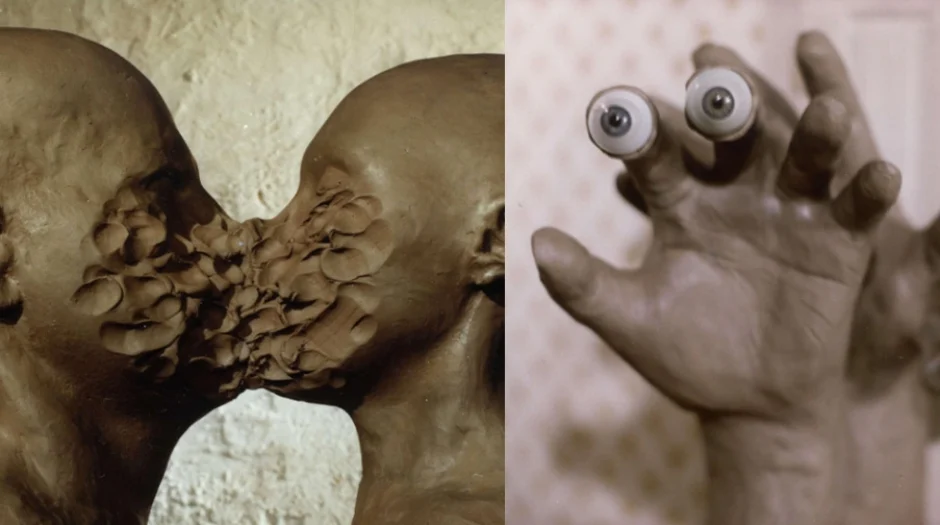
In the landscape of 20th-century animation and experimental cinema, few figures command as much reverence—and instill as much unsettling wonder—as the Czech surrealist Jan Švankmajer. Tonight, Los Angeles audiences have the unprecedented opportunity to bear witness to the full scope of his visionary output as LIGHTSTRUCK, the city’s premier experimental film series, launches "The Alchemical Furnace of Jan Švankmajer."
Curated by Zena Grey and Mark Toscano, this four-part retrospective—hosted at the 2220 Arts + Archives venue—serves as the first complete screening of Švankmajer’s short film library in Los Angeles. Featuring newly remastered prints overseen by the director himself, the series invites viewers to step into a tactile, often grotesque, and deeply psychological world that has shaped the trajectory of modern animation.
The Anatomy of the Retrospective: A Four-Part Journey
The series is structured across four consecutive Thursday evenings, with each program meticulously curated to balance Švankmajer’s widely celebrated masterpieces with his rarer, more obscure works.
According to the organizers at LIGHTSTRUCK, the goal was to provide a cohesive narrative arc to his career, moving from his early forays into the medium in the 1960s to his more politically charged and philosophically dense later shorts. The collaboration with Athanor, Švankmajer’s personal studio, ensures that the visual fidelity of these screenings matches the meticulous craftsmanship of the original productions.
For each installment of the series, doors open at 7:30 p.m., with the screenings commencing at 8:00 p.m. at 2220 Beverly Blvd. Tickets are currently available through the official LIGHTSTRUCK website, and demand is expected to be high given the historical significance of the event.
A Chronology of Chaos: From ‘The Last Trick’ to Global Acclaim
To understand the significance of this retrospective, one must look at the timeline of a career that has defied conventional censorship and aesthetic categorization.
The Formative Years (1964–1970)
Born in Prague in 1934, Švankmajer entered the world of filmmaking with The Last Trick (1964). This debut established the foundational pillars of his aesthetic: a fascination with stop-motion animation, the use of antique puppets, and the integration of collage. His work was never merely "animation"; it was an act of subversion.

The Surrealist Alignment and Censorship (1970–1979)
In 1970, Švankmajer officially joined the Czechoslovak Surrealist Group alongside his wife, the late, brilliant painter Eva Švankmajerová. Their artistic partnership was a profound symbiosis, blending his technical precision with her visceral, textural style. However, this period also brought significant hardship. During the height of the communist regime’s repression, Švankmajer was banned from filmmaking for seven years (1972–1979). This period of forced silence, paradoxically, only served to deepen the psychological complexity of his eventual return to the screen.
Global Recognition and Artistic Zenith (1980s–Present)
The 1980s marked a global breakthrough for the artist. His 1982 short, Dimensions of Dialogue, stands as a landmark in film history, sweeping the festival circuit with the Golden Bear at the 1983 Berlinale and the Grand Prix at the Annecy International Animation Film Festival.
His transition into feature filmmaking cemented his legacy. Works such as Alice (1988), his disturbing reimagining of Lewis Carroll, and the dark, Faustian psychodrama Faust (1994), redefined what stop-motion could achieve. His filmography continued to evolve through the new millennium with Conspirators of Pleasure (1996), Little Otik (2000), Lunacy (2005), Surviving Life (2010), and his most recent venture, Insects (2018). In 2009, the Karlovy Vary International Film Festival honored him with the Crystal Globe, recognizing his "outstanding artistic contribution to world cinema."
The Master’s Hand: The Importance of the Remasters
One of the most compelling aspects of the LIGHTSTRUCK retrospective is the inclusion of recent, director-supervised remasters. Švankmajer’s films are defined by their "tactility"—the sense that you can feel the grit of the clay, the rust on the metal, and the decay of the meat he so frequently utilizes in his imagery.
Older, degraded prints often flattened the textures of his work, stripping away the nuances of his lighting and shadow play. By overseeing the restoration process himself, Švankmajer has ensured that the "alchemical" nature of his films—the way objects seem to breathe, transform, and decompose—is preserved for a new generation of digital projection. This is not merely a screening; it is a restoration of a sensory experience.
Supporting Data: The Švankmajer Influence
To gauge the magnitude of his influence, one need only look at the luminaries of cinema who cite him as a primary inspiration. The list is a veritable "who’s who" of dark, idiosyncratic storytelling:
- The Brothers Quay: Their own work in puppetry and uncanny atmosphere draws a direct lineage from Švankmajer’s obsession with the "life" of inanimate objects.
- Terry Gilliam: The visionary director of Brazil and 12 Monkeys has frequently cited Švankmajer as a titan of animation, specifically praising his ability to make the mundane feel monstrous.
- Tim Burton and Henry Selick: The aesthetic architecture of films like The Nightmare Before Christmas or Corpse Bride would arguably look vastly different without the precedent set by the Czech surrealist.
LIGHTSTRUCK’s program notes categorize him as "one of the single most influential and idiosyncratic artists in animation and cinema history." This is not hyperbole. In an industry increasingly dominated by smooth, digital polish, Švankmajer’s insistence on the "human touch"—the imperfections, the thumbprints in the clay, the creaking of the wooden joints—remains a radical act of defiance.

Official Perspectives: The Curatorial Vision
Zena Grey and Mark Toscano, the curators behind LIGHTSTRUCK, have been instrumental in bridging the gap between historical archival work and contemporary exhibition. By securing the cooperation of Athanor, they have elevated this retrospective from a standard screening series to a major cultural event.
In interviews regarding the series, the curators have emphasized the importance of context. "Švankmajer is not a director you watch in isolation," one might infer from the structure of the series. By presenting his shorts alongside one another, they allow the audience to track the evolution of his recurring motifs—the eating of objects, the transformation of human faces into clay, and the subversion of domestic life.
The inclusion of "iconic classics and remarkable obscurities" suggests a curatorial intent to challenge the viewer. While audiences may come for the famous films like Dimensions of Dialogue, they will leave with an appreciation for the fragmented, surreal snippets of his lesser-known experiments that form the connective tissue of his worldview.
Implications for Modern Cinema
The retrospective arrives at a time when the debate over the future of animation is reaching a fever pitch. With the rise of AI-generated imagery and the automation of creative processes, Švankmajer’s films stand as a stark reminder of the necessity of the "authorial hand."
His work suggests that cinema is not just a medium for narrative, but a medium for substance. Every frame of a Švankmajer film is a labor-intensive struggle against the laws of physics and the limitations of the medium. For young animators in Los Angeles, this series offers a masterclass in how to infuse the inanimate with a soul that is simultaneously beautiful and terrifying.
Furthermore, the retrospective highlights the importance of independent venues like 2220 Arts + Archives. By providing a home for the works of artists who do not fit into the commercial multiplex model, these venues protect the "alchemical furnace" of experimental art, ensuring that the legacy of masters like Švankmajer remains a living, breathing part of the cultural discourse.
As the lights dim tonight in Los Angeles, the audience will not just be watching films; they will be engaging with a surrealist manifesto that has survived wars, political bans, and the transition from analog to digital. The "Alchemical Furnace" is burning, and for the next four weeks, Los Angeles is its chosen vessel.
