
From Local Roots to Global Stages: The Rising Arc of Lu Po-Shun’s "Will You Still Be My Friend"
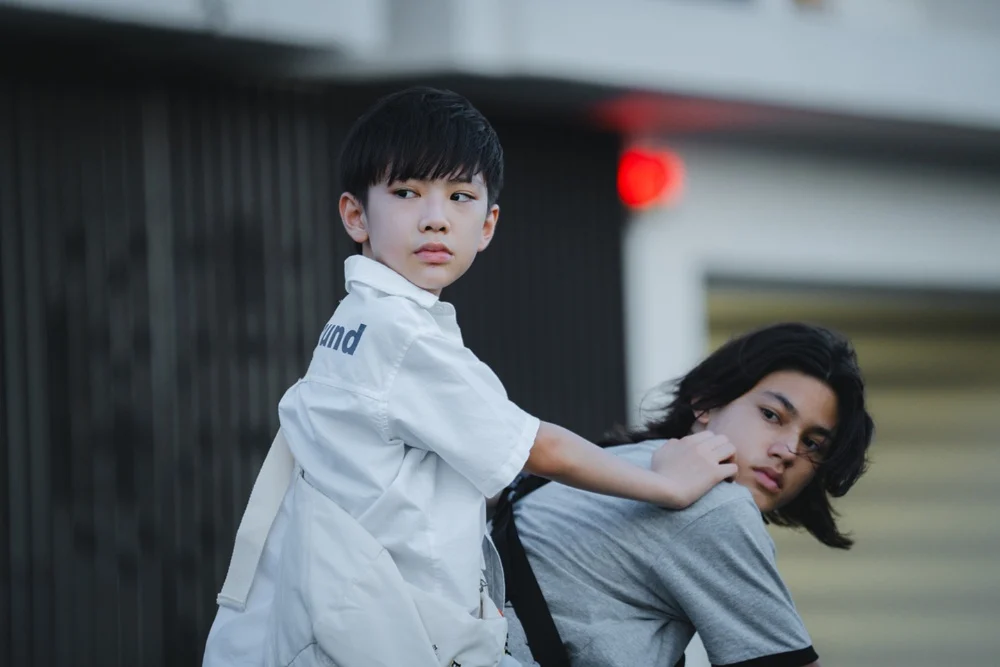
When Taiwanese director Lu Po-Shun sat down with Variety this past March, his debut feature, Will You Still Be My Friend, existed in the precarious, high-stakes limbo familiar to many emerging filmmakers: it was a project of immense personal ambition that was still hunting for its final round of financing. Today, that uncertainty has been replaced by the steady momentum of critical acclaim.
Following a successful premiere at the San Sebastián International Film Festival and securing two prestigious Golden Horse Award nominations—including a nod for Best New Performer—Lu has arrived at the Busan International Film Festival with a renewed sense of purpose. As his film screens in the "A Window on Asian Cinema" section, the narrative has shifted from one of financial pursuit to one of international artistic validation.
The Genesis: A Community’s Coming-of-Age
Set against the backdrop of Yunlin County on Taiwan’s southwest coast, Will You Still Be My Friend is a delicate, observant coming-of-age drama. The story follows two young boys whose inseparable bond is gradually strained by the encroaching pressures of the adult world—specifically, the local political friction and socioeconomic tensions surrounding solar energy development in their rural community.
The feature is an expansion of Lu’s earlier short film, When Henge Meets Crescent, which was originally commissioned for the Taiwanese public broadcaster PTS’s pandemic anthology, Quarantini. For Lu, the transition from short to feature was not merely a matter of runtime, but a deep-dive excavation of his own upbringing.
"I built the feature out of the short by mapping out each character’s arc," Lu explains. "I had to give everyone a clear beginning, development, turning point, and resolution. The key events then drove the story forward, bringing it together into a complete, cohesive narrative."
Chronology of a Filmmaker’s Journey
The trajectory of the film reflects a disciplined, methodical approach to production. The process began long before the cameras rolled, with Lu conducting extensive field research in Yunlin, the region he calls home. By grounding the script in the lived realities of his community, he ensured that the political subplots—while potentially heavy—remained tethered to human experience.
- Pre-Production (2025): Lu spends a year in intensive research and casting. He discovers lead actor Jaden Wang via a social media account managed by the boy’s mother. The casting proves to be a serendipitous match, as Wang possesses both the required cultural skills—lion dancing—and a physical connection to the filming location in Kaohsiung.
- Production & Development: Lu navigates the delicate balance of directing children. He emphasizes the importance of acting classes that focus on script analysis rather than rote memorization, encouraging the young actors to understand the "why" behind their characters’ gestures and lines.
- Premiere (September 2026): The film debuts at San Sebastián, where all four screenings sell out on the first day. It emerges as a frontrunner for the festival’s youth award, finishing in the top three.
- The Festival Circuit (October 2026): The film arrives at Busan, marking a pivotal moment for international distribution and industry networking.
- Theatrical Release (December 4, 2026): The film is scheduled for a wide theatrical release in Taiwan, having already been granted a general-audience rating.
The Art of Subtraction: Crafting the Narrative
One of the most significant challenges Lu faced during the edit was determining the weight of the "adult world" within the film. In the original, more explicit script, the political machinations and interpersonal conflicts of the older characters were far more prominent.
"The adult storylines were actually more complicated and more explicit in the full script," Lu admits. "But in the edit, with limited running time, explaining those events too clearly would have sent the narrative in too many directions and risked taking the audience’s attention away from the two boys. So, we chose to make those storylines less explicit, allowing them to emerge more through the changes in the children’s relationship."
This editorial restraint is perhaps why the film has resonated so strongly with international critics. By prioritizing the emotional landscape of the protagonists over the exposition of local bureaucracy, Lu has created a story that transcends its specific geographic setting.
Supporting Data and Industry Recognition
The film’s critical success is underscored by its recognition from the Golden Horse Awards—the most prestigious honor in Chinese-language cinema. The nomination for "Best New Performer" for Jaden Wang serves as a testament to Lu’s directing process.
"When you work with children, you have to work with their personalities," Lu notes. "But a character in a feature also goes through changes, so the actors need to understand where the character differs from who they are." This nuanced approach to performance coaching has clearly paid dividends, moving the film into the sphere of serious arthouse contenders.
Furthermore, the film’s sales are now being handled by Moveria, a move that indicates a formal entry into the global market. Producer Yu-Hao Su is currently leading the charge at the Busan market to secure further distribution deals, a process that Lu recognizes as the final, and often most difficult, hurdle for an independent director.
Echoes of the New Wave
Perhaps the most flattering, albeit surreal, aspect of the film’s reception has been the comparison to Taiwan’s legendary New Wave cinema. Festival materials have drawn thematic lines between Lu’s work and the foundational films of masters like Hou Hsiao-hsien, specifically The Boys from Fengkuei, as well as François Truffaut’s The 400 Blows.
Lu handles these comparisons with a mix of humility and intellectual rigor. "If you look at it as looking back at yourself and telling stories about the community you belong to, I think that connection makes sense," he says. "It feels a little strange to talk about your own work’s place in film history. But I also think filmmakers need to consider these questions: Why am I doing it this way? In what context should the work be read? Does what I’m making have a relationship with Taiwanese films of the past?"
Implications for the Future
For Lu Po-Shun, the Busan International Film Festival represents more than just a screening opportunity. It is a dual-purpose mission: as a director, he is eager to gauge the visceral reactions of Asian audiences; as an executive producer, he is keenly aware of the need to prove the film’s market viability.
"Having been through this process, I’ve realized how difficult it is for a film to find distribution," Lu says reflectively. "For directors and actors who aren’t yet well known, it takes more effort to get people to notice the work. But seeing the film reach more people is also one of the most rewarding things about making movies."
As the festival continues, the implications for Lu’s career are significant. He has successfully navigated the transition from a short-film creator to a feature-length storyteller with a distinct, mature voice. While he has yet to commit to his next project, the industry’s eyes are now firmly fixed on his progress.
The success of Will You Still Be My Friend serves as a case study for emerging directors: success lies not in grand, sweeping spectacles, but in the intimate, honest examination of one’s own backyard. By focusing on the local, Lu has effectively tapped into something universal, bridging cultural divides through the simple, enduring complexity of adolescent friendship. As he walks the red carpets and navigates the sales meetings in Busan, it is clear that Lu Po-Shun is no longer just a director looking for financing—he is a filmmaker with a story that the world is finally ready to hear.
