
The Masterstroke of Adaptation: How One Narrative Shift Defined House of the Dragon
When George R.R. Martin’s Fire & Blood hit bookshelves, readers were presented with a dense, historical chronicle of the Targaryen dynasty. It was a dry, academic account of civil war, succession, and political maneuvering. However, when HBO adapted this material into House of the Dragon, the showrunners—co-created by Martin and Ryan Condal—recognized that a faithful page-to-screen translation would lack the emotional intimacy required for a serialized television drama. The solution? A singular, pivotal change to the ages and relationship dynamics of Alicent Hightower and Rhaenyra Targaryen.
This decision, while seemingly minor, fundamentally altered the DNA of the series, transforming a dry power struggle into a tragic, deeply personal character study that defines the modern fantasy landscape.
The Divergence: Book vs. Screen
In the source material, Fire & Blood, the timeline of Alicent and Rhaenyra’s lives is defined by a significant age gap. Alicent marries King Viserys I when she is roughly 19 years old, while Rhaenyra is a child of eight or nine. In this version, the two women were never peers; they were separated by an entire generation and the rigid social strata of Westeros. The book characterizes their rivalry as an inevitable byproduct of political factionalism and the patriarchal constraints of the Iron Throne.
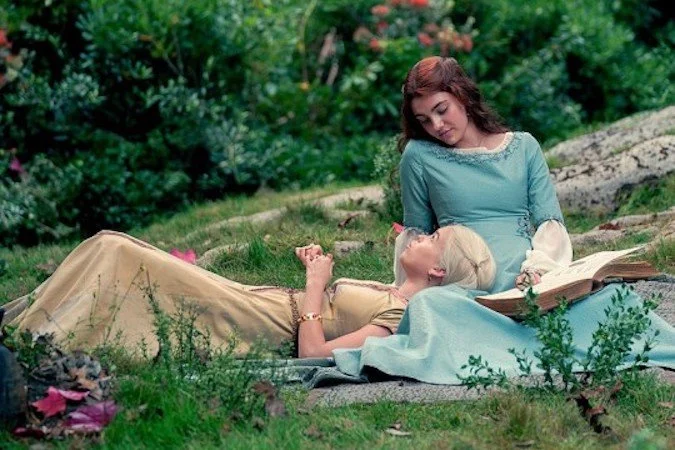
The television adaptation, however, completely rewrote this dynamic. By aging up Rhaenyra and aging down Alicent to be roughly 15 years old at the start of the series, the showrunners transformed them from political rivals into childhood best friends. Simultaneously, the show aged up King Viserys—portrayed with profound vulnerability by Paddy Considine—into a middle-aged ruler, creating a disturbing, power-imbalanced marriage for Alicent.
This change was not merely for aesthetic or narrative convenience; it was a deliberate choice to ground the impending Targaryen civil war, known as the "Dance of the Dragons," in the heartbreak of a severed relationship rather than just abstract political ambition.
A Chronology of Conflict
To understand the weight of this change, one must look at the progression of the series, which utilizes time jumps as a primary storytelling device.
The Foundation of Friendship
In the early episodes, we see Rhaenyra (Milly Alcock) and Alicent (Emily Carey) as inseparable companions. Their bond is the only source of genuine human connection in the stifling, male-dominated atmosphere of the Red Keep. Because they are peers, their friendship feels earned and authentic, making the subsequent betrayal feel like a physical wound.
The Great Divide
As the series progresses, the pressures of the court, the manipulation of Otto Hightower, and the marriage of Alicent to Viserys create an insurmountable chasm. When the show hits its first major time jump, the baton is passed to Emma D’Arcy (Rhaenyra) and Olivia Cooke (Alicent). The audience is forced to reconcile the lingering affection of the younger versions with the icy, guarded hostility of the older women.
The Escalation
The conflict is exacerbated by the next generation. The "eye for an eye" incident—a brutal moment where Aemond Targaryen loses his eye in a skirmish with Rhaenyra’s children—serves as the point of no return. The friendship is officially buried under the weight of maternal protective instinct and the impending war of succession.
The Mirage of Peace
Even in Episode 8, as King Viserys lies on his deathbed, the show teases a potential reconciliation. The moment the two women raise their glasses in a toast to their dying father/husband is perhaps the most poignant scene in the series. It highlights that, beneath the crowns and the political agendas, there is a deep-seated desire to return to the intimacy they once shared—a hope that the audience, too, is desperate to cling to.
Supporting Data: Why Character-Driven Drama Wins
The critical success of House of the Dragon can be largely attributed to this shift in focus. By prioritizing the emotional stakes between the two leads, the show avoids the "history book" feeling that often plagues epic fantasy.
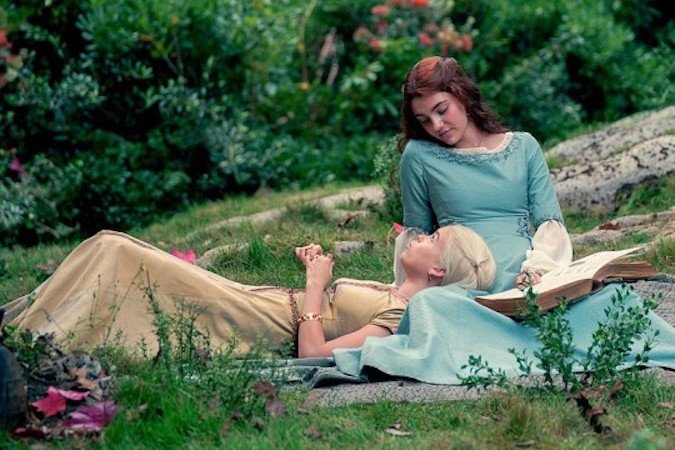
According to viewer metrics and critical reception, episodes that center on the internal, interpersonal conflicts between Alicent and Rhaenyra consistently rank higher in audience satisfaction than those focused solely on political maneuvering or dragon-focused spectacle. The "tragedy of the friendship" provides a necessary anchor; as the dragons grow larger and the violence grows more gruesome, the audience remains tethered to the screen by the question: Can they ever forgive each other?
The decision to make them friends also mirrors the tragic trajectory of the entire Targaryen dynasty. Just as the family is torn apart by internal strife, the two women are the living embodiment of a house divided against itself.
Official Responses and Creative Intent
The creative team has been vocal about the necessity of this change. In various interviews, Ryan Condal has noted that the challenge of adapting Fire & Blood was the lack of dialogue and internal monologue in the book. By creating a friendship, the writers gained a mechanism to externalize the internal politics of the court.
"We needed a way to make the viewer care about the history," a member of the writing team noted in a recent production retrospective. "If they are just two women vying for a throne, it’s a standard political drama. If they are best friends turned enemies, it becomes a tragedy of Shakespearean proportions."
George R.R. Martin himself has been supportive of the change, acknowledging that while the book is a "historical account," the show is a "dramatic interpretation." Martin has praised the performances of the lead actresses, noting that the depth they brought to the roles was not explicitly on the page but was the natural evolution of the script’s new direction.
Implications: The Future of Fantasy Storytelling
The success of this narrative tweak serves as a masterclass in adaptation. It proves that the most important element of any story is not the plot points—which are often malleable—but the emotional resonance of the characters.
The "Game of Thrones" Legacy
Game of Thrones was famous for its shock value, often killing off beloved characters to prove that "no one is safe." While effective, it sometimes alienated viewers who felt the world was too bleak. House of the Dragon shifts the focus toward the "why" of the violence. The conflict is not just about power; it is about grief, lost potential, and the toxic legacy of patriarchal expectations.
A New Standard for Prequels
Moving forward, this approach sets a new benchmark for prequels. Instead of simply recreating the events described in historical lore, future shows are likely to adopt the "emotional pivot" model. By focusing on the personal relationships that defined historical turning points, writers can bridge the gap between the distant past and the contemporary viewer.
The Weight of Succession
Ultimately, the change highlights the central theme of the entire A Song of Ice and Fire universe: the danger of legacy. Rhaenyra and Alicent are both victims of their fathers’ ambitions. Their friendship was sacrificed on the altar of succession, proving that in Westeros, the only thing more dangerous than a dragon is the weight of one’s own history.
Conclusion
The decision to turn Alicent and Rhaenyra into childhood friends was a stroke of genius that transformed House of the Dragon from a high-fantasy spin-off into a profound exploration of human frailty. By grounding the epic scale of the Targaryen civil war in the quiet, intimate tragedy of two women caught in a system they cannot control, the show has secured its place as a landmark of modern television.
As the war of the greens and the blacks continues to escalate, the audience will likely continue to look back at that initial, fragile friendship—a ghost of what might have been, had history been written differently. In the world of Westeros, peace is fleeting, but the memory of a lost friend is a fire that burns long after the dragons have stopped screaming.
