
Beyond the Charts: Olivia Rodrigo’s Evolution from Disney Darling to Generation Z’s Defiant Voice
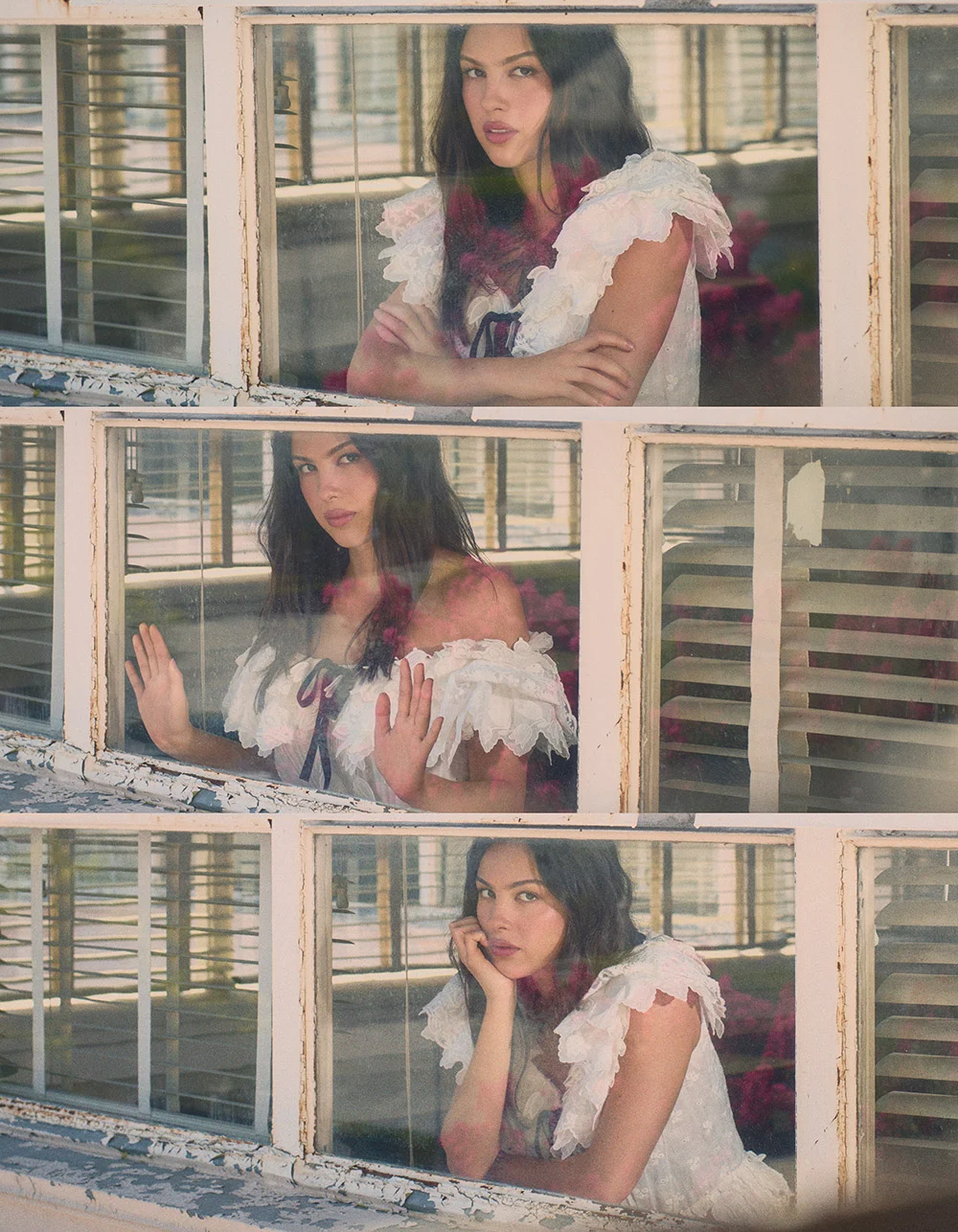
LOS ANGELES — Forty hours after pulling off the most ambitious undertaking of her career, pop star Olivia Rodrigo sat in a sunlit Valley rehearsal space, nursing a tall black coffee through a haze of exhaustion and sun-baked contentment. Just two days prior, she had stood before 50,000 screaming fans at Irvine’s Great Park, headlining Daisy Chain Fields—a women-led charity festival she conceptualized, organized, and built from the ground up.
"It felt like it was my wedding a little bit," Rodrigo reflects, adjusting her dark Ray-Ban Wayfarers. "Everyone that I ever met in my life was there. My whole family on both sides. I planned it for a year and a half. I was joking about it to Alanis [Morissette], and she looks at me and says, ‘This is more important than your wedding.’ I was like, ‘Oh, wow,’ and I just suddenly got a wave of nervousness. But, yeah, it was special."
For Rodrigo, 23, the festival—which successfully raised $20 million for women-centric nonprofits like Planned Parenthood, the National Women’s Law Center, and Baby2Baby—was far more than a high-profile concert. It marked the literal and symbolic culmination of a multi-year transformation. Having cemented her status as the defining voice of Generation Z through raw, unfiltered, and confessional songwriting, Rodrigo is now navigating the dizzying intersection of massive cultural clout, relentless media scrutiny, and the complex responsibilities of modern pop stardom.

Chronology: From the Disney Channel to Global Arena Dominance
Rodrigo’s path to becoming a global phenomenon is characterized by relentless momentum. Having entered the entertainment industry at the tender age of 13, she spent her formative years on Disney Channel productions, starring in Bizaardvark alongside Madison Hu before landing the lead role in High School Musical: The Musical: The Series.
The paradigm shifted overnight in January 2021 with the release of her debut single, "Drivers License." The track shattered streaming records and transformed her into an international sensation. Her debut album, Sour, went on to become the most-streamed album by a female artist in Spotify history, launching her into an elite tier of pop stardom.
While her sophomore follow-up, 2023’s Guts, proved slightly less commercially monolithic than its record-shattering predecessor—achieving triple-platinum status compared to Sour‘s six-times-platinum run—it firmly established her as a formidable, arena-selling touring act.

Now, following the release of her third and most critically acclaimed studio album, You Seem Pretty Sad for a Girl So in Love, Rodrigo finds herself staring down an arduous global schedule. The album debuted at No. 1 on the Billboard 200, driven by the massive success of its lead single, "Drop Dead," which surpassed half a billion Spotify streams. Following a brief celebratory pool party with friends in Los Angeles, the honeymoon phase is officially over. Rodrigo is pivoting straight into preparations for her sold-out, 86-date, eight-month-long arena tour.
"The blessing and the curse of my job is that I don’t really live anywhere—I’m never in a place longer than two or three months," she admits.
Supporting Data: Commercial Triumph and Artistic Autonomy
The commercial statistics behind You Seem Pretty Sad underscore Rodrigo’s immense pulling power. The record generated the highest opening sales week for a female artist of the year, moving 485,000 units in its first week and remaining firmly entrenched in the top five of the Billboard charts since its June release.

Yet, numbers tell only half the story. Artistically, the album represents a profound maturation in Rodrigo’s songwriting, earning praise from the very rock legends she grew up idolizing.
The Cure frontman Robert Smith, who provides guest vocals on the album standout "What’s Wrong With Me," marvels at her dedication to the craft.
"Olivia’s desire to be recognized as a songwriter is very refreshing; it’s unmodern in a way," Smith says. "It’s not effortless—she spends an awful lot of time getting things right with her music. But she also gets it right so quickly. It’s bizarre at times. She was in London with me a while back. She played me something she wrote that morning, things that could take 14 years for many writers to get out, and she does it in a morning."

Rodrigo’s writing style relies on an old-school confessional framework, digging into the visceral emotional landscape of young adulthood, obsession, and self-doubt. In an era dominated by algorithmic pop formulas and a flood of AI-generated tracks on streaming platforms, Rodrigo maintains a hardline stance against synthetic art.
"I would never use AI in any of my music," she states firmly. "Absolutely no. Hard line on that. The closest I’d ever got is that once, me and [producer] Dan [Nigro] were like, ‘God, I wonder what ideas ChatGPT would have for an Olivia Rodrigo title,’ and they’re all fucking awful."
The conceptual backbone of You Seem Pretty Sad shifted dynamically during its creation. Initially conceived as a collection of traditional love songs—inspired in part by her relationship with English actor Louis Partridge—the album’s tone pivoted dramatically following a sudden breakup. Rodrigo and Nigro spent the final months of production reworking tracks to capture the "gray area" of modern heartbreak, evolving upbeat romance anthems into melancholic dissections of post-relationship depression.

Official Responses and the Politics of Pop
True to her generational mantle, Rodrigo is increasingly unafraid to blend her art with socio-political commentary. The week prior to Daisy Chain Fields, she released "Serena Joy," a biting protest track named after the complicit Handmaid’s Tale character, serving as a stark warning against political complacency and the erosion of bodily autonomy.
Alanis Morissette, who made a surprise performance at Daisy Chain after Karen O withdrew due to personal reasons, praised Rodrigo for aligning her art with her ethical framework.
"Olivia is a very unique artist in that her value system shows up in all the choices she makes," Morissette observes. "Themes of truth-speaking, feminism and humanism, empowered sensitivity and activism permeate her environments in a way that feels mission-full and loving. There is a softening in the community around women truly being there for each other. Us women have had good reason to be wary of female safety in a patriarchal world. I can feel it in a handful of us artists that it might actually be safe to lean on each other now. Olivia is at the front of this charge."

Rodrigo’s willingness to lean into controversy—whether critiquing immigration enforcement policies or speaking out on reproductive rights—marks a distinct departure from the media-trained neutrality typical of contemporary pop stars.
"Everyone is welcome to come to Daisy Chain," Rodrigo says of the festival’s inclusive yet unapologetic ethos. "But if you don’t agree with the message that we’re sending, then you don’t have to buy a ticket."
Implications: The Heavy Toll of Public Life
Despite her staggering success, Rodrigo’s journey is not without friction. Living much of her youth under an international microscope has complicated her relationship with fame. While she acknowledges the immense platform and positive impact she can wield—such as raising $20万円 for women’s charities—she is openly candid about the psychological toll of continuous public scrutiny.

Tabloid culture and online "stan" communities frequently dissect her personal life, turning casual dates into viral internet discourses. This summer, media storms erupted over casual outings in New York, leading to absurd internet speculation and unwarranted public judgment.
"It’s so hard and kind of sad, especially because relationships are supposed to be something private," Rodrigo reflects. "I feel like every time I go on a casual date with a guy, there’s a picture of it on the internet, which feels really invasive… I’m single, I don’t have a boyfriend, and to be stalked outside of your home and then these pictures are being used as evidence that you’re a bad person, it’s just the craziest thing. But I know who I am, and I know what my values are… I wish that I could be 23 years old and experience life normally."
That longing for normalcy extends to milestones she missed while catapulting to fame at 18, chief among them being higher education. Though she briefly sampled a poetry class at USC in 2022—which inspired her Guts track "Lacy"—she still dreams of sitting in a traditional lecture hall.

"I’d love to go back to school. I feel like that’s kind of a misconception that people have, that you have to go when you’re like 19 years old," she says. "But I would love to go and learn in more of a classroom setting. I’d love to sit in a lecture. That’d be really fun. It’s the most basic stuff, but I never had it."
For now, higher education will have to wait. With a massive arena tour looming and a cultural footprint that grows heavier by the day, Olivia Rodrigo’s immediate classroom is the global stage. And as she navigates the complexities of her early twenties with razor-sharp wit and unyielding integrity, her audience is more than ready to follow her wherever she leads.
