
Unholy Resurrection: Ken Russell’s ‘The Devils’ Returns to Its NC-17 Roots in Stunning 4K
Once you have witnessed Ken Russell’s The Devils, you never truly forget it. It is a work of visceral, uncompromising cinema that sears itself into the collective consciousness, standing as one of the most controversial and fiercely debated films in the history of the medium. Upon its initial release in 1971, the film was met with outright bans in multiple countries and subjected to brutal, mandated censorship in others. Now, over half a century later, the director’s original cut has been painstakingly restored in 4K, reclaiming its status as a masterpiece of provocative art. This is not merely a re-release; it is a restoration of a vision that was long considered lost to the censors’ scissors.
The Narrative Landscape: A Kingdom of Plague and Paranoia
Set against the backdrop of 1634 plague-ridden France, The Devils serves as a chilling exploration of the intersection between political ambition and religious hysteria. The narrative follows Cardinal Richelieu (Christopher Logue) as he manipulates King Louis XIII (Graham Armitage) into a devastating consolidation of church and state power.
At the center of this political storm is the city of Loudun, led by the charismatic, hedonistic, and unapologetically flawed Father Urbain Grandier (played with magnetic intensity by Oliver Reed). When Grandier thwarts the demolition plans of the power-hungry Baron De Laubardemont (Dudley Sutton), he inadvertently paints a target on his own back. The catalyst for his destruction arrives in the form of Sister Jeanne (Vanessa Redgrave), the repressed prioress of the local convent. Consumed by a jealous, eroticized obsession with the priest she has never met, Jeanne accuses Grandier of witchcraft. What follows is a descent into a hellscape of fabricated evidence, systemic torture, and social collapse—a cautionary tale of what happens when governance is dictated by dogma rather than reason.
A Chronology of Controversy: From Banned to Restored
The history of The Devils is a battleground of artistic expression versus institutional suppression.
![‘The Devils’ NC-17 Director’s Cut Review – The Definitive Version of Ken Russell’s Stunning and Highly Controversial Masterpiece [Beyond Fest]](https://www.dreadcentral.com/wp-content/uploads/2026/08/devils-1200x675.jpg)
- 1971 (Original Release): The film premieres to immediate global outcry. Its depiction of religious corruption, graphic sexuality, and blasphemous imagery makes it a lightning rod for controversy. Warner Bros. demands significant cuts to secure a commercially viable rating, resulting in the excision of several scenes, most notably the "Rape of Christ" sequence.
- 1970s–2000s (The Era of Censure): For decades, the film exists only in truncated forms. It becomes a "holy grail" for cinephiles, whispered about in dark corners of film history, often unavailable on home media in many territories.
- 2026 (The Restoration): Following years of negotiation and technical labor, the director’s original, uncompromised cut is painstakingly restored. This version reincorporates the footage previously deemed "too offensive" for general consumption. The restoration process involved high-definition scanning and color grading to ensure that David Watkins’ breathtaking cinematography is preserved as Russell intended.
- October 16, 2026 (The Theatrical Event): The NC-17 restored version begins a limited one-week theatrical engagement via Warner Bros. Clockwork, marking the first time modern audiences can legally view the complete, uncut vision of the director.
Supporting Data: The Anatomy of a Masterpiece
To understand the weight of The Devils, one must look at the specific elements that set it apart from contemporary horror. While Ken Russell is synonymous with the genre—having directed Altered States, Gothic, and The Lair of the White Worm—The Devils transcends standard genre conventions. It is a political horror film where the monsters are not supernatural, but bureaucratic and ecclesiastical.
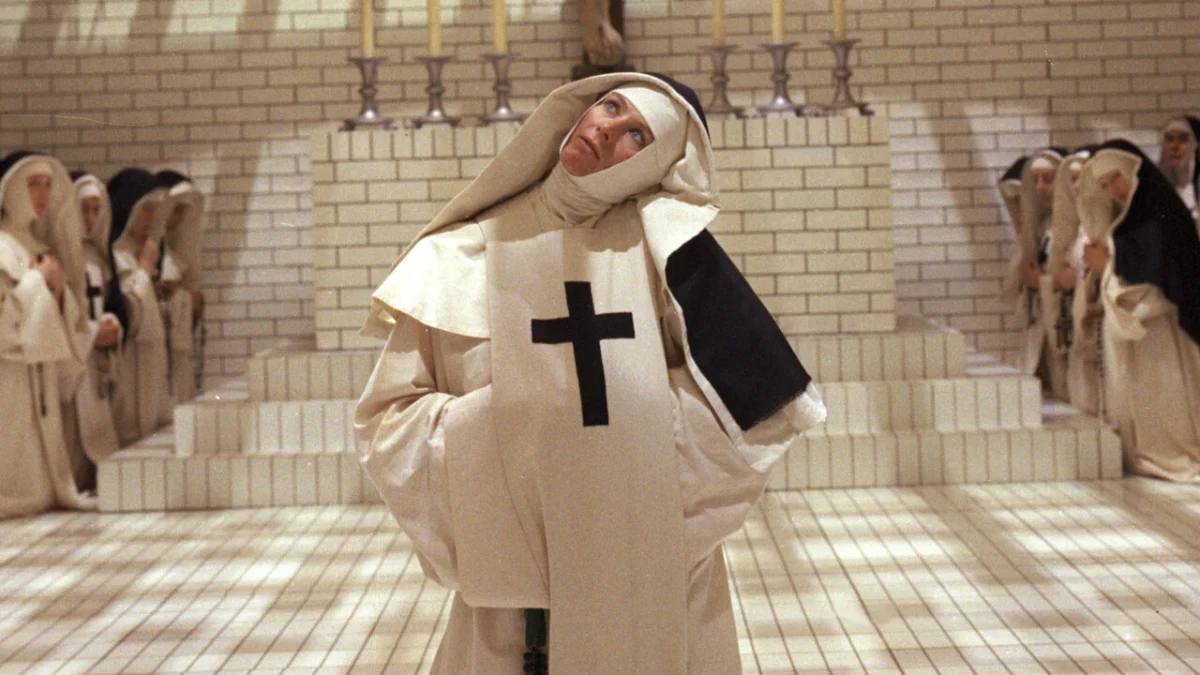
The film’s power is bolstered by Peter Maxwell Davies’ dissonant, cacophonous score, which acts as an auditory assault on the viewer, mirroring the chaos of the plague and the subsequent witch hunts. The production design, famously influenced by the brutalist architecture of Derek Jarram, creates a sterile, white-walled prison of a city that contrasts sharply with the vibrant, blood-drenched gore of the torture scenes.
The performance of Oliver Reed remains a masterclass in duality. As Grandier, he is a man who admits to his own hypocrisy. He is misogynistic and power-hungry, yet he stands as the only man in the film who refuses to lie for the sake of survival. His refusal to confess to crimes he did not commit serves as the film’s moral anchor, making his eventual demise at the hands of his tormentors all the more gut-wrenching.
Official Responses and the NC-17 Rating
The return of The Devils with an official NC-17 rating is a significant cultural marker. In the modern era, where the MPAA often pressures filmmakers to cut content to reach an R-rating, the acceptance of an NC-17 release by a major studio subsidiary signals a shift in the perceived value of the director’s original intent.
![‘The Devils’ NC-17 Director’s Cut Review – The Definitive Version of Ken Russell’s Stunning and Highly Controversial Masterpiece [Beyond Fest]](https://www.dreadcentral.com/cdn-cgi/image/width=788%2Cheight=444%2Cfit=crop%2Cquality=65%2Cgravity=auto%2Cmetadata=none%2Cformat=auto%2Conerror=redirect/wp-content/uploads/2026/08/devils-e1791318770392.jpg)
Warner Bros. Clockwork has framed this release not as a exploitation flick, but as a restoration of historical art. The studio’s commitment to releasing the film without further compromise suggests a recognition that the film’s "offensive" nature is, in fact, its primary cultural value. By refusing to sanitize the "Rape of Christ" or the explicit scenes of nun-led hysteria, the studio allows the film to function as it was intended: a provocation that forces the viewer to confront the inherent cruelty of institutionalized religious zealotry.
The Implications: Why ‘The Devils’ Matters Today
The enduring relevance of The Devils lies in its portrayal of the "mob mentality" fostered by leadership. Russell presents a world where the truth is irrelevant, and the loudest, most hysterical voice dictates reality. This remains a chillingly accurate reflection of modern discourse, where misinformation and identity-based grievances often override factual evidence.
Furthermore, the film serves as a profound critique of the abuse of power. The church officials in the film—specifically the witch-hunter Father Barre—are not portrayed as people of faith, but as bureaucrats using the aesthetics of religion to consolidate their own influence. By stripping away the "sanctity" of the church, Russell reveals the machinery of violence beneath.
A Religious Experience for the Secular Viewer
Watching the restored version in a theater environment offers a unique, communal experience. There is a palpable tension in the room as audiences witness the absurdity of the trials and the sheer, unbridled terror of the executions. Laughter—often a defense mechanism—gives way to stunned silence as the film progresses. For those witnessing the film for the first time, it is not merely a movie; it is a confrontation.
![‘The Devils’ NC-17 Director’s Cut Review – The Definitive Version of Ken Russell’s Stunning and Highly Controversial Masterpiece [Beyond Fest]](https://www.dreadcentral.com/cdn-cgi/image/width=780%2Cheight=439%2Cfit=crop%2Cquality=65%2Cgravity=auto%2Cmetadata=none%2Cformat=auto%2Conerror=redirect/wp-content/uploads/2022/02/the-devils-film-images-50bb077b-6741-46fb-a7de-7c2210e8297.jpeg)
The restoration highlights every detail: the texture of the period costumes, the sweat on the actors’ brows, and the vivid, almost hyper-real shades of red that characterize the film’s climax. It is, as the saying goes, a "religious experience" for the secular viewer—a descent into the darkness of human nature that leaves one profoundly changed.
Final Thoughts: A Warning for the Modern Audience
As the October 16th release date approaches, the excitement among horror enthusiasts and film historians is palpable. However, potential viewers should be warned: The Devils is not a passive viewing experience. It demands attention, patience, and a strong stomach. It is a film that challenges the viewer’s boundaries and forces an examination of one’s own complicity in a society where justice is often sacrificed for ideology.
Ken Russell’s masterpiece is finally back, unchained and uncut. Whether you view it as a piece of historical commentary, a high-art horror film, or a blistering attack on institutional corruption, one thing is certain: you will not leave the theater the same way you entered. It is the definitive version of a film that was, and remains, a singular achievement in world cinema.
The restored director’s cut of The Devils arrives in select theaters for a one-week engagement starting October 16th. It is, without hyperbole, the most essential cinematic event of the year.
