
Echoes of Memory: How the Las Piñas Bamboo Organ Became the Soul of DreamWorks’ ‘Forgotten Island’
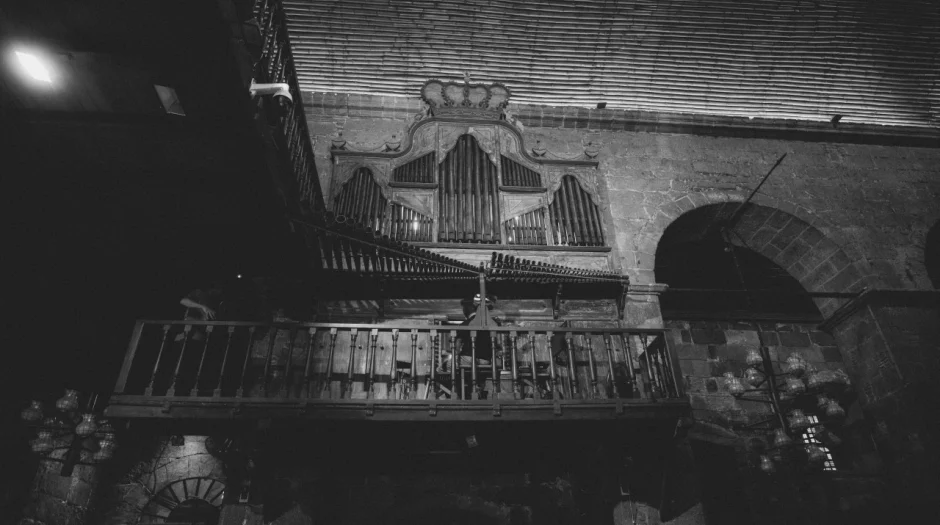
In the landscape of modern animation, where digital precision often dictates the aesthetic, DreamWorks’ latest feature, Forgotten Island, stands as a defiant, heartfelt anomaly. Directed by Joel Crawford and Januel Mercado—the visionary duo behind Puss in Boots: The Last Wish—the film is a lush, vibrant, and deeply emotional exploration of friendship, cultural identity, and the fragile nature of memory. While the film’s animation, supported by the Philippines’ Snipple Animation Studios, is visually arresting, its true heartbeat lies in its sonic landscape. Central to this auditory journey is the legendary Bamboo Organ of St. Joseph Parish Church in Las Piñas, Philippines—a 19th-century marvel that serves as the film’s emotional anchor.
A National Treasure: The Bamboo Organ’s Legacy
To understand the gravity of Forgotten Island’s soundtrack, one must first understand the instrument itself. Completed in 1824 after six years of painstaking labor by Father Diego Cera, the first resident parish priest of Las Piñas, the Bamboo Organ is a singular feat of engineering. Housed within the stone walls of St. Joseph Parish Church, the instrument comprises 1,031 pipes, 902 of which are crafted entirely from bamboo.
Declared a National Cultural Treasure of the Philippines in 2003, the organ is more than a musical instrument; it is a testament to the ingenuity and spiritual devotion of the 19th-century Filipino community. The unique acoustics of the church, featuring a ceiling also constructed from bamboo, allow for a resonant, earthy, and ethereal sound that cannot be replicated by modern synthetic means. For composer Nathan Matthew David, the opportunity to feature this instrument was not merely a creative choice—it was a pilgrimage.

The Sound of Nostalgia: A Composer’s Quest
When Nathan Matthew David began drafting the sonic identity for Forgotten Island, he sought a texture that could bridge the gap between the film’s high-concept, supernatural stakes and its grounded, intimate core. The film follows Jo (voiced by H.E.R.) and Raissa (Liza Soberano), best friends from 1990s Manila whose bond is tested when a portal transports them to the mythical island of Nakalimutan. There, they face the demon Batiba (Jenny Slate), who feeds on memories.
"Conceptually, it was something I talked about with Joel and Januel early on," David explains. "But it was like, ‘Are we really going to be able to make this work? This is crazy.’ But it seemed to really fit the character of Batiba. She’s a tree-dwelling character rooted in memory and nostalgia."
David traveled to Manila, where he sat in the presence of the instrument, listening as Prof. Armando Salarza played. The experience moved him deeply. "The organ offered a sound that had a fragility to it," David notes. "It’s also a really great glue between the indigenous instruments and the modern orchestra. It sits right in between them time-wise." By blending the ancient, woody tones of the organ with 8-bit synthesizers and indigenous chants from the Tboli tribe, David crafted a score that feels both prehistoric and futuristic, mirroring the film’s themes of fleeting time.

A Collaborative Tapestry: BINI and the Filipino Diaspora
The film’s commitment to cultural authenticity extended far beyond the score. In a major musical partnership, the acclaimed Filipino girl group BINI collaborated with David to produce "A Parallel World." Originally intended to be recorded entirely in English, the song evolved during the production process.
"The wonderful thing about BINI is that their friendship is so real and genuine," Crawford and Mercado observed. "They channel that into every note. They also brought the additional, authentic layer of singing in Tagalog. It made the lyrics more magical, inspiring us to alter the original plan."
This sentiment is echoed throughout the soundtrack, which features a robust lineup of Filipino talent, including SB19, Sophia Laforteza, and Ruby Ibarra. For the directors, this was never just about "representation"; it was about the concept of Kapwa—a Filipino term for the interconnectedness of all people, the idea that one looks out for others as if they were family.

"Watching my wife reunite with cousins she hadn’t seen in three decades during our research trip," Crawford says, "witnessing those bonds last over time and distance was so meaningful. We wanted to make sure that was on full display in the film."
Chronology of a Creative Journey
- 1824: Father Diego Cera completes the construction of the Las Piñas Bamboo Organ.
- 2003: The organ is officially declared a National Cultural Treasure of the Philippines.
- 2023–2024: Production of Forgotten Island intensifies; Nathan Matthew David travels to the Philippines for field research and recording.
- Summer 2026: Forgotten Island premieres at the Annecy International Animation Film Festival, receiving a five-minute standing ovation.
- September 2026: Joel Crawford receives the Creative Impact in Animation Award at SCAD AnimationFest.
- Present: The film is currently in global theatrical release, accompanied by an immersive partnership with the self-care app Finch.
The Stakes of Memory: A Philosophy of Loss
While many animated features rely on "end of the world" physical stakes, Forgotten Island pivots toward something more internal. The film posits that the loss of self, identity, and the connection to one’s history is a far greater tragedy than any external disaster.
"There’s so much convenience and accessibility now," notes Mercado, reflecting on the 1990s setting of the film’s prologue versus the hyper-connected present. "But we’ve lost something in all that too because memories are supposed to be temporary and ephemeral. They’re supposed to be fleeting. That’s what makes them special."

By choosing to center the narrative on Jo and Raissa’s friendship, the directors challenge the audience to consider what they would be willing to sacrifice for the people they love. The bamboo organ’s recurring motifs serve as a sonic reminder of these stakes: the instrument sounds like history, like the earth, and like the echoes of a past that is rapidly slipping away.
Implications for the Future of Animation
The success of Forgotten Island—both at the box office and within the critical community—signals a shifting tide in major studio animation. By prioritizing deep, research-heavy cultural immersion over generic world-building, DreamWorks has created a template for how studios can engage with international heritage.
The partnership with the self-care app Finch is perhaps the most unconventional extension of this impact. By gamifying the film’s themes of memory and self-care, the production team has successfully bridged the gap between cinematic entertainment and real-world mindfulness.

Furthermore, the influence on younger filmmakers is already palpable. As Crawford notes, his own career path was paved by watching the collaborative, friendship-driven directing style of mentors like Mike Mitchell and Walt Dohrn. "I remember thinking, ‘I hope one day I can be like that,’" Crawford says. "Now, hearing from young filmmakers who look at our partnership with Januel the same way—it’s a full-circle moment."
Conclusion
Forgotten Island is more than a film; it is a sonic and emotional map of the Filipino experience. Through the meticulous integration of the Bamboo Organ, the soulful harmonies of BINI, and a story that honors the concept of Kapwa, the film demands that its audience look inward. It reminds us that while technology may offer us the world, it is the fleeting, organic moments—the sounds of bamboo pipes in an old church, the bracelets exchanged between best friends, and the stories passed down through generations—that truly define who we are.
When the lights go up in the theater, the film’s ultimate goal is simple yet profound: to make the viewer reach for their phone, not to scroll through social media, but to call a friend. In an era of digital noise, Forgotten Island is a resonant, beautiful, and necessary signal.
