
Swallowed Whole: Inside the Terrifying, Fact-Based Making of the Survival Thriller Whalefall
If Steven Spielberg’s 1976 classic Jaws successfully kept generations of beachgoers out of the ocean, the upcoming survival thriller Whalefall may well ensure they never look at the water the same way again. Based on the acclaimed, scientifically grounded novel by Daniel Kraus, the film drops audiences directly into the ultimate claustrophobic nightmare: a scuba diver accidentally swallowed alive by a massive sperm whale, with a ticking clock of just one hour to escape before digestive enzymes finish the job.
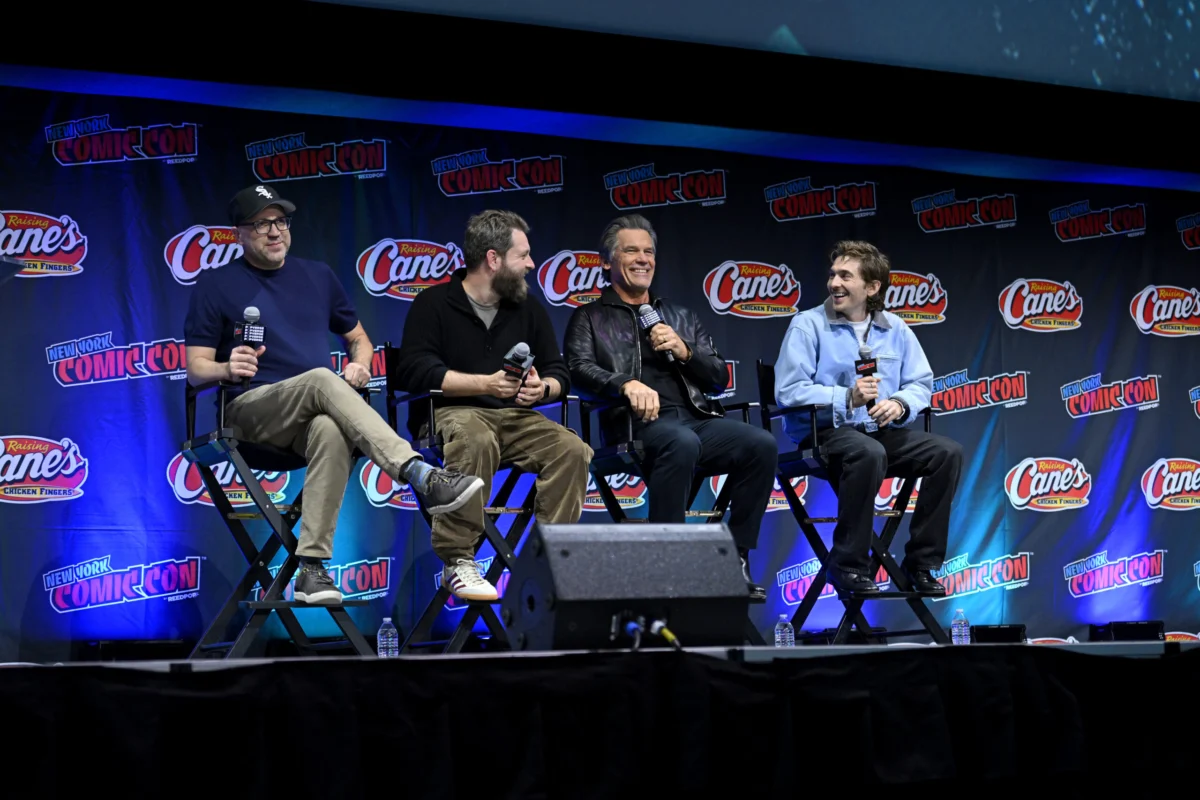
Ahead of its October 16 theatrical opening, the creative team behind Whalefall took over New York Comic Con (NYCC) for a rowdy, highly anticipated Friday afternoon panel. Writer-director Brian Duffield, author Daniel Kraus, star Austin Abrams, and supporting actor Josh Brolin pulled back the curtain on how they brought the seemingly "unfilmable" book to the big screen.
Main Facts: A Race Against Time in the Deep Blue
At its core, Whalefall is a high-stakes race-against-the-clock survival story. The narrative centers on Jay (played by Resident Evil and Weapons star Austin Abrams), an experienced scuba diver who, while exploring deep waters, crosses paths with a supersized sperm whale. Due to a tragic quirk of circumstance, the marine mammal inadvertently swallows Jay whole.
Trapped deep within the pitch-black, highly pressurized confines of the giant creature’s stomach, Jay has precisely sixty minutes to engineer an escape before he is digested.
Despite the harrowing premise, the cast was quick to emphasize that the film is not a creature feature designed to villainize marine life. Instead, it is a deeply emotional, character-driven story about survival, reconciliation, and father-son dynamics—anchored heavily by Josh Brolin, who plays Jay’s late father, Mitt.
Chronology: From Viral Video to the Big Screen
The journey of Whalefall from a stray thought on the internet to a major studio motion picture is as fascinating as the plot itself.
The Spark of Inspiration
The project began not with a fictional prompt, but with a viral video. Author Daniel Kraus was browsing online when he came across footage of a seafaring adventurer having a terrifyingly close encounter with a humpback whale.
"What inspired the book was that this happens," Kraus told the NYCC crowd. "I don’t mean the swallowing part, but divers and kayakers do end up in the mouths of humpback whales. I saw one of those videos and thought, ‘Is there actually a way that some whale could swallow someone? And if so, is there a way that person could survive?’"

Fact-Checking the Impossible
Rather than leaning into fantasy tropes found in the biblical story of Jonah or Carlo Collodi’s Pinocchio, Kraus committed to absolute biological accuracy. He consulted marine mammalogists, who confirmed that while humpbacks lack the anatomy to ingest a human whole, certain species—specifically sperm whales—could theoretically swallow a person.
From there, Kraus meticulously researched what scientifically accurate physiological and chemical hazards a human would face inside a sperm whale’s digestive tract. Because of this rigid adherence to science and the extreme physical demands it would place on a production, Kraus initially assumed his manuscript was entirely unfilmable.
The Twitter Connection
Kraus casually mentioned the concept on Twitter, catching the attention of filmmaker Brian Duffield, known for Spontaneous and No One Will Save You. Duffield slid into Kraus’s direct messages demanding an early look.
"I thought that everyone was going to want to make it," Duffield recalled. "I told Daniel that I needed to read it as soon as possible… A couple of months later, he sent it to me, and it changed my life."
The Audition Process and Chronological Shooting
For Austin Abrams, securing the role of Jay was an exhaustive trial. Because the film relies heavily on a single actor carrying the emotional and physical weight of isolation, casting directors insisted on rigorous in-person auditions.
"It was a long process," Abrams noted. "A month would go by and I’d do another one, another month would go by and I’d do another one. I remember toward the end doing an audition in a tent to try and recreate the whale’s stomach."
Once cast, Abrams faced an unusual production schedule. Rather than alternating between terrestrial flashback sequences and stomach scenes, director Brian Duffield opted to shoot all of the land-based father-son flashbacks first. Once those were in the can, the production locked Abrams inside a custom-built, 360-degree interior stomach set, shooting the survival sequences entirely in chronological order.
Supporting Data and Production Challenges
Bringing a biologically accurate whale interior to life required unprecedented feats of practical and visual effects engineering.

Stumpating Weta Workshop
Duffield enlisted the legendary visual effects wizards at Weta Workshop—famous for their groundbreaking work on The Lord of the Rings and Avatar—to construct the whale’s interior. According to the director, even industry veterans were stunned by the unique commission.
"Richard Taylor was giddy, because he’s never had to do anything like this," Duffield said, referencing Weta’s Oscar-winning founder and longtime Peter Jackson collaborator.
Building the physical set required massive amounts of trial and error. The crew had to figure out how to squeeze traditional film lighting rigs and heavy camera equipment into a fully enclosed, organic-looking space. Furthermore, the team had to carefully monitor Abrams’ physical and mental endurance as he spent two grueling months performing largely in isolation.
Brolin’s Double Duty
Josh Brolin’s involvement goes far beyond his onscreen performance as Jay’s combative father, Mitt. In a unique creative flourish, Brolin also provided the sound design for the whale’s heartbeat.
Director Brian Duffield devised a clever psychological trick for the set: "Along with me recording a few things for Austin to hear on set… he said, ‘Hey, can I record your heart and play that without telling him what it’s going to be?’ So when he hears the heartbeat [in the stomach], he thought, ‘That’s the whale’s heartbeat.’ But Brian told him, ‘No, that’s Josh’s heartbeat.’"
Official Responses and Cast Perspectives
The panel offered deep insights into how the actors processed the intense themes of the movie. Far from developing a phobia of the ocean, the cast expressed profound respect for marine life.
"I feel like this movie is a love letter to whales more than anything," Austin Abrams told the panel, describing the grueling shoot as a "beautiful experience." He added, "I wanted to do something that had never been seen before and something that I wanted to see. I found the whole thing mythological and compelling, and I couldn’t not do it."
For Brolin, the film served as a stark personal reminder of familial fragility. "It’s the most extraordinary setting for a movie, and it’s the most universal story possible about a father and son who haven’t quite figured how to jell," Duffield explained.

Brolin echoed this sentiment, tying his performance to his own life experiences. "I talked to my own son, and thought about my relationship with my father," Brolin shared. "I have these moments after watching the movie where I go, ‘Man, time is precious.’ So take full advantage of it now, because you never know."
Implications: A New Standard for Survival Thrillers
As Hollywood looks for fresh intellectual property that breaks away from traditional franchise fatigue, Whalefall represents a high-risk, high-reward bet on original, high-concept storytelling. By marrying hard science with visceral human drama, the film aims to redefine the survival genre.
Beyond the box office, the production left permanent marks on its creators. Much like the cast of The Lord of the Rings commemorating their journey with matching tattoos, the Whalefall team adopted permanent ink to mark the harrowing project.
"Daniel has a whale on his arm, and I have a full nautical back tattoo," Brolin revealed to the audience, adding with a laugh, "Everybody get ready to get a tattoo after you see this movie."
Meanwhile, director Brian Duffield took home some slightly more eccentric keepsakes from the art department. "I have an entire storage unit full of whale pieces," he confessed. "I have tentacles, whale teeth, beaks, and random bits of whale meat."
Audiences will find out if the gamble pays off when Whalefall surfaces in theaters on October 16.
