
Welcome to a World Ruled by Replicants: Everything We Learned From the ‘Blade Runner 2099’ NYCC Trailer
Main Facts
The expansion of one of science fiction’s most revered and philosophically rich universes has officially arrived at a major turning point. During a high-profile panel at New York Comic-Con 2026, Prime Video dropped the explosive first trailer for Blade Runner 2099, offering audiences their clearest look yet at a radically altered dystopian future.
Set 50 years after the events of Denis Villeneuve’s critically acclaimed Blade Runner 2049 (and 80 years after Ridley Scott’s 1982 original), the upcoming eight-episode limited series completely inverts the foundational dynamics of the franchise. While the original film featured a presumably human Blade Runner hunting artificial life, and its sequel followed a replicant operating within the system, Blade Runner 2099 introduces a subversive new paradigm: a human being who is actively pretending to be a replicant.
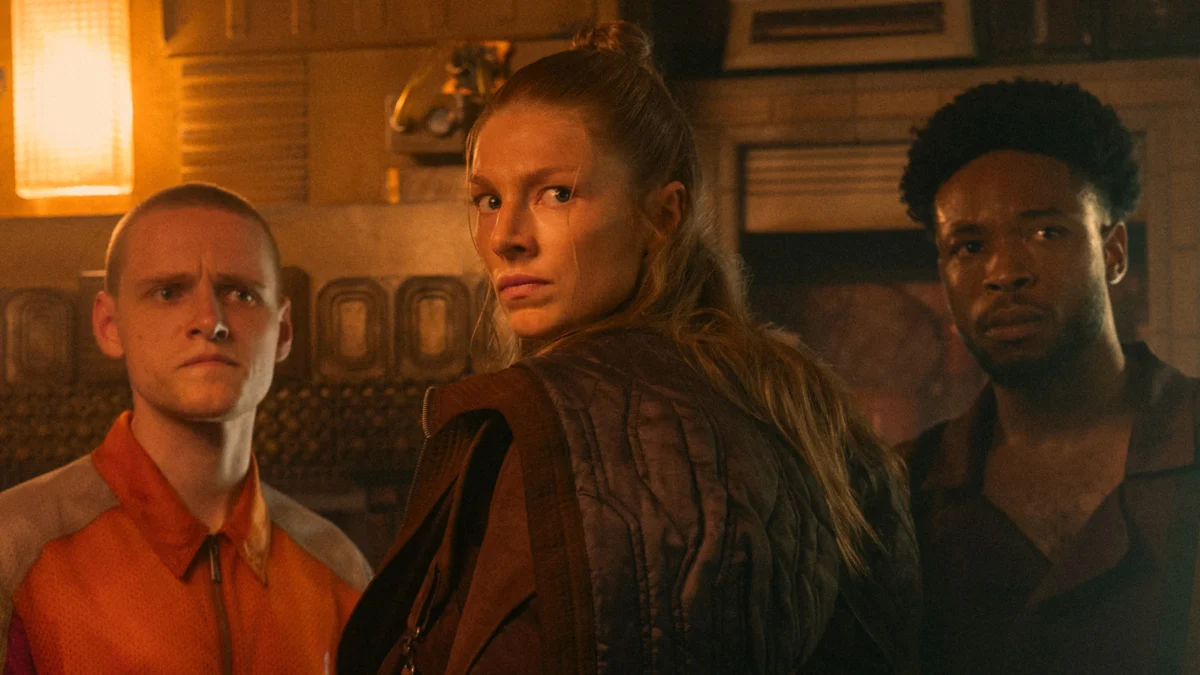
The series stars Hunter Schafer as Cora, a rogue individual playing a catastrophically dangerous game of deception in a world that has undergone a global upheaval. According to the newly released narrative details, a cataclysmic war between humanity and its synthetic creations concluded with the replicants emerging victorious. Taking the reins of global power, the artificial beings used their advanced expertise in terraforming—honed on the grueling off-world colonies—to begin healing the severe environmental damage choking Earth.
However, this systemic realignment has turned life upside down for organic humans. Rogue populations are now hunted down in the shadows by replicant Blade Runners, establishing a chilling new world order where creators have become the hunted and creations have assumed the role of absolute authority.
The series is slated to premiere its entire eight-episode run on Prime Video on November 25, 2026.
Chronology of the Franchise: From 2019 to 2099
To fully grasp the narrative weight of Blade Runner 2099, it is necessary to trace the evolutionary timeline of the franchise’s socio-political landscape across nearly a century of cinematic fiction:
- 2019 (The Original Blade Runner): Set in a rain-soaked, neon-drenched Los Angeles, humanity relies on bioengineered androids known as replicants—specifically the fragile, short-lived Nexus-6 models—to perform dangerous labor on off-world colonies. Rick Deckard (Harrison Ford), a cynical human detective, is pulled out of retirement to "retire" (execute) a rogue faction of replicants led by Roy Batty (Rutger Hauer). The film establishes the core thematic conflict: the blurred line between human consciousness and artificial sentience, encapsulated by Batty’s iconic "tears in rain" monologue.
- 2049 (The Sequel Blade Runner 2049): Thirty years later, society has survived a massive digital blackout ("The Blackout of 2022") that destroyed replicant registry records and collapsed the Tyrell Corporation. A new corporate titan, Niander Wallace (Jared Leto), has revived the technology with obedient, long-lived models. Officer K (Ryan Gosling), a loyal Nexus-9 replicant working as a LAPD Blade Runner, uncovers a secret that threatens to destabilize human-replicant relations forever: the miraculous, natural birth of a child born to a replicant mother.
- The Intervening Decades (2049–2099): Sometime in the fifty-year gap leading up to the new series, underground tensions boil over into open warfare between humanity and the rising synthetic population. Contrary to historical power structures, the replicants win the war. They seize control of global governments and infrastructure, initiating a massive planetary restoration project while ruthlessly tracking down remaining pockets of human resistance.
- 2099 (The New Series): Replicants are now the masters of Earth. Yet, victory has brought profound existential dread. No longer bound by the restrictive four-year lifespans of the past, the synthetic ruling class grapples with its own identity crisis. They possess advanced lifespans, but they are still mortal—and they know the exact date and time their systems will fail.
Supporting Data and Character Dynamics
The New York Comic-Con 2026 panel did more than just establish the macro-politics of this future Earth; it introduced complex characters grappling with the ultimate questions of existence.
At the center of the narrative is Cora (Hunter Schafer), whose decision to masquerade as a replicant Blade Runner remains one of the trailer’s most compelling mysteries. Why would a human court such extreme danger? Is she an operative for the human underground resistance, a spy, or an individual seeking protection in a world where organic human life holds little institutional value?
Equally striking is the inclusion of screen legend Michelle Yeoh as Olwen, a veteran replicant Blade Runner who is facing a stark biological reality: she is in the final week of her life.
While the strict four-year expiration date of early models like the Nexus-6 is a thing of the past, modern replicants do not live forever. Instead, they carry the psychological burden of a predetermined expiration date—they know precisely when their internal clock will stop. The NYCC trailer heavily features visual motifs of mirrors, reflections, and existential despair, alongside tantalizing references to a rumored "cure" for replicant mortality.
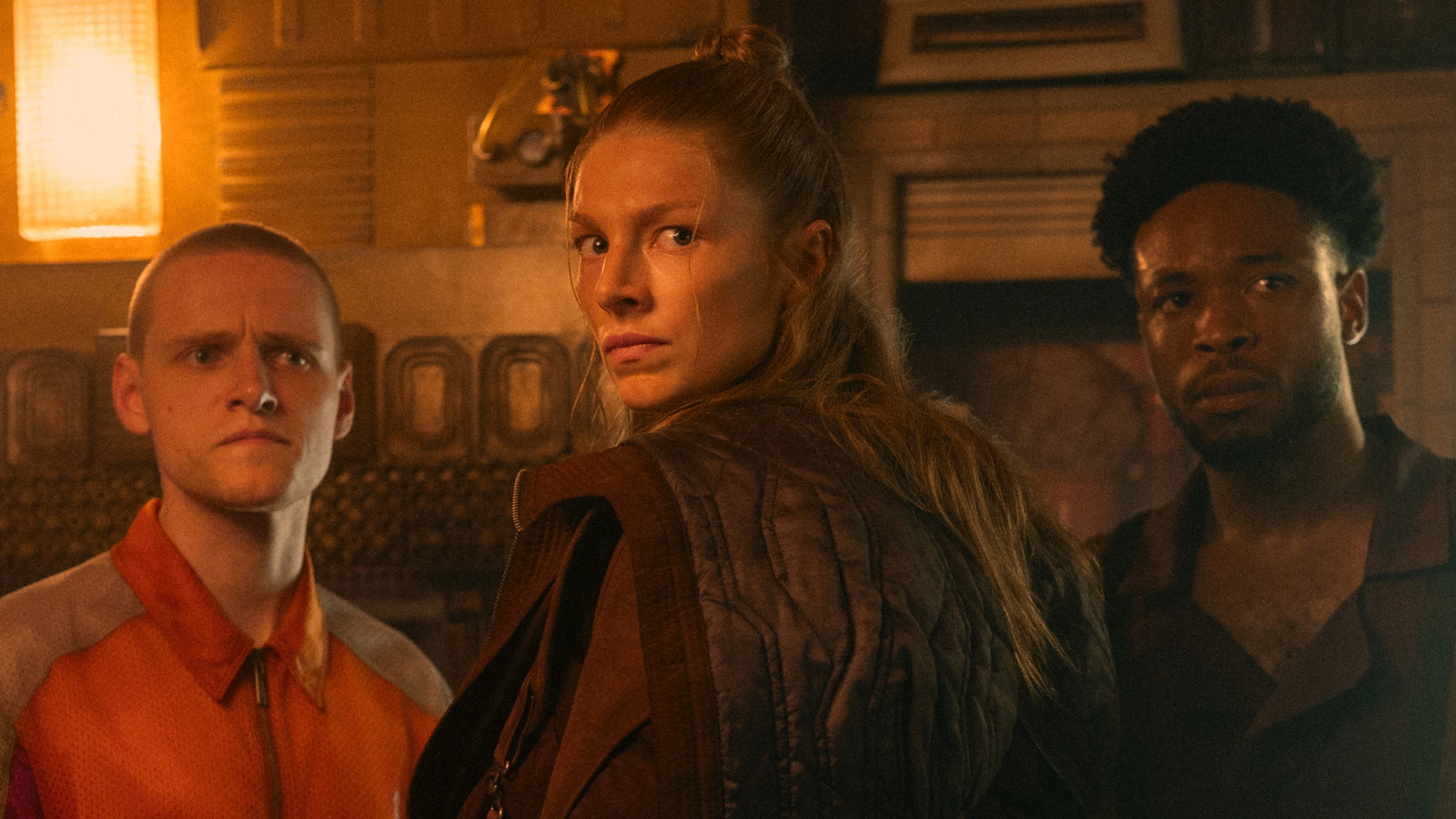
This sets up a fascinating thematic reversal. In the original 1982 film, replicants fought desperately for more time to extend their brief existences. In Blade Runner 2099, an entire ruling class of synthetic beings appears to be hunting for immortality, suggesting that the pursuit of endless life is the ultimate equalizer between creators and their creations.
Official Responses and Creative Vision
The transition of the Blade Runner universe from the silver screen to a prestige television format has been guided by a meticulous creative team determined to honor the visual and philosophical legacy of Ridley Scott and Denis Villeneuve.
Showrunner Silka Luisa, speaking during interviews surrounding the NYCC panel, shed light on the profound existential themes anchoring the narrative. Addressing the unique tragedy of the replicants’ awareness of their own mortality, Luisa explained the psychological architecture driving characters like Michelle Yeoh’s Olwen:
"Blade Runner has always been about mortality. Part of the human experience is dying, and it’s inevitable, and replicants know exactly when they’re going to die, which in some ways makes it even harder because it’s sooner than it should be. And that knowledge, I don’t know if we’re meant to have that. Can you ever stop fighting the desire to want to be here and to see how the story continues? That felt very fundamental."
This deep-rooted exploration of life, time, and consciousness is designed to run through all eight episodes of the first season. Rather than relying solely on action and dystopian world-building, the creative team has emphasized that Blade Runner 2099 will maintain the slow-burn, noir-infused investigative pacing that defined its cinematic predecessors, updated for modern serialized television storytelling.
Implications for the Science Fiction Genre
The arrival of Blade Runner 2099 carries significant implications not only for Prime Video’s streaming slate, but for the science fiction genre as a whole.
Adapting a cinematic masterpiece into a television series is notoriously difficult, particularly when the source material is defined by specific aesthetic signatures, atmospheric world-building, and high-concept philosophical inquiries. By shifting the power balance—placing replicants in charge of a broken planet while humans fight for survival from the margins—the series avoids simply retreading the tropes of the first two films.
Furthermore, the concept of a human posing as an artificial lifeform turns the classic Turing test paradigm on its head. In past stories, characters had to prove they were human, or androids had to pass as human to blend into society. Now, a human must suppress her organic nature and fake synthetic traits just to survive in a world managed by algorithms, bioengineered labor forces, and cold bureaucratic efficiency.
As streaming platforms increasingly lean toward safe, recognizable intellectual property, Blade Runner 2099 is taking a daring narrative risk. By leaning heavily into themes of identity, systemic power shifts, and the psychological torment of knowing one’s expiration date, the series signals that it intends to engage with the deep intellectual legacy of Philip K. Dick’s original source material (Do Androids Dream of Electric Sheep?).
With all eight episodes dropping simultaneously on November 25, 2026, audiences will soon discover whether this world ruled by replicants can live up to the towering legacy of the cinematic icons that came before it.
