
The Ink of the Soul: Shuichi Okita’s Satoko Always is a Masterful Ode to the Creative Spirit
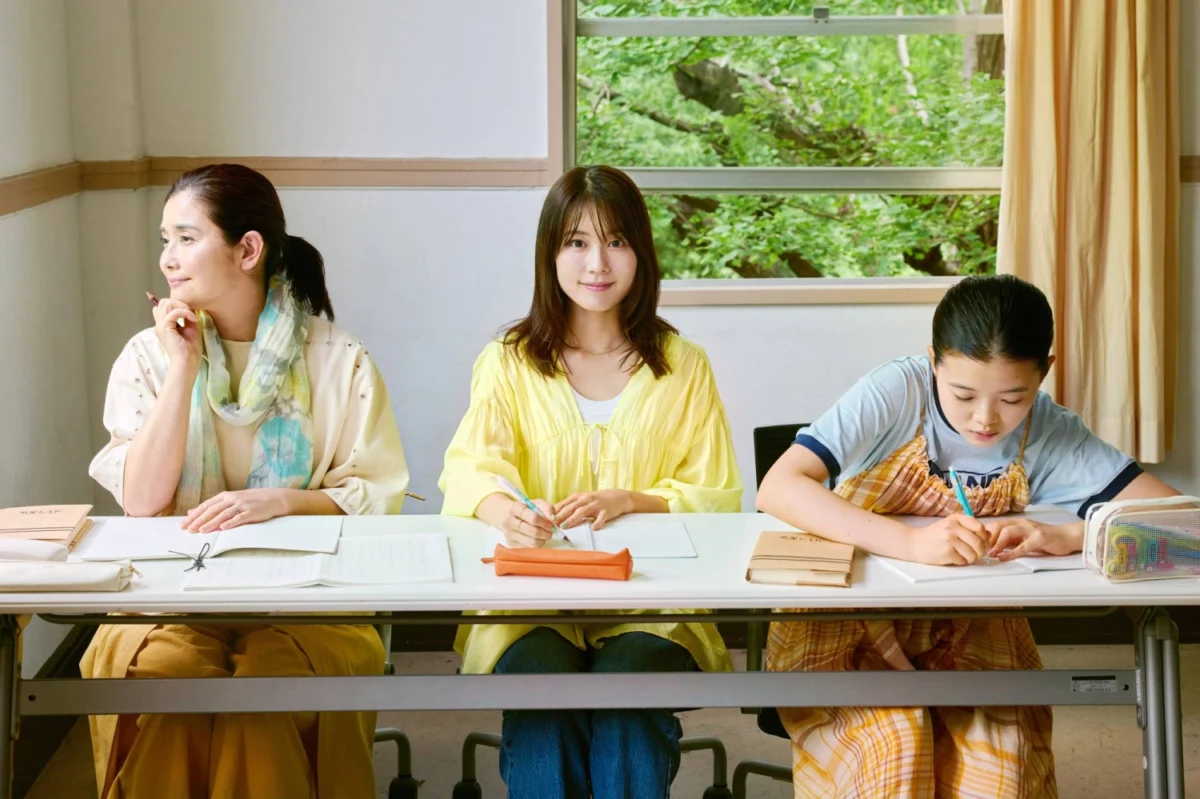
In the landscape of contemporary Japanese cinema, few directors possess the whimsical, humanistic touch of Shuichi Okita. With his latest feature, Satoko Always, the director of The Woodsman and the Rain and The Story of Yonosuke has crafted a cinematic tapestry that is as much about the act of writing as it is about the women who wield the pen. Premiering to significant buzz in the competition section of the Busan International Film Festival, Satoko Always explores the lives of three women who, despite being total strangers, share a name, an age-defying resonance, and a newfound compulsion to translate their internal worlds onto paper.
A Tripartite Portrait: The Structure of Satoko Always
At the heart of the film lies a clever, metatextual conceit. The narrative is divided into three distinct chapters, each centered on a woman named Satoko. While the film explicitly states that these are not the same person, Okita invites the audience to perceive them as reflections of one another—fractured facets of a singular, universal female experience.
The film serves as a showcase for a diverse acting triumvirate. Kasumi Arimura, a titan of the modern Japanese screen, headlines the production with a performance of quiet, desperate intensity. She is expertly balanced by the seasoned grace of veteran actress Hikari Ishida and the breakout, star-making performance of Kashun Himeno, whose portrayal of a junior high schooler stands as the film’s emotional anchor.
The Junior High Schooler: Satoko Nakai’s Awakening
The film opens with a sequence that perfectly encapsulates Okita’s blend of the mundane and the magical. We meet Satoko Nakai (Himeno), a plucky teenager suffering from allergic rhinitis. In a moment of charming awkwardness, she is introduced with a nebulizer pressed to her face—only for the scene to transform into a meet-cute when her crush, the handsome Hayase (Toharu Ogawa), arrives for the same treatment.
Their relationship develops in the sterile, humdrum environment of an ENT clinic, a setting that Okita renders intimate and romantic. When a bout of exhaustion causes Nakai to fall asleep during a mandatory kabuki performance, she faces a classic student dilemma: how to write a report on something she didn’t see. Her choice to fabricate a fictional account earns the praise of her teacher, Ms. Terao (Yoh Yoshida), who recognizes a dormant creative spark. This encourages Nakai to pen a love letter to her favorite food—fermented shrimp (shiokara)—which serves as a beautifully transparent veil for her budding feelings for Hayase.
The Professional: Satoko Nishida’s Mid-Life Crossroads
The narrative shifts to the thirty-something Satoko Nishida (Arimura), a film publicist struggling with the friction between professional ambition and personal stagnation. As she works on a marketing campaign for a Korean baseball drama, her life outside the office is defined by a clandestine and perilous affair with a business associate, Muramoto (Joe Odagiri).
Okita uses the character of Nishida to explore the blurred lines between fiction and reality. Just as she consumes romance-heavy K-dramas, she begins to write her own, using the act of storytelling as a psychological life raft after a traumatic, near-fatal hospital incident. The transition between Nakai and Nishida is seamless, with the recurring motif of shiokara serving as a sensory bridge between the two women.
The Homemaker: Satoko Iijima’s Empty Nest
The final act introduces us to Satoko Iijima (Ishida), a woman who has spent years in the role of the devoted wife and mother. As her youngest son, Shota (Mansaku Takada), prepares to leave for university, Iijima faces the existential crisis of the "empty nest." In her search for purpose, she returns to the memories of a childhood sweetheart. Her process of "writing" the past is brought to life through a visually daring hybrid of live-action and stop-motion animation, signaling that for Iijima, storytelling is a way to reclaim the agency she surrendered to domesticity.
Supporting Data and Production Context
Having debuted in Japan last month to strong domestic reception, Satoko Always arrives in Busan with significant momentum. The film is widely expected to secure robust distribution deals across Asian territories and select Western markets, driven by the star power of Arimura and the consistent, high-regard reputation of Okita.
The production design of the film deserves specific mention for its tactile obsession. Okita, working alongside his cinematographer, captures the physical reality of the writing process with startling clarity. Whether it is the scratching of a pencil on paper, the rhythmic tapping of a keyboard, or the focused macro-shots of a cursor blinking on a screen, the film treats writing as a physical labor—a form of sculpture. This attention to detail reinforces the film’s thesis: that writing is not merely a cerebral exercise, but a visceral way to anchor oneself in reality.
Artistic Intent: The Director’s Perspective
In interviews surrounding the film’s international rollout, Shuichi Okita has spoken at length about his desire to honor the act of writing as a form of self-preservation. "We write not for the applause of the masses, but for the sanity of the individual," Okita noted.
By avoiding the common cinematic trope of pitting female characters against their male counterparts, Okita has crafted a film that feels remarkably balanced. Satoko Always is a celebration of womanhood that seeks to uplift, finding strength in the vulnerabilities of its leads rather than in their capacity to dominate others. The film’s "gently assured touch" is a hallmark of a director who has matured into a master of the character-driven narrative.
Implications for Global Cinema
The success of Satoko Always at international festivals like Busan highlights a growing global appetite for films that prioritize emotional interiority over high-stakes external conflict. In an era dominated by large-scale franchises, Okita’s work stands as a reminder of the power of the intimate, the specific, and the human.
The "Satoko" Phenomenon: Why Names Matter
Critics have noted that the use of the same name for three different women is more than just a stylistic quirk; it is an invitation to consider the anonymity of the creative process. By tethering three vastly different life stages—adolescence, young adulthood, and motherhood—to one name, Okita suggests that the impulse to create is a constant, a baseline human function that remains with us regardless of our circumstances.
A New Standard for Character Studies
The performances in Satoko Always are likely to feature prominently in upcoming awards discussions. Kashun Himeno’s turn is already being hailed as a defining performance of the year, providing a raw, unvarnished look at the intensity of first love. Simultaneously, Kasumi Arimura continues to prove why she is one of Japan’s most versatile actresses, perfectly embodying the melancholic, slightly detached persona of a professional who has lost the thread of her own story.
Conclusion: An Invitation to Create
Ultimately, Satoko Always is a film about the necessity of the "creative voice." It posits that every individual, regardless of their social standing or personal turmoil, has a story that deserves to be told. Whether written in a notebook, typed on a screen, or animated in the mind, the act of storytelling is presented as the most fundamental way of processing the complexities of existence.
As the film continues its festival run, it leaves audiences with a profound question: what story are you waiting to write? By stripping away the ego and focusing on the tactile, messy, and deeply personal act of composition, Shuichi Okita has not only created a beautiful film but has also provided a blueprint for how we might better understand ourselves. Satoko Always is a rare, luminous triumph—a work of art that insists, with quiet conviction, that we are all, in our own way, the authors of our own lives.
