
A Monumental Leap for Stop-Motion: Travis Knight and Laika Return with the Epic ‘Wildwood’
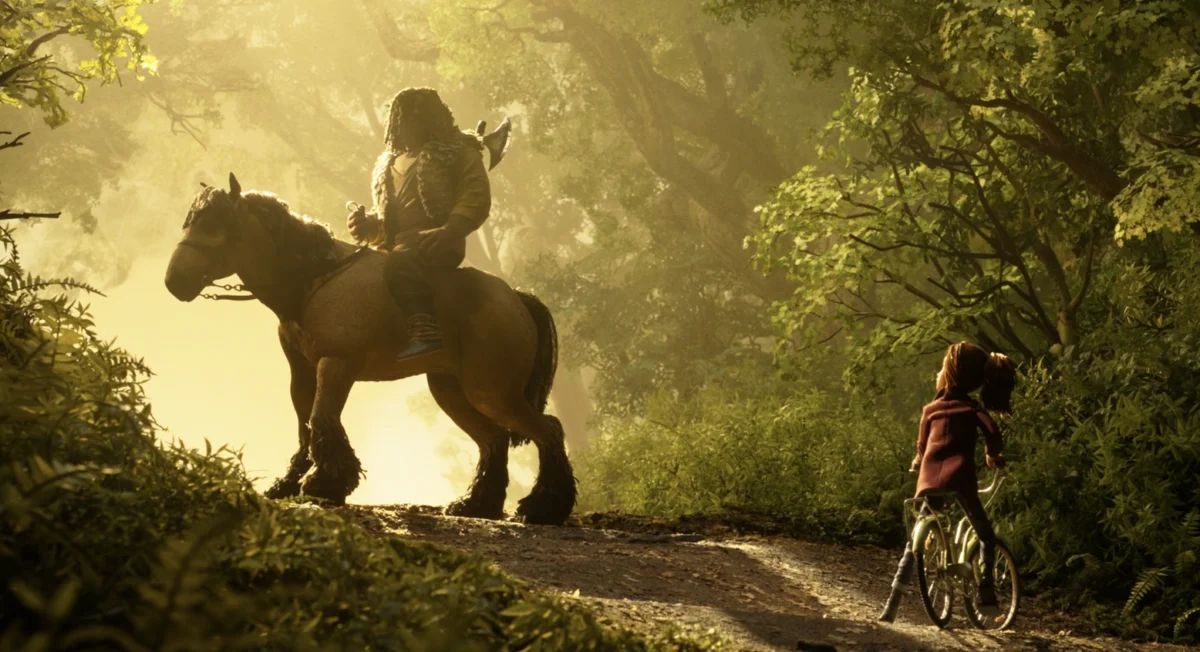
Laika, the Oregon-based stop-motion animation studio renowned for pushing the boundaries of the medium, has returned with its most ambitious, sprawling, and visually arresting project to date. Directed by studio chief Travis Knight, Wildwood adapts Colin Meloy’s 2011 fantasy novel—itself brought to life by the distinct illustrations of Carson Ellis and the narrative adaptation of screenwriter Chris Butler. Premiering at the 2026 London Film Festival ahead of a nationwide theatrical release via Fathom Entertainment on Wednesday, October 23, the film stands as a testament to uncompromising artistic vision in an industry increasingly dominated by cost-cutting shortcuts and digital homogenization.
Clocking in as the longest and most expansive movie of its kind ever made, Wildwood tells a complex story of grief, coming-of-age, and the fragile boundary between reality and imagination. Yet, for all its staggering technical achievements and breathtaking aesthetic design, the film walks a tightrope. It serves simultaneously as a celebration of everything that makes Laika a singular force for good in modern cinema and as its least emotionally enchanting feature to date—proving that even the most meticulous hand-crafted care cannot always completely mask a conventional narrative framework.
Chronology of Production and World-Building
The journey to bring Wildwood to the screen has been years in the making, reflecting the painstaking nature of Laika’s signature craft. Production on the sprawling fantasy epic spanned an astonishing 1,155 days, pushing animators and technicians to new extremes.
The story kicks off in a hyper-detailed, lovingly recreated miniature vision of Portland, Oregon. Teenage protagonist Prue McKeel (voiced by Peyton Elizabeth Lee) finds herself desperate to move past childhood fairy tales. Her father, Mr. McKeel (Jake Johnson), has long filled her head with stories about the "Impassable Wilderness" lying just on the other side of the St. Johns Bridge—a mystical, forbidden forest that humans were never meant to enter.
When Prue takes her toddler brother, Mac, downtown against her parents’ wishes, the unthinkable happens. A massive, terrifying murder of computer-augmented crows swoops down and abducts the infant, carrying him straight toward the fog-shrouded woods across the Willamette River. Determined to rescue her brother, Prue enlists the help of her nerdy, tabletop-gaming classmate Curtis Mehlberg (Jacob Tremblay).

Upon crossing the railroad tracks into the enchanted forest, the children are immediately thrust into a high-stakes geopolitical conflict. They encounter a fascistic talking coyote voiced by Tom Waits and are pulled into the orbit of Alexandra (Carey Mulligan), a grief-stricken dowager governess who has conscripted the forest’s animals into an uncertain war. Alexandra’s pain over the loss of her son has curdled into a tyrannical obsession with controlling the realm—specifically through a sentient, powerful breed of wild ivy. From there, Prue and Curtis are separated, thrusting them into separate, perilous trials involving owl monarchs, bandit kings, and bureaucratic human captors before the film’s climactic, sweeping battles unfold.
Supporting Data and Technical Marvels
To bring this Pacific Northwest fantasy to cinematic life, Laika marshaled an unprecedented arsenal of physical and digital resources. The production metrics alone read like a masterclass in industrial artistry:
- 142,000: The number of distinct 3D-printed face models utilized to capture the characters’ vast emotional range.
- 728: Individual trees hand-molded by studio artisans to construct the flora of the Impassable Wilderness.
- 715+ miles: The total amount of brass wire deployed throughout the 1,155-day production schedule to rig and pose puppets.
- 2,804: Total shots in the film, of which 670 were augmented using CGI in collaboration with Wētā FX.
While Laika remains the gold standard for tactile stop-motion artistry, the heavy reliance on digital augmentation for cannon explosions, marching coyote armies, and surging walls of ivy introduces a curious paradox. The digital environments are so seamless—and yet so fundamentally impossible for human hands alone to manipulate—that they occasionally border on the uncanny, testing the boundaries of the studio’s traditional aesthetic.
Furthermore, the financial realities of Laika’s model remain stark. With a single negligible exception, each film in Laika’s catalog (Coraline, ParaNorman, The Boxtrolls, Kubo and the Two Strings, Missing Link) has cost more to produce and grossed less than its predecessor. Backed by Nike co-founder Phil Knight and run by his son Travis Knight, the studio operates with a rare financial safety net, absorbing losses that would spell immediate doom for any other animation house on Earth.
Official Responses and Creative Intentions
Speaking on the creative philosophy behind Wildwood, Travis Knight and his collaborators have continually emphasized a desire to push young audiences out of their comfort zones, embracing a Ghibli-esque maturity that few American studios dare to attempt.

The film’s PG-13 rating is earned from its opening scenes, leaning into a dark, melancholic tone that explores the stages of grief. Carey Mulligan’s performance as the tormented Alexandra anchors the film’s thematic weight, channeling the archetype of classic literary villains—blending elements of Jadis, Saruman, and the Evil Queen—while grounding her motivations in genuine heartbreak.
Colin Meloy’s original novel provided a rich, whimsical foundation, though screen adapter Chris Butler faced the immense challenge of compressing a sprawling fantasy text into a cohesive 131-minute narrative. While voice contributions from industry staples like Mahershala Ali (as bandit king Brendan), Richard E. Grant (as the theatrical Owl Rex), Charlie Day, and Awkwafina inject vibrant personality into the ensemble, the sheer density of characters occasionally leaves supporting figures feeling undercooked.

‘Wildwood’ (Laika)
Implications for the Animation Industry
Wildwood arrives at a precarious crossroads for the film industry. At a time when major studios consistently lean toward animation shortcuts, algorithmic trend-chasing, and low-risk IP extensions, Laika’s insistence on spending years hand-crafting a physical world feels like an act of artistic rebellion.
Yet, the film’s narrative struggles hold profound implications for the studio’s future storytelling trajectory. While Wildwood is an undeniable visual smorgasbord, its narrative compromises—diluting Prue’s self-discovery amidst a parade of creatures and spreading thin the emotional arc of Curtis and the McKeel parents—demonstrate that technical brilliance cannot entirely substitute for narrative tight-roping. The film strains so hard to balance kid-friendly adventure with adult meditations on letting go that it occasionally fails to fully satisfy either demographic.
Nevertheless, these flaws ultimately mirror the film’s core message: that magic and beauty can persist in our lives even after innocence gives way to something mottled, complicated, and imperfect. As one wise character remarks to Prue in the film, "You’re so intent on seeing no magic in the world, but you miss it in every blade of grass and budding flower."
Even if Wildwood falls slightly short of the narrative heights achieved by Kubo and the Two Strings or Coraline, it remains a monumental, breathtaking achievement. It proves that Laika has not lost its soul, cementing the studio’s status as a vital, irreplaceable national treasure in modern cinema.
Grade: B-
