
Luca Guadagnino’s Artificial Storms the 2026 New York Film Festival and Instantly Rewrites the Oscar Race
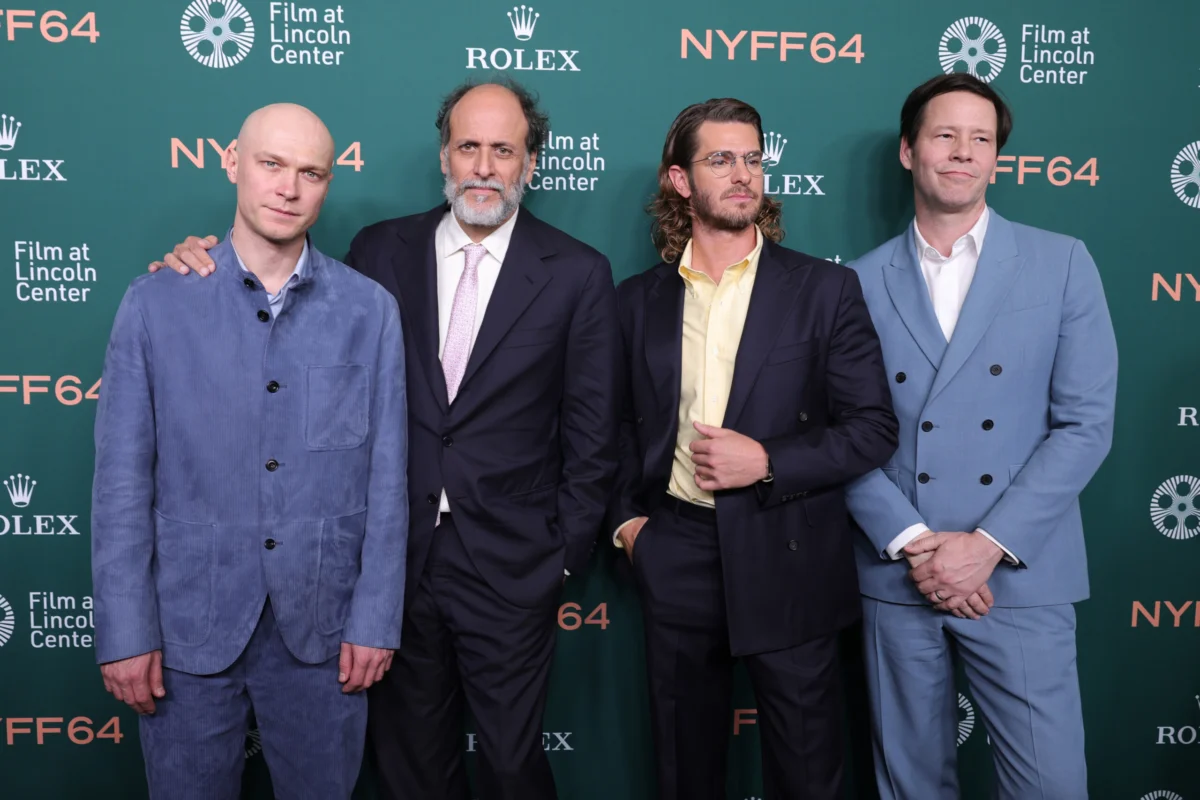
Main Facts: A High-Stakes Silicon Valley Satire Takes Center Stage
The 2026 New York Film Festival (NYFF) hosted one of the most anticipated and dramatic world premieres of the awards season cycle with the screening of Luca Guadagnino’s Artificial. Stripped of any actual generative artificial intelligence in its production—save for the digital age subject matter playing out onscreen—the seriocomic feature offers a razor-sharp, behind-the-curtain peek into the messy, high-stakes origin story of OpenAI.
Originally developed and subsequently dropped by Amazon MGM, the project found a passionate new home with distributor Neon, which slated the film for a high-profile Christmas Day theatrical release. However, rather than keeping the movie locked in a vault until the holidays, Neon rolled out a surprise world premiere at Alice Tully Hall. The timing could not have been more calculated or more explosive: it unspooled on the exact same day Aaron Sorkin’s rival tech-drama, The Social Reckoning, held its final press screenings ahead of its October 9 opening.
The back-to-back presentations immediately galvanized the critical establishment. As the lights came up at Lincoln Center, industry insiders and awards pundits were left drawing direct comparisons between the two films. The prevailing sentiment echoing through the lobby was clear: Guadagnino had successfully upstaged Sorkin’s latest endeavor. "Guadagnino just ate Sorkin’s lunch," one prominent critic was overhead declaring in the crowd.
Starring Andrew Garfield as OpenAI mastermind Sam Altman, Ike Barinholtz as a larger-than-life Elon Musk, and breakout star Yura Borisov as chief scientist Ilya Sutskever, Artificial immediately vaults itself into the upper echelon of 2026–2027 Academy Award conversations.
Chronology: From Terrifying Tech Warnings to the Lincoln Center Red Carpet
The genesis of Artificial stretches back years before ChatGPT became a household phrase. Screenwriter Simon Rich, a former Saturday Night Live staff writer, recently revealed that the film’s narrative engine was born from a personal place: his childhood friendship with OpenAI engineer Dan Selsam.
"About a year before ChatGPT was released, he showed us stuff on his computer that was so terrifying that I felt the urge to warn people," Rich explained during the festival’s post-screening Q&A. When traditional journalism failed to capture the existential weight of the technological shift, Rich pivoted to fiction. "As a last-ditch effort to warn mankind, I wrote this movie."

Tracing a twenty-year timeline from 2003 through the dawn of modern generative AI, the screenplay evolved into a living document during production. Garfield noted that the script remained fluid as real-world headlines about Altman and OpenAI broke daily. "As soon as something went on the public record, we could include it," the actor recalled.
After navigating turbulent waters that included being jettisoned by Amazon MGM, Neon swooped in to rescue and champion the film. The triumphant October 5 world premiere at Alice Tully Hall during the 64th New York Film Festival established Artificial not merely as a commercial play, but as a formidable, critically validated contender for the upcoming awards circuit.
Supporting Data and Production Insights: Inside the Mind of the Tech Titans
While Artificial tackles complex mathematical, ethical, and computational themes, director Luca Guadagnino emphasized that the human element remained his core focus. Addressing the press at Lincoln Center, Guadagnino noted the inherent contradiction of the subject matter.
"As much as AI belongs to a world of mathematics and computers… it’s still generated by people," Guadagnino observed. "This film is trying to be a deep exploration of the interaction between people where there is a total lack of desire, but a total desire to prevail."
The production’s commitment to capturing the psychological paradox of Silicon Valley’s elite translated into uniquely nuanced performances. Garfield resisted the temptation to turn Sam Altman into a flat caricature. Drawing on his initial impression of Altman testifying before Congress—an experience Garfield described as "hopeful and reassuring"—the actor sought to ground the character in genuine ambition before interrogating the moral hazards of handing over human autonomy and data to tech monopolies.
Similarly, Ike Barinholtz approached his portrayal of Elon Musk by following Guadagnino’s counterintuitive directive: focus not on external judgments, but on what Musk genuinely loves about himself. Set primarily in 2014—an era when public perception of Musk leaned heavily toward savior rather than disruptor—Barinholtz balanced a god-complex energy with sharp comedic timing.

Adding to the film’s artistic pedigree, the soundscape features an evocative score and original music by Blur frontman Damon Albarn. The NYFF screening memorably opened with Albarn performing "The Saddest Song," a haunting track featured during a critical narrative pivot near the film’s conclusion.
Official Responses and Creative Perspectives
The cast and crew spoke candidly about the tightrope walk required to balance dark comedy with prophetic warnings about artificial intelligence.
Garfield reflected on the dual responsibility of portraying a living tech icon while critiquing the systemic transfer of societal power. "I feel a tremendous amount of compassion for what that must feel like being on the inside of his soul," Garfield said of Altman. "At the same time, the deeper responsibility we all felt was to try to do some interrogation of who we’re giving all of our autonomy, power, and data to."
Barinholtz highlighted how Guadagnino utilized comedy to expose the absurdities of tech culture. Describing the director as one of the funniest people he has ever met, Barinholtz explained how shooting scenes where subordinates gaze at Musk with near-religious awe created a volatile, high-status energy that naturally exposed the underlying dynamics of bullying and unchecked ego.
Simon Rich defended the film’s comedic framing, arguing that humor is the most effective vessel for delivering a serious warning to humanity. By wrapping dystopian anxieties in sharp satire and rapid-fire dialogue, Artificial avoids feeling like an academic lecture or a dry corporate manual.
Implications: The 2027 Oscar Race Landscape
With its festival debut successfully behind it, industry prognosticators are aggressively recalculating how Artificial will perform across major Academy Award categories.

Best Picture
Though The Social Reckoning enters the race with massive pre-release hype, early critical consensus suggests it may stumble on its path to a Best Picture nomination. This leaves an opening for Artificial to capture the zeitgeist as the definitive "Big Tech is dangerous" film of the year. While Guadagnino’s past directorial efforts—such as Challengers, Queer, and After the Hunt—have occasionally faced friction with traditional Oscar voting blocs, the timely subject matter and infectious comedic rhythm give this feature a distinct edge. It may not boast the instant quotability of David Fincher’s The Social Network, but it possesses enough stylistic flair to sneak into the final Best Picture slots.
Best Actor & Best Supporting Actor Strategy
In a clever distribution and campaign maneuver, Neon is positioning Andrew Garfield in the Best Supporting Actor category, while breakout Anora star Yura Borisov enters the Best Actor race. Borisov portrays Ilya Sutskever, tracking the character’s journey from idealistic tech student to a morally compromised baron.
Garfield’s supporting campaign capitalizes on his industry standing and previous nominations. Playing Altman as a hybrid of earnest disruptor and Hitchcockian villain, Garfield delivers a performance that lingers long after the credits roll, making him an early frontrunner in a historically volatile supporting category.
Best Score and Best Original Song
Damon Albarn’s involvement elevates the film’s below-the-line prospects. With "The Saddest Song" serving as an emotional anchor and the broader soundscape winning praise from early audiences, Albarn is well-positioned to contend in both the Best Original Score and Best Original Song races when Oscar night arrives in 2027.
