
The Art of the Impossible: Laika’s ‘Wildwood’ Sets a New Benchmark for Stop-Motion Mastery
“Enjoy handmade art before it’s gone forever.”
These words, fleetingly glimpsed on a sign in the bustling, artisanal streets of Portland, Oregon, serve as more than just a background detail in the opening act of Wildwood. They are a cheeky, self-aware manifesto for director Travis Knight and the team at Laika, the independent animation studio that has spent the last fifteen years defying the digital homogeneity of the modern film industry.
Wildwood, the studio’s sixth feature, is a sprawling, 130-minute opus of tactile ingenuity. In an era where the “uncanny valley” of slick, algorithm-generated computer graphics often dominates the multiplex, Wildwood stands as a defiant, thumb-printed monument to the human hand. It is, quite simply, a stunner—a film that proves that even in the age of AI and hyper-rendered digital assets, the painstaking, frame-by-frame devotion of stop-motion animation remains the most emotionally resonant medium in cinema.
The Evolution of an Independent Titan
To understand the weight of Wildwood, one must look at the trajectory of Laika. Since their 2009 debut with Henry Selick’s Coraline, the studio has carved out a niche that blends gothic whimsy with profound emotional stakes. While films like Missing Link leaned into a lighthearted, comedic register, the studio has consistently demonstrated a willingness to experiment.
The turning point for the studio’s scale was 2016’s Kubo and the Two Strings. Under the direction of Travis Knight, Kubo proved that the miniaturist medium of stop-motion could support epic, widescreen fantasy without losing the intimacy of the puppets themselves. Wildwood acts as the culmination of these efforts, pushing the technical boundaries even further. By expanding the runtime to over two hours, Knight has crafted a narrative that traverses the spectrum from gothic fairytale to visceral, high-stakes fantasy warfare, cementing Laika’s status as the industry leader in high-end animation craftsmanship.
A Narrative Odyssey: From Portland to the Impassable Wilderness
Based on the sprawling, 500-page novel by Colin Meloy—the frontman of the indie folk band The Decemberists—Wildwood takes a familiar genre framework and elevates it through superior execution. The film follows Prue, a precocious 12-year-old girl living in a quintessential Portland suburb, voiced with grounded vulnerability by Peyton Elizabeth Lee.
Prue’s world is one of “oatmealy” normalcy, presided over by bohemian, overprotective parents (Jake Johnson and Maya Erskine). The local lore of their town is dominated by the “Impassable Wilderness,” a dense, forbidden forest that serves as the story’s primary crucible. When Prue’s infant brother, Mac, is snatched away by a murder of crows in a sequence that feels both Hitchcockian and nightmarish, the film sheds its suburban skin.
Prue, accompanied by her nerdy but loyal classmate Curtis (Jacob Tremblay), plunges into the woods. What follows is a dizzying, surreal trek through an ecosystem ruled by military coyotes, sentient birds of prey, and a complex hierarchy of human outcasts and sorcerers. At the center of this web is the Dowager Governess, voiced by Carey Mulligan, a character whose heartbreak fuels a war that threatens to consume the entire forest.
The Anatomy of a Masterpiece: Chronology and Craft
The film’s tone is established within the first ten minutes, which serves as a stark warning to audiences. The PG-13 rating is well-earned, beginning with a sequence of profound, disorienting tragedy: a young boy in a woodland castle leaps to his death, only to be revealed as a shattered android. It is a moment of cold, mechanical horror that immediately establishes that Wildwood is not a film content to talk down to its audience.
The Production Timeline
The development of Wildwood represents a multi-year labor of love that parallels the complexity of the narrative itself:
- Pre-Production: Extensive character design and miniature building, focusing on the distinct ecosystems of the forest.
- Principal Photography: Utilizing Laika’s signature blend of traditional puppet animation and subtle, state-of-the-art CG augmentation to handle backgrounds and environmental effects.
- Post-Production: The integration of Dario Marianelli’s sweeping, genre-bending score, which utilizes Celtic motifs, military percussion, and contemporary acoustic elements to mirror the film’s tonal shifts.
Supporting Data: Technical Marvels and Visual Fidelity
What sets Wildwood apart is the sheer, dense detail of its art direction. Working alongside legendary cinematographer Caleb Deschanel, the animators have achieved a level of lighting that is rarely seen in the medium. Deschanel, known for his work on The Black Stallion, brings a painterly eye to the enchanted glades and the spindly, terrifying shadows of the woods at night.
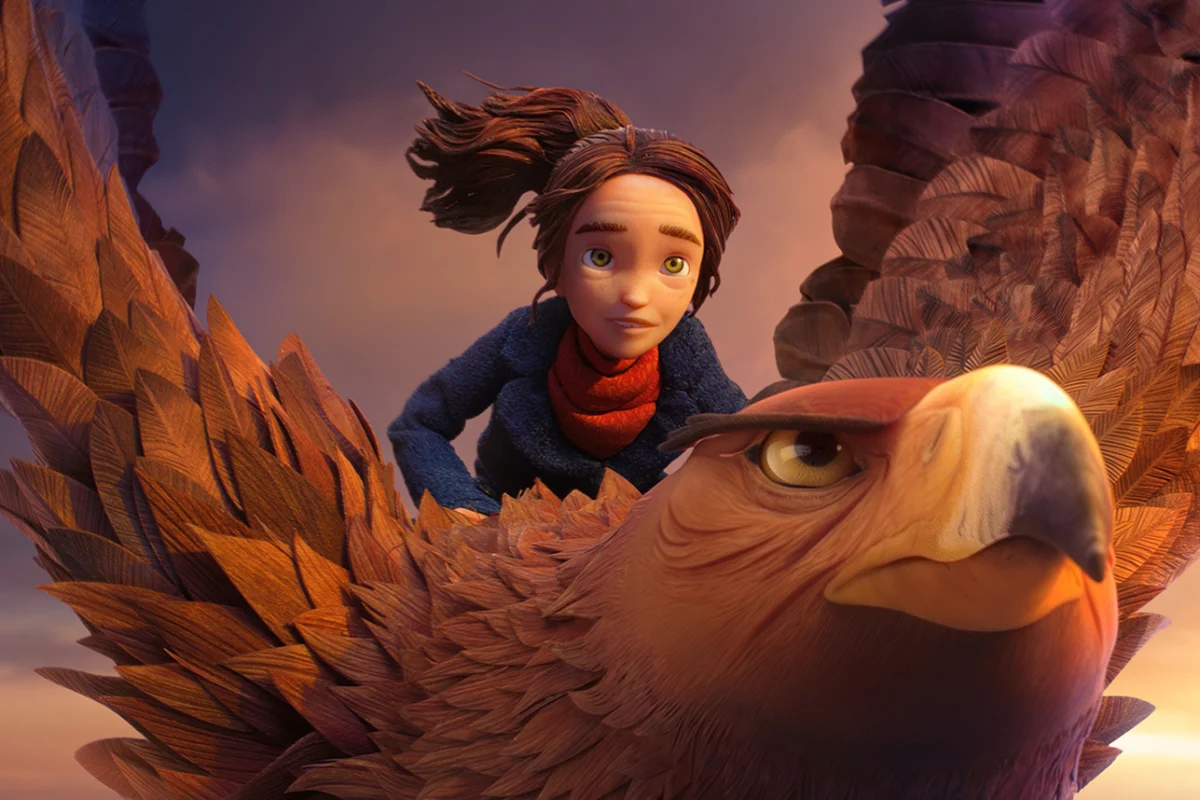
Consider the golden eagle, a creature of regal authority voiced by Angela Bassett. Every feather on its wings is a separate, articulated piece of physical art. The animators have tracked the passage of time on the foliage, showing a holy tree cycle through seasons in mere seconds, a feat of movement that feels both magical and grounded in physical reality.
The voice cast is equally vital, featuring Mahershala Ali as a gruff, gold-hearted warrior and Awkwafina as a snide but invaluable rat. Their performances, paired with the physicality of the puppets, create a sense of character depth that transcends the “cartoon” label.
Official Responses and Creative Intent
In interviews surrounding the film’s release, director Travis Knight has been clear about his mission. “We wanted to honor the tradition of fantasy literature,” Knight stated, “but we also wanted to imbue it with the tactile messiness of real life.”
The studio’s decision to adapt Meloy’s work—a book that draws heavily from the influence of C.S. Lewis, J.R.R. Tolkien, and Jim Henson—was a calculated risk. Screenwriter Chris Butler has effectively streamlined the source material, sharpening the dialogue and giving the relationships a sense of urgency that the sprawling novel occasionally lacked. The film acknowledges its inspirations openly, yet manages to carve out its own identity through sheer visual exuberance.
The Implications: Why ‘Wildwood’ Matters
The success of Wildwood has significant implications for the future of animated filmmaking. In an industry increasingly obsessed with cost-cutting and the potential for AI-generated animation, Laika’s commitment to the “handmade” is a radical act of defiance.
- The Counter-Culture of Craft: Wildwood proves that audiences are still hungry for the tangible. The imperfections—the thumbprints on the clay, the subtle grain of the wood—create a subconscious connection with the viewer that digital pixels simply cannot replicate.
- Narrative Maturity: By embracing a PG-13 rating and tackling themes of grief, abandonment, and the loss of innocence, Wildwood pushes the boundaries of what is considered “family entertainment.” It suggests that children’s cinema can be as intellectually and emotionally challenging as any prestige drama.
- Economic Sustainability: While the film is undeniably expensive to produce, its status as a “generation-crossing crowdpleaser” provides a blueprint for independent studios to compete with major conglomerates like Disney or Pixar.
Conclusion: A New Standard for Fantasy
Wildwood is a film of abundance. It is a story about the act of exploring the world—specifically the parts we are told to avoid. By venturing into the “Impassable Wilderness,” Travis Knight and his team have brought back a treasure. While the film occasionally suffers from its own ambition, with a runtime that lingers just a moment too long, it remains an entrancing, essential viewing experience.
As the final credits roll, accompanied by a closing ditty from The Decemberists, one is left with a single, resounding takeaway: handmade art is not only alive—it is thriving. In a marketplace of fleeting digital impressions, Wildwood is a permanent mark on the history of the medium, a testament to the idea that if you build something with enough love and enough labor, it becomes, in every sense of the word, real.
