
From Isolation to Empowerment: Mike Flanagan Reimagines ‘Carrie’ for the Digital Age
The horror genre has long served as a mirror for societal anxieties, but few stories have proven as malleable or as enduring as Stephen King’s debut novel, Carrie. Since its 1974 publication, the tale of a telekinetic teenager pushed to the brink by religious trauma and high school cruelty has become a cultural touchstone. Now, horror auteur Mike Flanagan—known for his masterful work on The Haunting of Hill House and Midnight Mass—brings his vision to Prime Video in a sprawling, eight-episode series that manages to breathe fresh, terrifying life into this oft-told narrative.
Premiering on October 7, this reimagining is not merely a remake; it is a profound examination of the contemporary American experience. By anchoring the story in the present day, Flanagan explores how technology, performative morality, and deep-seated social volatility create a breeding ground for the kind of destruction that King first envisioned nearly five decades ago.
A Modern Origin Story: The World of Carrie White
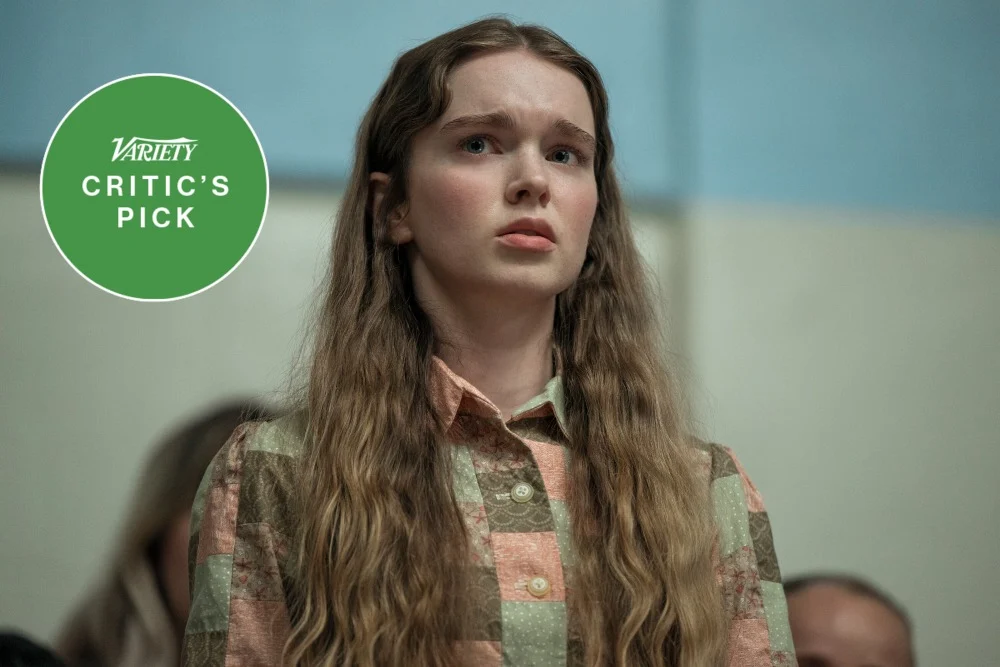
At the heart of this adaptation is Summer H. Howell, who delivers a transcendent performance as the titular Carrie White. Unlike previous iterations that framed Carrie as a passive victim, Flanagan’s version paints her as a girl possessing a fierce, untapped potential.
Carrie’s upbringing is the foundation of her tragedy. Raised by her doomsday-prepper father, Ralph (Tahmoh Penikett), and her hyper-religious, deeply unstable mother, Margaret (Samantha Sloyan), Carrie has lived in a vacuum. Her world is defined by extreme isolation, shielded from the complexities of the 21st century. When her father dies, the sudden vacuum in her life forces her into the one place she is least prepared for: a modern American public high school.
The transition is jarring. Carrie enters the halls of her new school with a wide-eyed, almost naive curiosity. She is a tabula rasa in a world that thrives on cynicism. As Flanagan deftly illustrates, society has a predatory instinct for purity; in the corridors of her new school, Carrie’s innocence is not a shield, but a target.
Chronology of a Breakdown: The Digital Crucible
The series masterfully tracks the rapid erosion of Carrie’s psyche. On her first day, she encounters the two pillars of her high school experience: Sue Snell (Siena Agudong), a senior whose empathy acts as a rare, fleeting light in the darkness, and Christine Hargensen (Alison Thornton), the quintessential antagonist who weaponizes social standing to maintain order.
The pacing of the first two episodes is particularly harrowing. Within forty-eight hours of enrolling, Carrie is thrust into a chaotic modern reality. She experiences the shock of her first menstrual cycle—a scene handled with a raw, visceral sensitivity—and is almost immediately subjected to a high-intensity, terrifying active shooter drill. For a girl who has spent her life in a bunker-like environment, these moments are not just stressful; they are seismic.
The conflict reaches a boiling point through the introduction of "Carrie Red," a malicious Instagram account curated by Christine. In this iteration, the bullying is not confined to the locker room; it is persistent, public, and algorithmic. "Carrie Red" becomes a digital stage where the student body, faculty, and administration are all scrutinized, mocked, and dismantled. This digital vitriol, paired with her mother’s suffocating, albeit strangely loving, religious zealotry, pushes Carrie toward an inevitable, explosive conclusion. The series builds toward the iconic prom night, but it does so by meticulously layering the psychological abuse that leads to the final, bloody crescendo.
Supporting Data: Why This Version Resonates
What distinguishes this series from Brian De Palma’s 1976 classic or the subsequent remakes is its scope. Flanagan expands the lore of the Carrie universe, hinting at a broader narrative where telekinesis is not a singular anomaly but a latent human potential.
Over the eight episodes, the show provides a haunting portrait of an America inundated with screen time and ideological division. By grounding the telekinesis in the context of global connectivity, Flanagan allows Carrie to transcend the borders of her small town. She begins to connect with other young women around the globe who possess similar gifts, creating a sense of destiny that elevates her from a local tragedy to a figure of cosmic importance.
Furthermore, the characterization of Margaret White deserves special note. Samantha Sloyan’s portrayal is a masterclass in nuance. While Piper Laurie’s original performance was defined by a terrifying, unrelenting cruelty, Sloyan’s Margaret is rooted in a fractured love. She is a woman who genuinely believes she is saving her daughter from the fires of hell, which makes her control even more insidious. It is this depth of character that allows the show to avoid the tropes of "evil for evil’s sake," instead grounding the horror in the genuine, tragic fractures of the human spirit.
Official Perspectives: The Creator’s Vision
Mike Flanagan has spoken extensively about the necessity of updating King’s work for the modern audience. In recent interviews, he emphasized that the core of Carrie is not the telekinesis, but the "unforgivable cost of exclusion."
"We live in a time where everyone is constantly broadcasting their lives, their opinions, and their judgments," Flanagan noted during a recent press roundtable. "Carrie White, in this version, is a character who has been silenced her entire life. When she finally finds her voice, it is a deafening, reality-altering sound. We wanted to explore what happens when the most marginalized person in the room suddenly possesses the power to rewrite the rules of the room itself."
The production team also highlighted the importance of returning agency to the female characters. "Sue, Christine, and Carrie are not just archetypes," said the show’s writing team. "They are individuals wrestling with the choice of who they want to be. Sue is forced to decide if her social capital is worth more than her moral compass. Christine is fighting against the toxicity of her own environment. And Carrie is fighting to exist in a world that demands she be either invisible or destroyed."
Implications: A New Era for Horror
The implications of this series are vast. By framing Carrie not as a victim who dies, but as a survivor who uses her pain to become "bulletproof," Flanagan is subverting the very nature of the horror story. The series suggests that the violence inherent in American society—the active shooter drills, the religious extremism, the digital harassment—is the true catalyst for the monster.
This Carrie serves as a sobering reminder that power, regardless of how it manifests, always comes at a high cost. By the time the final credits roll on the eighth episode, the audience is left to grapple with the realization that the horror was never the girl with the powers; it was the society that refused to let her be anything else.
Why This Matters for the Genre
- Genre Evolution: This series proves that classic horror can be adapted without sacrificing its roots, provided the adaptation explores new thematic territory.
- Social Commentary: By integrating social media and school safety protocols, the show acts as a time capsule for the anxieties of the 2020s.
- Character-Driven Horror: By shifting the focus toward the internal lives of the women involved, Flanagan creates a more empathetic, yet more devastating, narrative experience.
As we look toward the premiere on October 7, it is clear that Carrie will remain a subject of intense debate. It is a series that demands attention, not only for its technical prowess and stellar performances but for its refusal to look away from the darker corners of the modern human condition. Whether one is a long-time fan of Stephen King’s work or a newcomer to the story of the girl from Chamberlain, Maine, this Prime Video adaptation offers a haunting, necessary, and ultimately transformative experience.
Carrie is more than a story about a girl who can move objects with her mind; it is a story about the power of the marginalized to shake the foundations of a world that once tried to break them. Prepare yourself—October 7 will change how you look at the monsters under the bed, and more importantly, the monsters we allow to sit at the dinner table.
