
A New Era for Hollywood: The PSKY-WBD Merger, the Fight for California’s Creative Economy, and the Groundbreaking Push for a Federal Film Incentive
Introduction: The Changing Skyline of Burbank
It is a striking visual metaphor for the seismic shifts currently reshaping the entertainment landscape: high above the historic studio lots in Burbank, the iconic Warner Bros. water tower has been hastily repainted. The familiar shield now shares skyline space with the branding of "A Skydance Corporation," marking the definitive closure of the blockbuster PSKY and Warner Bros. Discovery (WBD) merger. This corporate consolidation has sent ripples of anxiety, speculation, and anticipation throughout the global entertainment industry. For decades, the water tower stood as a steadfast symbol of Hollywood’s golden age and studio stability. Today, it serves as a stark reminder that the old rules of media and filmmaking no longer apply.
While studio boardrooms merge and corporate titans recalibrate their balance sheets, the grassroots and independent pillars of the industry are forced to look far beyond the horizon. Amidst a climate of declining local production, vanishing below-the-line jobs, and runaway international shooting, organizations like Film Independent are stepping up to navigate uncharted waters. At the recent Film Independent Forum, industry leaders gathered for a pivotal panel titled The Future of Independent Film & The Creative Economy. Against the backdrop of massive corporate restructuring, the conversation quickly zoomed in on a fundamental existential crisis: How can Los Angeles, California, and the broader United States retain their crown as the cultural and economic capitals of independent storytelling?
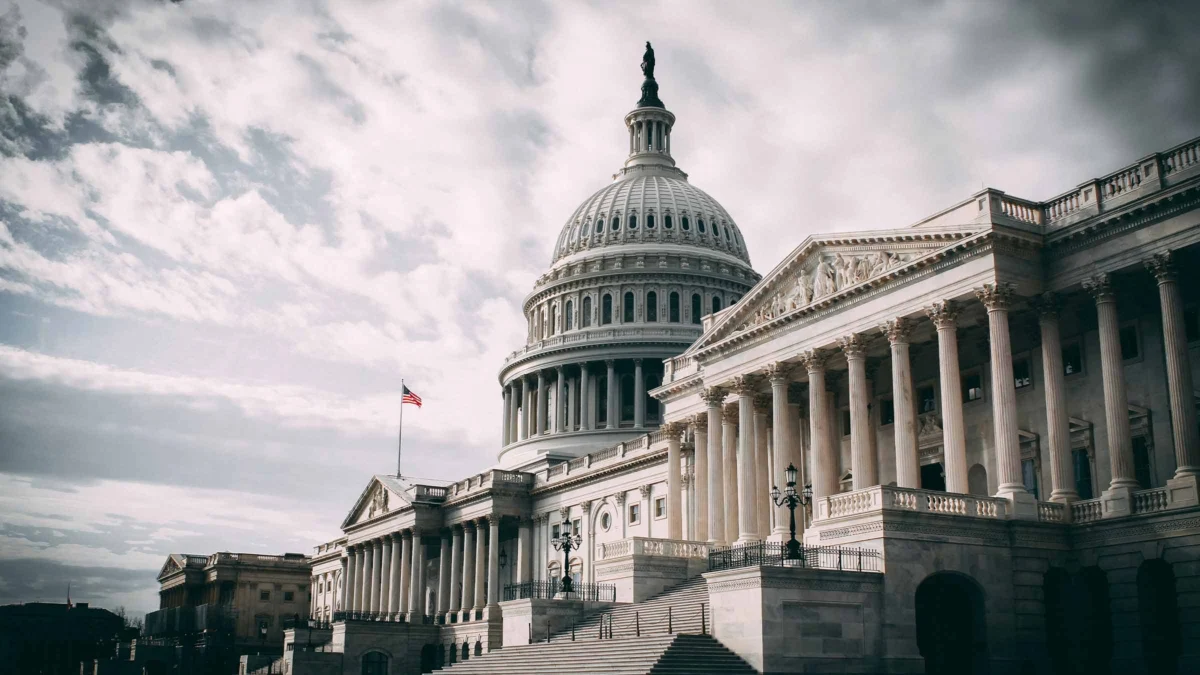
The answer, industry experts suggest, may lie in Washington, D.C., where a piece of bipartisan legislation has just been introduced that could completely rewrite the economics of domestic filmmaking.
Main Facts: The Anatomy of the Proposed Federal Incentive
To combat the steady bleeding of domestic production to foreign territories, a coalition of Washington lawmakers introduced a landmark bill on September 24, 2026: The Motion Picture, Television, and Entertainment Revitalization Act.
Hailed as a potential watershed moment for the U.S. entertainment industry, the legislation represents the nation’s first-ever national film and television production tax credit. At its core, the bill proposes a baseline 20% U.S. film incentive, with a series of strategic bonuses that could push the total tax rebate up to an unprecedented 30%.
Designed to level the playing field against approximately 65 foreign countries that currently offer lucrative subsidies unavailable in the United States, the federal incentive is structured to be fully stackable with existing state-level tax credits. Furthermore, it includes a lucrative 5% uplift for productions that spend at least $10 million across 10 different states within a single calendar year.
To qualify for this federal safety net, productions must meet specific criteria:
- A minimum domestic production spend of $1 million.
- At least 75% of total production days must take place within the United States.
- Eligible formats include narrative and documentary feature films, scripted and unscripted television series, TV pilots, animation, pre- and post-production, as well as both above-the-line and below-the-line wages.
- If passed, the legislation will apply to projects entering active production after December 31, 2026.
Crucially, the bill features a dedicated 5% bonus specifically earmarked for independent productions, as well as a 5-year bonus for filming in federally declared disaster areas. Because Los Angeles County received this designation in the wake of the devastating 2025 Palisades and Eaton fires, local indie productions shooting in LA would instantly qualify for this regional uplift through January 2030.
Chronology of Crisis and Policy: How Hollywood Reached This Crossroads
To understand the urgent necessity of the Motion Picture, television, and Entertainment Revitalization Act, one must trace the timeline of economic pressures that have battered the U.S. production sector over the past decade.
Phase 1: The Global Race to the Bottom (2015–2023)
For years, international territories recognized the massive economic engine of film and television production. Countries across Europe, Asia, and North America aggressively cultivated robust tax incentive programs, offering rebates that routinely outpaced anything available in traditional U.S. production hubs. While states like Georgia, New York, and California fought back with their own localized incentives, federal indifference left domestic producers vulnerable to the aggressive pitches of foreign economic development boards.
Phase 2: Post-Pandemic Turmoil and Labor Strikes (2023–2025)
The compounding shocks of the COVID-19 pandemic, followed by historic, industry-shaking strikes by the Writers Guild of America (WGA) and SAG-AFTRA in 2023, brought Hollywood to a temporary halt. When production resumed, studios facing post-merger austerity and economic contraction accelerated the practice of "runaway production." Projects that historically would have shot on backlots in Burbank or on the streets of Los Angeles were increasingly shipped to Vancouver, London, Budapest, and Belfast.
Phase 3: Natural Disasters and Economic Devastation in Southern California (Early 2025)
Adding insult to injury, Southern California was struck by the catastrophic Palisades and Eaton fires in 2025. The resulting devastation not only displaced communities and destroyed infrastructure but further crippled the local production ecosystem, triggering a federal disaster area declaration for Los Angeles County. Hundreds of below-the-line crew members, catering companies, equipment rental houses, and small independent businesses faced an existential financial squeeze.
Phase 4: The Legislative Breakthrough (September 2026)
Recognizing that the domestic film economy was approaching a point of no return, a rare bipartisan coalition of lawmakers banded together. On September 24, 2026, they formally introduced the Motion Picture, Television, and Entertainment Revitalization Act, setting the stage for a legislative battle in Congress and offering a renewed glimmer of hope to a struggling industry.
Supporting Data: The Stark Reality of Runaway Production
The economic disparity between shooting within the United States and filming abroad has widened to a chasm, according to industry veterans who track production expenditures.
During the Future of Independent Film & The Creative Economy panel at the Film Independent Forum, producer John Lang laid out a sobering financial comparison that stunned the audience. Lang revealed that a mid-tier feature film with a budget of $25 million to $30 million was handed a proposed transportation and logistics budget of $9 million to film on location in Atlanta, Georgia. In stark contrast, the exact same production faced a transportation estimate of just 950,000 British pounds to shoot in Belfast, Northern Ireland.
"You can’t compete with that," Lang bluntly stated to the audience, highlighting the sheer impossibility for domestic producers to absorb runaway logistics costs without government intervention.
Joe Chianese, Senior Vice President for Incentives at Entertainment Partners, echoed these sentiments while analyzing the mechanics of the newly proposed federal bill. Pointing out that approximately 65 nations currently dangle incentives that leave U.S. producers at a disadvantage, Chianese emphasized the revolutionary nature of stackable federal and state credits.
"If it passes and it stacks clean, shooting in Georgia or California or New York is the best deal on the planet," Chianese noted in a recent interview. "Nothing overseas comes close."
Official Responses and Bipartisan Momentum
The Motion Picture, Television, and Entertainment Revitalization Act has achieved something increasingly rare in contemporary American politics: genuine, cross-aisle alignment.
The legislation has garnered crucial backing from the White House, alongside a powerhouse group of congressional sponsors representing diverse geographic regions and political viewpoints. The bipartisan roster includes:
- Senator Adam Schiff (D-California)
- Representative Laura Friedman (D-California)
- Senator Tim Scott (R-South Carolina)
- Representative Tim Moran (R-Texas)
Notably, Representatives Friedman and Moran serve as founding members of the Congressional American Film & TV Production Caucus. This caucus acts as a dedicated vehicle to educate fellow lawmakers on the vital national security, cultural, and economic importance of keeping entertainment production rooted on American soil.
Local leadership has also rallied behind the initiative. Juan Devis, President of Film Independent, delivered a passionate address during the Film Independent Forum, contextualizing the stakes for the creative community.
"For 42 years, Film Independent has championed creative independence in filmmaking," Devis told the gathered crowd. "Through our programs, labs, grants, mentorship, events and the Spirit Awards, we have helped artists and projects move from idea through development and production, and ultimately toward audiences. But the conditions in which that work is being made are changing dramatically. Los Angeles remains one of the greatest filmmaking capitals of the world, yet we have watched production decline, jobs disappear and projects move elsewhere."
Devis emphasized that Film Independent is moving beyond traditional artistic curation to actively shape the economic and regulatory frameworks governing the industry. "Film Independent wants to take a more active role in making sure these filmmakers, businesses, and jobs are represented in the economic and policy conversations shaping our future," he added. "And that is why we are gathered here today, to ask: What will it take for Los Angeles and California to remain the world’s most important and relevant home for independent storytelling?"
Implications: What the Act Means for Independent Filmmakers
While major studio mergers like PSKY and WBD dominate headline news with tales of corporate consolidation, the lifeblood of cinematic innovation has always been the independent sector. The introduction of the federal tax incentive—coupled with its specific provisions for indies—carries profound implications for how independent films are packaged, financed, and executed.
1. Talent Attraction and Packaging
Securing financing for an independent film often hinges on a single factor: casting a recognizable, marketable lead actor who can greenlight foreign sales and distribution deals. However, convincing top-tier talent to commit to an indie budget is notoriously difficult if shooting requires months of grueling travel away from home.
Producer Tom Butterfield highlighted this dynamic at the Film Independent Forum: "When you’re talking about independent film and you’re trying to go for that actor who’s going to greenlight you, if you can say you’re shooting here in LA and they get to go home every day, that makes a huge difference."
If federal and state incentives make shooting in primary domestic hubs like Los Angeles financially viable once again, independent producers will find it significantly easier to lock down A-list talent, thereby accelerating the financing process.
2. Preserving the Industry Ecosystem
The health of the entertainment industry relies on a symbiotic relationship between massive, studio-backed tentpoles and lean, agile independent productions. John Lang emphasized this delicate balance during his panel remarks, noting that independent films serve a crucial structural function.
"We fill in the gaps in the ecosystem," Lang explained. "You don’t want everyone to just have a job at a huge company. You need to have that mix of small and medium-sized businesses."
From local prop houses and specialty camera rental operations to independent catering companies and post-production mixing studios, the micro-economies surrounding film hubs depend on a steady stream of medium-and-low-budget productions. The federal incentive’s 5% independent bonus directly safeguards these local enterprises.
3. Navigating Post-Disaster Recovery in Southern California
For Los Angeles County specifically, the inclusion of the 5-year federal disaster area bonus—triggered by the 2005/2025 wildfire crises—acts as a vital economic tourniquet. Through January 2030, indie filmmakers choosing to shoot locally will enjoy a compounding tax advantage that counterbalances the skyrocketing costs of insurance, labor, and municipal permitting in the region.
Conclusion: A Resilient Path Forward
As the Warner Bros. water tower proudly displays its new Skydance branding, the message to the creative community is unmistakable: the old Hollywood is gone, and a new corporate reality has taken its place. Yet, history has proven that whenever studio monoliths consolidate, independent artists find new, innovative ways to adapt, survive, and thrive.
The Motion Picture, Television, and Entertainment Revitalization Act is not a silver bullet, nor will it instantly reverse years of globalized production shifts overnight. However, combined with the tireless advocacy of institutions like Film Independent and the fierce dedication of independent producers, writers, and crew members, the legislation represents a fighting chance.
By anchoring production back in the United States, supporting local small businesses, and providing targeted relief to independent storytellers, Washington’s proposed credit just might keep Hollywood’s beating heart right where it belongs. As the industry looks toward the enforcement deadline of December 31, 2026, all eyes remain fixed on Congress—and on a future where creative independence remains a uniquely American hallmark.
