
The Unified Frontier: Teradek Redefines Wireless Production with the Bolt 7 Platform
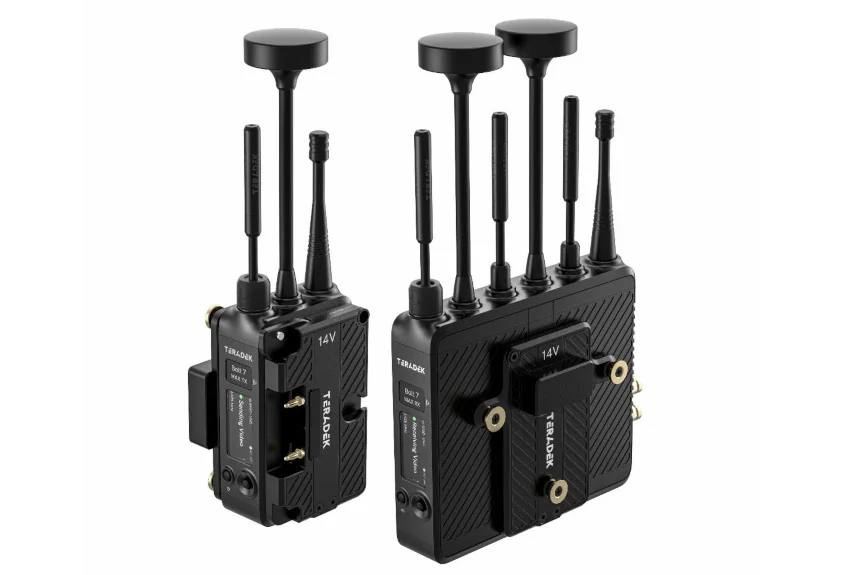
In the fast-paced world of professional cinematography and live broadcasting, the "wireless ecosystem" has long been a fragmented landscape. While zero-delay video transmission has become a staple, the auxiliary requirements—camera control, telemetry, color metadata, and Ethernet transport—have historically necessitated a cluttered array of additional networking hardware, Wi-Fi dongles, and external antennas.
With the launch of the Teradek Bolt 7, the industry leader is signaling a paradigm shift. Moving beyond the role of a mere video transmitter, the Bolt 7 functions as a comprehensive production connectivity platform. By integrating a dedicated 900MHz data channel alongside its industry-standard 6GHz zero-delay video transmission, Teradek is effectively consolidating the production data pipeline into a single, cohesive wireless architecture.
Main Facts: A New Architecture for Production Connectivity
The Bolt 7 represents the most significant architectural overhaul to the Teradek Bolt platform since its inception in 2013. At its heart, the system maintains the hallmark zero-delay performance required by high-end cinema, but it bifurcates the wireless load into two specialized channels.
The Dual-Band Advantage
The system utilizes the 6GHz frequency band for high-bandwidth, 4K HDR video transmission, ensuring that the critical visual signal remains clear and latency-free. Simultaneously, the newly integrated 900MHz radio acts as a dedicated highway for production-critical data. This separation is vital; it ensures that heavy data traffic—such as camera control signals or Ethernet packets—never competes with the primary video stream for bandwidth, eliminating the risk of interference or latency spikes common in shared-network environments.
Technical Specifications at a Glance
- Video Resolution: Up to 4096 x 2160 (4K) at 60fps.
- Color Depth: 10-bit 4:2:2 YCbCr via SDI; 8-bit 4:4:4 RGB via HDMI.
- Data Pipeline: Dedicated 900MHz radio for telemetry, camera control, and Ethernet.
- Connectivity: 12G-SDI, HDMI, and USB-C with DisplayPort Alternate Mode.
- Form Factor: Transmitter is 20% smaller than the previous Bolt 6 XT.
- Display: 2-inch full-color OLED for advanced diagnostics and pairing.
Chronology: The Evolution of the Bolt Platform
The trajectory of Teradek’s Bolt series is a history of chasing the "impossible" in wireless performance.

- 2013: The Origin: Teradek introduced the Bolt, fundamentally changing how directors and focus pullers interacted with cameras by providing a reliable, zero-delay wireless feed.
- 2019-2021: The 4K Pivot: As the industry shifted toward 4K and HDR, the Bolt 4K series standardized high-bit-depth, color-accurate monitoring, becoming the gold standard for high-end feature films.
- 2022: The 6GHz Transition: With the launch of Bolt 6, Teradek moved into the 6GHz spectrum, providing much-needed relief from the congested 5GHz Wi-Fi environments that plagued sets in metropolitan areas.
- 2025: The Bolt 7 Expansion: The announcement of Bolt 7 marks the shift from "video-only" to "connected-production." By acknowledging that the camera is now a networked device requiring constant bidirectional communication, Teradek has integrated data-transport features that were previously the domain of expensive, external, or proprietary networking solutions.
Supporting Data: Why 900MHz Matters
The decision to incorporate a 900MHz channel is a strategic response to the physical limitations of current production sets.
In the past, to control a camera on a crane or a gimbal remotely, a technician would need to establish a separate Wi-Fi network. However, on a busy set, Wi-Fi is notoriously unreliable due to interference from phones, production laptops, and other wireless gear.
Overcoming Interference
900MHz provides superior penetration and range compared to the higher frequencies used for video or standard Wi-Fi. Because it operates on a lower frequency, it is far less susceptible to physical obstructions like walls, crowd interference, or heavy metal equipment found in live broadcast environments. By embedding this into the Bolt 7, Teradek provides a "failsafe" control link that functions even when the production’s main network is struggling under the weight of dozens of connected devices.
Versatility in Connectivity
The inclusion of USB-C with DisplayPort Alternate Mode is another nod to the evolving camera market. With the rise of high-end mirrorless cameras and even mobile devices (like the iPhone 15/16 Pro) being used in professional workflows, the ability to send video and data through a single USB-C cable—and subsequently transmit that over the Bolt 7—dramatically simplifies the rigging process for compact, "run-and-gun" cinema setups.
Official Responses and Industry Implications
Teradek’s leadership has emphasized that the Bolt 7 is designed to solve the "cabling nightmare" of modern production. By streamlining the gear list, the company aims to provide more than just a piece of hardware; they are providing a workflow solution.

Implications for Cinema and Broadcast
For the cinematographer, the implication is a cleaner camera build. A smaller transmitter means less weight on the gimbal and a lower power draw. For the DIT (Digital Imaging Technician), the benefit is profound: the ability to manage color workflows and camera metadata in real-time through the same link that sends the 4K video feed.
In the realm of live broadcast, the implications are equally significant. Remote camera shading—the process of adjusting exposure and color balance from an OB truck—requires a rock-solid, low-latency connection. The Bolt 7’s ability to transport this telemetry data alongside the video signal means that broadcast engineers can maintain full control over multiple cameras without the need for additional, bulky RF gear.
A Comprehensive Ecosystem Approach
One of the most critical aspects of the Bolt 7 launch is its backward compatibility. Teradek has avoided the trap of forced obsolescence. The Bolt 7 is compatible with the existing Bolt 4K and Bolt 6 ecosystem, allowing rental houses and production companies to integrate the new technology into their existing fleets incrementally.
However, it is vital to note the distinction: while video transmission remains interoperable with older models, the advanced data-transport features are exclusive to the Bolt 7 architecture. Furthermore, the system now integrates with Teradek’s RF-X, an automated switching system that monitors signal health and dynamically selects the best feed. This synergy confirms that Teradek is moving toward a self-healing, "smart" production environment.
The Practicality of Range Classes
Teradek continues its tradition of offering three distinct range classes:

- 750: Tailored for localized, tight-knit sets where portability is paramount.
- 1500: The "workhorse" range, suitable for most commercial and episodic television sets.
- MAX: Designed for long-distance, complex setups, such as sports stadiums or large-scale, multi-stage filming environments.
All three tiers maintain the same 4K HDR fidelity, ensuring that productions of any size can leverage the new data-connectivity features without sacrificing image quality.
Final Thoughts: The Future of Connected Production
The release of the Bolt 7 is a clear indicator that the definition of a "wireless transmitter" is undergoing a permanent change. As cameras become increasingly digital, data-heavy, and networked, the equipment that links them to the rest of the crew must evolve.
By moving from a single-purpose video tool to a multi-functional data and video hub, the Bolt 7 addresses the realities of the modern set: space is limited, time is expensive, and reliability is non-negotiable. Whether it is a gimbal-mounted cinema rig requiring remote iris control or a stadium-based live broadcast requiring instant telemetry, the Bolt 7 provides a singular, unified solution.
As production workflows continue to integrate more advanced, cloud-based, and remote-controlled technologies, the Bolt 7 will likely be viewed as the cornerstone of this transition. It is not merely an upgrade in resolution or range; it is an upgrade in the infrastructure of filmmaking itself, proving that the most powerful tool in the filmmaker’s arsenal is one that simplifies the complex.
