
The Paradox of Power: Ike Barinholtz on Portraying Elon Musk in Luca Guadagnino’s ‘Artificial’
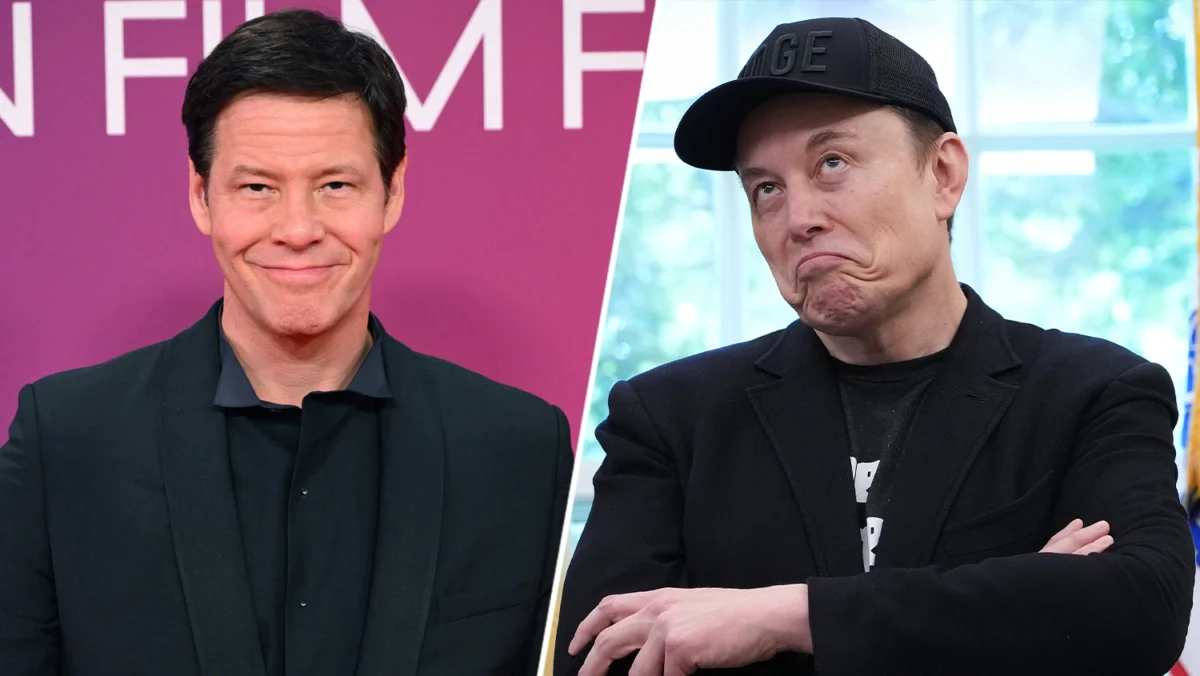
As the cinematic landscape increasingly turns its lens toward the seismic shifts in Silicon Valley, few projects have generated as much industry intrigue as Luca Guadagnino’s Artificial. Centered on the chaotic, high-stakes five-day window in November 2023 that saw the sudden firing and subsequent reinstatement of OpenAI CEO Sam Altman, the film promises a deep dive into the personalities that are actively shaping the trajectory of the human race. Among the ensemble, perhaps no role carries as much weight as that of Elon Musk, played with a complex duality by actor and comedian Ike Barinholtz.
In recent interviews, Barinholtz has shed light on the daunting task of capturing one of the world’s most polarizing figures, describing his performance as a delicate balance between genuine menace and inherent absurdity.
The Genesis of a Tech Thriller
Penned by Simon Rich, Artificial is far from a dry corporate drama. By focusing on the "Five Days in November" that nearly brought OpenAI to its knees, the film positions itself as a thriller set in the pristine, sterile boardrooms of San Francisco. The narrative serves as a microcosm for the larger anxieties surrounding Artificial General Intelligence (AGI).
While the film boasts a sprawling cast—including Andrew Garfield as the embattled Sam Altman, alongside Yura Borisov, Monica Barbaro, Cooper Hoffman, Jason Schwartzman, Chris O’Dowd, Mark Rylance, Zosia Mamet, Cooper Koch, and Billie Lourd—the presence of Musk serves as a thematic anchor. Musk, who was a founding donor of OpenAI before eventually severing ties, remains a ghost in the machine of the company’s history.
Characterizing the Titan: Barinholtz’s Approach
For Ike Barinholtz, stepping into the shoes of the Tesla and SpaceX CEO required a nuanced psychological excavation. Speaking with Discussing Film, the actor revealed that he approached the role by targeting a specific temporal window in Musk’s public image.
"The good news is, I got to play him in an era where he was really kind of looked at as the next Tony Stark," Barinholtz explained. This framing allows the film to explore the "before" version of the public perception—a time when Musk was widely lauded as a visionary savior of industry and technology. However, the film moves beyond the public persona to explore the private, behind-the-curtain machinations that defined his influence on the AI landscape.
"I had to do these scenes that are him kind of behind the curtain a little bit," Barinholtz noted, acknowledging the lack of public record or video documentation for these private encounters. This lack of "tape" gave the actor the creative license to interpret the power dynamics within the room.
He further elaborated on the tonal tightrope he walked: "We tried to make something that felt menacing to the people in the room, but as you pull out 37,000 feet down, looking down, it does seem a little ridiculous." This binary—the terrifying influence of a man who controls the levers of global communication versus the performative, often erratic nature of his public presence—forms the crux of Barinholtz’s portrayal.
Chronology: The Five Days that Shook the Industry
To understand the gravity of Artificial, one must revisit the timeline of the events that inspired Simon Rich’s screenplay. The "OpenAI Coup" was a whirlwind of institutional instability that captured the world’s attention.
- Friday, November 17, 2023: The OpenAI board of directors, citing a lack of transparency, fires Sam Altman as CEO. The news sends shockwaves through the tech world, triggering an immediate internal revolt.
- Saturday, November 18, 2023: Investors, led by Microsoft, begin pressuring the board to resign and reinstate Altman. The narrative of "effective altruism" vs. "commercial acceleration" becomes the central conflict.
- Sunday, November 19, 2023: Negotiations take place at OpenAI headquarters. Emmett Shear is appointed as interim CEO, but the staff threatens a mass walkout if the board does not step down.
- Monday, November 20, 2023: Nearly 700 of OpenAI’s 770 employees sign a letter demanding the board’s resignation. The company is effectively paralyzed.
- Tuesday, November 21, 2023: The board capitulates. Sam Altman is reinstated as CEO, a new initial board is formed, and the era of "AI dominance" continues, albeit with heightened scrutiny from regulators and the public.
Artificial utilizes this rapid-fire chronology to heighten the tension, with Barinholtz’s Musk hovering on the periphery, a reminder of the ideological schisms that helped precipitate the crisis.
Supporting Data: The Cost of the AI Race
The film arrives at a time when the societal stakes of AI are at an all-time high. Data from the industry suggests that the competition between OpenAI, Google, Anthropic, and Musk’s own xAI is not merely a business rivalry but a fundamental shift in the global economy.
Industry analysts point to the "OpenAI Crisis" as the moment the public stopped viewing AI as a laboratory experiment and began viewing it as a geopolitical weapon. The involvement of key players like Musk—who has been both a proponent of AGI and its loudest critic—adds a layer of moral ambiguity that Artificial leans into. By casting the roles with such high-caliber talent, Guadagnino is signaling that this story is not about the technology itself, but about the human ego that drives it.
Official Responses and Industry Reception
While the subjects of the film—Altman, the former board members, and Musk—have remained largely silent regarding the production, the industry buzz is deafening. Neon, the studio behind the project, has slated the premiere for Christmas Day in U.S. theaters, signaling a push for prestige and, potentially, awards-season recognition.
Critics have noted that Guadagnino, known for his visually lush and psychologically complex work in films like Call Me by Your Name and Challengers, is a surprising but inspired choice for a tech-centric procedural. His ability to render intimacy in isolated settings seems perfectly suited for a film that takes place largely behind closed doors.
"It’s not just a biopic; it’s a study in power," says one industry analyst. "By juxtaposing the ‘menacing’ nature of these boardroom decisions with the ‘ridiculous’ nature of the personalities involved, the film is inviting the audience to laugh at the absurdity of the people who might decide the fate of the planet."
Implications: A Mirror to Silicon Valley
The broader implication of Artificial is the demystification of the tech elite. For years, the narrative surrounding figures like Musk and Altman was curated by their own PR machines and social media platforms. By dramatizing the internal fractures of their world, Guadagnino and Rich are stripping away the veneer of the "visionary."
Barinholtz’s performance acts as the audience’s surrogate in this regard. By playing Musk as someone who understands his own power, but whose motives remain shrouded in a mix of genius and ego, he challenges the audience to reconcile the man with the myth.
Furthermore, the film highlights the fragility of our current digital infrastructure. If a five-day boardroom fight can threaten the existence of the world’s most advanced AI company, what does that say about the stability of the systems we have entrusted our future to?
Conclusion: A Christmas Release with Sharp Teeth
As the film heads to theaters this December, it is clear that Artificial aims to be more than just a recounting of recent history. It is a cautionary tale, a satire, and a character study rolled into one.
With Andrew Garfield’s portrayal of the calculated, perhaps messianic Altman, and Ike Barinholtz’s turn as the unpredictable, larger-than-life Musk, the film is poised to be one of the most debated releases of the year. It asks us to look at the people behind the algorithms and decide for ourselves: are they the architects of a new utopia, or are they simply playing with fire, unaware of how ridiculous they look to the rest of the world?
Whether the film succeeds in its mission to humanize the tech giants or merely adds fuel to the fire of their controversy remains to be seen. But one thing is certain: when the lights go down in theaters this Christmas, the audience will be looking at Silicon Valley through a lens that is significantly more skeptical, and perhaps a little more cynical, than it was before.
