
The Sonic Landscape of Satire: Gazelle Twin’s Score for ‘The Fall of Sir Douglas Weatherford’
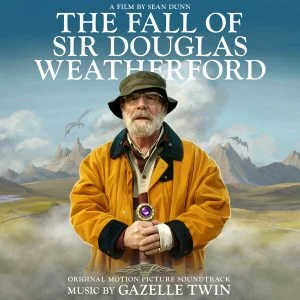
Silva Screen Records has officially announced the digital release of the original motion picture soundtrack for the acclaimed British comedy The Fall of Sir Douglas Weatherford. The score, composed by the avant-garde electronic musician and producer Elizabeth Bernholz—professionally known as Gazelle Twin—offers a haunting, whimsical, and deeply layered auditory experience that mirrors the film’s exploration of grief, fantasy, and the erosion of local history.
The soundtrack is currently available across all major digital streaming and download platforms, including Amazon, marking another significant contribution to the film music canon for a composer known for her ability to blur the lines between traditional scoring and experimental sound design.
The Narrative Core: A Clash of Realities
Directed and written by Séan Dunn, The Fall of Sir Douglas Weatherford serves as a poignant, darkly comedic examination of the tension between personal history and pop-culture spectacle. The film features a powerhouse ensemble cast, headlined by Peter Mullan, alongside Jakob Oftebro, Gayle Rankin, Sid Sagar, and Lewis MacDougall.
The narrative centers on a grieving tour guide, Sir Douglas Weatherford, whose life is defined by his meticulous commitment to the heritage of his Scottish hometown. His fragile equilibrium is shattered when a high-budget fantasy television production descends upon the town. As the film crew transforms the local landscape into a soundstage for a mythical epic, the genuine history of the town is rapidly eclipsed by a fabricated "mythology."
This conflict provides the perfect canvas for Bernholz, whose work often explores themes of alienation and the uncanny. By juxtaposing the authentic, melancholic reality of the protagonist with the glossy, artificial bombast of the in-universe television show, the soundtrack functions as a character in its own right, highlighting the absurdity and sadness of a man losing his world to a green-screen fantasy.
The Composer’s Evolution: Gazelle Twin’s Cinematic Language
Elizabeth Bernholz, operating under the moniker Gazelle Twin, has spent the last decade establishing herself as one of the most provocative voices in contemporary music. Her transition into film scoring has been marked by an uncanny ability to subvert genre tropes.
Having previously contributed to projects such as The Power, Summerwater, Black Cab, and the Welcome to the Blumhouse installment Nocturne, Bernholz is no stranger to themes of isolation and psychological fracturing. Her score for The Fall of Sir Douglas Weatherford represents a tonal departure from her often aggressive, industrial-inflected work, shifting instead toward a more pastoral, yet fractured, melodic language.
The score successfully navigates the "meta" requirements of the film: it must sound like a standard, epic television fantasy theme for the scenes involving the film-within-a-film, while simultaneously providing a grounded, empathetic soundscape for Douglas’s internal journey.
Chronology of the Project
The project’s path from conception to release reflects the typical, yet rigorous, lifecycle of an independent international co-production:
- Production and Principal Photography: The film moved through development with a focus on capturing the specific atmosphere of the Scottish Highlands, which served as the backdrop for both the real-world narrative and the fictional fantasy setting.
- Rotterdam Premiere: The film made its international debut at the prestigious International Film Festival Rotterdam earlier this year, where it garnered attention for its unique blending of melancholic character study and sharp media satire.
- Theatrical Release: MUBI, known for its curated approach to independent cinema, handled the UK theatrical distribution, releasing the film in June. The response from critics focused heavily on the visual contrast between the rustic town and the garish production design of the fictional White Stag of Emberfell TV series.
- Soundtrack Release: Following the theatrical window, Silva Screen Records finalized the digital release, allowing listeners to experience the music outside the constraints of the film’s narrative structure.
The Track List: A Journey Through Emberfell and Beyond
The soundtrack is composed of 18 distinct tracks that transition between the "real world" of the protagonist and the fictionalized "Emberfell" fantasy universe.
- Sir Douglas Weatherford Hallelujah! – A thematic introduction to the protagonist’s world.
- In Photographs – A track focused on memory and the loss of the past.
- Kenneth’s Commute – A rhythmic, mundane piece that underscores the protagonist’s daily grind.
- The White Stag of Emberfell (Television Theme) – A grand, orchestral-synth hybrid that mimics the tropes of big-budget fantasy.
- Quiet Home – A meditative, minimalist piece.
- A Phantom – The score’s first foray into the uncanny.
- The Eye Test – Tension-building ambient sound design.
- A Project of Cultural Significance – A satirical take on corporate media production.
- Emberfell Cosplay Tour – Whimsical, lighthearted percussion.
- K for Kenneth – A short, intimate character study.
- An Exciting Proposal – Rhythmic shifts indicating narrative change.
- King of These Lands – Grandiose, mock-heroic themes.
- Goat Vision – Experimental sound design reflective of the film’s quirkier moments.
- Tempest’s Lament – Emotional depth for the fictional TV series.
- The Geldun Blade – High-stakes action music.
- Kenneth Retreats – A shift back to internal introspection.
- Snow Globe – A crystalline, fragile arrangement.
- The Legend of Emberfell (Television Theme) – The concluding epic suite.
The Implications of Satire in Modern Scoring
The release of this soundtrack highlights a growing trend in film music: the deliberate construction of "fake" media within media. By composing a convincing television theme for the fictional White Stag of Emberfell, Gazelle Twin is engaging in a meta-commentary on the nature of consumption.
For the audience, the music serves as a guide to the film’s central thesis. When the music sounds "fake" or overly processed, it mirrors the encroachment of the film crew. When it sounds organic and raw, it mirrors Douglas’s connection to his home. This dichotomy is what makes the soundtrack a compelling listen independently of the movie.
Critics have noted that the music captures the specific, fleeting nature of "tourist history"—how a town’s identity can be wiped away by a pop-culture fad. By leaning into the sounds of the "fantasy epic" genre, Bernholz exposes the thin line between inspiration and appropriation.
Domestic Release Outlook
While the film enjoyed a successful run in the UK through MUBI, international audiences—particularly those in North America—remain in a state of anticipation regarding a domestic release. The soundtrack’s wide availability on major platforms like Amazon, Apple Music, and Spotify serves as a bridge for international fans who have been following the film’s festival circuit progress.
Historically, soundtracks are often released prior to international streaming availability, serving as a promotional tool for the eventual acquisition of the film by domestic distributors. With the critical acclaim surrounding Peter Mullan’s performance and the distinctiveness of Gazelle Twin’s score, industry analysts suggest that a domestic release could be imminent as streaming platforms continue to hunt for high-quality, festival-tested British content.
Conclusion
The score for The Fall of Sir Douglas Weatherford is a masterclass in tonal duality. Elizabeth Bernholz has successfully navigated the challenge of creating a soundtrack that is both a functional narrative device and a standalone listening experience.
For fans of Gazelle Twin, the album represents a fascinating expansion of her repertoire, proving that she can apply her signature sonic textures to even the most traditional of narrative structures. For fans of the film, the album serves as a melancholic souvenir of a story that asks a simple, yet devastating question: what happens to a place when its story is no longer its own?
As the film continues to find its audience globally, the music will undoubtedly remain a focal point of the conversation, acting as the heartbeat of a town caught between the weight of its own history and the fleeting neon lights of a fantasy empire.
