
Marshall Electronics Showcases Next-Generation PTZ, POV, and Network-Ready Camera Technologies at NAB New York 2026
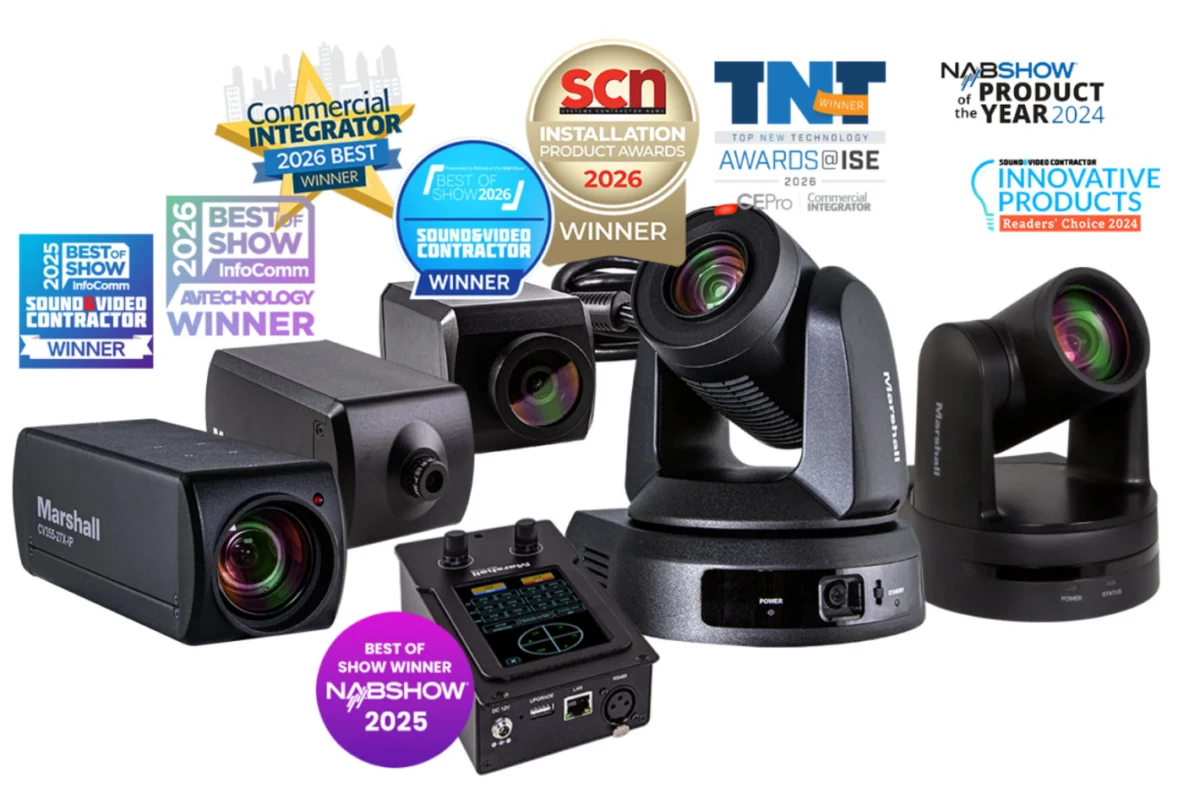
NEW YORK — As the broadcast, live-streaming, and professional audiovisual (AV) industries converge at the Javits Center for NAB New York, Marshall Electronics is making a definitive statement on the future of video capture and control. Backed by more than four decades of engineering expertise serving broadcast television, corporate AV, unified communications (UCC), studio production, and industrial OEM markets, Marshall is using Booth 730 to highlight an extensive ecosystem of award-winning camera technologies.
Designed to meet the rigorous demands of modern IP and SDI workflows, the company’s showcase emphasizes intelligent auto-tracking, all-weather durability, compact form factors, and sophisticated hardware control panels. This year’s exhibition underscores Marshall’s ongoing commitment to delivering flexible, reliable, and high-performance video solutions tailored to the evolving needs of content creators, AV integrators, and live production engineers.
Main Facts
At NAB New York, Marshall Electronics is presenting a curated portfolio of its most innovative and industry-recognized hardware solutions. The showcase centers on seamless integration within complex production environments, emphasizing technologies that bridge traditional baseband infrastructures with modern network-based workflows.
- The Flagship Showcase: Marshall is featuring its premier line of PTZ (Pan-Tilt-Zoom) and POV (Point-of-View) cameras, which include advanced capabilities such as UHD60 resolution, optical zooms exceeding 25x, and artificial intelligence (AI)-driven auto-tracking.
- Key Hardware Highlights:
- CV625-TB: A multi-award-winning 25X UHD60 PTZ camera featuring dual PTZ and POV sensor design with intelligent auto-tracking.
- CV574-WP: An all-weather UHD network camera engineered with high low-light sensitivity and accurate color reproduction for outdoor and demanding environments.
- CV520 & CV320: Compact, full-HD IP and 3G-SDI POV solutions housed in durable aluminum-alloy bodies.
- CV355-27X: A high-reach full-HD camera featuring a 27X optical zoom and flexible IP/3G-SDI connectivity.
- CV612-TBI: An economical, facial-learning-enabled 12X PTZ camera built for real-time tracking in dynamic presentation spaces.
- RCP-Plus: An advanced touchscreen hardware control panel capable of managing up to 70 cameras simultaneously across VISCA RS485 and IP protocols.
Chronology and Industry Evolution: Four Decades of Video Innovation
To understand the significance of Marshall’s current lineup at NAB New York, it is essential to trace the historical trajectory of the company alongside the broader evolution of the broadcast and professional video sectors.
The Foundation and Early Decades (1980s–2000s)
Founded more than 40 years ago, Marshall Electronics initially established its reputation as a trusted provider of high-performance components and specialized video infrastructure. Through decades of close collaboration with broadcast engineers, the company expanded from supplying basic industrial OEM components into developing dedicated LCD monitors, multiviewers, and miniaturized cameras. During this era, the broadcast industry was defined by analog-to-digital conversions and the eventual standardization of high-definition (HD) SDI formats. Marshall’s ability to engineer compact, reliable tools for space-constrained environments—such as inside studio control rooms or mounted on mobile broadcast units—cemented its status as an industry staple.
The Transition to HD-SDI and Compact POV Systems (2010s)
As the industry shifted toward high-definition workflows, production requirements changed rapidly. Broadcasters, sports networks, and live event producers demanded high-quality imagery from unconventional angles—mounted inside race cars, hidden within sports goals, or tucked into tight broadcast studio corners. Marshall responded by developing its signature line of miniature POV cameras utilizing broadcast-grade sensors. These cameras provided true broadcast quality while maintaining ultra-compact footprints, solving a persistent logistical challenge for live production crews.
The IP, UHD, and AI Revolution (2020s–Present)
Entering the current decade, the professional video landscape has experienced a seismic shift toward ultra-high-definition (UHD/4K) resolutions, Internet Protocol (IP) networking, and automation. Traditional baseband workflows are increasingly supplemented—and in some cases replaced—by NDI, SRT, and IP-based control protocols.
Marshall has aggressively adapted to this modern paradigm. Recent hardware developments reflect a strategic focus on integrating artificial intelligence into physical cameras—such as facial recognition and intelligent auto-tracking—while retaining robust baseband connectivity like 3G-SDI and HDMI. The introduction of network-ready UHD solutions and advanced touchscreen controllers at recent international exhibitions, including IBC and NAB, highlights a continuous evolution toward user-friendly, highly automated production ecosystems.
Supporting Data and Technical Breakdown of Featured Solutions
Marshall’s exhibit at Booth 730 features a deep dive into the technical specifications and operational advantages of its award-winning hardware lineup. Each product has been engineered to solve specific pain points in modern live production, remote learning, corporate presentation capture, and house of worship broadcasting.
1. CV625-TB: 25X UHD60 PTZ Camera with Dual-Camera Tracking
At the apex of Marshall’s PTZ offerings is the CV625-TB, a multi-award-winning camera that addresses one of the most complex challenges in automated video production: smooth, natural presenter tracking in ultra-high definition.
- Resolution and Frame Rate: Delivers pristine 4K resolution at up to 60 frames per second (UHD60), ensuring crisp motion rendering for fast-paced live events.
- Optical Zoom: Equipped with a powerful 25X optical zoom lens, allowing operators to capture detailed close-ups even from the back of large auditoriums or expansive stages.
- Intelligent Dual-Camera Tracking: Incorporates an innovative dual PTZ and POV architecture. The system automatically identifies, tracks, follows, and frames presenters without requiring a dedicated camera operator. This self-adjusting workflow significantly reduces labor overhead while maintaining broadcast-quality framing consistency.
2. CV574-WP: All-Weather UHD Network Camera
Designed for challenging outdoor or industrial production environments, the CV574-WP bridges the gap between rugged durability and high-end optical performance.
- Weatherproof Design: Built to withstand environmental stressors, making it an ideal choice for live outdoor broadcasting, stadium placement, weather monitoring, and marine applications.
- Low-Light Sensitivity: Features an advanced image sensor optimized for low-light conditions, delivering rich, accurate color saturation and high signal-to-noise ratios even as ambient lighting changes drastically.
- Network Readiness: Fully integrated with modern IP streaming protocols, allowing seamless deployment in remote locations where traditional cable runs are impractical.
3. CV520 and CV320: Compact IP and 3G-SDI POV Cameras
Recognized internationally with multiple industry awards, the CV520 and CV320 represent the pinnacle of miniaturized broadcast engineering.
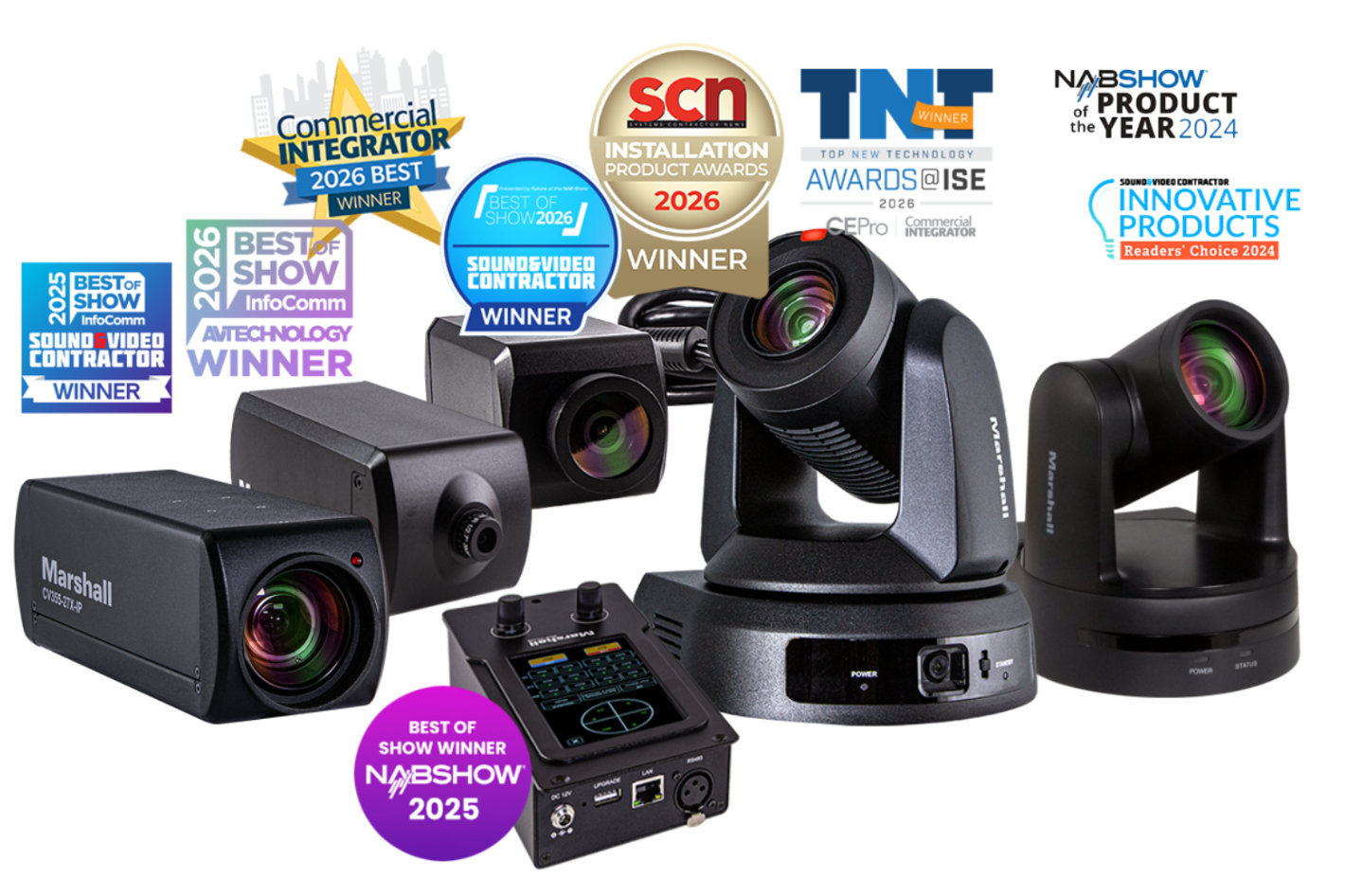
- Form Factor: Housed in robust aluminum-alloy chassis, these cameras are built to endure heavy touring and rigorous daily deployment. Their ultra-compact footprints allow them to be rigged in virtually any location.
- Connectivity: Despite their small size, they offer simultaneous IP and 3G-SDI outputs, ensuring compatibility with both legacy baseband infrastructures and modern network-based video switchers.
- Control Capabilities: Provide comprehensive adjustment options for shutter speed, gain, white balance, and pedestal, giving DPs and shading engineers precise control over image parameters.
4. CV355-27X: Versatile High-Reach POV Camera
For applications requiring both wide-angle spatial awareness and tight telephoto framing from a compact unit, the CV355-27X provides an optimal balance of form and function.
- Optical Range: Features an integrated 27X optical zoom lens that gives production teams incredible reach without sacrificing full-HD clarity.
- Workflow Flexibility: Combines standard 3G-SDI connectivity with IP streaming capabilities, making it exceptionally versatile for multi-camera broadcast trucks, legislative chambers, and live performance venues.
5. CV612-TBI: Economical 12X PTZ with Facial Learning
Recognized with dual industry awards, the CV612-TBI brings high-end automation features to a more accessible price point without compromising performance.
- Facial Learning AI: Utilizes advanced facial recognition and learning algorithms to lock onto and track presenters smoothly. The camera avoids jerky movements, maintaining natural framing even when subjects move across a stage or classroom.
- Target Applications: Ideally suited for corporate boardrooms, higher education lecture halls, and houses of worship where dedicated camera operators are unavailable, yet professional production values are expected.
6. RCP-Plus: Touchscreen Camera Control Panel
Hardware control remains a vital component of live production, and Marshall’s award-winning RCP-Plus redefines how operators interact with multiple cameras simultaneously.
- Capacity: Supports up to 7 camera units via VISCA RS485 serial connections, up to 63 units via VISCA-over-IP, or a staggering 70 cameras using a hybrid approach combining both protocols.
- Interface: Features an intuitive touchscreen display paired with fine-tuned physical finger dials. This hybrid design allows operators to execute rapid global adjustments or precise individual camera shading (iris, black level, color balance, focus) with minimal latency.
Official Responses and Industry Perspectives
Leadership at Marshall Electronics views the NAB New York exhibition not merely as a product showcase, but as an opportunity to demonstrate how hardware engineering can simplify increasingly complex workflows for modern creators.
In statements surrounding the company’s exhibition lineup, Marshall representatives emphasized that the modern production landscape demands versatility above all else. Broadcasters, corporate media departments, and educational institutions are no longer willing to compromise on image quality when transitioning to automated or IP-based systems.
"Our focus has always been on bridging the gap between uncompromising broadcast video quality and the practical, everyday demands of system integrators and production crews," noted a Marshall Electronics spokesperson ahead of the event. "Whether an organization is outfitting a sprawling multi-camera house of worship, a high-tech corporate hybrid meeting space, or a challenging outdoor live broadcast, our award-winning portfolio—from the AI-driven CV625-TB to the robust CV574-WP and the versatile RCP-Plus control surface—demonstrates our dedication to providing reliable, scalable tools that perform flawlessly under pressure."
Industry analysts attending NAB New York have echoed these sentiments, pointing out that Marshall’s strategic emphasis on dual-protocol connectivity (IP and SDI) and intelligent automation directly addresses the primary pain points experienced by modern AV engineers. As budgets tighten and production demands increase, tools that reduce human labor through reliable AI tracking—while maintaining pristine image fidelity—represent the fastest-growing segment of the professional video market.
Implications for Broadcasters, AV Integrators, and Content Creators
The technologies highlighted by Marshall Electronics at NAB New York carry significant implications for the broader professional video ecosystem.
1. The Democratization of Automated Production
Features once restricted to high-end television studios—such as sophisticated robotic PTZ movement, facial-learning auto-tracking, and multi-camera hardware control—are becoming increasingly accessible. Solutions like the CV625-TB and CV612-TBI allow single-operator or unattended environments (such as university lecture capture and corporate town halls) to achieve broadcast-caliber dynamic framing. This shift lowers the barrier to entry for professional-grade video production while optimizing operational budgets.
2. Convergence of IP and Baseband Workflows
The industry-wide migration from SDI to IP networking continues to reshape how facilities are wired and operated. However, legacy infrastructure cannot be replaced overnight. Marshall’s strategy of building simultaneous IP and 3G-SDI connectivity into compact form-factor cameras (such as the CV520, CV320, and CV355-27X) provides a crucial bridge for facilities undergoing gradual modernization. Integrators can deploy these cameras into existing SDI routers today while seamlessly integrating them into IP video networks tomorrow.
3. Heightened Demands for Durability and Versatility
As live streaming expands beyond controlled indoor studio environments into unpredictable outdoor settings, industrial durability is paramount. The all-weather capabilities of sensors like the CV574-WP reflect a growing expectation that professional cameras must perform reliably regardless of weather, lighting extremes, or physical constraints.
Conclusion
Marshall Electronics’ presence at NAB New York 2026 reinforces the company’s legacy as an innovator and dependable partner in professional video. By combining four decades of engineering expertise with cutting-edge advancements in AI tracking, UHD resolution, and hybrid IP/SDI connectivity, Marshall continues to equip broadcasters, AV integrators, and content creators with the reliable tools needed to shape the future of visual storytelling. Attendees at the Javits Center can experience these award-winning solutions firsthand at Booth 730.
