
The Insta360 Luna Pro: A Convergence of Cinematic Precision and Creator Agility
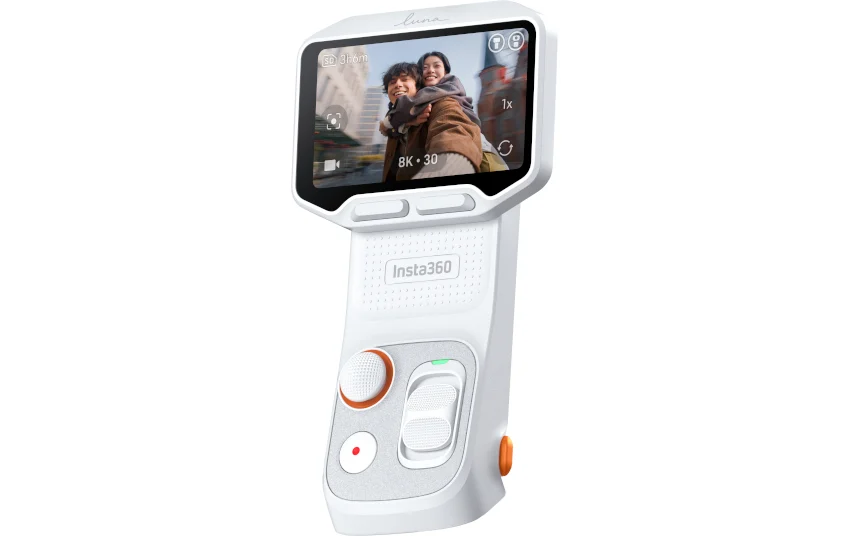
In an era where the boundaries between professional cinematography and high-end social media content creation are increasingly porous, Insta360 has unveiled the Luna Pro. This new gimbal-integrated camera represents a bold strategic move, blending the meticulous optical engineering of Leica with the aggressive, AI-driven automation that has defined the brand’s meteoric rise. By packing a 1-inch 8K sensor and sophisticated 10-bit color science into a form factor smaller than a standard cinema rig, Insta360 is making a compelling argument: the future of production may not belong to the largest sensor, but to the most versatile one.
Main Facts: The Intersection of Hardware and Intelligence
At its core, the Luna Pro is designed to eliminate the friction between a creative vision and the act of recording. Central to its performance is a 1-inch sensor capable of 8K resolution, paired with a custom-engineered Leica Summicron 20mm-equivalent f/1.8 lens. This specific optical configuration offers a wide field of view ideal for handheld vlogging, while the fast aperture provides the low-light performance that small-sensor cameras have historically lacked.
The camera’s processing power is split across a dual-chip architecture—a dedicated imaging processor paired with a 4nm flagship chip. This division of labor allows for simultaneous heavy-duty tasks: high-bitrate 8K Dolby Vision recording and real-time AI-powered subject tracking. For the vertical-first creator, the camera offers native 9:16 4K recording at 30fps, utilizing 6K oversampling to ensure that content destined for TikTok, Reels, or Shorts retains clinical sharpness and color fidelity.
The device is built around a three-axis mechanical gimbal, ensuring fluid, stabilized footage without the need for post-production stabilization plugins that often crop into an image and degrade quality. Priced at $599.99, the Luna Pro sits in a unique "prosumer" sweet spot, offering features that mirror professional cinema cameras while maintaining the accessibility required for a solo creator.
A Chronology of Innovation: The Evolution of the Luna Line
The release of the Luna Pro is the culmination of years of iterative development at Insta360. While the company initially gained global recognition for its 360-degree cameras, it soon recognized that the market for standard, stabilized, single-lens cameras was underserved by both smartphone manufacturers and traditional camera giants.
- Phase 1: The Stabilization Era: Insta360’s early focus on FlowState stabilization proved that software could mimic professional camera support. This laid the foundation for the integration of mechanical gimbals.
- Phase 2: The Collaboration Era: The partnership with Leica marked a turning point in perceived quality. By moving from "gadget" status to "optical instrument" status, Insta360 began attracting the attention of professional videographers.
- Phase 3: The Prosumer Integration: The Luna series—starting with the Ultra—established the company as a player in high-bitrate, high-resolution workflows. The Luna Pro serves as the refinement of this vision, optimizing the package for the solo operator who demands cinema-grade color (10-bit I-Log) without the overhead of a large-scale camera team.
The launch on September 10, 2026, marks the company’s most significant expansion into the "hybrid" market, where the device is marketed simultaneously as an everyday carry for influencers and a secondary, lightweight B-cam for high-end production houses.

Supporting Data: Under the Hood
The technical specifications of the Luna Pro reveal a machine built for efficiency. Beyond the 8K/30fps headline, the camera supports 4K at 120fps and 1080p at 240fps for high-end slow-motion work.
Storage and Power Dynamics
In a nod to professional workflows, the Luna Pro includes 47GB of internal storage, mitigating the risk of "missing the shot" if a microSD card fails. For longer productions, it supports external media up to 2TB. The battery life, rated at four hours, is particularly impressive given the power draw required for 8K processing and gimbal motor operation.
Connectivity and Audio
Insta360 has streamlined the audio chain by allowing direct pairing with their Mic Series wireless transmitters, bypassing the need for clunky receiver dongles that often clutter the camera body. Furthermore, the inclusion of timecode support—a feature previously reserved for cameras costing five times as much—positions the Luna Pro as a legitimate, albeit compact, component in a multi-camera, time-synchronized production environment.
Official Responses and Strategic Vision
During the product unveiling, representatives from Insta360 emphasized that the Luna Pro was not intended to replace the primary cinema camera in a filmmaker’s kit, but to augment it. "We wanted to create a device that respects the filmmaker’s workflow," noted a lead developer. "By incorporating 10-bit I-Log and ACES (Academy Color Encoding System) support, we are giving the user a professional canvas. By incorporating AI tracking and a detachable screen, we are giving them an assistant."
The collaboration with Leica has been a cornerstone of the marketing narrative. Leica’s influence is not merely in the glass; it is in the software-based image profiles—Leica Natural, Vivid, and Chrome. These profiles allow creators to achieve a specific "look" straight out of the camera, catering to those who need to upload content in minutes, while the I-Log mode offers the dynamic range necessary for high-end color grading.
Implications for the Industry
The release of the Luna Pro carries several significant implications for the future of digital imaging.

1. The Death of the "B-Cam" Barrier
For years, the difference between a main camera and a B-cam was defined by resolution and color depth. With the Luna Pro, the B-cam now shares the same 10-bit log capabilities and high resolution as many A-cams. The barrier is no longer image quality; it is ergonomics. As the Luna Pro proves, you can now have a cinema-quality image in a device that fits in a jacket pocket.
2. The Rise of the AI-Operator
The "Deep Track" and "Rapid Focus" AI systems integrated into the Luna Pro suggest a future where the camera operator’s role is shifting. Instead of manually pulling focus or panning a camera, the operator acts as a director, setting the AI parameters and focusing on composition and talent direction. This democratization of professional-looking footage is likely to disrupt the entry-level video production market significantly.
3. Vertical Video as a Primary Format
The Luna Pro’s native 9:16 recording, achieved through rotating the touchscreen rather than cropping, signifies that vertical video is no longer a "social media trend." It is a primary broadcast format. Manufacturers are now designing hardware specifically to accommodate the mobile-first consumption habits of modern audiences.
Conclusion: Is the Luna Pro for You?
The Insta360 Luna Pro is a paradox: it is a high-performance production tool masquerading as a vlogging camera. For the professional filmmaker, it represents a "get out of jail free" card—a camera that can be pulled out in seconds to capture high-quality B-roll or C-roll that matches the color science of a larger sensor rig. For the social creator, it provides a massive leap in technical ceiling, offering 8K resolution and 10-bit color that effectively future-proofs their content.
As of its release in Cosmic Black and Stellar White, the Luna Pro sets a new benchmark for what can be achieved in a compact, gimbal-stabilized package. Whether it truly replaces the "big rig" remains to be seen, but for most creators, it will likely render the need for a secondary camera bag completely obsolete. In the rapidly evolving landscape of visual storytelling, Insta360 has provided a tool that is as agile as the creators it serves, proving that the most powerful camera is the one you actually have with you—especially when it happens to be one of the best on the market.
