
Cynthia Erivo Champions the Vital Role of Intimacy Coordinators in Groundbreaking Legal Drama ‘Prima Facie’
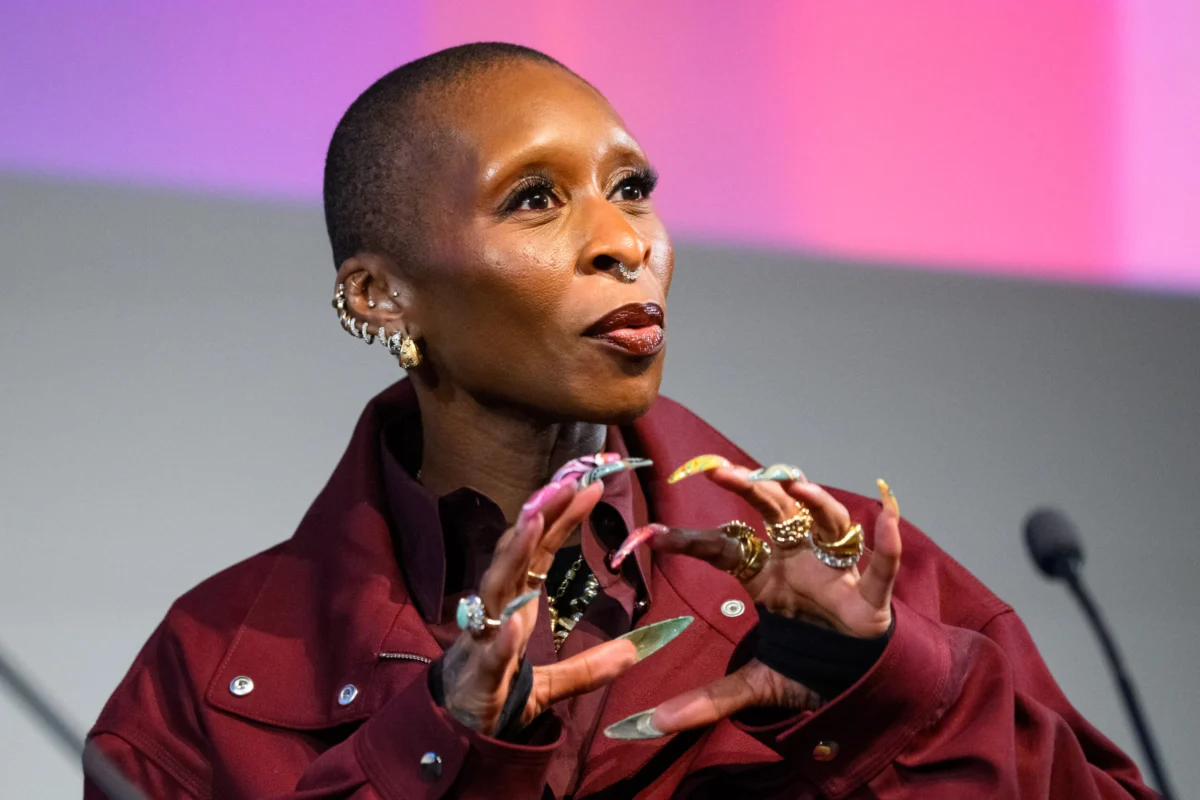
During a candid and emotionally resonant screen talk at the London Film Festival this past Monday, Academy Award-nominated powerhouse Cynthia Erivo offered an intimate look into the grueling process of bringing the legal thriller Prima Facie to the screen. Stepping into her first major role following the colossal cultural phenomenon of Wicked, Erivo is not merely starring in the film; she is spearheading it as a producer, tackling a narrative that demands both immense emotional vulnerability and technical precision.
The film, an adaptation of Suzie Miller’s acclaimed stage play, centers on Tessa Ensler, a brilliant defense attorney whose professional world is shattered when she becomes the victim of a sexual assault at the hands of a colleague. As the story traverses the harrowing journey from trauma to the courtroom, Erivo’s performance anchors a narrative that forces the audience to confront uncomfortable truths about justice, consent, and the systematic erasure of Black women’s experiences within the legal and social consciousness.
The Architecture of Safety: Why Intimacy Coordinators are Essential
At the heart of the discussion was Erivo’s staunch defense of the intimacy coordinator—a role that has gained significant prominence in Hollywood but continues to face skepticism in some traditional corners of the industry. Erivo was unequivocal in her assessment: "Not enough credit is given to them."
For Erivo, working with intimacy coordinator Lizzy Talbot was not a luxury; it was a structural necessity for maintaining her psychological well-being during the production of the film’s most traumatic sequences. "Lizzy was really helpful with creating a space that felt very safe," Erivo explained to the audience. She described the unique challenge of portraying the dissociation often experienced by survivors of assault. "I had to understand what it was like to be in your body but not there—finding what that looked like for me, where you’re there but you have to check out to stay safe. That was the thing we had to figure out: how to do that and come back safely."
Erivo highlighted that the physical act of performing a scene is only half the battle; the psychological toll of "coming back" to reality after filming a harrowing sequence is often underestimated. "A lot of this was really hard to film, but the hardest thing was actually coming back from filming it. Getting your feet back on the ground, getting back into your body and finding the safest place again."
Her co-star, Daniel Ings, who portrays the perpetrator in the film, was instrumental in this process. Erivo lauded Ings for his professionalism and empathy, noting that from the first day of rehearsals, he prioritized the safety and comfort of their collaborative environment. "He from the beginning was very, very kind and immediately wanted to have a conversation about how we could be protective of one another… so that we could go as far as we needed to go and then come back again."
Beyond Choreography: Redefining the Profession
Erivo’s advocacy for intimacy coordinators serves as a clarion call for the industry to move past the misconception that these professionals only choreograph sex scenes. In her view, their role is fundamentally about safeguarding the humanity of the performers.
"I think not enough credit is given to intimacy coordinators and they’re often given a hard time for the work they have to do on a set," Erivo remarked, drawing applause from the London Film Festival crowd. "The work that they do is incredibly important. It isn’t just about choreographing a sex scene, a love scene; it’s sometimes about how to not just choreograph these really hard, harrowing scenes, but make sure everyone comes back to their bodies safely."
This perspective aligns with a broader shift in the film industry, where the #MeToo era and subsequent internal policy changes have prioritized the emotional safety of actors. By centering the expertise of coordinators like Talbot, Erivo is helping to institutionalize a standard of care that protects performers from the long-term psychological scarring that can accompany intense, traumatic subject matter.
Centering the Black Female Experience
One of the most pressing motivations for Erivo in producing and starring in Prima Facie was to fill a glaring void in cinema. She noted that discussions surrounding sexual assault often overlook the specific realities of Black women, who face unique societal stigmas and "preconceived notions" about how they experience and express pain.
"What this does is it puts us in the eye of the beholder—we’re sort of front and center to have the discussion of what it looks like when this happens to us as well," she stated. "It’s more often than you would realize, more than we discuss at all. It’s often not reported."
Erivo expressed a hope that the film would catalyze a wider, more inclusive conversation about consent and the specific intersectionality of trauma. She noted that rarely does a film provide a platform for a Black woman’s experience with sexual violence with such unflinching gravity. By taking ownership of this role, she is ensuring that this narrative is not merely a subplot, but the defining lens through which the audience experiences the film.
Transitioning from Elphaba to the ‘Villain Era’
While the conversation at the London Film Festival was dominated by the gravitas of Prima Facie, Erivo also reflected on the monumental task of bringing Elphaba to life in the Wicked franchise. Her performance as the misunderstood green girl has earned critical acclaim and an Oscar nomination, but for Erivo, the work was about finding the "DNA" of the character rather than just applying the makeup.
"I know that the two of us are very different… but I knew I wasn’t trying to make her different, but just trying to make her as true as possible," Erivo said. She drew parallels between herself and Elphaba, noting their shared stubbornness and hidden reservoirs of joy.
Looking toward the future, Erivo teased a shift in her career trajectory, joking that she is entering her "villain era." She clarified that this shift is not about malice, but about creative expansion. "I want to find those stories where we get to see faces that are different in leading roles that are complicated and not necessarily the hero, but are gritty and in the gray area and fun to play."
Implications for the Future of Filmmaking
The implications of Erivo’s involvement in Prima Facie extend far beyond a single performance. By acting as a producer, she is exercising agency over the stories that are told and the conditions under which they are made. Her advocacy for intimacy coordinators, coupled with her commitment to centering marginalized voices in trauma narratives, signals a maturing industry that is increasingly willing to pair artistic ambition with social responsibility.
As Prima Facie makes its U.K. debut, following its successful premiere at the Toronto International Film Festival, the film stands as a testament to the power of a performer who refuses to separate the craft of acting from the ethics of production. Cynthia Erivo is not just stepping into a role; she is defining the terms under which the next generation of actors will work, ensuring that they have the support systems necessary to explore the depths of human experience without sacrificing their own well-being.
Whether she is portraying a misunderstood witch in a technicolor musical or a survivor fighting for justice in a bleak courtroom drama, Erivo remains committed to authenticity. "I’m sort of seeking [complex stories] out for myself," she concluded, "and I want to seek them out for other people." Through Prima Facie, she has done exactly that, cementing her status not only as a preeminent actress of her generation but as a vital architect of a more equitable and compassionate cinematic landscape.
