
The Anachronistic Misstep: Why Kelsey Grammer’s ‘Hank’ Remains a Study in Sitcom Failure

In the pantheon of television history, few actors possess the pedigree of Kelsey Grammer. Having anchored two of the most iconic sitcoms in the medium’s history—Cheers and Frasier—Grammer solidified his status as a titan of the multi-camera format. However, the trajectory of a legendary career is rarely a straight line. Amidst the accolades and syndication riches, there lies a forgotten, awkward chapter: the 2009 ABC sitcom Hank.
While Frasier redefined the intellectual potential of the television comedy, Hank serves as a stark reminder of what happens when a performer attempts to transplant the sensibilities of the 1990s into a television landscape that had moved on. Canceled after just five aired episodes, Hank is more than a footnote; it is a case study in the evolution of television comedy and the perils of creative stagnation.
The Context: A Television Landscape in Flux
To understand why Hank failed so spectacularly, one must look at the climate of 2009. The industry was undergoing a seismic shift. The "Golden Age of Television" was gaining momentum, but the traditional sitcom was in an identity crisis. The "live audience" model, once the gold standard, was being cannibalized by the rise of the single-camera, mockumentary-style comedy.
In September 2009, when Hank premiered, it faced an impossible task. It was competing against the debuts of Modern Family and Cougar Town. While Modern Family was heralded as a fresh, dynamic reinvention of the domestic comedy, Hank felt like a relic from a bygone era. It was a show that seemed to exist in a vacuum, seemingly unaware that the audience’s appetite for canned laughter and predictable, trope-heavy punchlines had evaporated.
Chronology of a Short-Lived Disaster
The timeline of Hank was as abbreviated as its premise was familiar. Developed by Tucker Cawley—a writer who had cut his teeth on the massive success of Everybody Loves Raymond—the show was intended to be a vehicle for Grammer to reclaim his throne as the king of primetime.

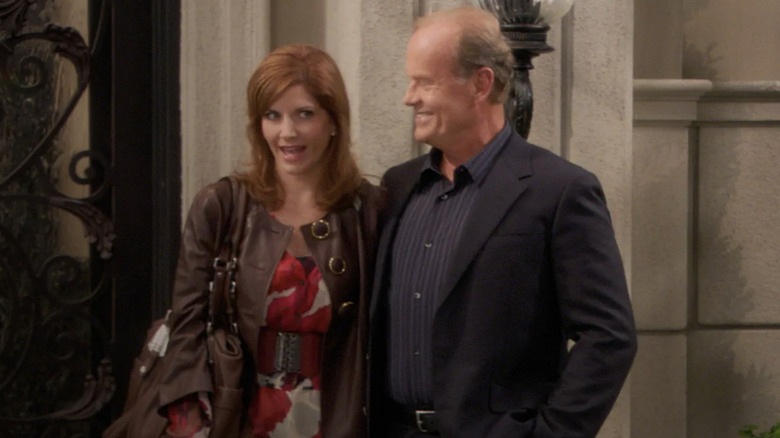
Grammer played the titular Hank Pryor, a high-flying entrepreneur who loses his fortune and is forced to relocate his family to his hometown of River Bend, Virginia. The supporting cast, featuring Melinda McGraw as his wife Tilly, and Jordan Hinson and Nathan Gamble as his children, were tasked with navigating the "fish out of water" dynamic.
- September 30, 2009: Hank makes its debut on ABC. The ratings are immediately lackluster, failing to retain the audience from its lead-ins.
- October 2009: As the episodes progress, the critical drubbing intensifies. Critics highlight the show’s derivative nature and dated humor.
- November 2009: By early November, after only five episodes had graced the airwaves, ABC made the decisive move to pull the plug. The network effectively canceled the series, leaving five produced episodes unaired and the production staff in limbo.
Anatomy of a Flop: Why ‘Hank’ Failed to Resonate
The primary failure of Hank was not a lack of effort, but a fundamental misunderstanding of the cultural zeitgeist. By 2009, audiences were growing weary of the "Pompous man learns a lesson in humility" trope, a narrative arc that had been perfected by Grammer himself in Frasier.
The Stagnation of the Multi-Cam Format
The show relied heavily on the mechanics of the 1980s sitcom: the setup, the pause for the laugh track, and the punchline. This rhythm, which felt sharp and witty on the soundstages of the Paramount lot in 1993, felt laborious and artificial in 2009. The laughter often felt forced, creating a dissonance between what the viewer was seeing and how the show demanded they react.
Derivative Writing
Critics were quick to point out that the humor in Hank felt like a greatest-hits compilation of better shows. Whether it was the "mattress on the stairs" bit—a transparent nod to the "Pivot!" sequence in Friends—or the "race car bed" gag, the show suffered from a lack of unique identity. Instead of innovating, Hank attempted to mimic the successes of its predecessors, resulting in a product that felt hollow and recycled.
Supporting Data and Critical Reception
The critical consensus was brutal, bordering on unkind. Linda Holmes, writing for NPR, captured the sentiment perfectly, advising viewers to steer clear of the show entirely. She noted that while other comedies in the ABC lineup were pushing the envelope, Hank was stubbornly rooted in the past.

The ratings tell a similarly grim story. According to archival data from the period, the show experienced a steady decline in viewership with each passing week. By the time the fifth episode aired, the show had lost nearly 50% of its pilot’s audience. In the brutal world of network television, where advertising revenue is tied directly to viewership demographics, the show’s inability to retain its lead-in audience made its cancellation an inevitability rather than a possibility.
Official Responses and Behind the Scenes
The cancellation was handled with the cold efficiency typical of the network business. There was no "save the show" campaign, and the network did not attempt to retool or salvage the project. The Hollywood Reporter noted at the time that the show had "underperformed in the ratings," a diplomatic way of stating that the show was hemorrhaging viewers.
For Grammer, the failure of Hank was a humbling experience, though one he would not fully internalize. Five years later, in 2014, he attempted a return to the traditional sitcom format with Partners, a show co-starring Martin Lawrence. Like Hank, it lasted only one season, suggesting that the "Grammer-led multi-cam" formula had become a difficult sell in the evolving digital age.
The Implications: A Lesson in Legacy
The failure of Hank holds significant implications for the entertainment industry. It highlights the danger of relying on established stars to carry a format that has outlived its cultural currency. It also underscores the importance of evolution; even the most talented performers must adapt to the shifting expectations of their audience.
The modern television viewer, accustomed to the narrative complexity of prestige drama and the rapid-fire, irony-laden humor of contemporary comedies, has little patience for the "sitcom-by-numbers" approach that Hank epitomized.
Furthermore, the existence of Hank serves as a poignant memento mori for the era of the network sitcom. It acts as a reminder that fame is not a shield against obsolescence. Even a talent as monumental as Kelsey Grammer is subject to the unforgiving laws of the television market.
Conclusion: A Footnote in a Legendary Career
Ultimately, Hank was not a career-ending event for Kelsey Grammer, but it was a crucial lesson. It serves as a stark contrast to his more successful endeavors, proving that the magic of a hit show is not simply in the presence of a star, but in the alignment of talent, tone, and timing.
While the show is largely forgotten today—relegated to the archives of television history alongside other "one-and-done" experiments—it remains a valuable lesson for creators and performers alike. The television landscape is a living, breathing entity, and those who attempt to stand still in its currents risk being swept away. Hank may have been a failed experiment, but it was an essential part of the journey that eventually led to the industry’s continued search for the next great evolution of the sitcom.
For the casual observer, Hank is merely a bad show that didn’t last. For the student of television history, it is a fascinating, cautionary tale of how the most familiar faces can sometimes be the most out of place when the world around them changes.
