
The Enigma of Iron Mike: A Critical Review of Netflix’s New Docuseries Tyson
Main Facts
Of all the contradictions that construct the sprawling, often confounding public persona of Mike Tyson, none presents a more perplexing puzzle than the champion’s relationship with his own narrative. Throughout his legendary and tumultuous life, Tyson’s overarching ethos could arguably be boiled down to a professed indifference toward what "people"—the mainstream public generally, and the media specifically—think of him. Yet, paradoxically, few figures of his global stature have exerted such conspicuous, tireless, and shameless effort to ensure that anyone not living beneath a rock is intimately familiar with Mike Tyson’s version of who Mike Tyson is.
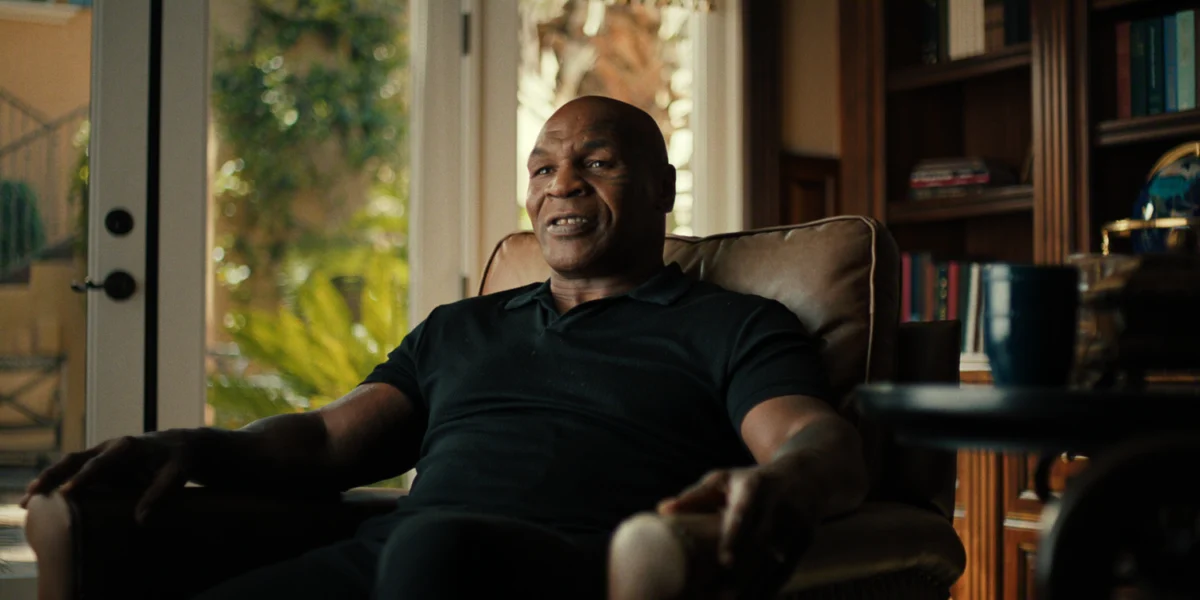
This duality takes center stage in Tyson, a new four-part documentary series directed by Floyd Russ, scheduled to premiere on Tuesday, October 13, on Netflix. While the project is not technically an authorized biopic or vanity piece—Tyson is notably absent from the executive producer credits and presumably received no direct paycheck for his central participation—the series functions entirely on the former heavyweight champion’s terms. It is yet another iteration of the Mike Tyson story that has been told, re-told, and packaged across decades: candid, raw, and vulnerable in one breath; stubbornly, aggressively evasive in the next.
For all the objectionable, violent, and illegal behavior that has stained Tyson’s life and career, the fighter has never truly been "canceled" in the modern sense of the word. Aside from a brief hiatus during his prison sentence for rape in the 1990s, and a temporary cooling of public sentiment following the infamous ear-biting incident with Evander Holyfield, Tyson has maintained his formidable foothold in mainstream pop culture better than nearly any public figure with a comparable rap sheet.
Tyson captures this phenomenon in four aesthetically formulaic hours. It offers little in the way of groundbreaking information or fresh perspectives, primarily because Tyson has already spent a lifetime endlessly broadcasting his perspective. Yet, much like the fighter himself, the docuseries possesses a volatile vulnerability that remains perversely difficult to look away from.
Chronology
For viewers approaching the series looking to trace the man behind cultural touchstones like The Hangover, director Floyd Russ takes a strictly chronological approach, tracking the established milestones of Tyson’s life from his rough-and-tumble upbringing in the Brownsville neighborhood of Brooklyn to his early, systemic run-ins with the law.
The narrative follows Tyson into the juvenile detention facility where he first discovered boxing under the tutelage of juvenile counselor Bobby Stewart, who ultimately connected the troubled teenager to legendary trainer Cus D’Amato. D’Amato would serve as surrogate father, mentor, and the architectural mind behind the terrifying peak of Tyson’s athletic career.
Russ charts the dizzying rise, catastrophic fall, and subsequent rehabilitation arcs of Tyson’s boxing dominance. The documentary covers his rapid ascent as the youngest heavyweight champion in history—driven by a run of vicious, mesmerizing knockouts—interspersing the archival footage of his fights with the darker chapters of his personal life. The chronology tackles his turbulent, ill-fated marriage to actress Robin Givens, the 1992 Indianapolis rape trial and subsequent conviction, his volatile bouts with Evander Holyfield, the tragic accidental death of his daughter Exodus, and his heavily publicized struggles with drug addiction, relapses, and recovery.
However, the chronology is frequently held hostage by its subject. Nothing is strictly off-limits on paper, but in practice, access is governed entirely by Tyson’s shifting tolerance for introspection. While he speaks at length about his tumultuous relationship with Givens—acknowledging certain elements of marital discord while sidestepping direct confirmations of severe abuse—the narrative hits a brick wall regarding the rape accusation brought by Desiree Washington. When questioned on deeply contentious legal matters, Tyson delivers curt, one-sentence denials or fixes a menacing glare upon the director, effectively forcing Russ to pivot. Because key figures like Givens and Washington either declined to participate or went unresponsive to production inquiries, "what Tyson says goes" becomes the default editorial policy.
Supporting Data and Production Analysis
Clocking in as a substantial four-part commitment, Tyson adheres faithfully to the standardized, codified aesthetic of prestige sports documentaries popularized by networks like ESPN and HBO. The editing and pacing are overwhelmingly rudimentary. Throughout the runtime, viewers are subjected to familiar stylistic tropes: standard talking-head interviews interspersed with stock footage, predictable inserts, and recurring, literal cutaways to fluttering pigeons—a nod to Tyson’s lifelong, well-documented avian passion.
The fourth episode presents a missed opportunity for genuine tonal disruption when Tyson convinces director Russ to join him in smoking hallucinatory toad venom. Yet, even this bizarre, potentially revelatory sequence is flattened by a lack of cinematic flair or psychological unpacking.
Beyond the man himself, the docuseries relies on a robust roster of secondary voices spanning different eras of Tyson’s life. Childhood friends, gym partners, fellow pugilists, family members, and various associates populate the frame. Among the documentary’s emotional anchors are insightful, poignant conversations with boxing legends Lennox Lewis and James "Buster" Douglas. Douglas’s emotional reflection on what it meant to defeat the seemingly invincible Tyson just weeks after losing his own mother provides some of the series’ most resonant, human moments.
Equally compelling—and considerably more painful—are the interviews featuring Tyson’s children. They articulate with devastating clarity the unique psychological tightrope of navigating the positives and negatives of having Mike Tyson as a patriarch. Meanwhile, former manager Rory Holloway injects palpable, still-raw energy into the project, voicing a vivid sense of betrayal regarding the moment Tyson famously fired his entire management and legal team at the height of his powers.
Occasional outside commentators, notably journalist and cultural critic Van Lathan, attempt to inject broader socio-historical context. Lathan’s observations gesture toward framing Tyson as a complex product of American race relations and the specific historical legacy of the Black heavyweight champion. Tyson, an avowed student of boxing history, clearly possesses the intellectual capacity to engage with these themes deeply. Yet, Tyson consistently declines to elevate its ambitions, falling comfortably short of the monumental, sociological scope of landmark projects like O.J.: Made in America.
Adding a peculiar political and cultural footnote to the proceedings, Donald Trump appears as a talking head. Trump offers characteristically predictable, cavalier opinions regarding Tyson’s sexual assault allegations and overall cultural footprint, serving a role here that feels oddly reminiscent of his similarly jarring inclusion in Netflix’s recent Hulk Hogan: Real American documentary.
Official Responses and Industry Context
The release of Tyson arrives against a backdrop of ongoing fatigue and fascination regarding the commodification of trauma in sports media. Over the years, Tyson’s life story has been optioned, adapted, and commercialized across virtually every medium imaginable.
He was the focal point of Animal Planet’s Taking on Tyson, which centered on his passion for racing pigeons; he spearheaded Adult Swim’s animated comedy Mike Tyson Mysteries; and he spent years touring a successful one-man stage show about his life.
Tension surrounding the ownership of his life story reached a boiling point in 2022 when Hulu released Mike, an unauthorized biographical limited series. Tyson publicly lambished the project, famously launching a scathing social media tirade comparing Hulu to a "slave master" for profiting off his life story without his blessing or financial compensation. Ironically, as critics noted at the time, the unauthorized version of Tyson’s story ended up being virtually indistinguishable from the heavily curated, authorized narrative Tyson has spent decades meticulously constructing himself.
Netflix’s Tyson represents a continuation of this narrative monopoly. While the streamer has built a powerhouse division of true-crime and sports docuseries, responses to Tyson within the critical community highlight a growing exhaustion with the platform’s tendency to platform controversial, deeply flawed public figures without imposing rigorous journalistic friction. Because Russ declines to interrogate Tyson’s immunity from permanent public exile, the series occasionally borders on passive enablement, allowing the subject to dictate the boundaries of his own redemption arc.
Implications
The arrival of Tyson raises broader questions about the cultural appetite for rehabilitating controversial sports figures in the streaming era. Mike Tyson’s enduring legacy is a masterclass in modern celebrity resilience—demonstrating that immense athletic genius, combined with a compelling, raw personal vulnerability, can routinely eclipse severe legal transgressions and moral failings in the public consciousness.
For casual viewers or those entirely unfamiliar with Tyson’s previous autobiographical endeavors, the series may offer a startlingly intimate glimpse into the psyche of a deeply damaged, multi-faceted pugilist who shifts seamlessly between terrifying, humorous, introspective, and incoherent states. For seasoned boxing fans and media observers, however, Tyson ultimately feels like a missed opportunity—a four-hour exercise in preaching to the choir that prioritizes aesthetic comfort over hard-hitting investigative journalism.
Ultimately, Tyson is not a series designed to convert skeptics or alter the entrenched cultural consensus surrounding its subject. Those who are fundamentally opposed to the excessive platforming of a convicted felon and domestic abuser will—and perhaps should—skip it entirely. For those already drawn into the orbit of "Iron Mike," the docuseries provides precisely what Tyson has always offered: a captivating, infuriatingly controlled glimpse through a cracked window into the soul of one of sports’ most enduring enigmas.
