
Holiday Horror Gets Bloody: ‘Christmas at the Kringles’ Promises Yuletide Carnage with Official R-Rating
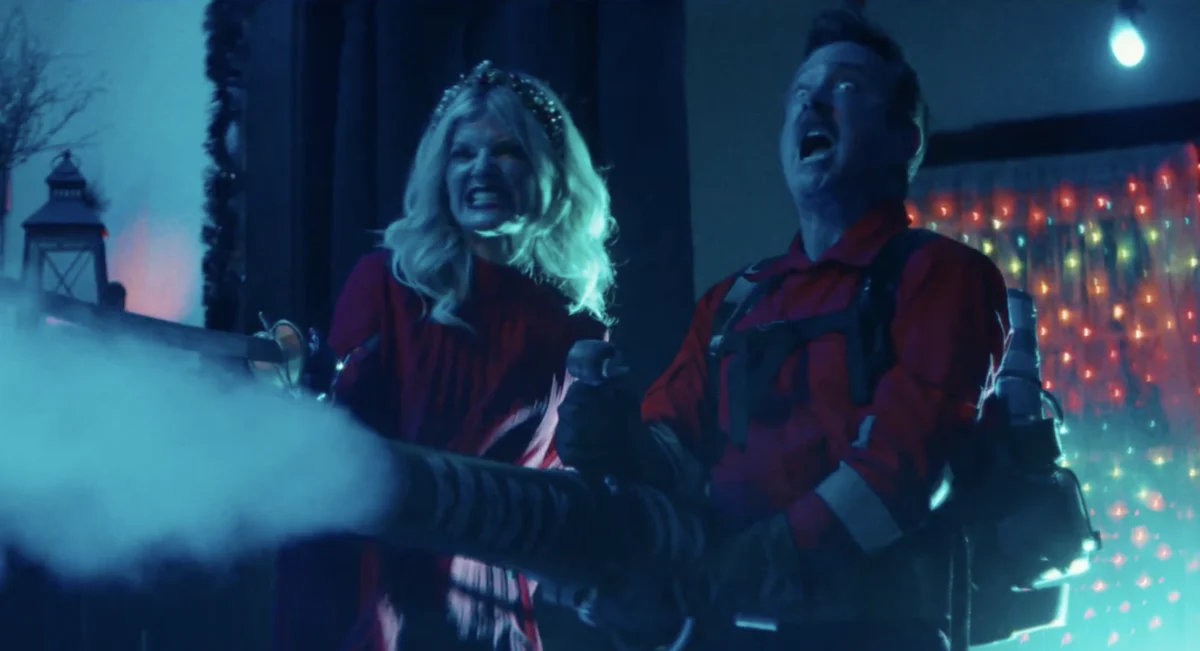
The holiday season is arriving early this year, but it’s bringing more than just good cheer and festive lights. For horror aficionados and fans of dark comedy, the most anticipated stocking stuffer of 2026 has officially received its seal of approval—or perhaps, its badge of infamy. Christmas at the Kringles, the latest genre-bending project from visionary director Kevin Lewis, has been officially slapped with an R rating by the Motion Picture Association (MPA).
The classification, cited for "some strong bloody violence, language, and some sexual material," confirms that audiences should prepare for a cinematic experience that trades sugarplums for chainsaws. As the industry prepares for the film’s theatrical debut on October 30, the marketing rollout has begun to lean heavily into the juxtaposition of suburban domesticity and unadulterated gore.
The Main Facts: A Nightmare on Evergreen Terrace
At its core, Christmas at the Kringles is a satirical suburban nightmare. The film centers on the Severson family, who, in a classic horror trope turned on its head, move into a picturesque neighborhood only to discover that their next-door neighbors, the Kringles, have taken their obsession with the holiday season to a truly psychotic level.
What begins as a seemingly quirky, year-round celebration of tinsel and carols quickly descends into a fight for survival. The narrative hook—that the Kringles are attempting to hypnotize and indoctrinate the Severson family into their twisted cult—serves as a backdrop for the high-octane violence promised by the film’s R-rated designation.
The film is written by Zack Imbrogno, known for his work on Slayers. By tapping into the dark underbelly of the "perfect" American neighborhood, Imbrogno and director Kevin Lewis aim to subvert the tropes of classic holiday films, blending the warmth of family traditions with the cold, sharp edges of a slasher flick.
Chronology of a Holiday Horror Hype
The road to the October 30 release has been marked by a deliberate and calculated campaign of escalating tension.
- Early Development: The project was announced as a follow-up to Kevin Lewis’s cult hit Willy’s Wonderland, which famously saw Nicolas Cage battling demonic animatronics. The studio sought to capture a similar "high-concept, low-sanity" energy for Christmas at the Kringles.
- The Casting Reveal: Throughout the production phase, the ensemble cast generated significant buzz. The inclusion of genre veterans like Thomas Lennon and Beverly D’Angelo—the latter being a direct nod to the National Lampoon’s Christmas Vacation legacy—signaled that the film would be deeply aware of its own cinematic lineage.
- The Trailer Drop: Released just last week, the full-length trailer provided the first concrete evidence of the film’s tone. Featuring imagery of chainsaws, elaborate bondage sequences, and the shocking reveal of a severed head serving as a gruesome Christmas tree topper, the trailer went viral within the horror community, cementing the film’s status as a must-see for the Halloween season.
- The MPA Rating: The official R-rating was the final piece of the puzzle, confirming that the "Christmas carnage" hinted at in the marketing materials would be delivered without restraint.
Supporting Data: Why the R-Rating Matters
In the current theatrical landscape, an R-rating is often viewed as a badge of honor for horror films. It signals to the core audience that the filmmaker has not been forced to sanitize the experience to satisfy a broader demographic.
The MPA’s specific citation of "strong bloody violence" is particularly telling. In recent years, horror films that lean into practical effects—a hallmark of Kevin Lewis’s directorial style—have found immense success at the box office. By eschewing the "PG-13 horror" route, Christmas at the Kringles positions itself alongside films like Barbarian and Talk to Me, which utilized their mature ratings to generate word-of-mouth excitement.
Furthermore, the film is backed by Briarcliff Entertainment, a studio that has shown an increasing aptitude for identifying and distributing high-concept genre fare. By scheduling the film for an October 30 release, they are effectively bridging the gap between Halloween and the holiday season, capturing the audience that is bored with traditional spooky season fare and ready for something more chaotic.

Official Responses and Creative Vision
Director Kevin Lewis has remained characteristically enthusiastic about the project. In previous discussions regarding his filmmaking philosophy, Lewis has emphasized the importance of "fun" in horror. "I don’t want to just scare the audience," he noted during early production meetings. "I want to take them on a ride where they’re laughing one second and looking away from the screen the next."
The cast, too, has been vocal about the unique atmosphere on set. Thomas Lennon, who brings his trademark deadpan delivery to the project, has described the script as "a fever dream of holiday anxiety." Meanwhile, horror royalty Beverly D’Angelo’s participation serves as a bridge between the traditional, wholesome holiday cinema of the 1980s and the modern, subversive horror landscape.
The collaboration between these actors suggests that Christmas at the Kringles is not merely a "slasher" but a character-driven dark comedy. The synergy between the ensemble cast—ranging from the comedic timing of Rob Riggle to the dramatic grounding of Ron Livingston—is expected to be the film’s strongest asset.
Implications for the Horror Genre
The release of Christmas at the Kringles comes at a pivotal time for horror cinema. We are currently witnessing a "Holiday Horror Renaissance," where the traditional symbols of joy are being repurposed as instruments of terror.
- The Subversion of Nostalgia: By centering the plot on a family moving into a new home and encountering "the neighbors from hell," the film plays on universal anxieties regarding suburban conformity.
- The "Willy’s Wonderland" Effect: The success of Lewis’s previous work has proven that there is a massive, underserved audience for "fun-horror." This film is the logical next step in that evolution.
- The Shift in Holiday Marketing: For decades, the holiday season was reserved for feel-good family dramas. By successfully carving out a space for a hard-R horror film in late October, Briarcliff Entertainment is testing the viability of a new sub-genre: the "Pre-Holiday Slasher."
If Christmas at the Kringles performs well at the box office, it could lead to a permanent shift in how studios view the final quarter of the year. Instead of waiting until December for holiday-themed horror, we may see an influx of films that use the early winter months to provide a sharper, more violent contrast to the sanitized content typically found on streaming platforms.
Final Verdict: Are You Ready for the Kringles?
As the October 30 release date looms, the excitement surrounding Christmas at the Kringles is palpable. It is a film that promises to be loud, proud, and unapologetically bloody. With a script that balances the absurdity of a cult-leader Santa with the visceral terror of a home invasion, it is positioned to become a staple of modern horror viewing.
Whether you are in it for the gore, the dark comedy, or simply to see a severed head serve as a holiday centerpiece, one thing is certain: your relationship with your neighbors will never be the same after you watch this film. The Kringles are waiting, and they are definitely not interested in a silent night.
Prepare your chainsaws, mark your calendars, and keep your doors locked. The naughty list has never looked this inviting.
