
Navigating the Abyss: Brian Duffield’s ‘Whalefall’ Delivers a Visceral, High-Stakes Survival Masterpiece
Main Facts
Released in 2026, Whalefall is a gripping, high-concept survival thriller directed by Brian Duffield, whose previous work on No One Will Save You established his penchant for intense, high-stakes cinematic tension. Adapted from Daniel Kraus’s acclaimed, best-selling novel of the same name, the film features a powerhouse ensemble cast led by Austin Abrams as Jay Gardiner and Josh Brolin as his estranged father, Mitt Gardiner. The supporting cast includes Elisabeth Shue, John Ortiz, Jane Levy, and Emily Rudd.
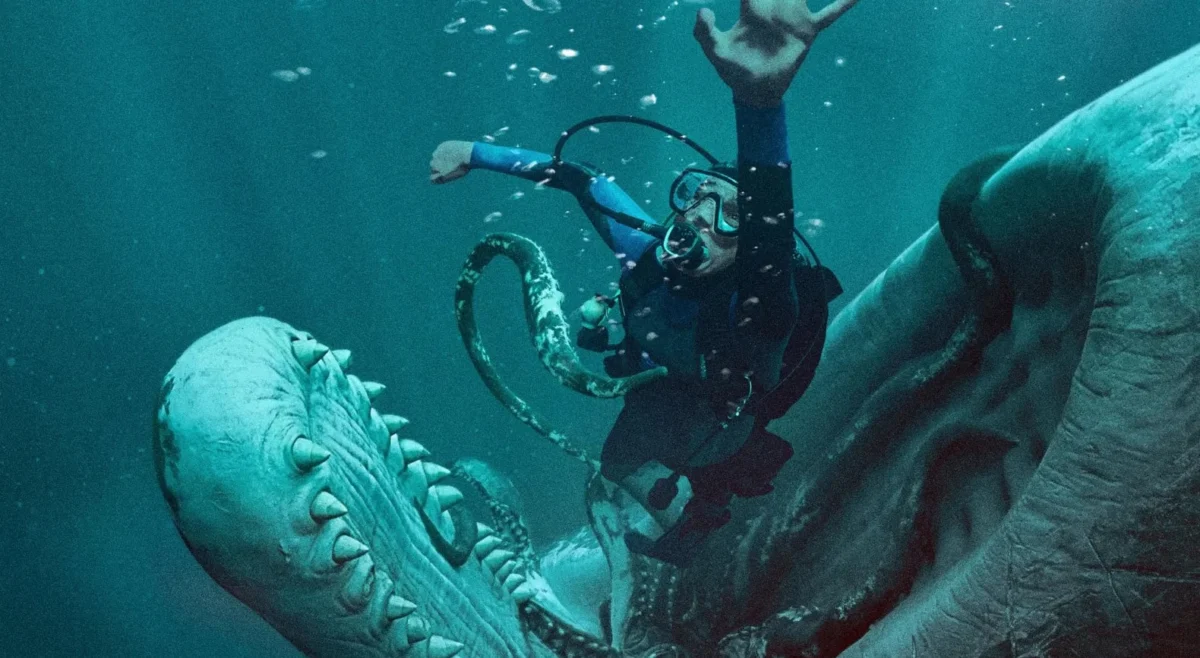
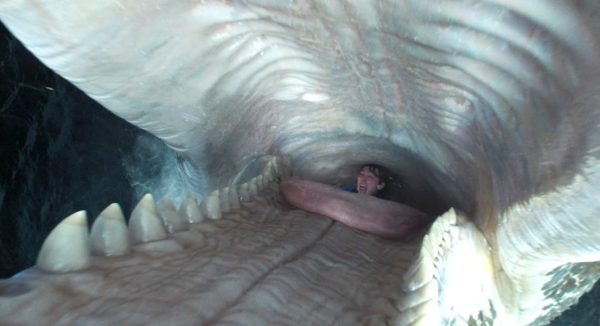
At its core, the film’s premise is as audacious as it is perilous: following the death of his father, young diver Jay Gardiner ventures into the chilly, unforgiving waters off the central coast of California to locate his father’s remains. However, his mission takes a horrific turn when a colossal sperm whale swallows him alive. Trapped within the pulsating, alien landscape of the leviathan’s digestive tract, Jay must navigate a claustrophobic nightmare against the ticking clock of his rapidly depleting oxygen supply.

Rather than relying purely on creature-feature spectacle, Whalefall roots its harrowing premise in deep-seated familial trauma, functioning simultaneously as a pulse-pounding action-adventure and a poignant exploration of grief, reconciliation, and paternal expectations.
Chronology: From Fractured Memories to the Belly of the Beast
The narrative structure of Whalefall operates across two distinct temporal strands, weaving the psychological weight of the past directly into the immediate perils of the present.
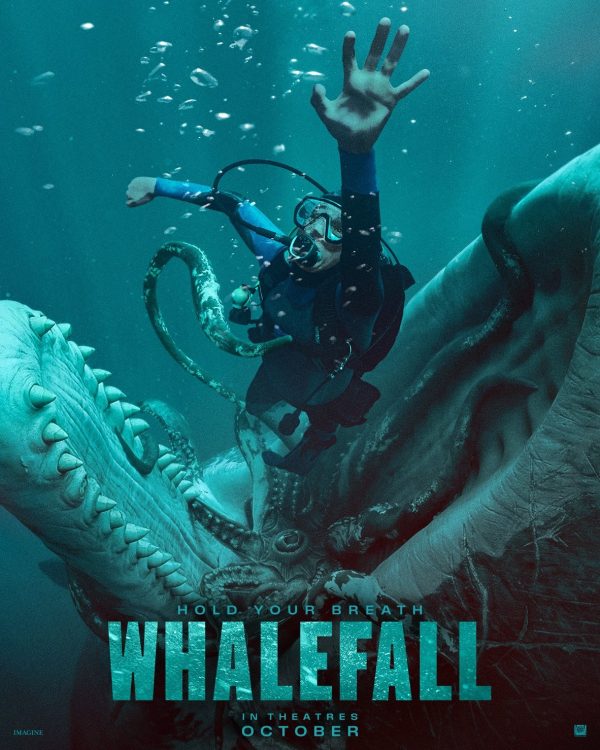
In the present timeline, a bruised and emotionally detached Jay Gardiner resolves to execute a dangerous, defiant dive at dawn. It is an act driven by a mixture of unresolved grief and lingering resentment—a final, silent "fck you" to a man who dominated his life even in death. As Jay descends into the murky Pacific depths, surrounded by swirling kelp and inquisitive marine life, his quiet solitude is shattered. First confronted by a colossal, 20,000 Leagues Under the Sea*-esque squid, Jay is immediately swept into an even greater catastrophe: he is ingested by a giant sperm whale.
Intercut with Jay’s claustrophobic race for survival inside the creature are vital flashbacks establishing his relationship with his father, Mitt (Josh Brolin). Mitt is portrayed as a rugged, uncompromising figure, utterly consumed by a romanticized obsession with nature while remaining emotionally illiterate when dealing with his own family. The flashbacks depict a childhood marked by relentless emotional belittling. Mitt constantly berates Jay for perceived weaknesses—such as a small lung capacity, a biological vulnerability that serves as brilliant, nerve-wracking foreshadowing for the third act—and discourages everyday adolescent milestones.

Trapped deep within the whale’s innards, Jay’s timeline narrows down to a matter of minutes. Every movement becomes a calculated risk as he progresses through the biological compartments of the beast, attempting to find an exit before his oxygen tanks run completely dry.
Supporting Data and Production Insights
The success of a single-setting survival film hinges entirely on the audience’s emotional investment in the protagonist. Following in the cinematic footsteps of suffocating solitary masterpieces like 127 Hours, Buried, and The Martian, Whalefall avoids feeling like a cheap gimmick thanks to meticulous craftsmanship and powerhouse performances.

- Cast and Performances: Austin Abrams carries the film on his shoulders, delivering a career-defining physical and emotional performance. Abrams expertly mimics the terror and vulnerability of a young man forced to confront his mortality, infusing his character’s internal monologues with genuine emotional resonance rather than utilizing them merely as expositional crutches. Meanwhile, Josh Brolin brings a formidable, gruff intensity to Mitt Gardiner, channeling a stubborn pig-headedness reminiscent of his work in The Dog Stars.
- Direction and Cinematography: Director Brian Duffield utilizes color theory masterfully to establish mood. The mourning sequences on land are washed in a drab, melancholic filter, starkly contrasting with the vibrant, sunlit flashbacks of Jay’s youth. Once inside the whale, the visual palette shifts dramatically. Duffield and his cinematography team construct an environment that feels like a cross between Dante’s circles of hell and a grotesque, organic obstacle course. Flesh pulses, bioluminescent sparks streak across stomach linings, and visceral pools of digestive ooze evoke a nauseatingly realistic atmosphere.
- Sound Design and Immersion: The acoustic landscape of the film plays a monumental role in ratcheting up tension. The squelches, gurgles, and rhythmic heartbeats of the leviathan are mixed with agonizing precision, making the theatrical experience—particularly in format screenings like 4DX—an overwhelmingly immersive test of nerves.
Official Responses and Critical Reception
Upon its 2026 theatrical run, Whalefall has drawn widespread acclaim from critics and audiences alike, frequently lauded for its ability to elevate a preposterous-sounding logline into a deeply human drama.
Industry critics have singled out Daniel Kraus’s faithful adaptation of his own source material for maintaining narrative momentum without sacrificing emotional gravity. Special praise has been directed at Austin Abrams, whose breakout turn has been championed as a masterclass in solo acting. Reviewers have noted that Abrams manages to make viewers genuinely care about Jay’s psychological healing just as much as his physical escape from the whale’s digestive acids.
While mainstream audiences initially flocked to the film drawn by the sheer novelty of a "man-in-a-whale" concept, critical reviews have heavily emphasized that the movie’s true strength lies in its refusal to lean into campy, cartoonish action tropes. Studio insiders note that the production team deliberately sought to ground the surreal narrative in biological realism, collaborating with marine experts to conceptualize the internal architecture of the sperm whale with anatomical plausibility, albeit dialed up for cinematic horror.
Implications for the Survival Genre and Cinematic Adaptation
- Elevating High-Concept Cinema: Whalefall proves that high-concept premises do not need to sacrifice narrative depth or thematic resonance. By anchoring a bizarre, larger-than-life survival scenario in the gritty realism of generational trauma, the film sets a new standard for how modern survival thrillers can balance spectacle with emotional character arcs.
- A Shift in Book-to-Screen Fidelity: With author Daniel Kraus directly adapting his own work, the film demonstrates the creative potency of keeping the original visionary closely tied to the filmmaking process. This success is likely to encourage studios to grant authors greater creative control over adaptations of speculative and survival fiction.
- The Tonal Balancing Act: The film’s bold third-act tonal shift—moving away from pure kinetic panic into a more meditative, acceptance-driven resolution—has sparked significant industry conversation. While it risks alienating audiences expecting a popcorn-munching creature feature like The Meg, it ultimately rewards viewers looking for narrative maturity. Whalefall signals a welcome shift toward treating audiences with respect, proving that blockbusters and indie-spirited character studies can successfully coexist within the same cinematic beast.
