
The Battle Over the No Fakes Act: Senate Deadlock Highlights the High-Stakes Clash Between AI Regulation and Free Speech
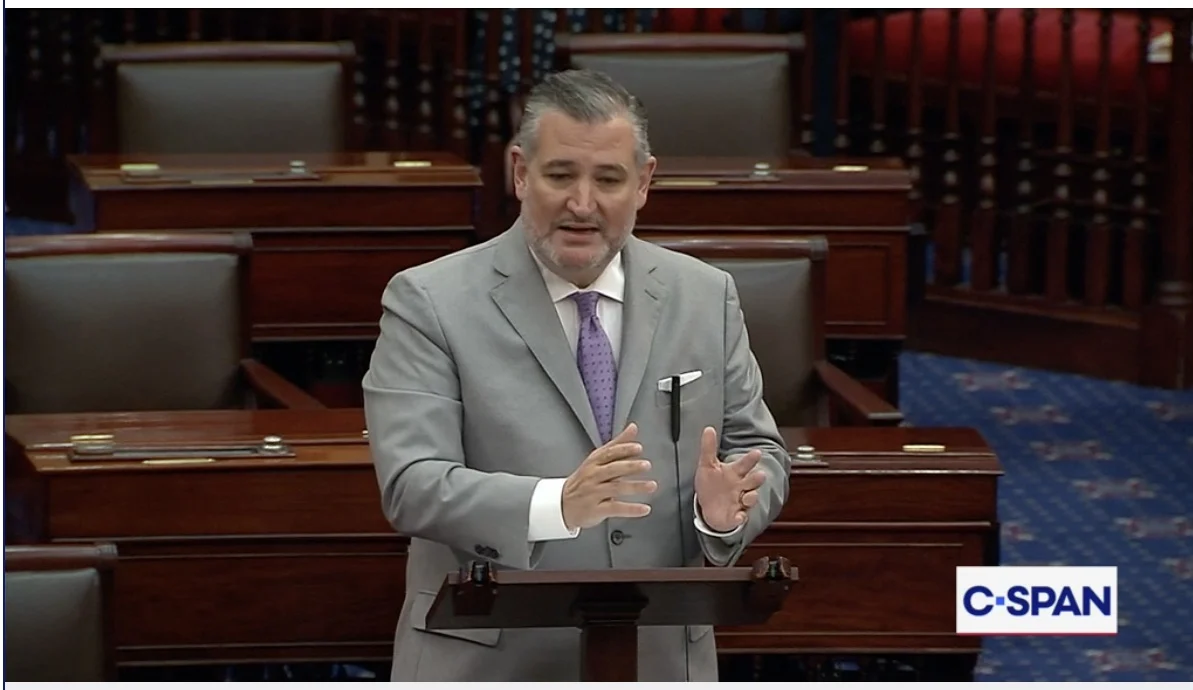
WASHINGTON — In a legislative showdown that underscores the complex friction between emerging artificial intelligence technologies and foundational constitutional protections, the bipartisan No Fakes Act was abruptly blocked in the U.S. Senate on Wednesday.
Senator Ted Cruz (R-TX) brought the fast-track momentum of the high-profile bill to a grinding halt, raising red flags over potential overreach regarding political commentary, parody, and satirical content. The setback prevents the legislation from securing a swift floor vote ahead of the congressional recess, leaving lawmakers, Hollywood heavyweights, and tech giants grappling with how to effectively police unauthorized digital replicas without trampling on the First Amendment.
The high-stakes debate brings to the forefront a fundamental question of the modern digital age: How can the law protect individuals from having their identities hijacked by generative AI deepfakes while fiercely safeguarding the right to lampoon politicians, create political memes, and engage in satirical discourse?
Main Facts: What the No Fakes Act Proposes
The No Fakes Act is designed to create a unified, federal intellectual property right over an individual’s voice and likeness. In an era where hyper-realistic deepfakes can be generated in seconds using consumer-grade software, the legislation seeks to grant every person—from A-list celebrities and professional athletes to private citizens—the legal standing to authorize or prohibit the commercial exploitation of their digital replications.
Core Provisions of the Bill
- Digital Ownership Rights: Individuals gain the legal right to control the commercial use of their voice and likeness in digital replicas.
- Statutory Exemptions: The bill explicitly carves out exceptions for legitimate forms of media, including news reporting, documentaries, sports broadcasting, and biographical works.
- Expressive Works: Protections are also written to cover commentary, criticism, and parody, aiming to shield traditional creative works from liability.
- Remedies and Recourse: The legislation establishes takedown mechanisms and legal avenues for victims whose digital likenesses are utilized without authorization or compensation.
Despite boasting an eclectic coalition of supporters—ranging from major entertainment industry unions and Hollywood studios to top-tier record labels and artificial intelligence developers like OpenAI and Google/YouTube—the legislative machinery hit a brick wall on the Senate floor.
Chronology of the Legislative Roadblock
To understand how the No Fakes Act arrived at this contentious impasse, it is necessary to trace its legislative journey through the halls of Congress over recent months.
June: Clearing the Judiciary Committee
The bill’s momentum appeared steady when it successfully cleared the Senate Judiciary Committee in June. During committee deliberations, Senator Cruz voted in favor of moving the legislation forward. However, even at that early stage, Cruz signaled reservations, specifically questioning how the bill’s language would apply to political satire and meme culture. He urged the bill’s sponsors to refine those sections before the measure advanced to the full Senate floor.
September: The Push for a Pre-Recess Vote
As the legislative calendar wound down ahead of the midterm-season recess, key sponsors sought to fast-track the bill. Recognizing the urgent threats posed by unauthorized AI-generated content—particularly as political campaigns gear up and studios face unresolved labor anxieties—proponents aimed to secure a quick floor victory.
Wednesday: The Senate Floor Objection
When the bill was brought up for expedited consideration, Senator Cruz formally objected, effectively sidelining the legislation for the immediate future. Cruz maintained that despite earlier discussions, the current draft of the bill still failed to provide ironclad, unambiguous protections for satirical publications, political commentators, and meme creators.
Cruz stated that while he supports the overarching goal of stopping malicious deepfakes, his staff will need to work intensively with the bill’s sponsors over the coming weeks to tighten free speech safeguards before he allows the legislation to advance.
Supporting Data and Context: The AI Wild West
The urgency behind the No Fakes Act stems from a rapidly escalating crisis in digital media, where generative AI tools have democratized the ability to clone human voices and superimpose faces onto video footage with terrifying accuracy.
High-Profile Political and Satirical Examples
During his Senate floor remarks, Senator Cruz pointed to specific, high-profile instances of AI usage to illustrate the gray areas that concern him. He questioned whether the legislation’s vague definitions could sweep up popular satirical outlets like The Onion or the The Babylon Bee.
Furthermore, Cruz highlighted real-world political communications that blur the lines of parody and propaganda:
- Spencer Pratt’s Mayoral Campaign: Los Angeles media personality and political hopeful Spencer Pratt made waves by featuring an AI-generated deepfake of rival mayoral candidate Karen Bass, altered to resemble The Joker from Batman. Under strict liability regimes, critics ask whether such aggressive political parody could face crippling legal challenges.
- Donald Trump’s Digital Communications: Former President Donald Trump and various political action committees have frequently utilized AI-generated imagery and deepfakes in political communications, ranging from whimsical endorsements to manipulated depictions of political adversaries.
These examples highlight the central dilemma: Where does protected political speech end, and unauthorized identity misappropriation begin?
Official Responses and Cross-Aisle Tensions
The blocking of the bill has sparked an intense war of words among key senators, revealing deep divisions over how the legislation handles constitutional rights and enforcement mechanisms.
Senator Ted Cruz: The Free Speech Defense
Explaining his rationale for halting the bill, Cruz emphasized that the current framework delegates too much power to technology corporations to determine what constitutes "bona fide" parody.
"One of my concerns about how this bill is drafted right now is it will apply to websites like the Babylon Bee or The Onion, and it leaves the decision as to whether someone’s use of a likeness falls within the exception," Cruz said on the Senate floor. "It creates an exception for what it calls bonafide parody, but it leaves to big tech to make the decision whether it falls in that exception or not."
Cruz maintained that he wants to see a robust anti-deepfake bill pass, but insisted that the current text leaves too much room for subjective interpretation by corporate platforms rather than independent judicial review.
Senator Marsha Blackburn: Defending the Framework
Senator Marsha Blackburn (R-TN), one of the bill’s primary architects and co-sponsors, strongly pushed back against Cruz’s characterization, asserting that the necessary safeguards are already firmly embedded in the legislation.
"This bill contains the necessary broad exceptions for entire categories of speech," Blackburn argued. She insisted that the protections Cruz is demanding "are there" and noted that her team has spent considerable time attempting to collaborate with Cruz’s staff on clarifying language.
Blackburn emphasized that the legislation purposefully places the ultimate authority in the hands of the judicial system, not tech platforms.
"We have worked with First Amendment legal experts in drafting the bill, and we are confident that it is First Amendment compliant. We have even doubled down on this language," she stated.
Detailing the bill’s operational safeguards, Blackburn explained:
"If someone believes their content that was removed from this bill was protected speech, they can submit a counter-notice triggering judicial review within 14 days if the victim wants the material to stay down. Otherwise, the content can go right back up."
Senator Chris Coons: The Pragmatic Appeal
Weighing in on the stalemate, Senator Chris Coons (D-DE), another foundational co-sponsor of the legislation, urged his colleagues not to let legislative perfection derail necessary progress in combating digital fraud and exploitation.
"We should not let the perfect be the enemy of the good," Coons warned, reflecting the anxiety among lawmakers that failing to pass federal standards leaves creators, politicians, and everyday citizens entirely vulnerable to algorithmic abuse.
Implications: What Lies Ahead for AI Regulation
The temporary stalling of the No Fakes Act carries profound implications for the entertainment industry, Silicon Valley, and the American political landscape.
1. The Looming Threat of Unregulated Deepfakes
Without a federal standard governing digital replicas, victims of malicious deepfakes—ranging from non-consensual explicit imagery targeting private individuals to fraudulent political endorsements—must rely on a patchwork of state laws, common-law right of publicity claims, and voluntary platform policies. This fragmented legal environment makes it exceedingly difficult for victims to seek swift justice.
2. Hollywood and Silicon Valley Alignment Tested
The broad coalition backing the bill represents a rare moment of alignment between creative guilds (such as SAG-AFTRA), major movie studios, record labels, and massive technology companies like OpenAI and Google. These entities share a vested interest in establishing clear legal boundaries for generative AI training data and output generation. However, the legislative roadblock proves that even broad coalitions can stumble when constitutional free speech concerns are injected into the debate.
3. The Path to Compromise
Despite the setback, neither side has signaled an intention to abandon the legislation permanently. Senator Cruz expressed a willingness to collaborate with sponsors in the coming weeks to refine the text. Whether this involves tightening the definitions of satire, limiting the enforcement powers of tech platforms, or creating clearer safe harbors for political commentary, the coming weeks will test the limits of bipartisan cooperation in an increasingly polarized Congress.
As generative AI technologies continue to evolve at a breakneck pace, the pressure on lawmakers to strike the delicate balance between protecting personal identity and preserving the sacred tradition of political satire has never been higher. The No Fakes Act may be temporarily sidelined, but the debate over who controls our digital faces and voices has only just begun.
