Remembering Sam Neill: The Reluctant Antichrist, Cthulhu’s Favorite Skeptic, and Cinema’s Ultimate Everyman
The cinematic landscape lost one of its most grounding, versatile, and deeply beloved figures with the passing of actor Sam Neill at the age of 78. Across a career spanning more than five decades, Neill cultivated a rare, enviable reputation: he was a consummate chameleon who could seamlessly pivot from high-art international dramas to lurid B-movie creature features, all while maintaining the grounded warmth of the proverbial neighbor next door.
From battling prehistoric beasts in blockbuster franchises to plumbing the psychological depths of cosmic horror and arthouse madness, Neill’s footprint on modern cinema is indelible. Yet, for all his marquee-lighting credits, his off-screen persona as a New Zealand farmer, winegrower, and unapologetic animal lover proved just as enduring to millions of admirers worldwide.
Main Facts: A Career Defined by Range and Resilience
Sam Neill’s filmography is a masterclass in resistance to typecasting. While Hollywood often sought to box him into the role of the beleaguered, rationalist authority figure—most famously as paleontologist Dr. Alan Grant in Steven Spielberg’s Jurassic Park (1993)—Neill consistently subverted expectations.
He was equally at home embodying pure malice, whether playing the adult Antichrist in The Omen III: The Final Conflict (1981) or unraveling into cosmic insanity in John Carpenter’s Lovecraftian mind-bender In the Mouth of Madness (1994). He collaborated with visionary auteurs across the globe, including Andrzej Żuławski, Jane Campion, Phillip Noyce, and Steven Spielberg, earning critical acclaim and box-office dominance alike.
Off-screen, Neill was a committed environmental activist, a generous philanthropist, and the proud proprietor of Two Paddocks, an organic wine estate in Central Otago, New Zealand. It was this rich tapestry of high-profile artistic achievement and grounded, humble living that defined his public legacy right up to his final days.
Chronology: From Northern Ireland Roots to Global Stardom
Early Breakthroughs and International Art-House Acclaim
Born in Northern Ireland and raised in New Zealand, Neill’s journey to international cinema was built on a foundation of fierce theatrical and arthouse dedication. His breakthrough leading role in American and international consciousness arrived in 1981, a banner year that showcased his staggering range.
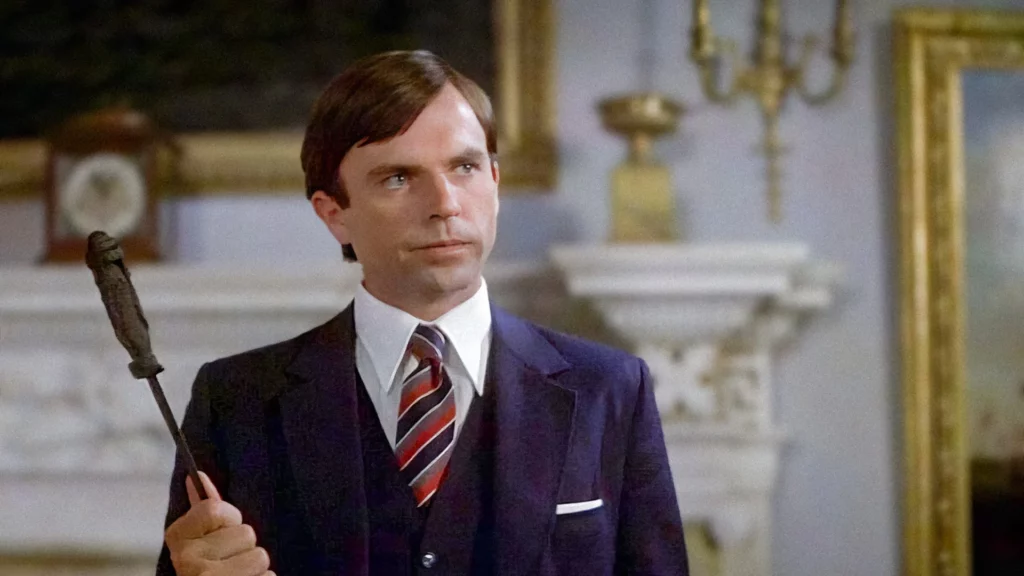
First came his haunting turn as Damien Thorn, the Washington power player and corporate CEO who also happens to be the literal Son of Satan, in The Omen III: The Final Conflict. Though the threequel received mixed reviews, it cemented Neill’s ability to project quiet, chilling menace.
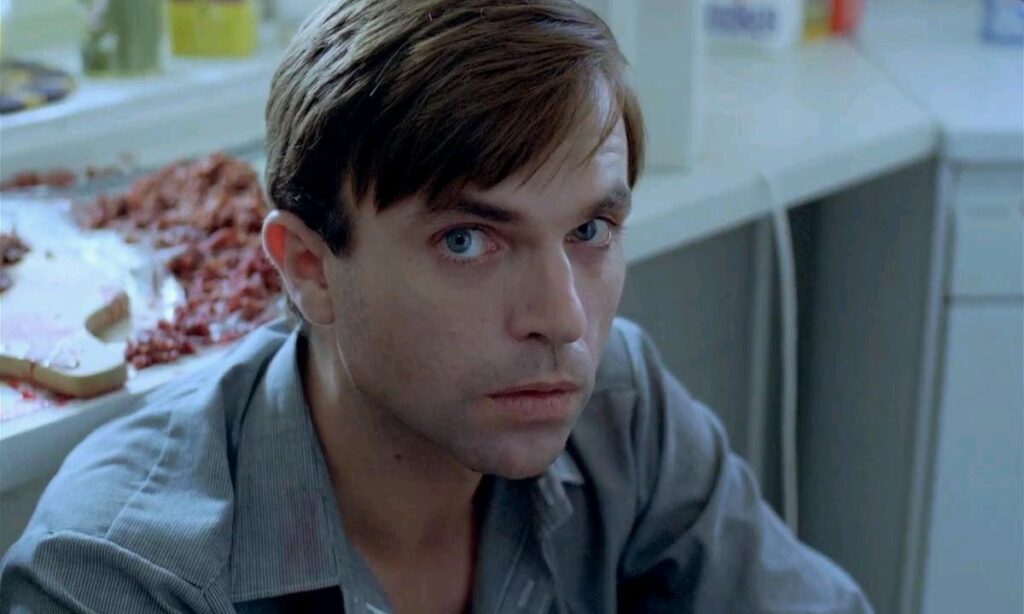
Later that same year, Neill delivered a blistering, psychologically complex performance in Andrzej Żuławski’s notoriously intense psychological horror film Possession, opposite Isabelle Adjani. Recommendations from legends like James Mason—who had spotted Neill in Gillian Armstrong’s 1979 Australian arthouse hit My Brilliant Career—helped position the young actor as a formidable new force in global cinema. Neill’s early-1980s cachet even earned him a high-profile screen test for the role of James Bond in The Living Daylights (1987), an experience Neill later humorously dismissed as one of the most mortifying episodes of his life.
The Blockbuster Era and Peak Versatility
The late 1980s and early 1990s established Neill as a reliable anchor for both psychological thrillers and prestige dramas. He held his own opposite heavyweights like Meryl Streep in A Cry in the Dark (1988) and Holly Hunter in Jane Campion’s The Piano (1993). He also displayed gritty, physical survival chops alongside a young Nicole Kidman in Phillip Noyce’s tense maritime thriller Dead Calm (1988)—a performance that famously caught Steven Spielberg’s eye.
That attention led directly to the defining role of Neill’s career: Dr. Alan Grant in Jurassic Park (1993). As the skeptical paleontologist thrust into a living nightmare of cloned dinosaurs, Neill offered a cost-effective, deeply human riff on Harrison Ford’s classic Indiana Jones archetype. His wide-eyed, breathless realization ("They do move in herds") remains one of the most iconic moments in blockbuster history.
Genre Masterpieces and Mature Reflection
In the wake of Jurassic Park, Neill leaned heavily into intellectual property and wild genre fare. He reunited with John Carpenter for In the Mouth of Madness (1994)—playing cynical insurance investigator John Trent sliding into absolute paranoia—and starred in Paul W.S. Anderson’s sci-fi horror cult classic Event Horizon (1997).
In 1995, Neill stepped behind the camera to codirect Cinema of Unease with Judy Rymer, a piercing, deeply personal documentary exploring the troubled psychological undercurrents and religious fundamentalism embedded in New Zealand’s national cinema.
As he entered his later decades, Neill continued to work prolifically, balancing franchise returns (such as 2022’s Jurassic World Dominion) with quiet reflection, pastoral life, and candor regarding his health battles.
Supporting Data and Collaborative Alchamy
One of Neill’s most understated cinematic superpowers was his rare ability to elevate his co-stars. While many traditional "alpha-male" leading men operated best in isolation, Neill functioned as an alchemical partner to actresses. Whether sparring with Judy Davis in My Brilliant Career, matching Isabelle Adjani’s frantic intensity in Possession, anchoring Meryl Streep’s harrowing legal drama, or trading bemused, affectionate glances with Laura Dern in Jurassic Park, Neill always drew the best out of the people sharing the frame with him.
Furthermore, his box-office footprint is staggering. Jurassic Park shattered global records, and Neill’s filmography boasts cumulative worldwide grosses well into the billions of dollars. Yet, unlike many stars of similar magnitude, Neill weaponized self-deprecation to keep his ego firmly in check. One of his most widely shared anecdotes involving a billion-dollar press tour involved accidentally passing gas in front of Princess Diana at a London premiere and frantically plotting to blame it on his young son.
Official Responses and Tributes
The entertainment industry responded to Neill’s passing with an outpouring of genuine grief and admiration, cutting through the usual echo chamber of celebrity hyperbole.
Director John Carpenter, who directed Neill in both In the Mouth of Madness and Memoirs of an Invisible Man, shared a heartfelt tribute on social media:
"I’m heartbroken to hear about Sam. We made two movies together and every day on set was a masterclass in professionalism, humor, and grace. The world has lost a remarkable actor, father, farmer, and friend."
Director Gillian Armstrong, reflecting on their work together in My Brilliant Career, remembered the actor’s effortless charm, writing: "I suppose he just liked the cut of my jib… I unconsciously made you a LUST object!"
Fellow actors, filmmakers, and fans alike took to various platforms to celebrate not just his cinematic legacy, but his vibrant digital presence as a gentleman rancher. Under the handle @TwoPaddocks—named after his Central Otago wine estate—Neill routinely posted disarming, joyful content featuring candid selfies with cows, pigs, ducks, and chickens.
During the global anxieties of late 2019, Neill offered a quintessential piece of internet wisdom that encapsulated his philosophy on life:
"When the world seems close to pear-shaped… CUDDLE A DUCK. [It works…]"
True to his principled nature, Neill famously walked away from Twitter following its acquisition by Elon Musk, noting that he was no longer comfortable participating in a platform that had grown overly angry and divisive.
Implications: The Enduring Legacy of an Unconventional Icon
Sam Neill’s passing marks the closing chapter for a rare breed of movie star: one who could command the screen as a leading man in a multi-billion-dollar franchise, plunge headfirst into the grotesque depths of European art-house horror, and yet remain fundamentally grounded in the simple pleasures of rural life.
His legacy is also inextricably bound to his candor regarding mortality. Diagnosed with non-Hodgkin lymphoma in his seventies, Neill addressed his health with characteristic pragmatism and an unquenchable thirst for existence. In a 2023 interview with the BBC, he remarked:
"I’m not afraid of dying. What I don’t want to do is to stop living, because I really enjoy living."
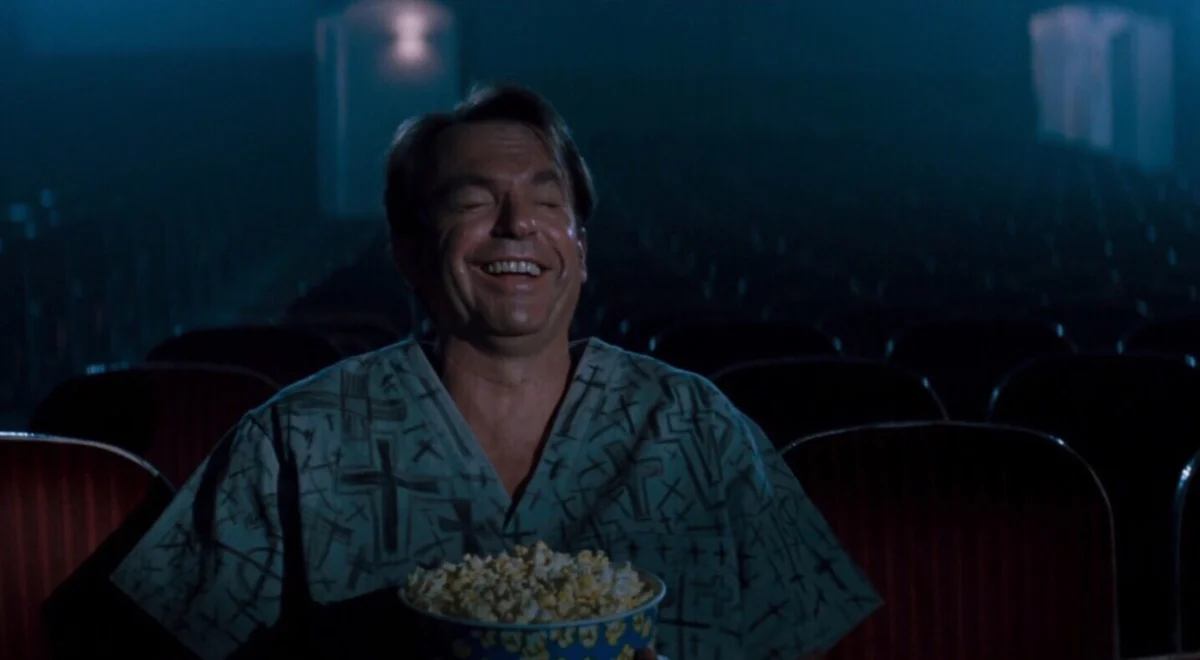
As cinephiles replay his iconic performances—from the sun-dappled plains of Jurassic Park to the terrifying final frame of In the Mouth of Madness, where an unhinged John Trent happily munches on popcorn while watching the world end on a 35mm screen—Sam Neill’s cinematic legacy remains secure. His career was a testament to the fact that you don’t have to sacrifice your humanity to become a legend. The mouth of madness may have claimed his fictional characters, but Sam Neill’s warmth, wit, and artistic integrity ensure his memory will endure indefinitely.