
Roaring Back to the Big Screen: An In-Depth Look at Godzilla Minus Zero
By SciFiNow Staff Desk
Published: October 14, 2026
Main Facts
The legacy of the King of the Monsters continues to expand with breathtaking intensity. Godzilla Minus Zero, the highly anticipated 1949-set sequel to the Academy Award-winning, VFX-triumph Godzilla Minus One, is officially slated for a theatrical release in cinemas on November 6, 2026.
Directed once again by visionary filmmaker Takashi Yamazaki, the sequel ratchets the cinematic dial all the way up. Reuniting the core surrogate family from the previous film—Noriko Ōishi (Minami Hamabe), Koichi Shikishima (Ryūnosuke Kamiki), and their adopted daughter Akiko (Sae Nagatani)—the narrative picks up in the fragile postwar recovery era of late-1940s Japan. However, the hard-earned peace is violently shattered when an even more terrifying threat emerges, forcing the traumatized survivors back into humanity’s desperate line of defense.
Supported by a stellar cast that includes Min Tanaka as the eccentric and tragic Professor Kanji Murakami and Masami Nagasawa as a brilliant genius meteorologist, Godzilla Minus Zero pairs its maximalist, apocalyptic action set pieces with a deeply entrenched exploration of postwar trauma, the horrific legacy of nuclear experimentation, and the weaponization of both nature and humanity. Bolstered by Naoki Satō’s booming, reimagined 1960s-inspired score and state-of-the-art IMAX-optimized visual effects, the film is already generating widespread critical acclaim as a masterclass in modern blockbuster filmmaking.
Chronology of the Franchise and Sequel Development
To understand the monumental weight of Godzilla Minus Zero, it is essential to trace the recent timeline of Toho’s live-action renaissance, which has completely revitalized the global kaiju phenomenon.
- Late 2023: Toho releases Godzilla Minus One, directed by Takashi Yamazaki. Set in immediate post-World War II Japan, the film becomes a historic critical and commercial darling, universally praised for blending intimate human drama with terrifying scale.
- Early 2024: Godzilla Minus One achieves an unprecedented milestone for the franchise by winning the Academy Award for Best Visual Effects at the 96th Academy Awards, proving that a modest budget combined with visionary direction could triumph over Hollywood mega-productions.
- Mid-to-Late 2025: Rumors swirl regarding a direct follow-up. Toho confirms that Takashi Yamazaki will return to helm a sequel, maintaining creative continuity and expanding the world established in Minus One.
- October 2026: Advance press screenings for Godzilla Minus Zero drop to ecstatic reviews, praising its hyper-charged visual design, deeper thematic integration of body horror, and affectionate nods to classic 1960s Godzilla eras.
- November 6, 2026: Godzilla Minus Zero officially arrives in cinemas worldwide, setting the stage for what box office analysts predict will be a massive theatrical run.
Chronology within the Cinematic Narrative
Within the internal timeline of the story itself, the progression highlights an escalating nightmare for the characters who thought they had survived the worst:
- The Ginza Aftermath: Following the catastrophic devastation of the Ginza attack depicted in the first film, Koichi, Noriko, and Akiko attempt to build a normal, domestic life together, perpetually managing physical injuries and psychological scars.
- The False Dawn: Noriko naively asks, "Will we ever live in peace?" believing that safety has finally been secured, unaware that an entirely separate prefecture has just suffered a devastating kaiju assault miles away.
- The New Threat Emerges: An unprecedented escalation manifests across the country. The mutations originating from past atomic testing evolve into a grotesque body horror storyline, forcing the government and civilian survivors to confront monsters of incomprehensible power.
- The Meteorological Defense Strike: Masami Nagasawa’s genius meteorologist character orchestrates a meticulously planned defense strategy, culminating in one of the most suspenseful and shocking narrative set pieces of the entire franchise.
Supporting Data and Production Analysis
The technical execution of Godzilla Minus Zero represents a massive leap forward from its predecessor, particularly in how practical aesthetics are fused with cutting-edge computer-generated imagery.
Visual Effects Breakdown
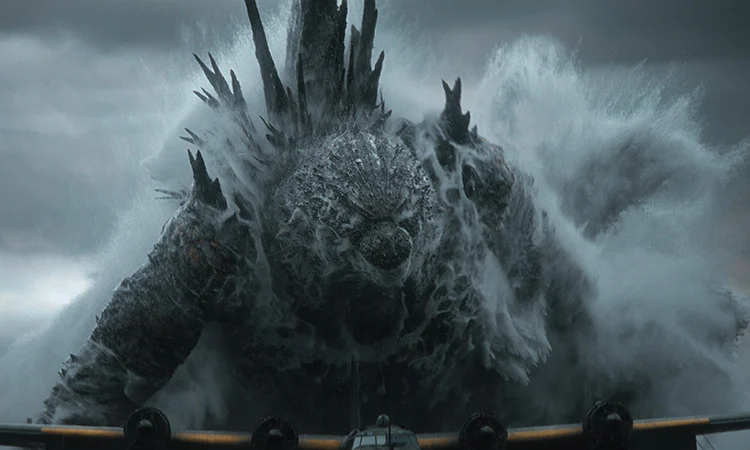
Reviewers have noted that the visual effects are "turned up to eleven." Where Minus One focused heavily on localized structural destruction in post-war Tokyo, Minus Zero scales up the chaotic environmental devastation. Houses are violently swept and spun into the air with the kinetic ferocity of a cinematic tornado—reminiscent of The Wizard of Oz, yet framed through the lens of utter annihilation. Lightning bolts crackle with blinding intensity, and blistering flames render the kaiju as both an elemental force of nature and a walking apocalyptic nightmare.
Sound Design and Musical Composition
Music plays a monumental role in anchoring the film’s tonal shifts. Composer Naoki Satō returns to deliver a booming sonic amalgamation that honors the franchise’s past while pushing into modern sonic landscapes. By boldly reimagining classic 1960s Godzilla themes, Satō bridges the gap between Showa-era camp and modern cinematic gravity, elevating every monster roar and military deployment into an operatic event.

Cast and Character Dynamics
- Ryūnosuke Kamiki as Koichi Shikishima: Continues his harrowing journey of survivor’s guilt, now compounded by the terrifying reality that his newly formed family is once again in the path of destruction.
- Minami Hamabe as Noriko Ōishi: Embodies the poignant vulnerability of a civilian grappling with systemic trauma, her storyline elevated by unsettling themes of human weaponization.
- Min Tanaka as Professor Kanji Murakami: Delivers a breathtakingly complex performance, balancing a comic, Dr. Jekyll and Mr. Hyde-esque revenge fantasy with a deeply haunting personal backstory.
- Masami Nagasawa as the Meteorologist: Brings intellectual rigor and tactical suspense to the forefront, spearheading the film’s most strategic military sequences.
Official Responses and Critical Reception
Early critical consensus points to Godzilla Minus Zero as a triumphant achievement that successfully honors the franchise’s rich, multi-decade history while forging an intensely modern identity.
Critics have particularly lauded director Takashi Yamazaki for refusing to play it safe. While some reviewers noted that the narrative occasionally leans into maximalist, over-emotional territory that borders on melodrama, the sheer awe-inspiring execution of the action set pieces easily eclipses any minor pacing grievances.
"The visual effects are turned up to eleven in this exhilarating blockbuster sequel… Godzilla Minus Zero captures the camp, the imagination, and fury of its predecessors with an intense and unforgettable potency. This is exhilarating blockbuster filmmaking. Give them all the awards!" — Katherine McLaughlin, SciFiNow
Furthermore, international audiences have responded enthusiastically to the film’s unyielding commentary on historical accountability. By framing the narrative around the complex emotions and lingering trauma of Japanese survivors caught between the devastating legacy of American military actions and the wrath of mutated nature, the film establishes a profound emotional gravity rarely found in modern blockbuster cinema.
Implications for the Franchise and the Kaiju Genre
The release of Godzilla Minus Zero carries massive implications for Toho’s long-term strategy regarding its crown jewel intellectual property, as well as the broader landscape of international science fiction cinema.
1. Raising the Bar for International VFX
Following the historic Oscar win of Godzilla Minus One, Minus Zero solidifies Toho’s visual effects division as a titan capable of competing with—and often outshining—Hollywood’s most expensive superhero and franchise blockbusters. By demonstrating that high-end visual fidelity can be achieved with efficient budgeting and visionary leadership, the film continues to redefine industry standards.
2. The Fusion of Camp and Prestige Drama
One of the most remarkable takeaways from the critical reception of Godzilla Minus Zero is its fearless tonal balancing act. By embracing the bombastic, slightly campy elements of classic 1960s monster battles ("those damn yanks!") alongside deeply serious examinations of body horror, radiation mutations, and psychological trauma, the film proves that the kaiju genre does not have to choose between intellectual prestige and crowd-pleasing entertainment. It can successfully house both.
3. Environmental and Geopolitical Resonance
As Noriko’s haunting question—"Will we ever live in peace?"—echoes through the narrative, the film maintains Godzilla’s foundational roots as a living embodiment of nuclear anxiety and environmental catastrophe. In an era marked by global tension and ecological uncertainty, Godzilla Minus Zero resonates deeply with contemporary anxieties, ensuring that the giant lizard remains as relevant today as he was during his 1954 debut.
As cinemas prepare to open their doors on November 6, 2026, anticipation is at an all-time high. Godzilla Minus Zero is not merely a sequel; it is a roaring declaration that the King of the Monsters is operating at the absolute peak of his cinematic powers.
