
A Triumph of Independent Vision: The Busan International Film Festival’s 31st Edition Honors Global Storytellers
The Busan International Film Festival (BIFF), a cornerstone of the global cinematic landscape, reached a crescendo of artistic celebration this week as it unveiled the winners of its prestigious Vision Awards. In a ceremony marked by the recognition of bold, experimental, and poignant storytelling, the 31st edition of the festival cemented its reputation as the premier launchpad for Asian and international independent cinema. As the festival nears its conclusion, the list of honorees reflects a diverse tapestry of voices—ranging from seasoned documentarians to emerging auteurs—all of whom have challenged the status quo of modern filmmaking.
The Big Winners: Defining the Vision of 2024
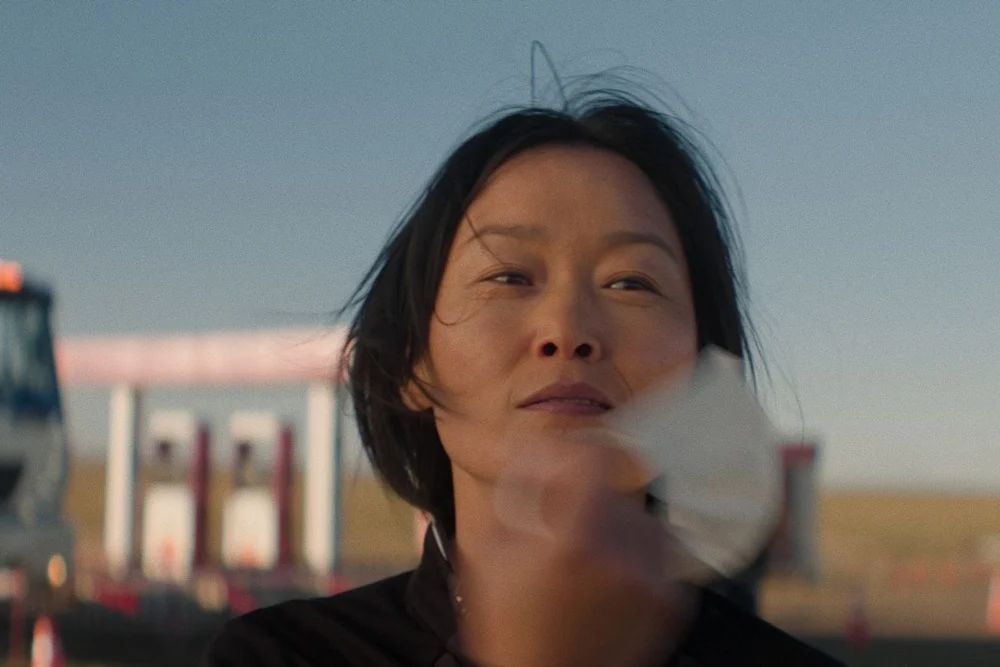
The standout star of this year’s awards gala was undoubtedly Sakhya Byamba’s Zogsool. Dominating the proceedings, the film secured a quadruple victory, demonstrating a rare consensus among juries. Zogsool claimed the esteemed Netpac Award, the Fipresci Award, and the Vision of Jiseok Award. Furthermore, it shared the Hylife Vision Award with Sailesh Rathnakumar’s Selvi, a film that garnered its own individual recognition by securing the Taipei Film Commission Award.
This overwhelming success for Zogsool underscores a recurring theme at this year’s BIFF: the return to raw, narrative-driven storytelling that resonates across cultural borders. Byamba’s work, which has captivated audiences and critics alike, represents the vanguard of a new generation of filmmakers who are utilizing the medium to explore complex sociopolitical and emotional landscapes.
Korean Cinema’s Homegrown Excellence
While the festival is a global affair, the local Korean contingent maintained a powerful presence, reaffirming the industry’s ongoing dominance in the independent sector. Jeong Jihye’s Full Moon emerged as a local titan, sweeping three major categories: the CGV Award, the K-Movie Award, and the Songwon Vision Audience Award (Korea).
The emotional depth of Korean independent film was further highlighted by Park Songyeol’s Beyond Love’s Horizon, which took home both the KBS Independent Film Award and the Critic b Award. The film’s impact was so profound that it served as the launching point for Won Hyangra, who secured one of the two coveted Actor of the Year honors. Sharing this accolade was Kang Seung-ho for his transformative performance in Cosmic Trace, a film that has been widely praised for its stylistic audacity.
Other notable Korean achievements included Oh Sehyeon’s Baler, which proved its resonance with both juries and viewers by winning the Jeong-in Award and the Citizen Critics’ Award. Kim Si-jin’s The Flower was also recognized, receiving the DGK Plus M Award, highlighting the festival’s commitment to supporting the next wave of Korean directors.
Documentaries and Short-Form Narratives: The Pulse of Reality
The BIFF Mecenat Award, which spotlights the most vital documentary work in the region, went to Yang Bo’s Agaar in the Asian category, while Yi Seungjun’s Can I Talk to You? took the Korean honors. These selections reflect the festival’s dedication to non-fiction filmmaking as a vehicle for truth-telling. A special mention was granted to Choi Se-dam’s A Woman Dancing on the Waves, signaling that the jury recognized the poetic, experimental potential within the documentary genre.
In the realm of short films, the Asian Sonje Award went to Soroush Shahpouri’s Fatima, while the Korean counterpart was awarded to Yun Taerang’s Toe’s. The jury also offered a special mention to Jung Jaeseo’s The Boy Who Fell to Earth, acknowledging the high level of competition in this category.
Chronology of a Festival
The 31st edition of BIFF, which opened its doors on October 6, has been a whirlwind of premieres, industry networking, and critical discourse. The festival serves as a bridge between the creative output of the East and the commercial interests of the West.
- October 6: The festival officially commenced, signaling the start of ten days of screenings and red-carpet events.
- October 10-13: The Asian Contents & Film Market (ACFM) took place, acting as the industry engine of the festival. During this window, production deals were brokered, and distributors scouted the next big international hits.
- Wednesday, Mid-Festival: The Vision Awards ceremony took place, serving as the mid-point climax of the event, where the festival’s core values were codified through the selection of winners.
- October 15: The festival is scheduled to close, capping off a cycle that has hosted thousands of film professionals and cinephiles.
Supporting Data: A Global Map of Recognition
The reach of the Busan International Film Festival extends far beyond the Korean peninsula. The breadth of the awards list illustrates a concerted effort to foster a truly global cinematic ecosystem. Among the international accolades:
- Face of the Future Award: Kumamoto Ryohei’s After the Song (Japan)
- The Heart of Eurasia Award: Arvin Belarmino’s Ria (Philippines)
- Bishkek International Film Festival-Central Asia Cinema Award: Chen Jianying’s There Will Be Snow
- International Film Festival of India – Vision Asia Award: Darkhan Tulegenov’s The Cord
These awards represent the festival’s role as a nexus for regional film circuits, where festivals from India, Kyrgyzstan, and beyond collaborate to promote independent cinema through shared platforms.
The Audience’s Verdict: A Shift in Taste
The Busan Cinephile Award, a highly anticipated honor, was bestowed upon Janay Boulos and Abd Alkader Habak for their harrowing and essential work, Birds of War. This award is particularly significant as it represents the voice of the festival’s dedicated student body, who represent the future generation of critics and filmmakers.
Additionally, the audience-led awards provided a clear look at what the public found most compelling this year. Shashank Walia’s Birds in the Dark won the Songwon Vision Audience Award for the Asia category. The Documentary Audience Award went to Im Yeonjeong’s Recovery, while the Flash Forward Audience Award—representing the festival’s commitment to new international voices—was awarded to the Spanish-helmed La Bola Negra, directed by Javier Calvo and Javier Ambrossi.
Implications for the Future of Film
The implications of the 31st BIFF are far-reaching. By centering on smaller-budget, high-concept films like Zogsool and Full Moon, the festival is pushing back against the increasing "blockbuster-ization" of the global cinema market. The success of these films suggests that audiences are hungry for stories that feel authentic, localized, and intellectually demanding.
For the industry, the festival serves as a vital barometer. When a film wins a Vision Award in Busan, it effectively gains a "seal of quality" that facilitates international distribution, festival circuits in Europe and North America, and eventual streaming acquisitions. The collaborative spirit shown between the festival and the Asian Contents & Film Market suggests that the industry is successfully navigating the transition toward hybrid models of distribution, where independent films find a home on both the big screen and digital platforms.
Conclusion
As the 31st Busan International Film Festival winds down, the legacy of this year’s edition is one of resilience and artistic curiosity. In a world of fragmented media, the festival remains a singular destination where the art of the moving image is protected, promoted, and celebrated. From the sweeping, four-fold victory of Zogsool to the quiet, introspective wins of documentaries like Agaar, the festival has succeeded in its primary goal: to provide a platform for the visionaries who define where cinema is going next. As attendees depart Busan, they carry with them not just memories of films, but a renewed sense of purpose for the industry at large.
