
Beyond the Screen: ‘Klara and the Sun’ Premiere Sparks Urgent Dialogue on Human Connection in the Age of AI
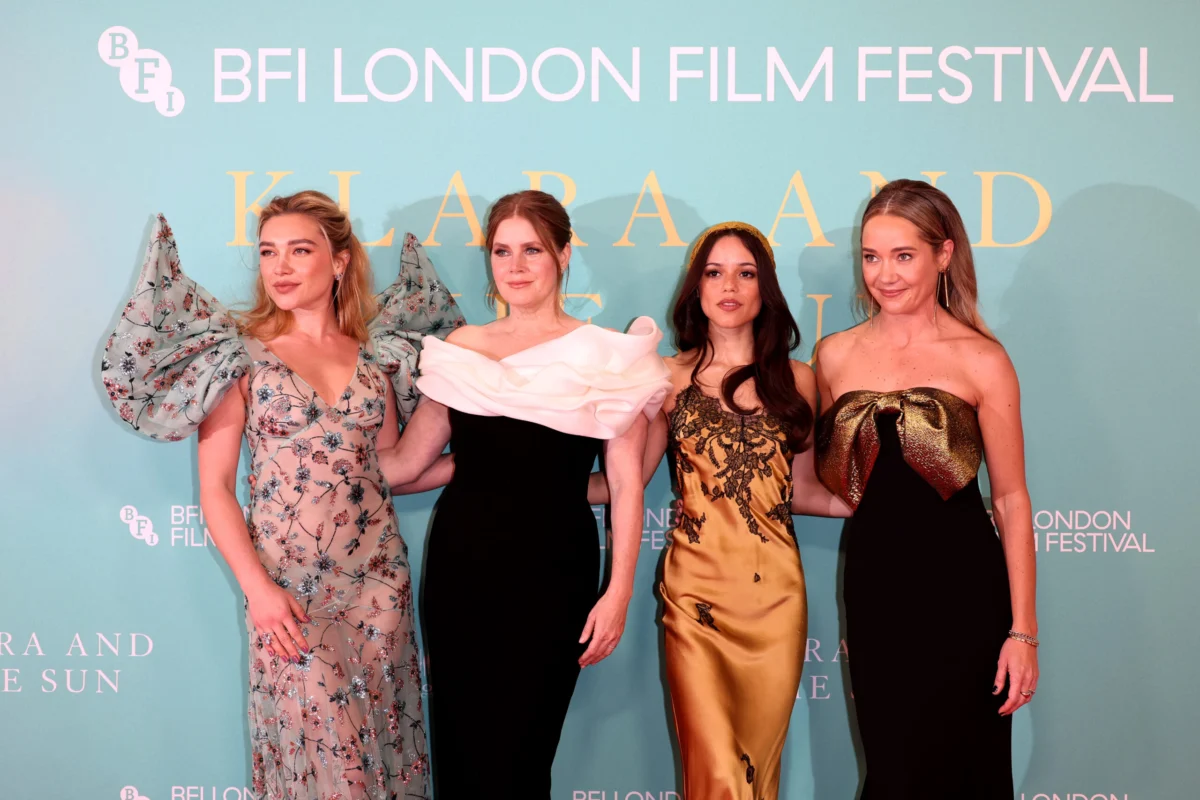
The London Film Festival became the epicenter of a profound cultural conversation this Thursday as the cast and creators of the highly anticipated dystopian drama Klara and the Sun gathered for its world premiere. Based on the 2021 bestselling novel by Nobel laureate Kazuo Ishiguro, the film serves as a mirror held up to a society increasingly mediated by digital interfaces, prompting its stars—most notably Jenna Ortega—to issue a clarion call for a return to genuine human presence.
Directed by Taika Waititi, the film arrives at a pivotal moment in global technological development. While science fiction has long explored the intersection of humanity and synthetic intelligence, Klara and the Sun eschews the well-worn tropes of malevolent machines, opting instead for a poignant exploration of empathy, loneliness, and the fragility of human relationships.
The Core Narrative: A Mirror to Modernity
The film is set in a fractured future defined by rapid advances in genetic engineering, which have effectively stratified humanity into rigid social castes. The story centers on Klara (Jenna Ortega), an "Artificial Friend" (AF)—a sophisticated android designed to provide companionship to children. Klara is purchased for Josie (Mia Tharia), a young girl struggling with a debilitating illness.
Unlike the hyper-connected, data-harvesting AI systems that dominate the contemporary zeitgeist, the version of artificial intelligence depicted in the film operates on a fundamentally different, more observational logic. As Ortega explained during the red carpet proceedings, Klara is not a repository of internet-scraped algorithms. Instead, her "consciousness" is built through observation of the tangible, physical world.
"AI today pulls information from the internet, but Klara derives her understanding from the real world," Ortega noted. "She is, in many ways, like a toddler. Portraying her required a deliberate rejection of robotic tropes; Taika and I wanted to emphasize a human, almost clumsy, quality—someone who is learning to exist through unknowing rather than pre-programmed perfection."
A Chronology of the Premiere and Production
The atmosphere at the London Film Festival was electric, characterized by a rare convergence of cinematic titans. The red carpet saw the arrival of Taika Waititi alongside his wife, Rita Ora, and a stellar ensemble cast including Amy Adams, Aran Murphy (son of Cillian Murphy), Natasha Lyonne, and Steve Buscemi.
The event also featured an unscripted moment of warmth as Florence Pugh, dressed in an eye-catching blue floral gown, joined the group for photographs. The camaraderie among the cast underscored the film’s central theme: the importance of showing up for one another.
The project’s journey from page to screen has been swift yet deliberate. Following the massive success of Ishiguro’s novel, the adaptation was fast-tracked by Sony Pictures. The production, which wrapped earlier this year, utilized the unique directorial lens of Waititi to translate Ishiguro’s minimalist, introspective prose into a visual language that balances dystopian coldness with the warmth of human longing. The film is currently slated for a wide theatrical release on October 23.
Supporting Data: The Shifting Landscape of AI
The thematic urgency of Klara and the Sun is underscored by the rapid acceleration of AI integration into daily life since the novel’s 2021 publication. When Ishiguro penned the source material, the public discourse regarding generative AI was largely academic or speculative. Today, it is an inescapable facet of commerce, creative arts, and social interaction.
"I am acutely aware that this film is being released into a world vastly different from the one in which my book was published five years ago," Ishiguro remarked on the carpet. "The anxiety surrounding technology has moved from the periphery to the absolute center of our lives. Yet, I want to clarify: this is not a cautionary tale about an AI that turns sinister or violent. It isn’t a story about machines killing off the human race. It is something much more subtle and, perhaps, more frighteningly relevant."

The "data" here is qualitative—the increasing reports of digital alienation and the erosion of sustained human attention spans. By casting an android as the protagonist, the film creates a "stranger in a strange land" scenario that forces the audience to re-examine the basic tenets of what it means to be a "friend" or a "caregiver."
Official Responses and Creative Vision
The creative team behind Klara and the Sun has been unified in their messaging: the film is a plea for "analog" living.
Amy Adams, who plays the role of Josie’s mother, highlighted the subjective nature of the viewing experience. "The sign of a successful film is one that speaks differently to every individual," she stated. "I’ve heard so many interpretations already. It’s a testament to the script and the source material that it doesn’t force a single conclusion upon the viewer, but rather invites them to find their own meaning in the story of an artificial being trying to love a human."
Taika Waititi, known for his ability to blend humor with profound melancholy, emphasized that the film’s direction was dictated by a desire for simplicity. "I want people to leave the theater and just… put the phone down," Waititi said. "We have forgotten how to just ‘be.’ We are constantly curating our digital lives rather than living our real ones. If this film encourages someone to look at the person standing right in front of them with renewed appreciation, we’ve done our job."
Implications: The Future of Human-AI Coexistence
The film’s existence poses a difficult question: If a machine can learn to love and observe as well as—or better than—a human, what happens to the status of the human soul?
Ishiguro’s involvement in the film’s promotion has also teased a new, mysterious collaboration with director Tim Burton. During the London premiere, the author revealed that he has penned an original script for a new project with the iconic director. While he declined to offer plot specifics, he noted that the project originated from organic, private conversations held at Burton’s home in North London. "It’s very hard to pigeonhole," Ishiguro teased. "It’s not a war film. It’s just… a Tim Burton film."
This intersection of high-concept literature and visionary filmmaking suggests a broader industry shift toward stories that grapple with the existential crises of the 21st century. Klara and the Sun stands at the vanguard of this movement. By stripping away the "killer robot" cliches, it forces us to confront the reality that the true danger of technology is not that it will become "evil," but that it will become so convenient and pervasive that we will choose it over the messy, difficult, and beautiful reality of other people.
As Jenna Ortega so succinctly put it on the red carpet, amidst the flashbulbs and the orchestrated spectacle of the premiere: "We have to put our focus on one another. Put down the computers, put down the phones. Appreciate the people standing right in front of you."
In an age of synthetic connections, Klara and the Sun argues that the most radical act one can perform is to be entirely, inconveniently, and beautifully present. As the lights go down in theaters this October, the film invites audiences not to fear the future of AI, but to reconsider the value of the humanity we are currently at risk of leaving behind.
