
Inside the Beautiful Chaos of Independent Cinema: A Masterclass with Filmmaker Jason Kartalian
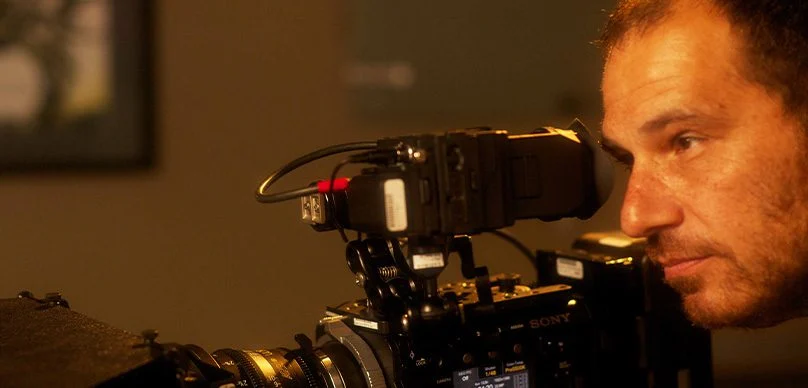
There is a distinct divergence in the world of motion pictures. On one side exists the theoretical version of filmmaking—the version neatly codified in textbooks, mapped out on whiteboards in sterile classrooms, and broken down into immaculate, undisturbed shot lists. On the other side exists reality: a frantic race against the setting sun, a crucial camera rig that refuses to sync, a hard drive that abruptly corrupts, an uncooperative location manager, and twelve pages of dense dialogue still scheduled to be captured before the company moves to the next layout.
Jason Kartalian knows that second version intimately. As a seasoned writer, director, and producer whose credits include Driller and Seahorses, Kartalian has spent his professional life navigating the unpredictable, high-stakes trenches of independent cinema. In this ecosystem, creativity is not merely an artistic luxury or a stylistic differentiator; it is the fundamental currency of survival.
Main Facts: The Anatomy of Modern Indie Filmmaking
Independent filmmaking is frequently romanticized as an artistic refuge away from studio interference, yet it remains one of the most punishing entrepreneurial ventures in the modern creative economy.
- The Subject: Jason Kartalian, an indie auteur, screenwriter, and producer renowned for features like Driller and Seahorses.
- Core Philosophy: True filmmaking is the art of problem-solving and navigating adversity. Technical mastery must always serve human emotion, and safety nets—both technical and logistical—are mandatory for survival.
- Key Insights: Low-budget efficiency, actor-director dynamics, the evolving relevance of traditional film school education, and the stark realities of self-distribution in a crowded digital marketplace.
Chronology: From Set Visits to Self-Distribution
A Childhood Steeped in Celluloid
Kartalian’s education in cinema began long before he ever stepped behind a professional camera. Growing up, his father was Buck Kartalian, a revered working character actor whose formidable career included indelible appearances in iconic Hollywood milestones such as the original Planet of the Apes (1968), Cool Hand Luke (1967), and The Outlaw Josey Wales (1976).
As a child, Jason spent his formative years wandering soundstages and location sets, observing firsthand how master craftspeople constructed cinematic worlds piece by meticulous piece. Encouraged by a family that welcomed creative experimentation, he began making amateur projects using Super 8 and early VHS technology for family gatherings.
Yet, watching his father navigate the precarious, often waiting-game lifestyle of a working character actor left a permanent impression. Acting offered little control over one’s career trajectory. Directing and producing, by contrast, offered agency. Filmmaking provided the pathway to become the initiator of work rather than a passive agent waiting for permission from the industry gatekeepers.
Transitioning to the Director’s Chair
That early exposure profoundly influenced how Kartalian approaches his performers. When directing his debut feature—initially titled Pedestrian and later released as One False Step—he cast his father alongside a roster of seasoned character actors. The trial-by-fire experience instilled a deep sense of humility.
Rather than obsessing exclusively over glass, camera packages, and technical vanity, Kartalian realized that filmmakers must constantly interrogate what those tools are actually designed to achieve: eliciting a visceral, emotional response from the audience. Writing, performance, cinematography, lighting, and production design are not isolated departments; they are synchronized gears within a single emotional machine. A technically flawless image holds zero value if the underlying human truth of the scene has evaporated.
Supporting Data & Practical Methodologies: Surviving the Low-Budget Set
When operating under the tight financial constraints of indie budgets, time is finite, fragile, and far more valuable than cash. Kartalian warns against the classic trap of burning valuable hours capturing exhaustive coverage that ultimately finds its way to the digital cutting-room floor.
The Pragmatic Master Shot Philosophy
He recalls observing a production waste an extraordinary amount of time repeatedly filming an actor entering a doorway, only to discover in the edit bay that the transition shot wasn’t even necessary for narrative continuity.
Kartalian’s counter-philosophy is ruthlessly pragmatic: secure the scene. When the clock is ticking down and the crew is fatigued, his preferred strategy is to capture the sequence entirely in a comprehensive master shot first.
"At least we got the scene," Kartalian notes, summarizing the defensive logic of the low-budget trenches.
Once the core narrative beats exist safely on digital media, additional coverage can be deployed to elevate and refine the scene. However, if circumstances—such as losing a location or running out of daylight—suddenly halt production, the movie has already survived.
Battling Elements and Embracing Adversity
The capacity to absorb sudden environmental shifts is the ultimate litmus test for an independent crew. While shooting Driller overnight on a remote Malibu ranch, Kartalian and his team contended with biting cold, treacherous terrain, rattlesnakes, tarantulas, swarms of bees, and actors required to perform in minimal wardrobe. The immediate psychological response was simple: dream of shooting the next project entirely inside a controlled, temperature-regulated stage.
Yet, seasoned filmmakers know that controlled locations merely trade outdoor hazards for indoor complications.
"Filmmaking is about dealing with adversity," Kartalian observes simply.
When actors, department heads, line producers, and camera operators trust one another and lock arms to solve operational crises collectively, an independent production becomes nearly impossible to derail.
Technical Literacy and Post-Production Safeguards
Kartalian firmly advocates that indie directors must possess functional literacy in the technical machinery surrounding them. While an auteur does not need to operate as their own Director of Photography (DP), they must understand lighting ratios, focal lengths, lens characteristics, audio fidelity, and basic grip mechanics well enough to avoid total helplessness during a crisis.
This is not about micromanagement; it is about expanding creative possibilities and preventing a production from grinding to a halt because a single individual encountered an issue.
This operational discipline extends far beyond principal photography. Kartalian stresses unglamorous administrative necessities: executing ironclad written agreements, ingesting and verifying all footage at the conclusion of every single shooting day, and maintaining redundant physical and cloud-based backups throughout post-production. Losing an entire feature film because a single primary hard drive suffered a catastrophic failure is a tragedy that no amount of artistic vision can fix.
Official Perspectives: The Value and Limits of Film School
Kartalian’s pragmatic approach extends to his views on formal film education. Having attended California State University, Northridge (CSUN), he acknowledges the institutional value of studying script structure and forging lifelong bonds with inspiring mentors. However, he maintains that the true realities of physical production cannot be taught in a lecture hall.
Universities can teach camera nomenclature, lighting diagrams, and editing software. The genuinely difficult lessons—diplomacy, emotional leadership, cross-departmental collaboration, real-time crisis management, and the cultivation of an individual voice—are learned exclusively on working sets.
According to Kartalian, aspiring filmmakers can architect their own education by actively listening to veteran crew members, volunteering on independent sets, deeply studying cinematic history, and immediately translating that knowledge into practical application. The ultimate objective is never to mimic how established studios make movies, but rather to unearth what makes one’s own perspective distinct.
Implications: Character-Driven Writing and the Realities of Distribution
That individuality forms the bedrock of Kartalian’s screenwriting process. While he respects traditional three-act structures and map-out outlines, he guards against letting rigid architectural rules stifle organic character development. He meticulously populates his scripts with granular behavioral details—what a character drinks, how they dress, their idiosyncratic tics—allowing those observations to steer the narrative.
During the production of Seahorses, this methodology became deeply collaborative. Through extensive table reads and rehearsals with actors, Kartalian integrated elements of the performers’ personal backgrounds directly into subsequent script revisions. Even the film’s aesthetic framework—water motifs, lighting palettes, and production design—was intentionally engineered around the thematic metaphor of the seahorse.
The Self-Funding and Distribution Reality
Seahorses stands as the purest manifestation of Kartalian’s creative philosophy. Largely self-funded through capital earned from outside commercial work, the project was born out of absolute creative necessity. Kartalian reached a juncture where commercial reception became secondary to personal expression: he simply had to bring the vision to life for himself.
The film went on to achieve international film festival recognition and global distribution. Choosing to self-distribute rather than surrender long-term rights to predatory aggregators, Kartalian confronted another sobering industry truth: uploading a finished feature to a streaming platform or video-on-demand (VOD) aggregator is not the finish line.
In the modern media landscape, availability does not equal awareness. Independent creators must still act as relentless marketers, actively generating attention and convincing audiences to invest their most precious commodity: time.
Conclusion
For emerging independent filmmakers, Jason Kartalian’s career trajectory serves as an invaluable blueprint:
- Master the technical tools, but never worship them.
- Protect your digital assets as if your creative life depends on it—because it does.
- Cultivate cross-departmental literacy.
- Assemble a crew rooted in mutual trust.
- Prioritize authentic character arcs over hollow plot mechanics.
- Invest your limited resources where the audience will actually look.
- Above all, make projects that demand to be made.
When viewers sit in a dark theater or stream a completed film at home, they remain blissfully unaware of the physical exhaustion, shattered equipment, budget compromises, and sleepless nights required to bring the images to life.
As Kartalian observes with hard-earned wisdom:
“They don’t see the pain and suffering… They see what we show them.”
That remains both the greatest cruelty and the enduring magic of independent cinema.
