
The Pendulum Swings Back: Are We Facing Another #OscarsSoWhite Season?
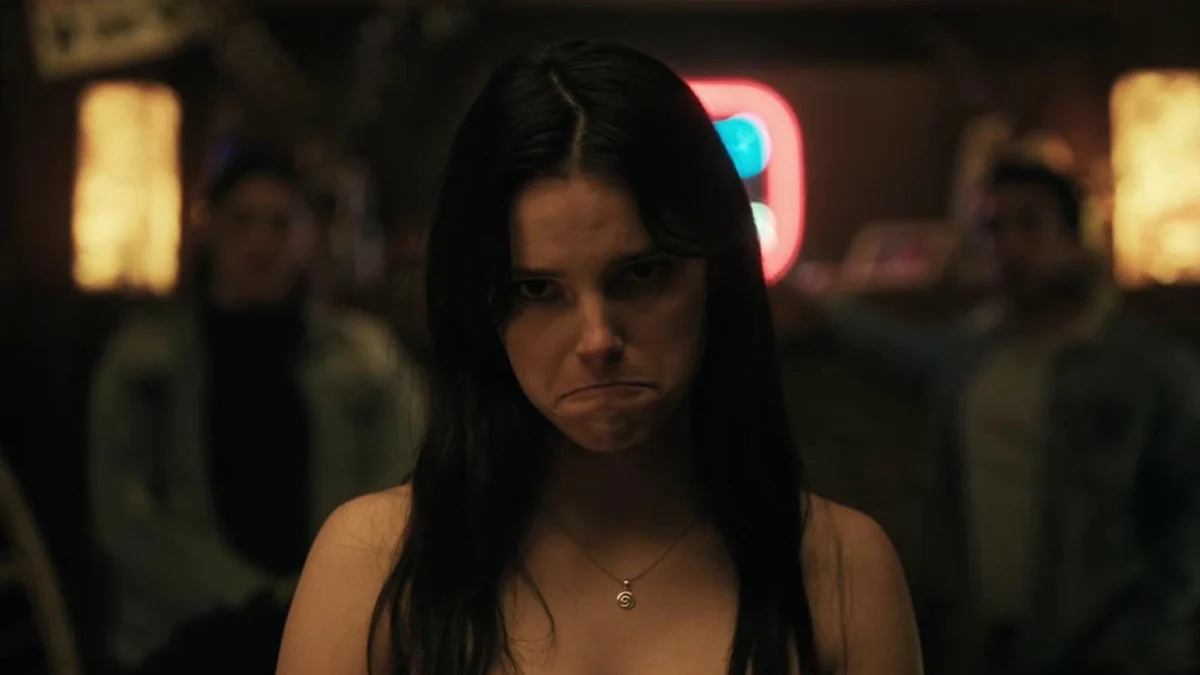
Just seven months ago, Sinners made cinematic history at the Academy Awards. Securing four wins out of a staggering 16 nominations—including historic victories for Best Actor (Michael B. Jordan) and Best Original Screenplay (Ryan Coogler)—the film felt like a monumental turning point for Black cinema and institutional recognition. Yet, as the preliminary contours of the upcoming Oscar season take shape, Hollywood finds itself staring down an unnervingly familiar precipice: a slate of top-tier contenders dominated almost entirely by white creators and performers.
As award pundits dust off their crystal balls, industry observers are left asking a heavy, urgent question: Is Hollywood regressing, and are the Academy’s hard-won diversity initiatives quietly unraveling?
Main Facts: The Current State of the Race
To evaluate the current awards landscape, one need only look to Gold Derby’s expert odds for the top eight categories. Across the board, early projections indicate a stark regression in representation among major contenders.

Of the top 10 films projected by experts to secure Best Picture nominations, every single one is led by white actors or centers on white subjects:
- The Odyssey
- La Bola Negra
- Wild Horse Nine
- Project Hail Mary
- The Debut
- Dune: Part Three
- The Invite
- You Can See Everything
- I Play Rocky
- Artificial
Furthermore, every single director currently projected to land in the Best Director tier is white. In the lead acting categories, the outlook is virtually identical. Out of 10 combined Best Actor and Best Actress contenders currently holding a projected nomination spot, nine are white, with Inde Navarrette (Obsession) standing as the lone exception.
Supportive categories offer only a microscopic reprieve. Just two people of color are currently positioned in the supporting acting races: Tao Okamoto (All of a Sudden) for Best Supporting Actress and John Leguizamo (The Odyssey) for Best Supporting Actor. Among screenwriters, the landscape is similarly monocultural, save for Rashida Jones (The Invite) and Ryusuke Hamaguchi (All of a Sudden).

When scrolling deep down the expert rankings for Best Picture hopefuls, the highest-ranking film anchored by a person of color in a leading role is Obsession at No. 11. The South Korean drama Possible Love sits at No. 17, followed immediately by Searchlight’s Behemoth!, starring Chilean actor Pedro Pascal, at No. 18. Unless unexpected late-season breakouts—such as a surprise push for Zendaya (The Drama, Dune), Misty Green star Rosalind Eleazar, or the Nigeria-set Clarissa—materialize, diversity in this year’s top tiers is remarkably sparse.
Chronology: A Decade of Push and Pull
To understand the cyclical anxiety surrounding the Oscars, we must look back at the historical milestones that forced the Academy to look in the mirror.
- February 2015: Activist April Reign launches the viral #OscarsSoWhite campaign following an acting nominee slate that was entirely white. The controversy spotlights acclaimed films like The Theory of Everything, Whiplash, and Birdman, while brutally side-lining Ava DuVernay’s Martin Luther King Jr. historical drama Selma, which was nominated for Best Picture but shut out of all other major categories except Best Original Song.
- February 2016: A near-identical repeat occurs. For the second consecutive year, all 20 acting nominees are white, intensifying industry-wide outrage.
- February 2017: A landmark Los Angeles Times investigation unmasks the Academy’s internal demographics, revealing an overwhelmingly white and male voting body. Under intense public scrutiny, leadership institutes aggressive institutional reforms.
- 2020–2024: The Academy nearly doubles its active membership to over 11,000 by 2025, with women comprising 33% and international members making up 24%. This period yields historic milestones: diverse Best Picture winners like Moonlight, Parasite, and Everything Everywhere All at Once, alongside groundbreaking Best Director victories for Chloé Zhao (the first woman of color to win the category) and Jane Campion.
- September 2026: As fall festival season concludes, early Oscar prognostications reveal a stark lack of marginalized voices in front of and behind the camera, triggering renewed concerns of systemic backsliding.
Supporting Data: The Measurable Impact of Reform
The structural adjustments made by the Academy post-2015 undeniably moved the needle. A comprehensive 2023 USC Annenberg Inclusion Initiative study confirmed that systemic changes dramatically improved representation for women and people of color across several branches. Films featuring diverse casts, such as BlacKkKlansman, Judas and the Black Messiah, Minari, American Fiction, Past Lives, Emilia Pérez, and Nickel Boys, successfully cracked the prestigious Best Picture threshold.

However, the USC study also sounded a note of caution, pointing out that despite notable gains, the Academy remained far from achieving true equity across all 19 examined branches. The fragile ecosystem of Oscar recognition relies entirely on a continuous pipeline of financed, distributed, and aggressively marketed prestige projects starring and directed by underrepresented artists. When that pipeline slows, the nominations inevitably follow suit.
Official Responses and Industry Shifts
The apparent regression in the 2027 race does not exist in a vacuum; it mirrors a broader sociopolitical retreat from Diversity, Equity, and Inclusion (DEI) initiatives across corporate America and governmental institutions.
In the wake of the 2020 racial justice uprisings sparked by the murder of George Floyd, companies scrambled to prioritize equity. Fast forward to the present day, and the external landscape has radically transformed. Corporate giants like Target have systematically dismantled internal DEI targets, federal shifts under executive administrations have placed heavy pressure on institutions to abandon identity-conscious programs, and the military and media conglomerates alike are recalibrating their public-facing equity stances. Hollywood is not immune to these macroeconomic and political winds.

Furthermore, high-profile creators are increasingly vocal about shifting industry philosophies. Actor and director Andy Serkis recently sparked intense debate when discussing the casting choices for his upcoming Middle-earth film, The Hunt for Gollum. Serkis openly stated that the production would not rely on "politically correct just-casting-for-the sake-of-casting-and-ticking-boxes," asserting that casting decisions would be made strictly where "relevant."
While framed by creators as a defense of artistic integrity, critics argue this philosophy often serves as a convenient justification for reverting to status-quo casting—predominantly defaulting to white leads under the guise of historical or source-material accuracy.
Implications: Can You Win an Award for a Role That Doesn’t Exist?
To truly grasp why #OscarsSoWhite may be staging an unwelcome comeback, one must recall Viola Davis’s unforgettable 2015 Emmy acceptance speech: "You cannot win an Emmy [or an Oscar] for roles that are simply not there."

The root cause of an unrepresentative Oscar ballot extends far beyond the voting preferences of the Academy’s newly diversified membership. Even if the Academy’s voting body were completely overhauled into a hyper-inclusive, global collective, it cannot vote for films that greenlight executives refuse to fund, studios choose not to distribute, and PR machines decline to back.
If major studios pivot away from diverse storytelling under the pressure of shifting political tides and risk-averse financial modeling, the pipeline dries up long before ballots are ever cast. As the industry looks ahead to the January nominations, the critical question is no longer just whether the Academy is moving backward—it is whether Hollywood as a whole is losing its appetite for inclusive storytelling. Get your hashtags ready. You just might need them again.
