Crafting Chaos and Cephalopods: Inside the Practical Magic of NEON’s The Wrong Girls
By DESIREÉ BOWIE
In an era dominated by the seamless, invisible touch of CGI and volume stages, a refreshing counter-movement is quietly thriving in Hollywood. Directors are increasingly turning away from sterile digital environments in favor of tactile filmmaking, utilizing physical miniatures, smoke, practical puppets, and specialized camera techniques to evoke a tangible sense of wonder.
No project embodies this adventurous ethos quite like NEON’s upcoming stoner comedy The WrongGirls. Written and directed by Dylan Meyer, the film blends an absurd, high-concept narrative with old-school practical wizardry. At the heart of the movie’s visual landscape are the ocean’s most elusive and fascinating inhabitants: giant squids. To bring Meyer’s surreal vision to life, the production enlisted Christopher Warren, Special Effects Director of Photography, and his seasoned crew at Blind Beagle VFX.
Fresh off their collaboration on Boots Riley’s I Love Boosters, where the creative mandate favored striking visual style over strict realism, Warren and his team found a kindred spirit in Meyer. The result is a delightfully trippy cinematic experience that proves practical effects—when paired with a healthy dose of imagination—still reign supreme.
Main Facts: The Premise and the Practical Approach
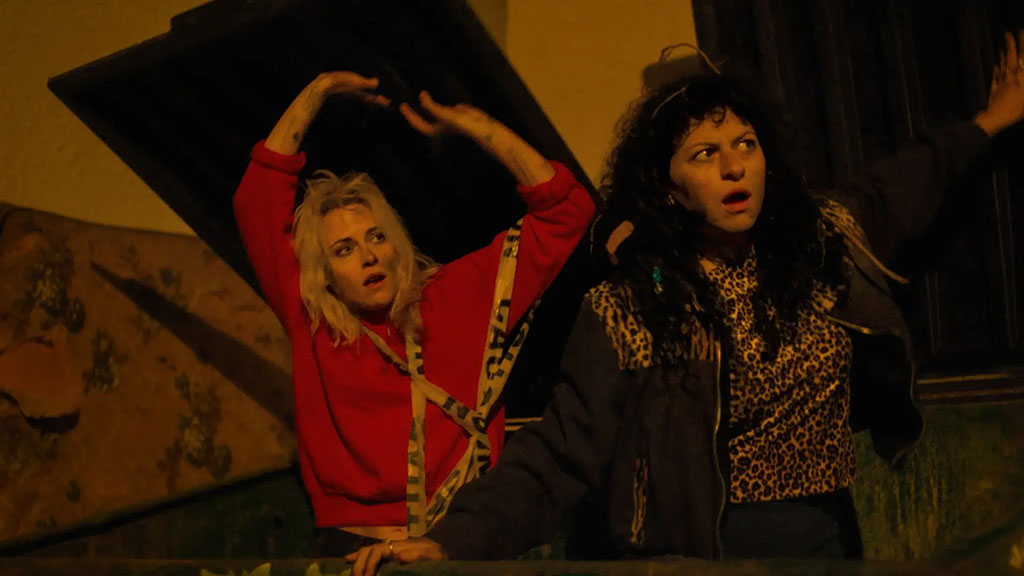
At its core, The Wrong Girls is a chaotic buddy comedy wrapped in a psychedelic escapade. The film stars Kristen Stewart and Alia Shawkat as Frankie and Molly, a pair of down-on-their-luck best friends struggling simply to make rent. Their mundane financial anxieties are upended overnight due to a classic case of mistaken identity: Frankie accidentally inherits a briefcase containing a powerful, experimental hallucinogen.
Deciding there is nothing to lose, the duo tests the drug themselves. The substance immediately grants them extraordinary telepathic abilities, instantly turning them into targets. They find themselves on the run from a syndicate of impeccably dressed, ruthless enforcers eager to reclaim their missing chemical cargo.
However, what elevates the film beyond a standard chase comedy is its stylistic obsession with squids—a creature born from Meyer’s longtime personal fascination with the deep ocean. Rather than turning to all-digital rendering farms, Meyer tasked Blind Beagle VFX with crafting organic, tactile sequences using a blend of underwater photography, physical miniature sets, motion control systems, and fiber-optic-lit practical puppets.
Collaborating closely with creature fabrication experts Russell FX—led by designers Josh Russell and Sierra Spence—Blind Beagle designed, built, and photographed a series of memorable sequences that anchor the film’s surreal visual identity. The collaboration resulted in a distinctive title sequence and a climax featuring oversized, menacing tentacles, proving that practical artistry can successfully marry comedy, action, and psychedelic art.
Chronology: From Catalina Waters to Stage-Bound Smoke
The journey of realizing the film’s squid sequences was a meticulous, multi-stage process that spanned weeks of physical construction, location shooting, and iterative testing.
Phase 1: Real-World Reference (Catalina Island)
The genesis of the film’s iconic title sequence began off the coast of Southern California. Warren and his camera crew ventured underwater near Catalina Island, capturing naturalistic footage of open ocean environments, local fish species, and swaying kelp beds. While the footage was initially intended merely as visual reference material for the VFX artists, its striking composition and lighting were so impressive that it ultimately made it directly into the final cut, establishing an authentic baseline before the narrative dives into the surreal.
Phase 2: Building the Miniature World
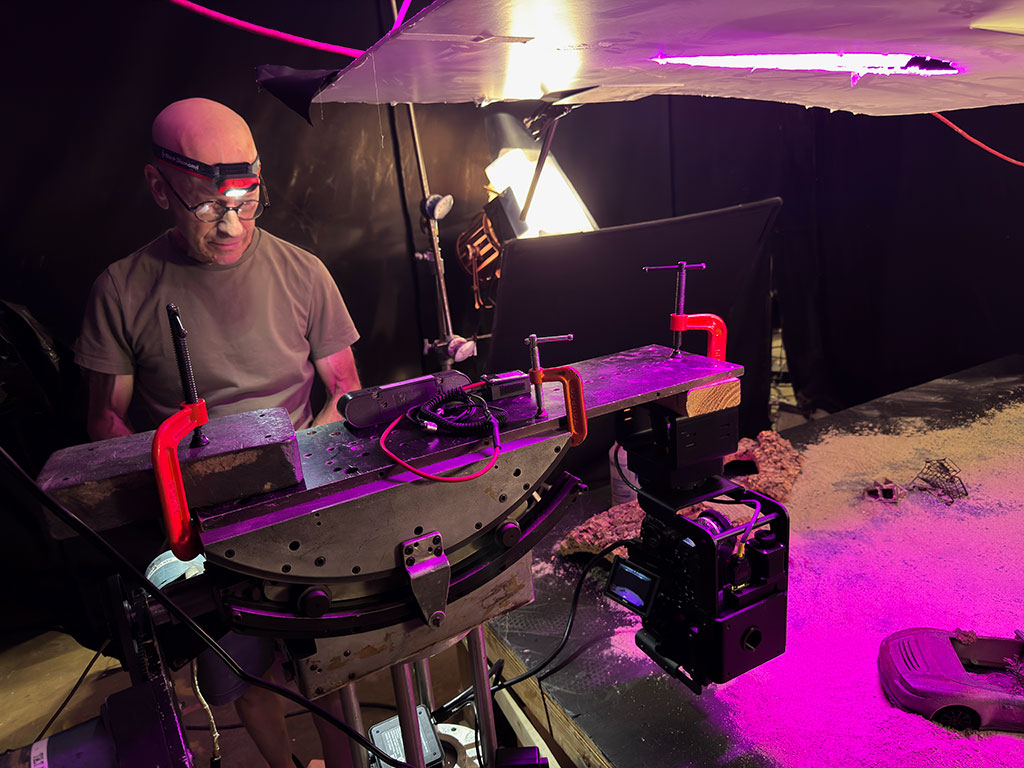
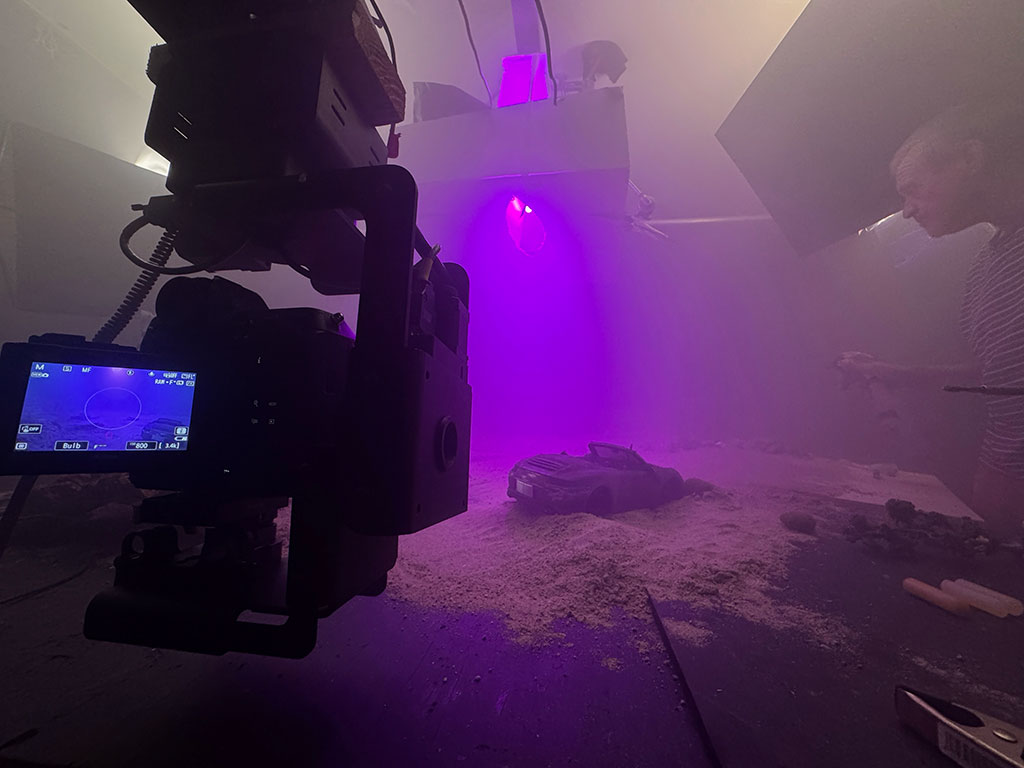
Once the real-world ocean footage fades to black, the film transitions seamlessly into a miniature ocean floor crafted by Blind Beagle VFX. To construct the set, the team laid down physical sand and seabed textures, populating the microscopic landscape with tiny details—including a miniature Porsche resting on the ocean floor.
To simulate the murky, light-filtering properties of deep water without using digital fog, the team utilized a specialized technique known as "dry-for-wet." By filling a controlled soundstage with carefully managed theatrical smoke, the team manipulated exposure levels to create the convincing illusion of deep-sea murkiness. Motion control operator Les Bernstien (known for his work on Foundation) was brought in to program precise, repeatable camera moves, gliding through the miniature environment just inches above the sandy floor.
Phase 3: The Practical Puppet and Water Tank Shoots
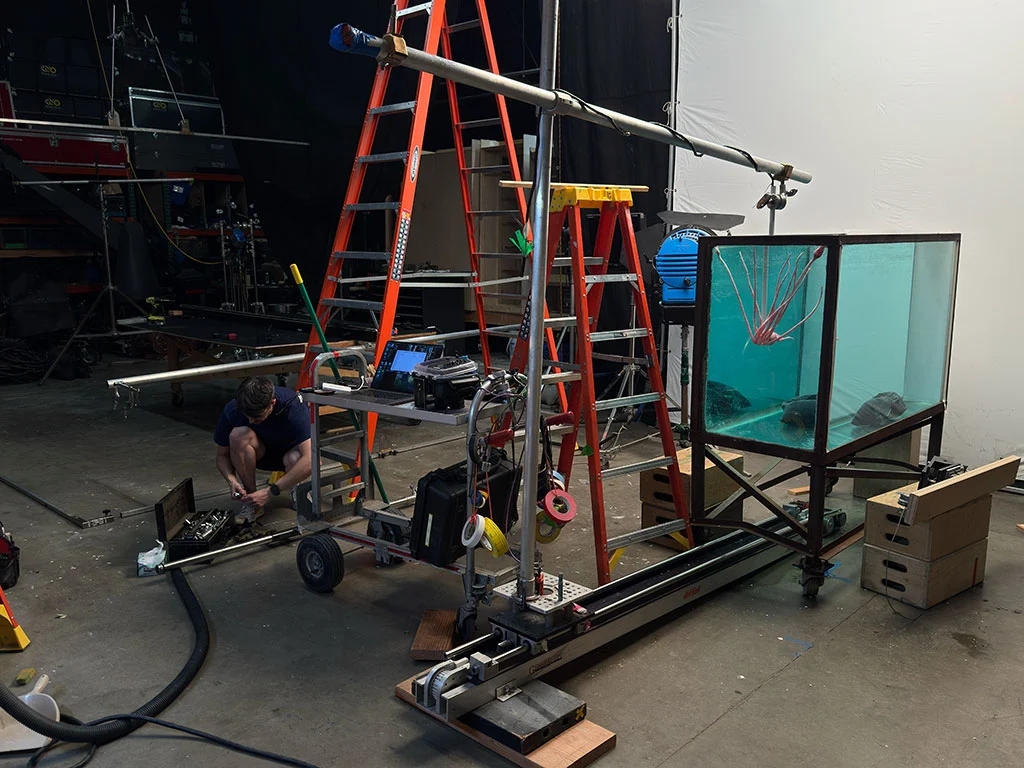
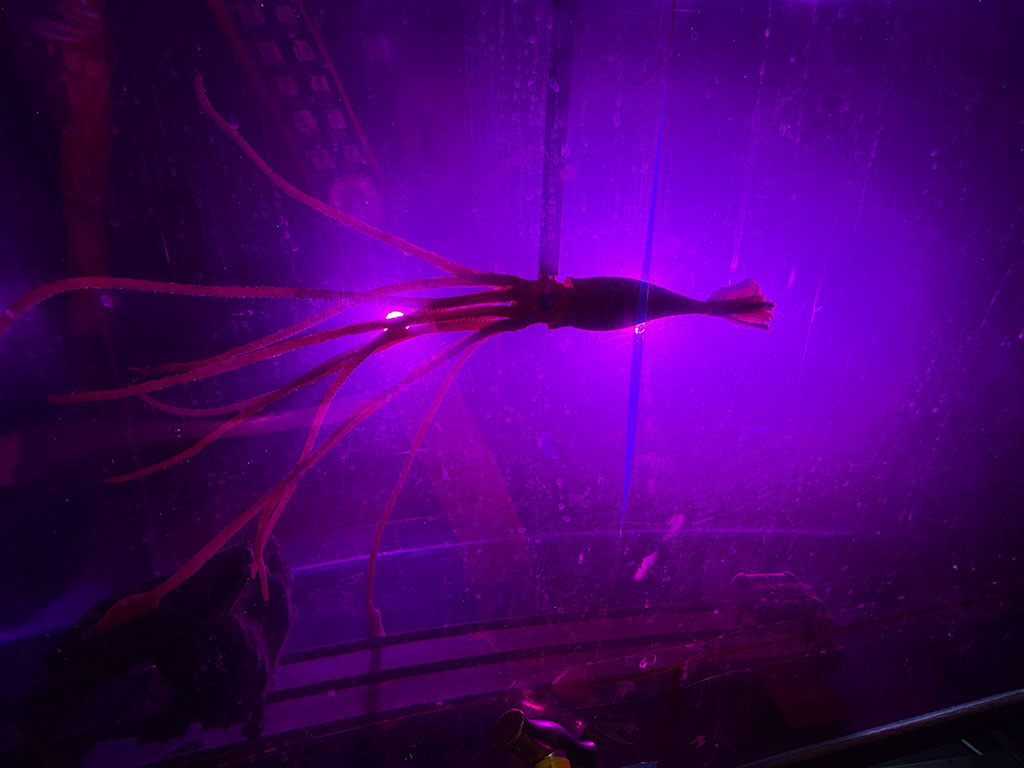
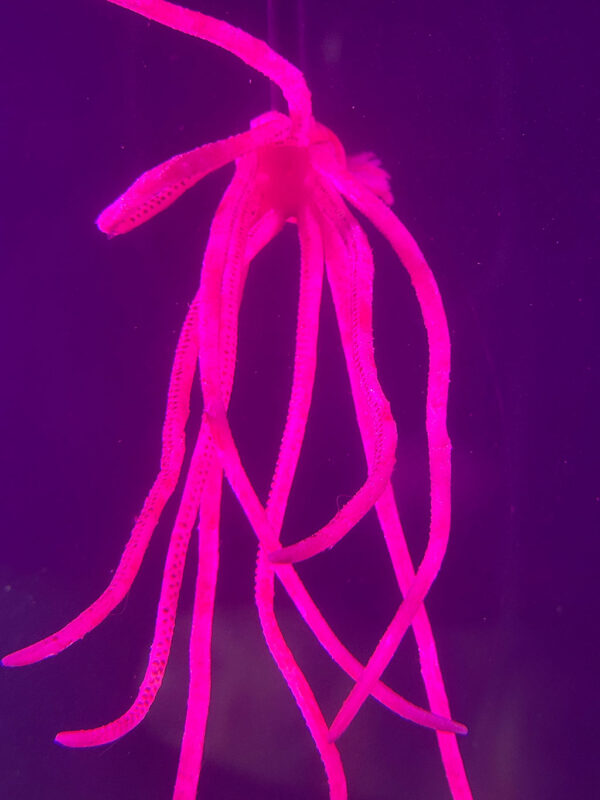
Concurrently, Russell FX delivered the practical squid elements. The primary miniature puppet measured roughly two and a half feet in total length, featuring a body spanning nine inches to a foot. Embedded with extensive fiber-optic cabling, the puppet possessed a mesmerizing, dynamic bioluminescent glow.
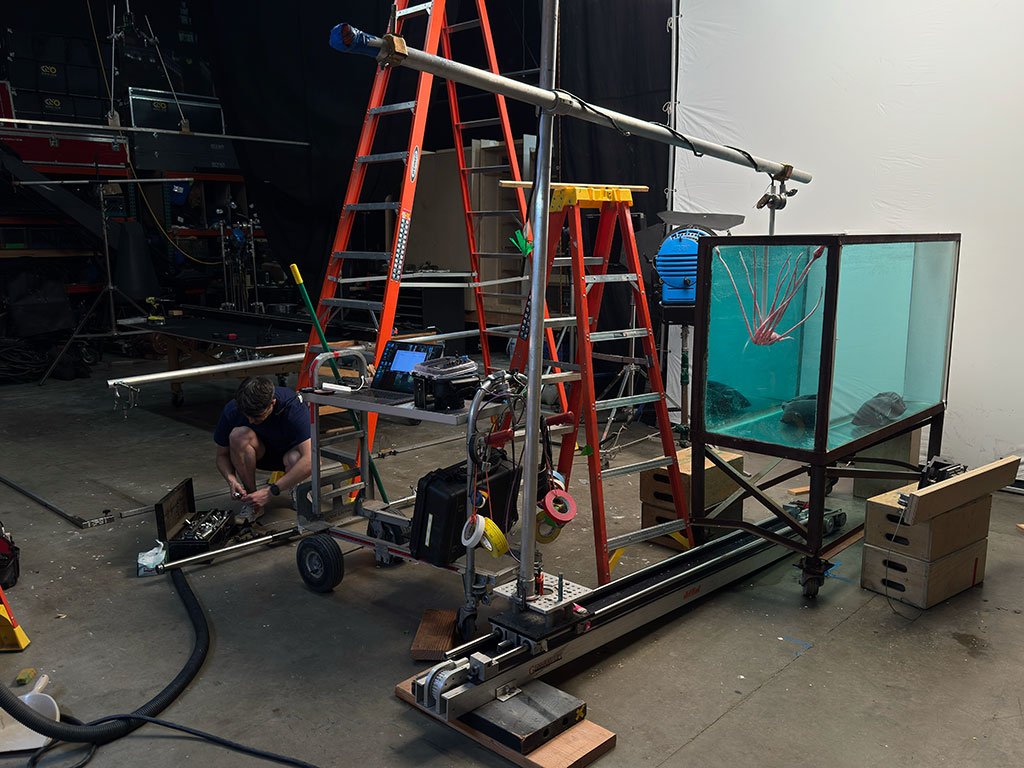
The physical photography required two to three dedicated days on stage, following a grueling week of dry-for-wet testing and approval phases with director Dylan Meyer. Because the squid needed to interact with water while maintaining its glowing fiber optics, the team shot sequences inside a specialized water tank.
Rigging techniques varied depending on the narrative beat of the shot. For the title sequence, the puppet was mounted on a tracking dolly with a concealed vertical rod, allowing the crew to push the squid away from the camera before rapidly reversing its motion to spray a jet of ink directly toward the audience, kicking off the film’s title card in spectacular fashion. Other shots featured free-floating rigs, with the squid gracefully swimming above the miniature set.
Supporting Data: Behind the Scenes of Miniature Magic
The technical achievements of The Wrong Girls rely on a precise marriage of old-school craftsmanship and modern mechanical control. Examining the components of the production highlights the immense physical labor required to achieve what CGI often accomplishes with a keystroke:
Puppet Dimensions: The core miniature squid measured approximately 30 inches overall, with a mantle/body length of 9 to 12 inches.
Fabrication Crew: Russell FX (led by Josh Russell and Sierra Spence) designed, molded, sculpted, and wired the practical squid elements, creating both the miniature tank puppet and the oversized climax tentacles.
Cinematography & Special Effects: Christopher Warren served as Special Effects Director of Photography, heading a Blind Beagle VFX team that included Gene Warren, Brandon Knight-Warren, and Brian Bradford.
Camera Movement: Motion control operator Les Bernstien operated the rig for the intricate miniature environment sweeps.
Production Schedule: The dry-for-wet smoke setup and testing phase required approximately one full week of preparation and approvals, followed by two to three intensive days of principal photography on the visual effects stage.
Sequence Construction: The title sequence uniquely merges three distinct methodologies: open-ocean naturalism (Catalina Island footage), darkness transition, and a dry-for-wet miniature set featuring the glowing puppet and a scale-model Porsche.
Official Responses: Director Vision and Crew Collaboration
Working with a first-time or distinctive feature director often sets the tone for an experimental special effects shoot. According to Christopher Warren, Dylan Meyer brought a wonderfully liberating mindset to the production—one that prioritized emotional impact and aesthetic coolness over tedious, academic realism.
“With this movie, we did not need it to be grounded in reality,” Warren reflects. “I think she was in that same mode of, ‘It doesn’t have to look real, it just has to be cool.’ She knew what she wanted to do, but she was willing to explore. And it’s always fun when you work with a director that’s just chill and like, ‘Show me what you got,’ and then, ‘Nope, this is what I want,’ and then you go do it. It was a fun shoot. Really fun.”
The fascination with cephalopods extended far beyond the story’s thematic elements, becoming a running joke on set.
“We joked about that on set a lot, about how cool they are and how unexplored they are,” Warren notes regarding Meyer’s passion for giant squids. “They are amazing creatures.”
Yet, capturing convincing behavior from a rubber-and-fiber-optic puppet submerged in smoke or water was not without its moments of levity.
“There definitely were some moments of laughter when you’re trying to get a squid to act on stage,” Warren admits, underscoring the inherent absurdity of traditional physical effects work.
Reflecting on decades in the visual effects industry, Warren points out that the fundamental philosophy of miniature photography remains unchanged: illusion.
“When you’re trying to fool the eye, you need to play tricks on the eye,” Warren explains. “So it becomes, ‘Did we do enough to fool the audience?’”
Implications: The Resurgence of Tactile Cinema
The reliance on miniatures, motion control, and practical puppetry for a contemporary indie comedy like The Wrong Girls carries broader implications for the entertainment industry. For years, mid-budget comedies and dramas gravitated exclusively toward digital visual effects, driven by the false economy and perceived safety of green screens and post-production rendering.
However, films like The Wrong Girls—alongside similar auteur-driven projects by directors like Boots Riley—demonstrate a growing industry appetite for authenticity and physical texture. Practical effects introduce inherent imperfections, organic lighting interactions, and unpredictable physical behaviors (such as smoke diffusion and water displacement) that digital artists spend hours trying to replicate artificially.
By grounding fantastical, drug-induced hallucinations in real-world miniatures, productions achieve a unique aesthetic charm that resonates strongly with audiences experiencing digital fatigue. Furthermore, the collaboration between specialized FX houses like Blind Beagle and Russell FX preserves a vanishing baseline of legacy craftsmanship—passing down vital techniques in motion control, physical rigging, and tactile sculpting to a new generation of filmmakers.
As The Wrong Girls heads toward its release via NEON, it stands as a testament to the fact that imaginative storytelling, combined with the hands-on ingenuity of practical effects veterans, can yield cinematic moments that are not only deeply funny and visually stunning, but utterly unforgettable.