
Lee Chang-dong’s Masterpiece ‘Possible Love’: A Searing Exploration of Class, Trauma, and Desire
Main Facts
Master auteur Lee Chang-dong returns to cinema with Possible Love, a novelistically layered and emotionally eviscerating drama that premiered to critical acclaim at the 2026 Venice Film Festival. Loosely anchored to the final commandment of Krzysztof Kieślowski’s Dekalog 10—“Thou shalt not covet”—the film operates independently of any tribute omnibus constraints, emerging as a singular, towering work of modern socioeconomic critique.
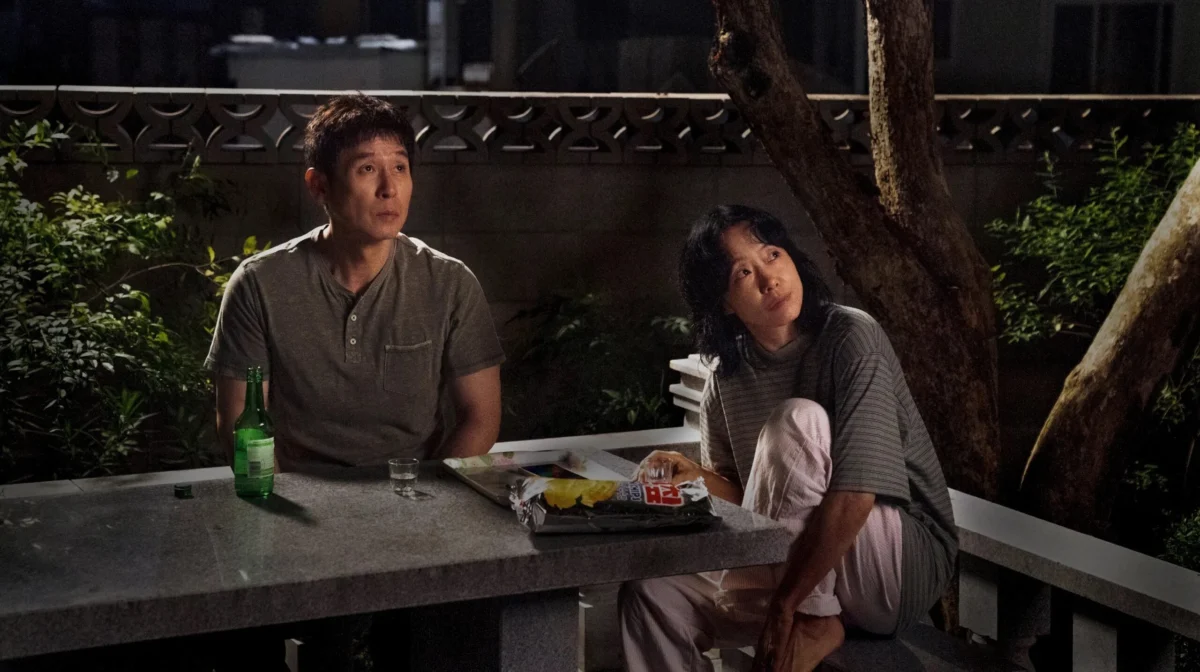
The narrative collides two vastly different couples. On one side are Ye-ji (Cho Yeo-jeong), a wealthy, idealistic first-time documentarian, and her fabulously affluent husband, Sang-woo (Zo In-sung). On the other are Mi-ok (Jeon Do-yeon) and Ho-seok (Sul Kyung-gu), a working-class couple fractured by a brutal, violent police crackdown on a labor strike at SP Heavy Industries two years prior.
The feature-length drama, boasting a runtime of 164 minutes, investigates the porous and dangerous boundaries between the ultra-wealthy and the disenfranchised. Netflix has scheduled a theatrical release for Friday, October 23, 2026, followed by a global streaming premiere on November 6, 2026. Critics have widely lauded the film, cementing an A grade across major publications for its psychological depth and blistering commentary on late capitalism.

Chronology: From Venice to the Global Stage
The trajectory of Possible Love began making waves during the late-summer film festival circuit.
- September 6, 2026: Possible Love makes its world premiere at the Venice Film Festival, immediately drawing comparisons to Lee’s previous masterworks like Burning and Secret Sunshine. Critics highlight its slow-burn tension and stellar central performances.
- October 23, 2026: Netflix deploys the film for a limited theatrical run, allowing audiences to experience its striking visual compositions and intricate sound design on the big screen.
- November 6, 2026: The film becomes available worldwide on Netflix, expanding its reach to international audiences and fueling awards-season discourse.
Supporting Data & Character Dynamics
The thematic architecture of Possible Love rests on the stark economic and physical dichotomies embodied by its four primary characters:
- Ye-ji (Cho Yeo-jeong): A wealthy dilettante whose artistic ambitions lead her to exploit the plight of blue-collar workers for her documentary project. Her character acts as a mirror for the oblivious nature of the ownership class.
- Sang-woo (Zo In-sung): Ye-ji’s imperious, trust-fund husband whose frictionless existence highlights the ease with which capital flows for the top one percent.
- Mi-ok (Jeon Do-yeon): A resilient, sad-eyed former seamstress willing to endure profound discomfort to resurrect her husband’s spirit and secure a future for their son, Cheol.
- Ho-seok (Sul Kyung-gu): A traumatized, implosive former factory worker crippled physically and psychologically by the state-backed suppression of the SP Heavy Industries strike.
The film’s structural turning point occurs in its final hour, when the narrative relocates to Sang-woo’s isolated coastal summer mansion. What begins as an artistic documentation of working-class trauma quickly devolves into an intense psychological game of power, intrusion, and primal self-preservation.

Official Responses and Critical Reception
Industry reception for Possible Love has been overwhelmingly positive, with particular praise directed toward Lee Chang-dong’s script—co-written with Oh Jung-mi—and the powerhouse performances of its veteran cast.
Jeon Do-yeon’s portrayal of Mi-ok has been singled out as a career-defining anchor, delivering what critics describe as "a state of self-preservation so primal that it renders the rest of the characters senseless." Meanwhile, Zo In-sung’s introduction into the Lee Chang-dong cinematic universe has been praised for capturing the chilling nonchalance of generational wealth.
Critics have noted that unlike Burning, which built steadily toward an explosive act of violence, Possible Love builds directly on an act of terrible violence. It continuously simmers, analyzing the residue of systemic oppression rather than offering a clean, comforting resolution.

Implications: The Architecture of Class and Observation
Possible Love transcends standard social-realist dramas by interrogating the very nature of observation, art, and empathy under late capitalism.
Through Ye-ji’s documentary-within-a-film framework, Lee Chang-dong offers a biting critique of how the elite consume working-class suffering as aesthetic currency. Ye-ji’s inability to perceive Mi-ok and Ho-seok as human beings—unless they are framed through her camera lens—serves as a metaphor for the systemic invisibility imposed on modern labor.
Conversely, the film refuses to romanticize poverty. Ho-seok is not painted as a noble martyr, but as a deeply embittered, broken man trapped within an inescapable cycle of institutional defeat. By contrasting Sang-woo and Ye-ji’s air-conditioned detachment with the raw, necessary intimacy shared between Mi-ok and Ho-seok, Possible Love posits that true emotional survival belongs only to those who cannot afford the luxury of illusion.
