
The Evolution of the Elements: How ‘Avatar: Seven Havens’ Proves That Radical Visual Departure Is the Only Way the Franchise Survives
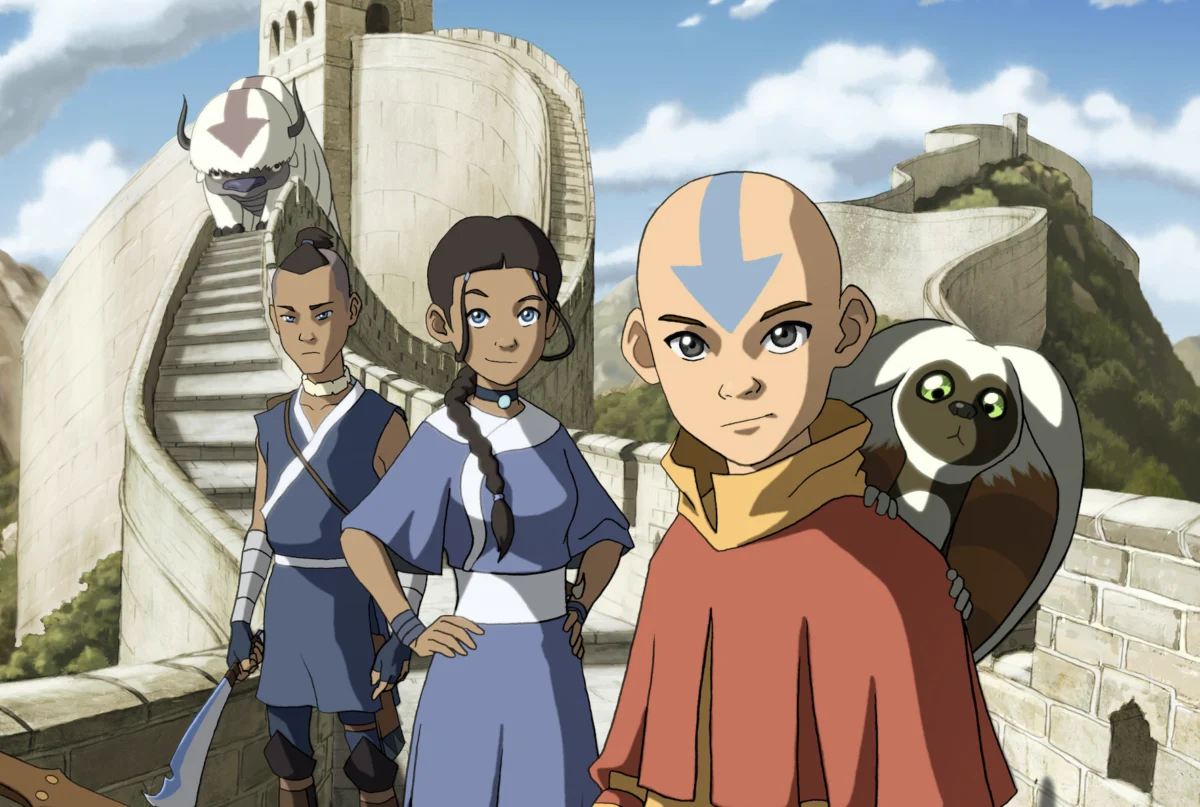
If there is an object lesson right now in the divergent pathways that massive intellectual property franchises can take—and their wildly varying levels of success—it can be found in the current cultural and commercial state of the Avatar universe.
Avatar: The Last Airbender, originally launched by Nickelodeon Animation Studios in 2005 and created by Michael Dante DiMartino and Bryan Konietzko, remains a towering achievement in modern television. Its inexplicable omission from major contemporary retrospectives, such as prominent lists of the best television shows of the 21st century, is a point of passionate contention among pop culture critics and fans alike.
Running for three structurally flawless seasons—or "books," as the show designated them—the original series concluded in 2008 with a four-part finale that stands as one of the most cohesive, satisfying narrative wrap-ups in the history of serialized television, animated or live-action. Its distinct artistic style was heavily influenced by the expressive framing of anime, yet anchored by the bold lines, dynamic color palettes, and deliberate movements of real-world martial arts disciplines that directly informed each elemental "bending" style.
Main Facts: The Anatomy of a Modern Cultural Phenomenon
To understand the weight of the Avatar franchise today, one must return to the foundational mechanics of its universe. While countless individuals across the Four Nations can manipulate a single element—making them Earthbenders, Firebenders, Waterbenders, or Airbenders—only the Avatar possesses the rare, cosmic burden of mastering all four elements to maintain universal equilibrium.

The animation of the original series was a collaborative international effort, primarily overseen by a trio of South Korean studios, with JM Animation handling the early seasons and MOI Animation taking the reins for the latter half. The resulting unified aesthetic achieved a delicate visual balance. ATLA could effortlessly pivot between the exuberant, chaotic energy of its young protagonist, Aang (voiced by Tyler Eisen), and his loyal sky-bison Appa (Dee Bradley Baker), to soulful, luminous landscapes that imbued the Four Nations with a tangible, lived-in depth.
Much praise has rightly been directed at the show’s thoughtful integration of diverse cultural influences. The Earth Kingdom mirrors the rigid, vast structures of historical Chinese bureaucracy, while the Fire Nation simmers with the sharp, merciless industrialism of Imperial Japan. In turn, ATLA left an indelible blueprint on the broader landscape of modern animation. Its fingerprints are visible everywhere:
- The lush, painterly action choreography of Blue Eye Samurai and Fullmetal Alchemist: Brotherhood.
- The deep, character-driven friendships and tectonic growth patterns found in shows like She-Ra: Princesses of Power and Star Wars Rebels.
Yet, the original series represents lightning in a bottle—a reality that Hollywood studios have repeatedly attempted to recapture, with mixed results.
Chronology: Two Decades of Expansion, Adaptation, and Missteps
The journey of the Avatar franchise from a single Nickelodeon property to a multi-platform transmedia empire spans nearly twenty years, marked by notable highs and notorious lows.

1. The Golden Era (2005–2008)
The original run of Avatar: The Last Airbender sets the gold standard for long-form narrative storytelling in children’s television, balancing serialized high-stakes conflict with self-contained character studies.
2. The First Cinematic Stumble (2010)
Director M. Night Shyamalan attempted to compress an entire season of television into a two-hour live-action feature film titled The Last Airbender. Widely panned by critics and fans alike for its rushed pacing, altered pronunciation of character names, and lifeless action choreography, it stands as a cautionary tale for adapting animation to live-action.
3. The Successor Era and The Legend of Korra (2012–2014)
Co-creators DiMartino and Konietzko returned with a direct sequel series, The Legend of Korra, which aired on Nickelodeon. Shifting the demographic slightly older, the series followed Korra (Janet Varney), a teenage Avatar from the Southern Water Tribe, navigating a rapidly modernizing, steampunk-inspired Republic City. While its animation relied more heavily on raw impact, massive explosions, and urban grit rather than intricate martial arts choreography, Korra successfully expanded the socio-political complexities of the universe.
4. The Birth of Avatar Studios (2021)
Recognizing the enduring value of the intellectual property, Paramount Global launched Avatar Studios in 2021, a dedicated division designed to oversee a slate of movies, spin-offs, and television series, cementing the franchise as a cornerstone of their streaming ecosystem.

5. The Live-Action Remake and Recent Films (2024–2026)
Netflix debuted its live-action adaptation of Avatar: The Last Airbender. While casting standout talents like Dallas Liu as Prince Zuko brought fresh dimension to individual characters, the series struggled with the perennial trap of live-action adaptation: attempting to match the literal design of the animated world while sacrificing the boundless, emotional expressiveness that only ink, paint, and frame-by-frame movement can provide. Simultaneously, theatrical and streaming projects—such as the adult-Aang animated film Avatar Aang: The Last Airbender and historical prequels like Avatar Kuruk: Wave of Chaos—strove to appease aging fans.
Supporting Data: The Creative Stagnation Trap
For years, the overarching issue plaguing the expanding Avatar universe has been creative conservatism. Time and again, when confronted with a blank slate, creative teams and executives looked back at the 2005 original and decided not to disrupt the established visual aesthetic, temporal setting, character archetypes, or tonal balance.
This reluctance to innovate stemmed from risk aversion. Studios treated the original series as an untouchable sacred text, resulting in spin-offs and companion pieces that frequently felt like pale, overly reverent shadows of the original work. Even The Legend of Korra, despite its urban shift, operated within a visual and thematic lineage directly tethered to Aang’s era.
Fan service, while comforting, began to calcify the franchise’s potential. The desire to constantly remind audiences of past glories threatened to trap the IP in an endless loop of nostalgia, unable to evolve alongside an audience that grew up alongside Aang and Korra.

Official Responses and Strategic Shifts
The turning point for Paramount+ and Avatar Studios arrived with a strategic pivot toward bold creative reinvention. Studio leadership recognized that for the franchise to survive past legacy nostalgia, it needed to grant creators the autonomy to break away from the visual parameters of the Four Nations.
This philosophy found its ultimate expression in the latest animated entry, Avatar: Seven Havens. Rather than playing it safe with familiar iconography, the production team embraced a radically different framework. In official statements surrounding the rollout of the series, executives highlighted the intentional decision to distance the project from previous timelines, allowing a new generation of global animation studios to leave their mark on the lore.
Implications: How ‘Seven Havens’ Saves the Franchise
The premiere of Avatar: Seven Havens on Paramount+ marks a vital turning point for the IP. Set hundreds of years after the events of The Legend of Korra in a radically altered post-apocalyptic landscape, the series functions similarly to Star Wars: The Force Awakens—retaining familiar structural beats like young protagonists with animal sidekicks, grand opening voiceovers, and high-stakes combat, while introducing darker, heavier thematic elements.
Crucially, Seven Havens succeeds where past adaptations faltered because of its visual audacity. Animated primarily by the French studio La Chouette Compagnie, the series shifts its stylistic inspirations. If previous entries drew aesthetic kinship from Studio Ghibli touchstones like My Neighbor Totoro or Howl’s Moving Castle, Seven Havens looks unapologetically toward the windswept, ruined wonder of Nausicaä of the Valley of the Wind and the surreal, organic biotechnology seen in masterpieces like Scavengers Reign.

By weaving Hindu and Jainist architectural and philosophical motifs into the design of Ellora—the titular sanctuary city—and contrasting them against irradiated, shifting sandstorms, the series feels like a genuinely evolved offshoot rather than a derivative cash-grab. It treats its audience with intellectual respect, leaning into unsolved mysteries regarding Korra’s legacy and the inexplicable existence of multiple simultaneous Avatars.
The Path Forward
The lesson of Avatar: Seven Havens is clear: artistic preservation does not require stylistic petrification. By entrusting the property to creators willing to tear down the established aesthetic boundaries and build something wildly, beautifully alien from the ashes, the Avatar universe has finally proven that it has a future. For a franchise built around the necessity of balance, embracing radical change may be the only way to keep the wheel turning.
The first three episodes of Avatar: Seven Havens are now streaming on Paramount+.
