
Reimagining a Literary Titan: Inside Netflix’s ‘East of Eden’ Adaptation
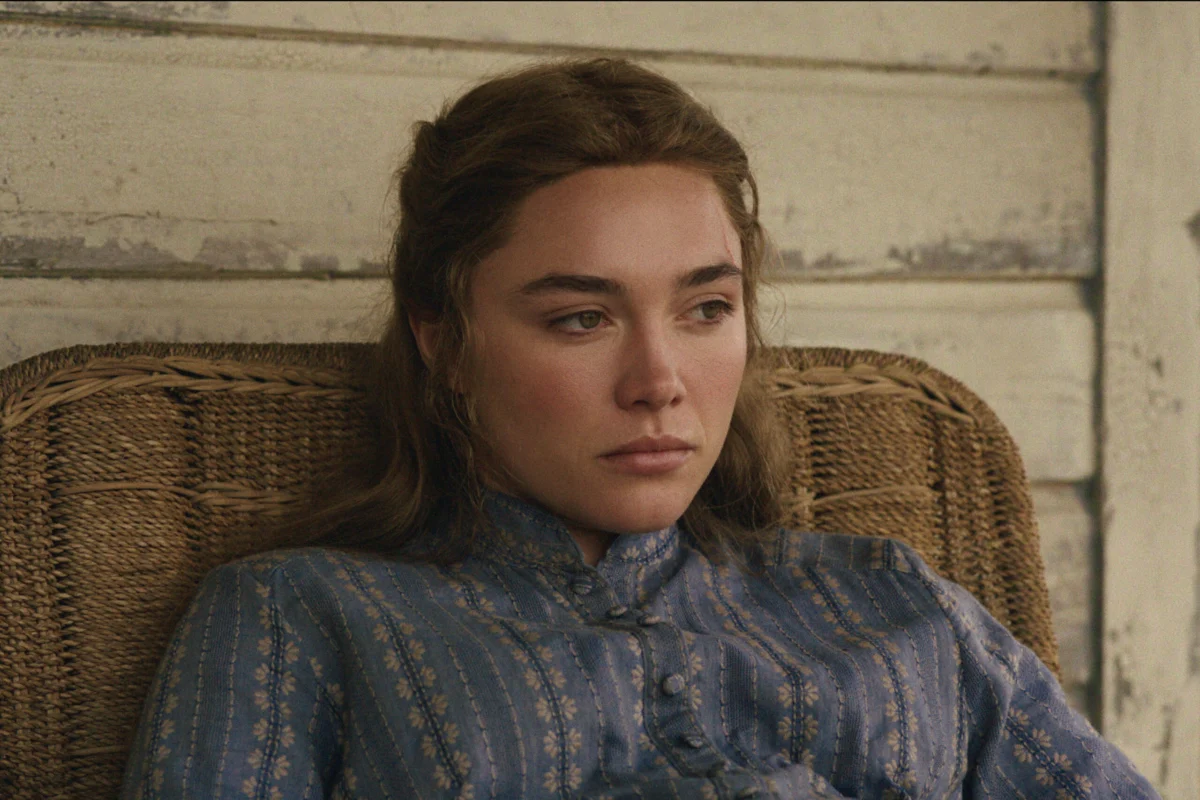
John Steinbeck’s 1952 masterwork East of Eden occupies a towering, almost untouchable space in American literature. Written as an expansive generational saga and conceived fundamentally as a sprawling parental letter to his young sons, the novel explores the foundational underpinnings of good, evil, free will, and the agonizing weight of familial inheritance.
When Elia Kazan adapted the novel into a landmark 1955 feature film—propelling James Dean into legendary status—it cemented a cinematic benchmark. However, that iconic film famously bypassed the book’s first two-thirds, focusing almost exclusively on the final chapters of the Trask family.
Now, exactly seven decades later, the monumental task of a full-scale, definitive retelling falls upon an unlikely and deeply personal standard-bearer: Zoe Kazan, the celebrated screenwriter, actor, and granddaughter of Elia Kazan. Serving as co-creator and showrunner alongside seasoned television writer Jeb Stuart, Kazan is bringing a seven-episode limited series adaptation of East of Eden to Netflix, debuting globally on October 1.
Main Facts: The Creative Blueprint of a Modern Classic
The upcoming Netflix series represents a massive undertaking in scale, ambition, and emotional resonance. Stretching across seven meticulously crafted episodes, the project aims to honor Steinbeck’s original text with unprecedented narrative depth.

At the center of the series is an all-star ensemble. Academy Award nominee Florence Pugh stars as Cathy Ames, the enigmatic, deeply complex, and transgressive woman whose actions drive a bitter wedge between two brothers, Adam Trask and Charles Trask, over the span of decades.
Adam is brought to life by Christopher Abbott, while Mike Faist steps into the complex shoes of Charles. They are joined by a stellar supporting cast, including Hoon Lee as the beloved family philosopher and steward, Lee.
Behind the camera, the production brought together a massive international crew of over 600 individuals, shooting on expansive, meticulously redesigned landscapes in New Zealand to capture the windswept American frontier of the late 19th and early 20th centuries.
Chronology: From Teenage Discovery to Netflix Greenlight
The genesis of this adaptation did not happen overnight; it is the culmination of a lifelong relationship with the text.

- 1952: John Steinbeck publishes East of Eden, an epic novel examining the history of the Salinas Valley and the eternal struggle encapsulated by the Hebrew word Timshel (“thou mayest”).
- 1955: Elia Kazan directs the iconic film adaptation starring James Dean, establishing a cinematic touchstone that concentrates heavily on the novel’s final section.
- Early 2000s (Roughly 15 years old): Zoe Kazan discovers the novel, falling deeply in love with the book and imagining a version that captures the sweeping, generation-spanning narrative left out of her grandfather’s film.
- Four Years Prior to Production: Kazan begins actively securing rights, developing scripts, and drafting an initial eight-episode arc.
- Pre-Production Phase: Florence Pugh signs on early in the development cycle, long before a network or director is officially attached, serving as a vital anchor for the project’s momentum.
- The Collaboration: Jeb Stuart comes aboard as co-showrunner, partnering with Kazan to tighten scripts, reduce the episode count from eight to seven for budgetary and pacing optimization, and steer the massive global production.
- October 1: The seven-episode limited series officially premieres worldwide on Netflix.
Supporting Data: Production Scale and Artistic Constraints
Translating a sprawling 600-plus-page historical novel into a television format required rigorous structural discipline and massive logistical coordination.
Initially written as an eight-episode arc with scripts averaging 60 pages each, the creative team faced inevitable budgetary and logistical realities common to high-end period pieces. To maximize production value, maintain cinematic fidelity, and ensure every frame met exacting visual standards, Kazan and Stuart made the bold decision to compress the series down to seven episodes, trimming scripts to roughly 52 pages each.
Despite these physical and financial constraints—which included navigating unpredictable weather patterns in New Zealand and managing a cast of over 100 speaking actors—the production successfully constructed a sprawling historical world. The series relies heavily on multi-generational storytelling, tracing the burden of ancestral shame, sibling rivalry, and the psychological weight of parentage across decades.
Official Responses: In Conversation with the Showrunners and Cast
The Showrunners: Zoe Kazan & Jeb Stuart
Addressing the heavy legacy of her family name, Zoe Kazan acknowledged the intense pressure of tackling a property so closely tied to both American literary history and her grandfather’s cinematic legacy.

"It’s a complicated process, because obviously my grandfather’s shadow looms very large, in good ways and bad ways," Kazan shares. "So much of this book is about family, and Steinbeck was writing about his own family in it… But that’s definitely not why I was drawn to the material in the first place. I really fell in love with this book when I read it at 15. It grabbed me and wouldn’t let go."
For co-showrunner Jeb Stuart, joining the project was an easy decision after reading Kazan’s bold drafts.
"With a name like Kazan, you’ve got a bull’s-eye on your back taking on something like this," Stuart notes. "So let’s make sure we get what you want to do up on the screen. And I think we did that. It’s also nice that we’re in a world where seven episodes has a place in modern media. We can get the full depth—or much greater depth—that you couldn’t have in the novel or the movie."
Central to the series’ casting coup was Florence Pugh, whom Kazan envisioned for the formidable role of Cathy Ames after witnessing her powerhouse performance in Midsommar.

"When I saw Florence in Midsommar, I felt like I was witnessing a miracle," Kazan says. "She was the only actor I walked into my first pitch meeting saying it had to be. She was the first person to attach herself to the project, long before we had Netflix attached… Her belief in me made me believe that I could do this."
The Brothers: Mike Faist & Christopher Abbott
Bringing the tumultuous Trask brothers to life required deep psychological exploration. Mike Faist, stepping into the role of Charles Trask, admitted to initial intimidation before diving into the source material.
"If you look at the original film, it really only tackles the last third of the book," Faist explains. "Being able to go back and see young Adam with his brother Charles was exciting to me. When Zoe introduced me to the character of Charles, I immediately fell in love with him. I think she was tapping into this idea of shame: What does it mean for a person to carry shame? What if you feel that you’re born with an innate badness?"
Christopher Abbott, cast as the idealistic and haunted Adam Trask, initially questioned whether he was right for the part before uncovering the rich duality written into the scripts.

"She asked me to play Adam. When I first started reading it, I thought maybe she’d gotten it wrong in the email," Abbott admits. "It was so nice to read it and then talk with her about it… [Zoe] talked about how these brothers present themselves versus what’s inside, and the duality they both have. I would have said yes to playing either brother, but this was fantastic writing."
Reflecting on the central philosophical crux of the story—the Hebrew translation of Timshel ("thou mayest")—both actors emphasized its enduring personal relevance.
"It’s a version of ‘You’re free now,’ or, if you’re bestowing it on someone else, ‘You are free,’" Abbott says of the term. "It took [Adam] an entire lifetime to be free of the things he was carrying."
Faist echoes this sentiment regarding human agency: "This idea of ‘Thou mayest’—you may. What I love about this story is that every one of these characters is wrestling with the good and bad that exist within them. That’s very human and honest."

Implications: A Timeless Tale for a Polarized Era
As television audiences prepare to dive into Netflix’s seven-episode event, the implications of revisiting East of Eden extend far beyond nostalgia or prestige literary adaptation.
In an era where modern cultural discourse often flattens complex human behavior into rigid, binary paradigms of absolute good versus absolute evil, Steinbeck’s thesis—and Kazan’s modern framing of it—offers a vital antidote. By emphasizing the moral agency inherent in Timshel, the series refuses to let its characters off the hook, nor does it dismiss them as irredeemable monsters.
Instead, the adaptation refocuses the spotlight on generational trauma, personal accountability, and the eternal human capacity for choice. By reclaiming the first two-thirds of Steinbeck’s epic and grounding the narrative in rich, psychological realism, Zoe Kazan, Jeb Stuart, and their exceptional cast have not merely dusted off an old classic; they have held up a mirror to the enduring complexities of the human condition.
