
The Case for the Coyote: How Coyote vs. Acme Bridges Classic Cartoons and Cutting-Edge Visual Effects
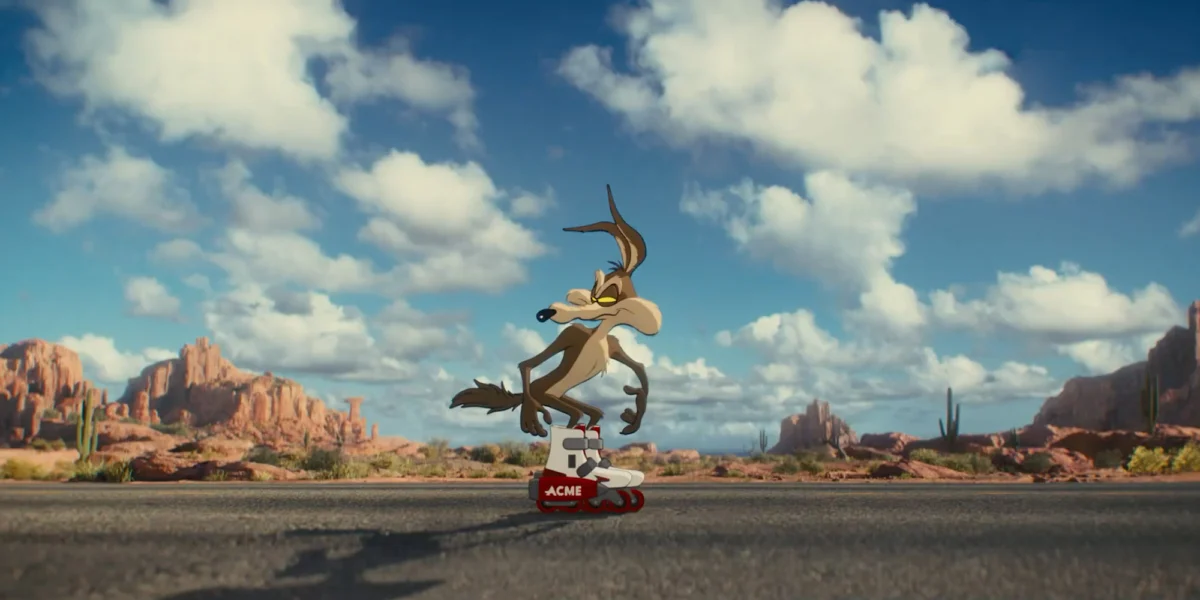
After decades of chronic structural trauma, backfiring rockets, gravity-defying cliffside falls, and an absolute absence of consumer accountability, Wile E. Coyote is finally getting his day in court.
The legal battle of the century takes center stage in Coyote vs. Acme, a hybrid live-action and computer-animated feature film that brings the beloved Looney Tunes icon into the modern cinematic fold. Recently, the expert panel of the VFXShow—featuring Matt Wallin, Jason Diamond, and Mike Seymour—convened to dissect the meticulous artistry, complex visual effects pipeline, and extraordinary creative challenges required to translate a two-dimensional cartoon legend into a living, breathing, three-dimensional world.
Far more than a simple nostalgia trip, the film represents a masterclass in modern visual effects compositing, blending cutting-edge computer-generated imagery (CGI) with traditional hand-drawn sensibilities, physical puppetry, and a surprisingly heartfelt narrative.
Main Facts: Inside the Courtroom of Coyote vs. Acme
Directed by Dave Green from a screenplay by Samy Burch, with a story crafted by Burch alongside James Gunn and Jeremy Slater, Coyote vs. Acme draws its primary inspiration from Ian Frazier’s celebrated 1990 New Yorker humor essay of the same name.
The plot centers on Kevin Avery, an earnest and struggling personal injury attorney played by Will Forte, who takes on a client with the most extensive—and catastrophic—history of product-related injuries in recorded history: Wile E. Coyote. Avery files a landmark lawsuit against the Acme Corporation, whose perpetually defective merchandise has driven the persistent predator to wit’s end.
Standing in Avery’s way is the slick, corporate defense attorney Buddy Crane, brought to life by John Cena. Assisting Avery in his crusade is his niece and legal intern, Paige, played by Lana Condor. However, as the legal proceedings unfold, the defense team encounters immediate, highly unique logistical hurdles—such as the inherent impossibility of successfully serving a court subpoena on a notoriously elusive, hypersonic bird like the Road Runner.

Behind the camera and across the digital workstations, the production faced an even greater challenge: how to seamlessly integrate a hyper-stylized cartoon character into live-action environments without sacrificing the physics-defying exaggeration that defines the Looney Tunes brand.
Chronology: The Journey from The New Yorker to the Silver Screen
The intellectual property trail of Coyote vs. Acme spans over three decades, evolving through distinct phases of conceptualization, production, and technical execution:
- 1990: Author Ian Frazier publishes his satirical piece in The New Yorker, written in the form of a legal brief filed by Wile E. Coyote against the Acme Company. The piece becomes a cult classic and plant seeds for a narrative expansion.
- Development Phase: Warner Bros. recognizes the cinematic potential of a high-concept courtroom comedy blending animation and live-action, eventually assembling a creative team including writers Samy Burch, James Gunn, and Jeremy Slater, alongside director Dave Green.
- Production & Principal Photography: Filming takes place with live-action actors Will Forte, John Cena, and Lana Condor. To solve the persistent cinematic problem of actors reacting to empty space, the production employs innovative on-set tools, including a life-size physical puppet of Wile E. Coyote operated by veteran puppeteer Dave Barclay.
- Post-Production & VFX Pipeline: Visual effects powerhouse DNEG takes the helm, combining state-of-the-art CG character work with classic hand-drawn sensibilities. Animators utilize "SketchViz"—early illustrated motion guides—to lock down character blocking, comic timing, and performance beats.
- The VFXShow Breakdown: Industry experts Matt Wallin, Jason Diamond, and Mike Seymour gather to analyze the technical breakthroughs of the film, examining how the VFX team managed the delicate balance between cartoon physics and photorealism.
Supporting Data: The Technical Anatomy of a Cartoon Icon
Bringing Wile Ethelbert Coyote into a live-action world required an unprecedented marriage of old-school artistry and modern digital pipelines. During their deep-dive discussion, the VFXShow hosts highlighted several critical technical components that made the film’s visual effects successful:
1. The "SketchViz" Foundation
Before a single frame of computer-generated fur was rendered, the production utilized an innovative pre-visualization technique known as "SketchViz." By combining hand-drawn, 2D animated sketches with live-action camera plates, the creative team could establish precise character poses, comedic timing, and physical interactions. This bridge ensured that the digital animators at DNEG stayed true to the classic Chuck Jones-era sensibilities rather than defaulting blindly to photorealism.
2. On-Set Practical Puppetry
Acting opposite a completely invisible character is one of the oldest challenges in visual effects filmmaking. To give Will Forte and Lana Condor authentic eyelines, physical blocking cues, and a tangible sense of scale, the production enlisted master puppeteer Dave Barclay. Barclay operated a life-size, physical puppet of Wile E. Coyote directly on set. This tangible reference point allowed the human actors to interact organically with their co-star, drastically improving the believability of the final composite shots.
3. Preserving "Gloriously Impossible" Physics
The primary danger of adapting a classic cartoon into live-action is the temptation to over-rationalize its physics—explaining how an anvil falls or why a rocket works. The visual effects team successfully resisted this urge. Wile E. Coyote retains his iconic proportions, elastic deformations, and defiance of gravity. DNEG’s CG character work painstakingly mapped classic squash-and-stretch animation principles onto a three-dimensional rigged model, allowing the character to share cinematic frame space with human actors while keeping his trademark cartoon logic intact.

Official Perspectives: Legal Counsel and Expert Witnesses Take the Stand
The VFXShow episode dedicated to the film functioned as a mock legal proceeding, with the hosts adopting playful personas to evaluate the merits of the production’s visual effects achievements:
- Matt Wallin (Counsel for the Coyote): Serving as the lead advocate for the animated protagonist, Wallin emphasized the emotional stakes of the character. He noted that the film succeeds because it manages to turn a figure historically defined by slapstick suffering into a sympathetic, deeply resonant emotional center.
- Jason Diamond (Expert Witness): Providing technical analysis on the aesthetic translation of the character, Diamond pointed out the intricate balance required in compositing. He discussed how lighting artists had to harmonize live-action set lighting with the stylized, expressive silhouettes of traditional animation.
- Mike Seymour (Acme Product Tester): Bringing a cynical eye to the structural integrity of Acme products, Seymour evaluated the VFX integration, focusing on how the digital debris, explosions, and catastrophic environmental damage were layered into live-action backdrops to sell the sheer scale of the Coyote’s enduring misfortune.
Implications: What Coyote vs. Acme Means for the Future of Hybrid Filmmaking
The release and technical execution of Coyote vs. Acme carry profound implications for the broader entertainment industry, particularly in the realm of hybrid IP adaptations.
For years, studios attempting to bring 2D animated characters into live-action environments fell into the trap of hyper-realism—rendering classic characters with hyper-detailed textures, fur follicles, and realistic anatomy that often stripped away their charm (a phenomenon sometimes criticized as uncanny valley design). Coyote vs. Acme demonstrates a more enlightened path forward. By explicitly honoring hand-drawn roots through SketchViz and marrying them with advanced CG rigging, the production proves that stylized animation and live-action can coexist harmoniously.
Furthermore, the film elevates a silent slapstick character into the emotional anchor of a feature-length narrative. By framing the eternal struggle between the Coyote and the Road Runner through the lens of a corporate product liability lawsuit, the filmmakers found a clever, self-aware framing device that resonates with modern audiences who grew up watching Saturday morning cartoons.
As Matt Wallin, Jason Diamond, and Mike Seymour concluded in their courtroom breakdown, the trial of Wile E. Coyote versus the Acme Corporation is ultimately a triumph of visual effects craftsmanship. It proves that with the right mix of technical innovation, respect for source material, and a well-placed anvil, even the most catastrophic cinematic challenges can yield a masterpiece.
All rise for the Coyote—and remember to check for falling anvils before exiting the theater.
