
Letting Frida Speak: How a Groundbreaking Sundance Documentary Lets the Iconic Artist Tell Her Own Story
By Patty Consolazio
One of the truly magical properties of cinema is its unparalleled ability to collapse time and space, transporting audiences directly into the lives, epochs, and emotional landscapes of individuals they could never otherwise hope to meet. Though she was born over a century ago, the renowned Mexican painter Frida Kahlo continues to speak with a staggering, contemporary candor. She shares her raw pain, her unbridled passion, and the very depths of her body and soul. This vivid resurrection is made possible thanks to the masterful re-creation of her life story by Sundance Institute alum Carla Gutiérrez and the dedicated creative team behind the feature documentary Frida.
The film made its highly anticipated world premiere on January 18, 2024, competing in the prestigious U.S. Documentary Competition at the Sundance Film Festival. By turning away from conventional third-party narration and leaning entirely into the artist’s own archival footprint, Frida redefines what a biographical documentary can achieve.
Main Facts: A Revolutionary Approach to a Legendary Life
At its core, Frida is an unprecedented cinematic experiment in self-representation. The documentary opens with a powerful, mission-setting promise displayed on screen: "Frida Kahlo left a rich testimony of her life in letters, writings, and her illustrated diary. These are her words."
Rather than relying on modern-day art historians, distant biographers, or talking-head experts to interpret her legacy, Gutiérrez and her team made a bold creative gamble: they let Kahlo narrate her own existence. Utilizing Kahlo’s personal letters, deeply personal diary entries, and extensive historical writings, the documentary constructs a first-person narrative arc that spans the artist’s childhood, her horrific bus accident, her tumultuous marriage to Diego Rivera, her political awakenings, and her final, pain-wracked years.
The film combines this intimate vocal track with a breathtaking visual style, bringing Kahlo’s iconic paintings to life through sophisticated animation and design. The artwork does not merely hang statically on screen; it breathes, pulses, and bleeds, mirroring the physical and psychological states of its creator.
Chronology: From 20-Year-Old Books to the Sundance Stage
The journey to bringing Frida to the 2024 Sundance Film Festival was a labor of rigorous research, creative evolution, and unexpected discoveries.
The Seed of an Idea
The project began when a colleague suggested to Carla Gutiérrez that she take on a documentary about the globally recognized Mexican painter. For Gutiérrez, who had long admired Kahlo from afar, the proposition was both exciting and daunting.
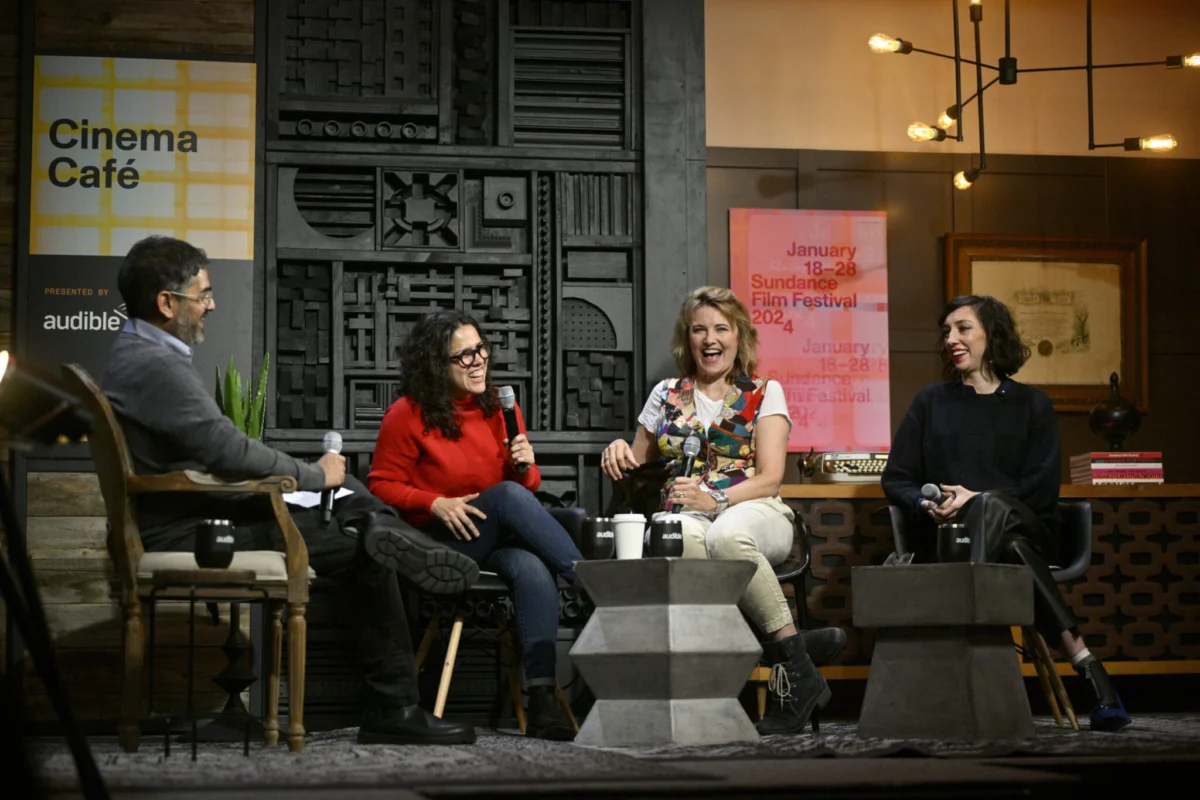
"I’ve lived with this story for a long time," Gutiérrez revealed during her post-premiere Q&A session at Sundance. "I immediately went back to the books I read 20 years ago and I realized within two hours, there’s a lot of her words, so she can tell a lot of her story, and I haven’t seen a film really focus on her voice as we could do it."
Deep Archival Research
Gutiérrez and her production team dove headfirst into historical archives, letters, and illustrated diaries. They initially anticipated structuring the film in a traditional documentary format, balancing Kahlo’s written words with a chorus of contemporary voices, historians, and friends who knew her.
However, as the research progressed, the filmmakers encountered a surprising creative roadblock: Kahlo’s voice was simply too loud, too dominant, and too compelling to share the stage.
"That’s what surprised us, is that she could really, really carry this story," Gutiérrez explained. "We thought we were going to [rely] on other people’s voices more, and then she just kept kind of like, pushing the other voices away… like, OK, Frida wants to talk. So Frida talks!"
The Premiere at Sundance
After years of meticulous editing, sound design, and animation work, Frida was selected for the U.S. Documentary Competition at the 2024 Sundance Film Festival. On January 18, 2024, the film unspooled before an enthralled audience in Park City, Utah, instantly generating critical acclaim for its innovative structure, visual audacity, and emotional resonance.
Supporting Data and Narrative Themes: Pain, Passion, and Paint
Frida transcends the standard biopic framework by exploring the complex intersections of Kahlo’s physical suffering, her vibrant sexuality, her artistic philosophy, and her sharp wit.

The Crucible of Suffering
A defining turning point in Kahlo’s life—and in the documentary—is the catastrophic bus accident of her youth that left her severely injured. Left bedbound in the hospital for months on end, Kahlo faced an agonizing recovery process. It was during this profound isolation that painting transformed from a casual hobby into her primary vessel for human survival and self-expression.
Confined to a bed, she painted herself because that was what she knew best; she was her own most accessible and complex subject. As highlighted in the film, Kahlo made a steadfast vow early on: never would she paint for mere glory or commercial applause. Her art was born out of absolute necessity.
Relationships and Rebellion
Beyond the canvas, Frida paints a vivid, unvarnished portrait of a woman who defied the rigid societal expectations of 20th-century Mexico. The documentary dives fearlessly into:
- Her rebellious, adventurous youth alongside young men.
- Her expansive, liberated sexuality and romantic interludes with both men and women.
- Her legendary, tender, yet intensely tumultuous relationship with famed Mexican muralist Diego Rivera.
- Her unfiltered, profanity-laced criticisms of elitist society—including her famous disdain for wealthy patrons who spoke nonsense and failed to understand or purchase her work.
The Sustaining Power of Color
Throughout her life, the physical trauma of her accident remained an uninvited, daily companion. Yet, the visceral pleasure and therapeutic release of painting sustained her spirit through the darkest hours. As Kahlo herself wrote in her personal reflections, capturing the essence of her internal life through pigment:
"Who would have thought that stains of color can come to life? And that they can help one live?"
This profound realization forms the emotional heartbeat of Gutiérrez’s film, reminding viewers that art was not merely Kahlo’s career—it was her lifeline.
Official Responses and Creative Insights
The reception to Frida at Sundance highlighted a broader industry appreciation for documentaries that find innovative ways to bypass standard biographical tropes. Carla Gutiérrez, speaking alongside key members of her production and creative crew—including producers and editors who lived with the project through its multi-year development—emphasized the responsibility they felt toward Kahlo’s literary estate and personal legacy.
"When you are dealing with an icon as massive as Frida Kahlo, the risk of caricature is always present," industry analysts noted following the premiere. "By stripping away the noise of secondary commentators and letting her handwritten words guide the rhythm of the film, Gutiérrez has achieved something remarkably rare: an intimate, unmediated dialogue between a historical figure and a modern audience."
Crew members noted during the festival panels that animating Kahlo’s art required an extraordinary level of reverence. Every brushstroke brought to life on screen was meticulously analyzed to ensure it aligned with the emotional subtext of the specific diary entry or letter being read aloud in that moment.
Implications: Redefining the Biographical Documentary
The success of Frida at the 2024 Sundance Film Festival carries significant implications for the future of documentary filmmaking, particularly within the sub-genre of artist biographies.
For decades, biographical docs have relied heavily on a predictable formula: archival photos, talking-head experts offering glowing praise, dramatic reenactments, and a comforting narrative voiceover. Frida successfully demonstrates that when subjects leave behind a sufficiently rich textual and artistic legacy, filmmakers can—and perhaps should—step out of the way.
By allowing Kahlo to speak directly to the camera through her own diary entries, letters, and animated canvases, the film achieves a level of psychological intimacy that traditional documentaries struggle to reach. It challenges audiences to look past the commercialized, floral-crowned pop-culture icon printed on t-shirts and tote bags, returning them to the complex, foul-mouthed, deeply vulnerable, and brilliantly talented human being who created them.
As Frida rolls out to broader audiences following its Sundance debut, it leaves an indelible mark on how we perceive historical icons. It proves that true artistic genius, when paired with modern cinematic craft, can transcend a century of time to remind us all that pain can be alchemized into beauty, and that words written decades ago can still strike like a beating heart.
