
The Art of the Pivot: How AIR Reimagined the Moment Sonny Vaccaro Bet It All on Michael Jordan
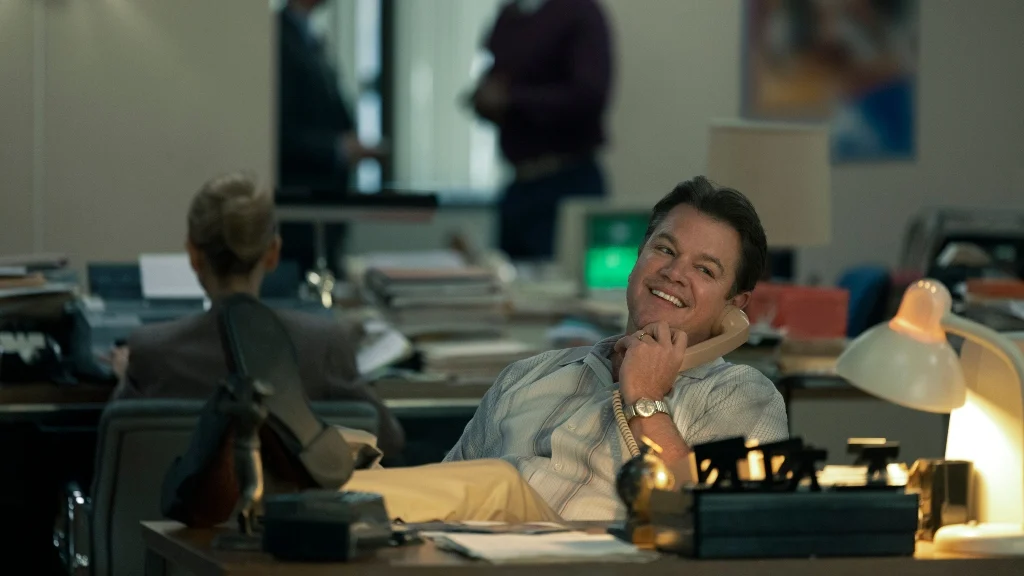
In the high-stakes world of Hollywood biopics, the line between historical accuracy and cinematic necessity is often blurred. Ben Affleck’s AIR—the gripping 2023 drama that chronicles Nike’s desperate, history-altering quest to sign a young Michael Jordan—is a masterclass in this creative friction. While the film captures the visceral energy of the 1984 sneaker wars, screenwriter Alex Convery recently pulled back the curtain on how one of the film’s most pivotal scenes was fabricated to preserve the movie’s narrative momentum.
The scene in question—a quiet, obsessive moment where Matt Damon’s Sonny Vaccaro sits alone, rewinding a grainy VHS tape of the 1982 NCAA Championship game—serves as the emotional anchor for the entire film. It is the moment the "lightbulb" goes on, convincing Vaccaro to stake the entirety of Nike’s basketball division budget on a single, unproven rookie. But according to Convery, that moment of discovery happened in a boardroom, not a screening room.
The Core Narrative: A Gamble That Defined Modern Sports Marketing
To understand the weight of this creative decision, one must first appreciate the stakes. AIR tells the story of 1984, a year when Nike was a distant third-place player in the basketball market, trailing far behind the titans of the era: Converse and Adidas.
In the film, Damon’s Vaccaro is portrayed as a visionary maverick, a man whose gut instinct outweighs the rigid data-driven corporate culture of Nike. The film’s climax hinges on his ability to convince Nike co-founder Phil Knight (played by Affleck) and—more crucially—Jordan’s mother, Deloris (played by Viola Davis), that Michael is not just a basketball player, but a cultural phenomenon waiting to happen.
The film successfully dramatizes the $250,000 budget gamble, turning a corporate accounting decision into a high-octane thriller. However, the mechanism Vaccaro uses to "see" Jordan’s greatness—the repeated viewing of the 1982 game-winning shot—was a deliberate departure from the historical record, engineered to keep the audience locked in the present.
Chronology of the Real-Life Discovery
In real life, Sonny Vaccaro didn’t need to rewind a tape to know who Michael Jordan was. The truth, as explained by Convery on the MovieMaker Podcast, is grounded in a more organic, long-term observation.
- 1982: Sonny Vaccaro was physically present at the Superdome in New Orleans for the NCAA Championship. He witnessed, in person, a freshman Michael Jordan sink the game-winning jumper against Georgetown.
- 1982–1984: For two years, that moment lived in the back of Vaccaro’s mind. It wasn’t a sudden epiphany sparked by a VCR; it was a lingering, persistent belief that the young man who dared to take the final shot as a freshman was destined for something greater.
- 1984: When the time came to pick a marquee player for Nike, Vaccaro drew upon his memory of the 1982 shot to justify his singular focus on Jordan.
"Sonny was actually at that game," Convery explained. "He was at the championship game and saw Jordan hit the shot. Cut to two years later when they’re having to pick a player… Sonny always says, ‘It’s just something about that shot that stuck in my mind, the fact that he got the ball as a freshman.’"
Why the Tape? The Necessity of Cinematic Compression
The challenge for any screenwriter adapting a true story is the "flashback trap." If Convery had chosen to show the actual 1982 game, he would have broken the narrative flow.
"Obviously, you’re not going to flash back to him at the game and try to explain, ‘I was there, but now I’m here,’" Convery noted. "You want to try to be a little more creative than that. So let’s just take everything that he’s talked about in that shot and kind of instill it into that moment."
By placing Vaccaro in front of a VHS player, the film achieves three critical objectives:
- Visual Exposition: It allows the audience to see exactly what Vaccaro saw without the jarring transition of a period-piece flashback.
- Characterization: It paints Vaccaro as a man who is obsessed, a man who treats his intuition as a subject of rigorous study.
- Efficiency: It anchors the film’s central thesis—that greatness is recognizable to those who know where to look—within a single, contained scene.
Supporting Data: The Case of Linwood Robinson
One of the most subtle, yet effective, additions to the film’s script came from an unlikely source: Matt Damon. In the scene where Vaccaro is researching potential candidates, the film highlights a player named Linwood Robinson, a recruit who received as much, if not more, fanfare than Jordan at the time.
This detail is historically accurate, and its inclusion in the film serves to emphasize Vaccaro’s unique foresight. While the rest of the world was looking at Robinson, Vaccaro was looking at Jordan.
"Matt [Damon] found that, which I really love," Convery said. "Because it is like, ‘Who’s Lynwood Robinson?’ You know, I just love that that’s the way they start that scene. It underscores that Vaccaro was really a visionary and that few people actually recognized Jordan’s greatness at the time."
By contrasting Jordan with a player who would eventually fade into obscurity, the film effectively demonstrates the fragility of the "Jordan bet." It turns a historical fact into a narrative device that builds tension: if Nike had followed the conventional wisdom of the day, they would have bet on the wrong man.
Official Responses and the "Truth" of the Sentiment
When interviewed about the process, Convery emphasized that while the method of discovery was changed, the emotional truth remained intact. When asked directly how he knew Jordan was the one, the real-life Sonny Vaccaro often struggles to articulate it with cold logic.
"I have this feeling," Vaccaro has said. "I don’t know, I can’t explain it to you other than I watched that shot, and I just knew."
For the filmmakers, the goal was to capture that "feeling" and make it palatable for a modern audience. By mashing together Vaccaro’s various musings and memories into one concentrated scene, they succeeded in translating an abstract, internal realization into a tangible, external action.
Implications for Biopic Filmmaking
The approach taken in AIR provides a valuable case study for the genre. Critics often debate the "dangers" of altering history, but Convery’s process suggests that truth and accuracy are not always synonymous in film.
- Narrative Integrity: The film remains faithful to the outcome of history (Nike signed Jordan, it changed everything) even if it takes liberties with the process of discovery.
- Audience Engagement: By avoiding clunky structural devices like long-form flashbacks, the film maintains a "propulsive" rhythm that keeps the viewer invested in the corporate maneuvering.
- The "Essence" Doctrine: As long as the change serves the character’s established truth, it is generally accepted by the subjects involved. Vaccaro’s endorsement of the film suggests that he feels his internal journey was accurately represented, even if the staging was a Hollywood invention.
Conclusion
AIR stands as a reminder that the best biopics are not documentaries; they are interpretations of a life or an event designed to elicit a specific emotional response. By consolidating Sonny Vaccaro’s two-year internal process into a single, intense night of tape-rewinding, Alex Convery and Ben Affleck managed to capture the essence of a legendary gamble.
They didn’t just tell us that Vaccaro was a genius; they showed us what it looked like to be the only person in the room who truly understood the future. In the end, the VHS tape may have been a prop, but the vision it represented was, and remains, entirely real. As the film continues to find new audiences on streaming platforms like Prime Video, it serves as a testament to the idea that sometimes, you have to rewrite the scene to tell the truth.
