
The Ultimate "Milkman" Conspiracy: How Kavner and Dawson’s Action-Comedy Spec Script is Disrupting Hollywood
LOS ANGELES — In the cyclical, often risk-averse ecosystem of modern Hollywood spec sales, true comedic originality is a rare commodity. Studios frequently lean into pre-branded IP, predictable sequels, and algorithmic safety nets. Yet, every few years, a spec script bypasses the conventional guardrails of development to ignite a genuine bidding war, propelled entirely by high-concept absurdity and execution-level craftsmanship.
Enter The Milkman, a 109-page comedy-action spec script written by the dynamic duo Lucas Kavner and Dylan Dawson. Recently optioned by Davis Entertainment—the powerhouse production banner behind blockbuster fare like Predator: Badlands and the critically acclaimed dark comedy Game Night—the project has set industry insider circles ablaze.
Industry analysts and script-readers are asking a provocative question: Could this be the funniest comedy screenplay of the year?
Main Facts: Inside the Spec That Has Hollywood Buzzing
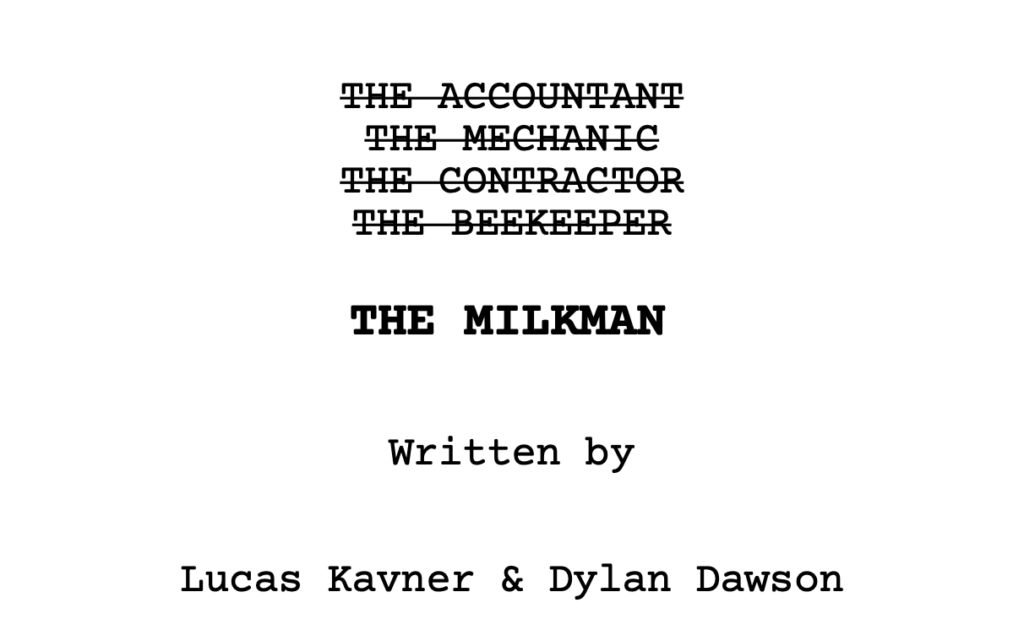
At its core, The Milkman operates as a high-octane, meta-textual parody of the modern "one-man wrecking crew" subgenre, specifically targeting hyper-violent, revenge-driven actioners like David Ayer’s The Beekeeper and Chad Stahelski’s John Wick.
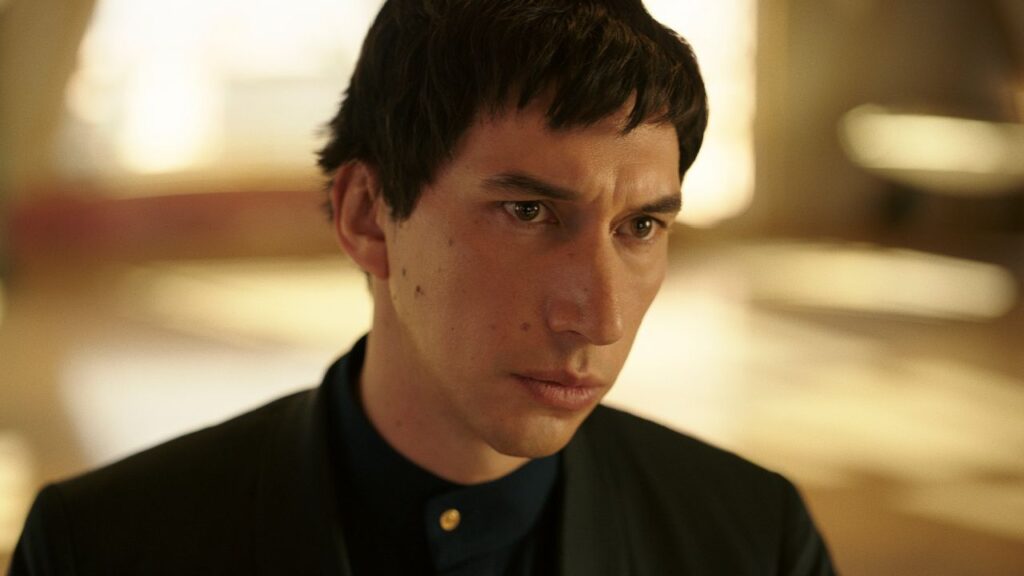
- The Title & Genre: Comedy / Action (109 pages).
- The Logline: After his beloved dairy cow is senselessly slaughtered, a peaceful, old-school dairy farmer transforms into a vengeance-obsessed one-man wrecking crew, navigating a modern, "curdled" world to take down a corrupt conglomerate and its high-powered digital enforcers.
- The Writers: Lucas Kavner and Dylan Dawson.
- The Producers: Davis Entertainment.
- The Critical Consensus: Earning a rare "Worth the Read" designation from prominent industry script reviewers, the screenplay is celebrated for its relentless commitment to structural inventiveness, intricate running gags, and sharp satire of contemporary digital culture.
Chronology and Narrative Arc: A Journey Through the "Curdled" Modern World
To understand the comedic engine driving The Milkman, one must trace the absurd trajectory of its protagonist. The narrative unfolds through a series of escalating set-pieces that systematically dismantle traditional action tropes.
Act I: The Catalyst
We are introduced to the Milkman, an anachronistic purile soul blissfully ignorant of modern digital ecosystems like TikTok. His life is defined by quiet routine: extracting milk and delivering it with artisanal precision. This tranquil existence shatters at a local diner when a bloated, self-absorbed mega-influencer named "Scronk" publicly humiliates the establishment’s waitress.
Operating under a strict personal code of justice, the Milkman delivers a brutal beating to Scronk’s security entourage, capping off the assault by forcing Scronk to drink an entire glass of milk in a ritualistic humiliation.
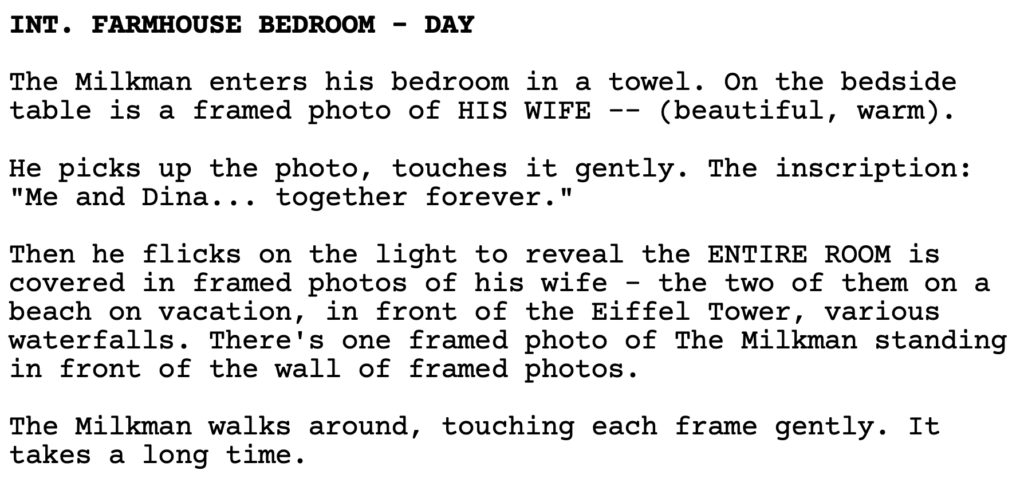
Days later, retaliation arrives. Scronk and his armed goons raid the Milkman’s farm. While a firefight rages in the homestead, Scronk slips away to the barn and executes the Milkman’s favorite cow, Dina—an animal named after his deceased wife and serving, in many ways, as his surrogate partner.
Act II: The Incognito Crusade
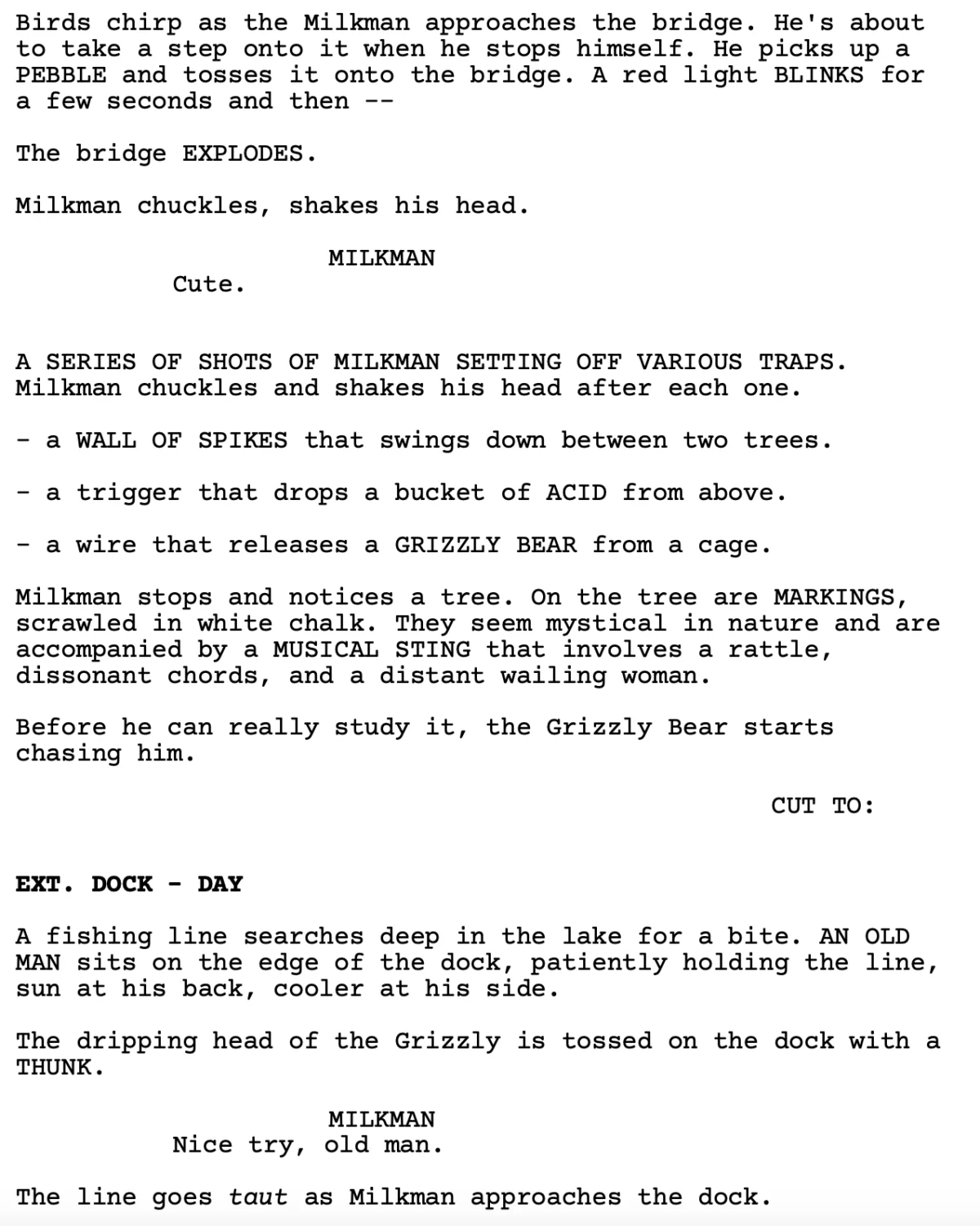
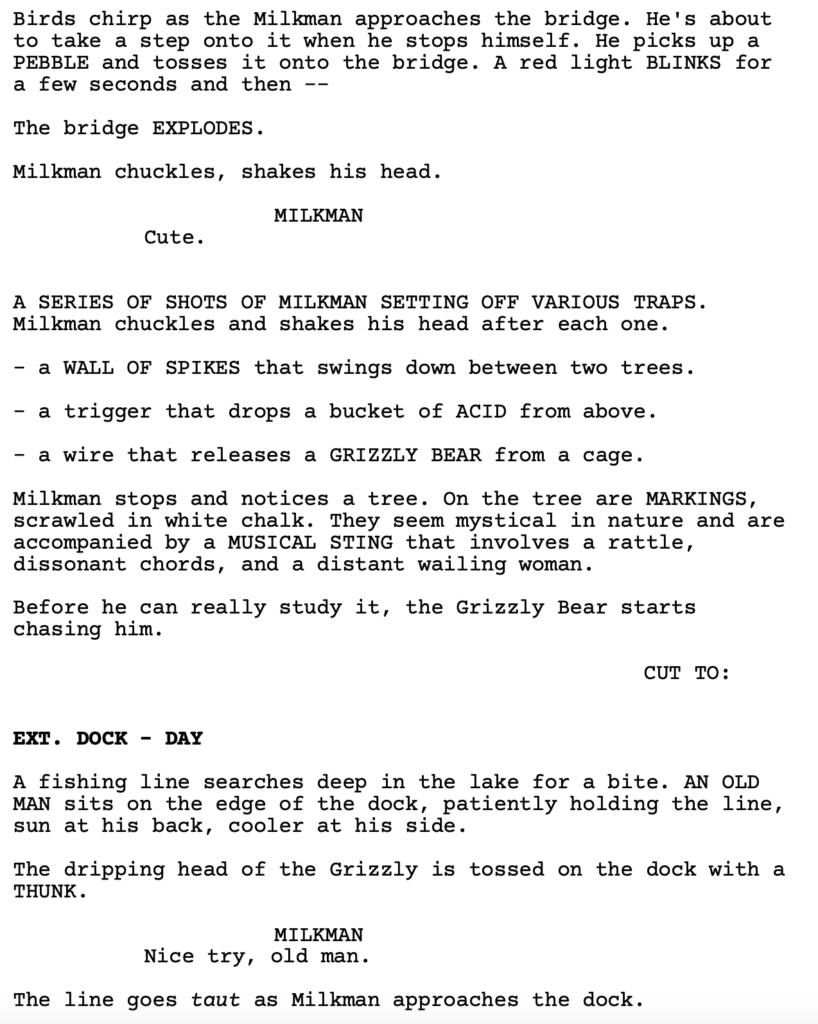
Learning that Scronk is heading to a massive digital influencer convention in the metropolitan core, the Milkman seeks out Creech, his stew-obsessed, highly eccentric mentor who lives in a heavily booby-trapped forest hideaway. After surviving a gauntlet of ten thousand traps, the Milkman gears up for war.
Disguised as a Gen Z "wood milk" influencer, the Milkman infiltrates the convention. His bizarre, unfiltered persona inadvertently turns him into the conference’s breakout star, capturing the attention of former music icon Moby, who attempts to secure a $30 million buyout for the fictional brand. Amidst the chaos, the Milkman tracks down Scronk, leading to a frantic chase that ends with Scronk accidentally plunging into a vegan shark tank—where the apex predators abruptly break their dietary restrictions to devour him.
Act III: The Deep State Conspiracy
Just as peace appears restored, the narrative takes a sharp escalation. Scronk is revealed to be the son of Benedict Valabont, a multi-billionaire online retailer and the shadowy mastermind behind "The Milkman Directive."
Forced on the run, the Milkman teams up with Cassie, a mysterious "bean bag influencer" who harbors a devastating secret: she is lactose intolerant. As Valabont’s elite operatives close in, the stage is set for a high-stakes, dairy-fueled showdown that promises to deliver action spectacle on an operatic scale.
Supporting Data: Why the Execution Elevates the Material
What separates The Milkman from standard studio comedies is not merely its high-concept premise, but the granular level of craft applied to every page. Kavner and Dawson utilize several distinct storytelling devices that have captured the admiration of professional readers:
- Meta-Textual Parody of Motivation: The script cleverly deconstructs the inciting incident of John Wick. Just as Wick’s rampage was driven not just by a killed dog, but a dog tied to his deceased wife, The Milkman amplifies this emotional anchor to absurd extremes, featuring surreal dream sequences where the dying cow briefly transforms into his late wife.
- The Acronym Running Gag: The screenwriters lean heavily into bureaucratic and military-industrial absurdity, populating the antagonist forces with needlessly complex acronyms. The protagonists encounter the D.E.L.I.V.E.R.Y. M.A.N. (Deep Extraction Logistics, Intellect, Vigilance, Elimination, Reconnaissance, Yield – Mobile Assault Node), E.L.E.V.A.T.O.R. G.U.Y., and a seemingly innocent woman named Diane who ultimately unveils herself as D.I.A.N.E. (Distractingly Innocent And Normal, Evil).
- Cinematic Counter-Programming: During a climactic battle against waves of bodyguards at the influencer convention, the scene breaks into Moby’s 2003 chill-out hit "Porcelain." Rather than playing a generic fight track, the sequence transforms into a slow-motion, operatic ballet of destruction, subverting expectations and elevating the comedic timing through sheer juxtaposition.
Official Responses and Industry Reception
While Davis Entertainment has kept official casting and production timelines under wraps following the acquisition, industry insiders report significant enthusiasm from comedy-friendly directors and talent agencies.
The script’s handling of contemporary influencer culture has resonated particularly well within younger development circles, who view the satire of digital celebrity culture as both timely and biting. Furthermore, friendly acknowledgments from creators of the very action films being parodied—such as The Beekeeper writer Kurt Wimmer—suggest the project maintains an affectionate, rather than cynical, relationship with the action genre it lampoons.
Industry analysts note that Davis Entertainment’s involvement signals a clear commercial ambition. Having successfully balanced high-concept genre thrills with elevated comedy in Game Night, the production company views The Milkman as a viable blueprint for a theatrical tentpole rather than a low-budget indie lark.
Implications for the Comedy Screenplay Market
The acquisition of The Milkman carries broader implications for the current state of feature comedy development:
- The Revival of the High-Concept Spec: For years, traditional studio comedies have struggled at the global box office, leading to a contraction in original comedy specs. Scripts like The Milkman prove that fusing comedy with adjacent high-value genres—such as action or sci-fi—provides the commercial safety net studios demand while preserving creative audacity.
- The Importance of Sustained Momentum: Script analysis of The Milkman points to a universal screenwriting hurdle: the notoriously difficult "third quarter," where narrative momentum often falters as writers rush toward the climax. Reviewers noted a slight dip in joke frequency during the middle-latter stretch of the script, offering a vital reminder to emerging writers that comedic velocity must remain prioritized above plot mechanics.
- Elevated Craft as a Differentiator: In an era where AI-generated outlines and formulaic coverage dominate the reading piles of junior executives, scripts that feature micro-innovations—such as title-page integration, epigraph satires featuring real-world public figures like Jake Gyllenhaal, and sophisticated musical counter-point—are precisely what break through the noise.
As The Milkman moves deeper into the development pipeline under Davis Entertainment, it stands as a testament to a foundational screenwriting truth: when a writer commits fully to an absurd premise and executes it with relentless, energetic craftsmanship, Hollywood is more than willing to answer the door.
