Bringing the Myth to Life: Inside Christopher Nolan’s Groundbreaking Practical and VFX Approach to The Odyssey
By TREVOR HOGG
Main Facts
For decades, acclaimed auteur ChristopherNolan has pushed the boundaries of cinematic storytelling, exploring the intricacies of human memory, space-time, and psychological duress through groundbreaking filmmaking techniques. From the dream-bending architecture of Inception to the historical grit of Dunkirk and the cosmic exploration of Interstellar, Nolan’s filmography has frequently echoed the themes of endurance and the profound pull of family.
Now, the visionary director has turned his lens toward the bedrock of Western literature: Homer’s The Odyssey. Tracing Odysseus’s agonizing, decade-long journey home to his wife, Penelope, and son, Telemachus, after the fall of Troy, Nolan’s adaptation blends classical myth with a contemporary, visceral cinematic grammar.
Spearheaded by a powerhouse creative team—including Visual Effects Supervisor Andrew Jackson, Special Effects Supervisor Scott Fisher, Production Designer Ruth De Jong, and Director of Photography Hoyte van Hoytema—The Odyssey relies on approximately 400 visual effects shots executed by DNEG. Rather than leaning entirely on computer-generated imagery (CGI), the production famously champions a tactile, hybrid methodology, merging large-scale practical builds, weather manipulation, and on-set puppetry with cutting-edge digital compositing.
Chronology: From Missed Opportunities to Global Production
The conceptual foundation for The Odyssey was laid years ago, stemming in part from a missed opportunity when Nolan was previously considered to direct the Bronze Age epic Troy. That early encounter with classical myth lingered in the filmmaker’s consciousness, eventually evolving into a desire to adapt Homer’s sweeping masterwork.
Because very little is historically or archaeologically known about the precise aesthetic of the Bronze Age, Nolan and his production team faced a massive world-building challenge. Rather than treating it as a traditional historical drama, the director approached the project with the mechanics of a science fiction film, where every element of the environment had to be conceptualized and constructed from the ground up.
Principal photography became a massive international endeavor, spanning multiple countries to capture diverse, specific topographies. Production kicked off with extensive location scouting and shooting across Morocco, Greece, Italy, Iceland, and Scotland.
The logistical hurdle of shooting across Europe and North Africa demanded unprecedented inter-departmental synergy. An art department was established in every shooting location, functioning not as isolated units, but as a unified creative front alongside Jackson, Fisher, Marine Coordinator Neil Andrea, and van Hoytema.
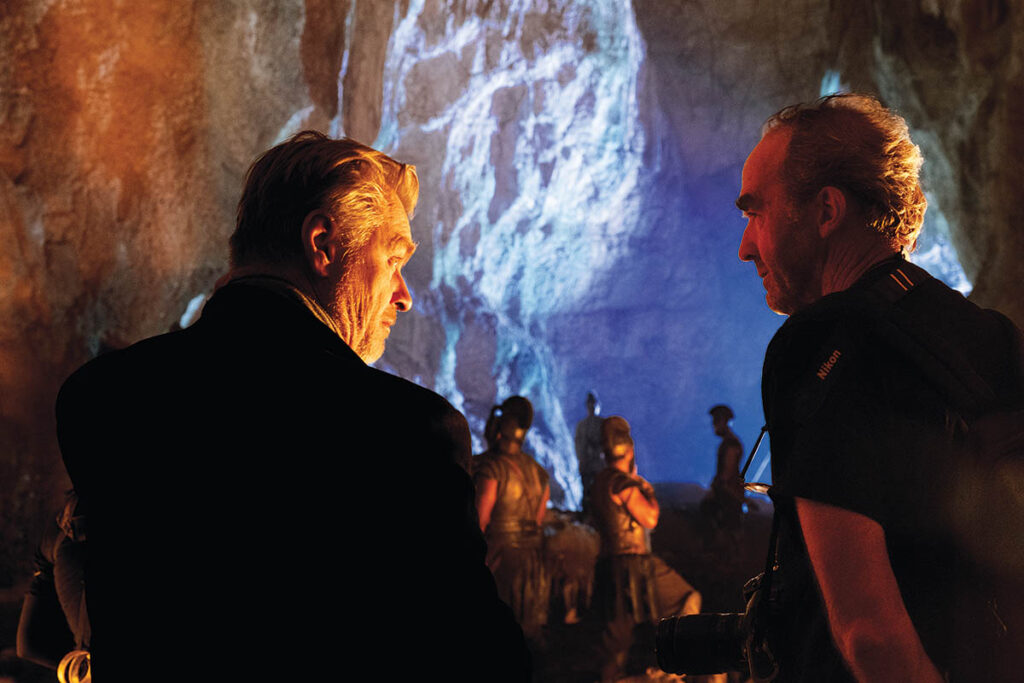
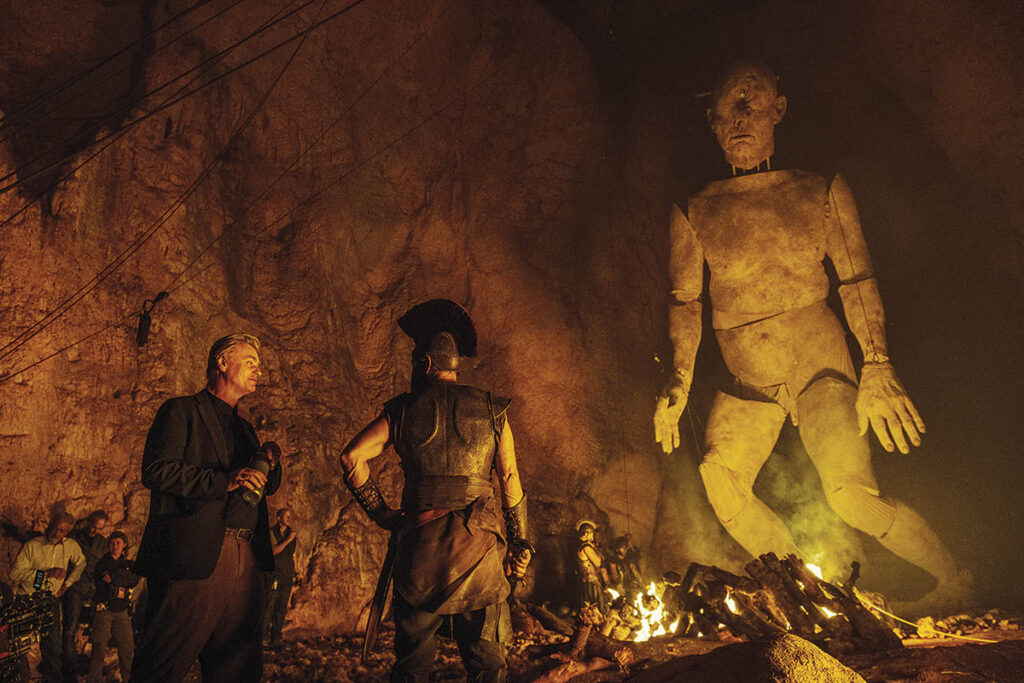
The tight scheduling constraints brought their own dramatic twists. For instance, an initial plan to shoot the pivotal Cyclops sequence in a Los Angeles cave set at the tail end of the production schedule was abruptly overhauled when Nolan discovered a natural cave in Greece during a location survey. Because shooting in Greece was slated for February, the timeline to design and construct a giant, functional 36-foot-tall Cyclops puppet was slashed from six or seven months down to a mere two months—forcing the special effects and visual effects teams into an intensive, high-pressure sprint of innovation.
Supporting Data: Practical Engineering Meets Digital Artistry
The production of The Odyssey stands as a testament to the philosophy that CGI should enhance, rather than replace, physical reality. Nolan, Jackson, and Fisher deliberately drew inspiration from legendary practical effects pioneers like Ray Harryhausen, makeup master Rick Baker, and sculptural makeup icon Rob Bottin, infusing the entire production with a deep sense of tactility.
1. The Cyclops and Its Cave
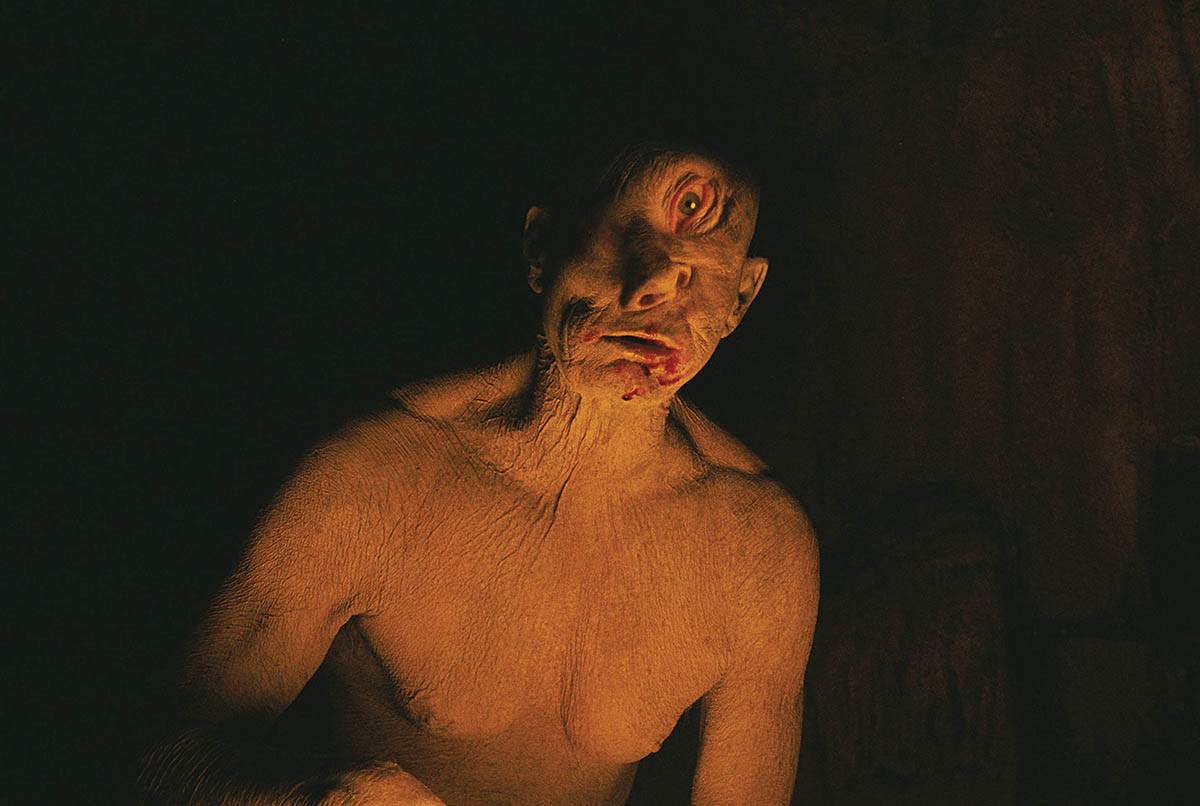
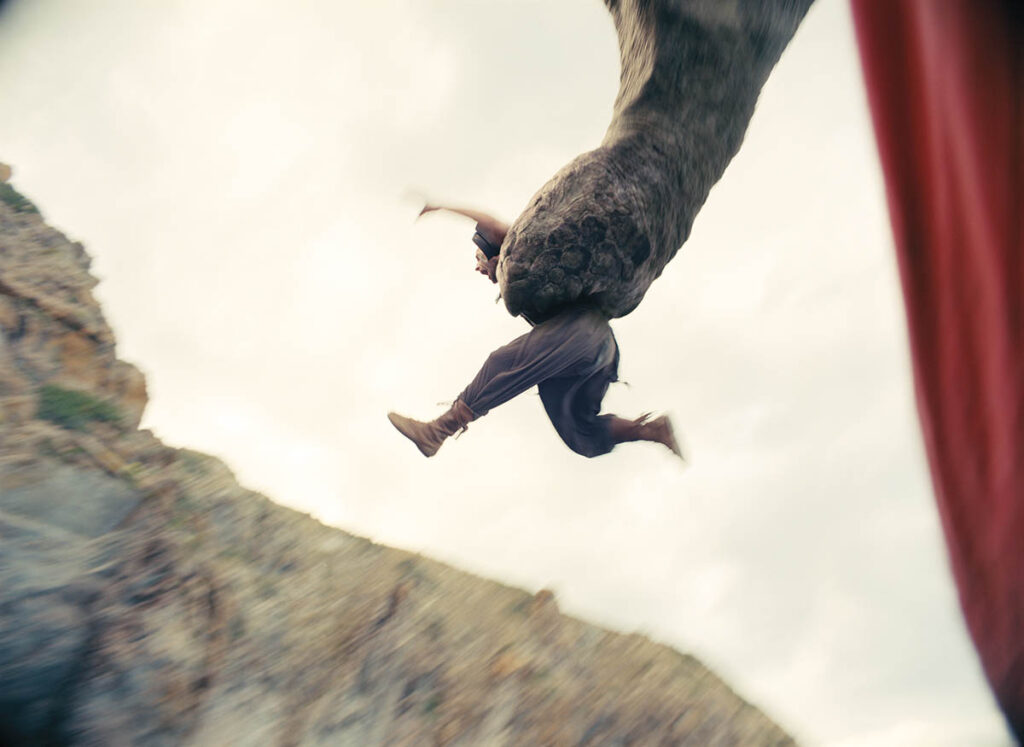
To bring the iconic one-eyed giant to life, the team built a lightweight, 36-foot-tall stick figure puppet using simple ropes, counterweights, and guides modeled after the massive parade puppets seen in France. This lightweight construction allowed stuntmen and puppeteers to leverage gravity and body weight for realistic movement.
For tighter, more complex interactions—such as picking up human actors—full-sized hands and specialized feet were manufactured. In scenes where the puppet’s mechanics met their limit, an actor in advanced practical makeup stepped in. A real Cyclops eye was even rotoscoped, composited, and timed precisely to the live-action footage. Furthermore, visual effects artists at DNEG seamlessly matched a miniature version of the Greek cave set to the full-sized location to accommodate the compressed shooting schedule.
2. Scylla and Charybdis
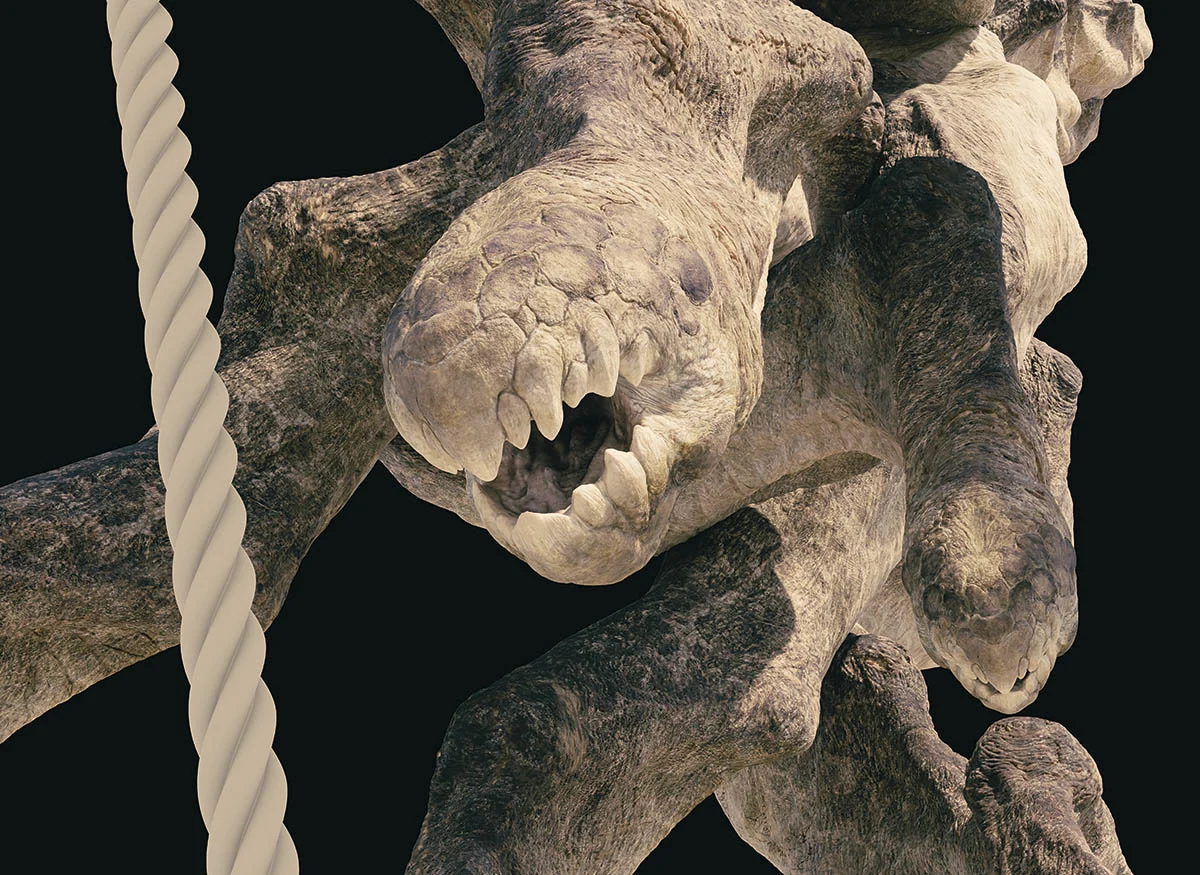
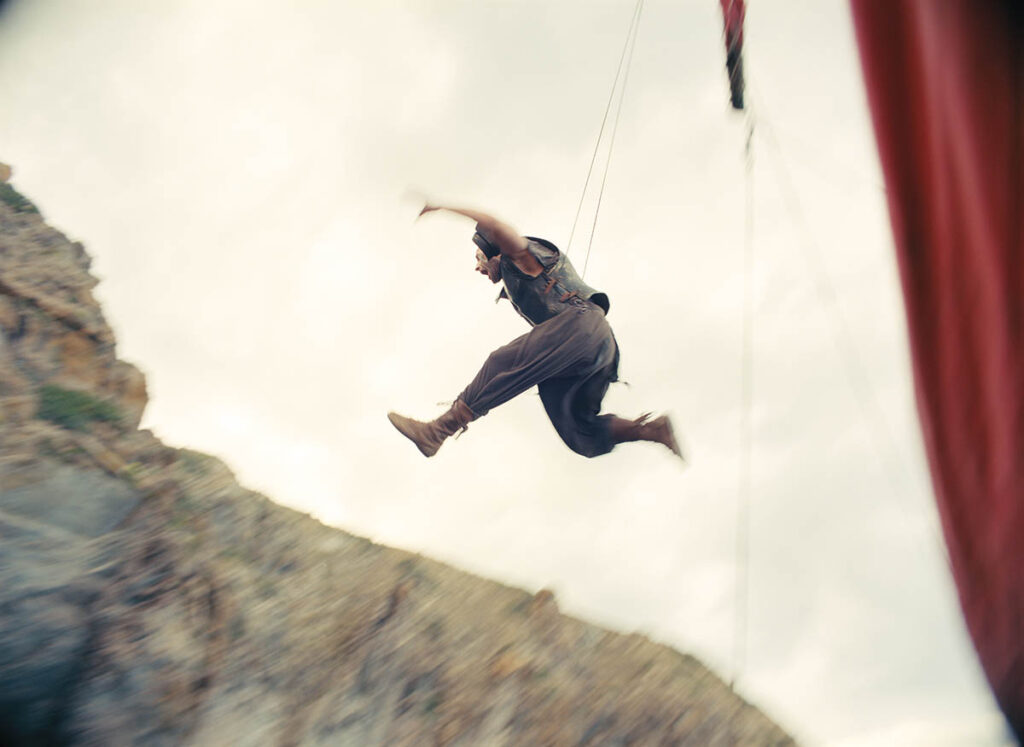
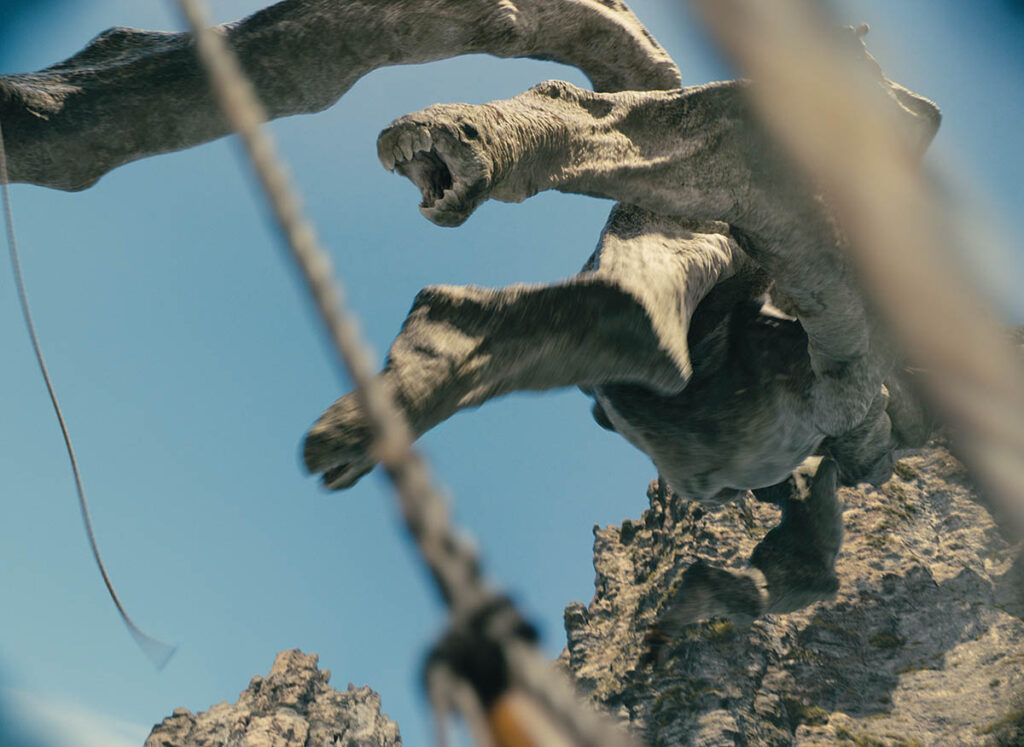
The multi-headed monster Scylla and the treacherous whirlpool Charybdis required a similarly rigorous hybrid approach. Special effects teams constructed a giant, foam-puppeteered single head for Scylla, mounted on wires to physically interact with stunt actors, smash breakaway set pieces, and tear apart ship structures on set.
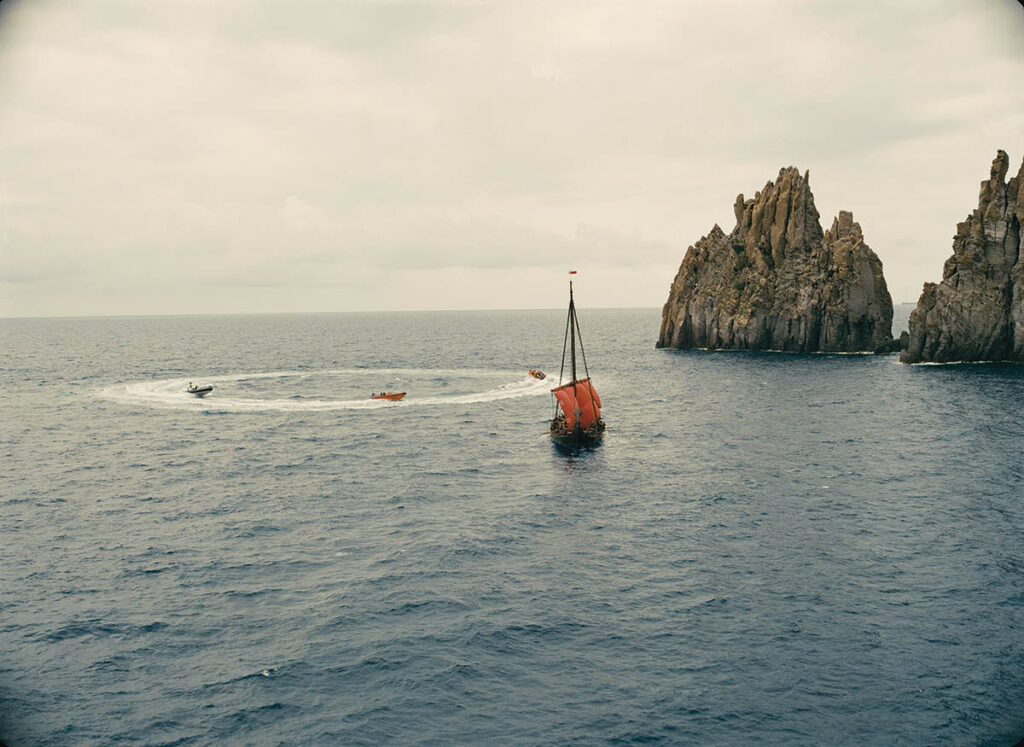
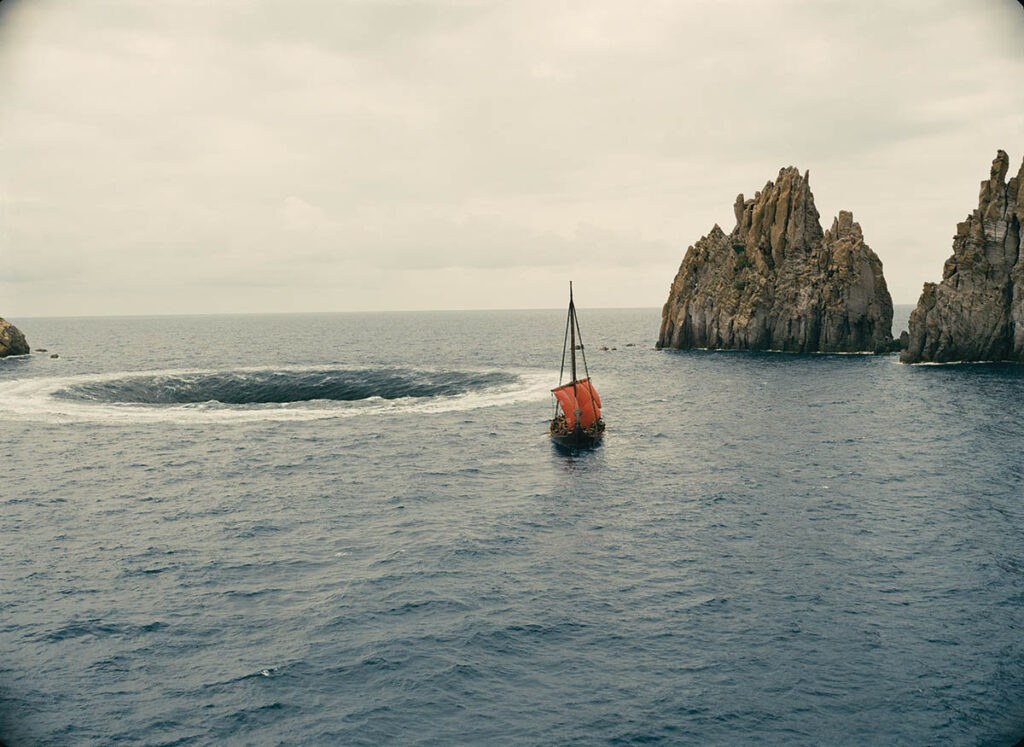
For the Charybdis whirlpool, the production scaled up oceanic disturbances using heavy-duty boat-like thrusters in the open ocean to churn the water naturally. High-angle shots looking down into the terrifying depths of the vortex were later augmented with digital water simulations by DNEG.
3. Weather, Water, and Practical FX
The wrath of Zeus was brought to life through a mix of genuine inclement weather, on-water shooting, and massive studio tank work at Falls Lake on the Universal Studios Hollywood lot. Utilizing a six-axis motion base submerged underwater beneath a large section of a ship, the crew simulated violent shipwrecks and mast collapses. Massive fireboats—much to the chagrin of star Matt Damon—blasted high-pressure water across the frame to simulate relentless oceanic downpours.
4. The Trojan Horse and Circe’s Transformation
Production Designer Ruth De Jong rejected the traditional wheel-bound Trojan Horse archetype, opting instead for a sunken, shiplap design constructed with the refined craftsmanship of ancient Greek shipbuilders. Similarly, for the Circe sequence where men are transformed into pigs, the production utilized in-camera face applications featuring half-man, half-pig hybrids, reducing the need for heavy digital crowd replication or post-production alterations.
Official Responses and Creative Insights
The leaders behind The Odyssey have been vocal about the artistic philosophy steering the film’s unique aesthetic.
Director Christopher Nolan on Genre and the Divine:
"I’ve always enjoyed science fiction because it’s one of the most cinematic of genres. We treated The Odyssey like a science fiction film… When it came to the gods and the idea of the divine, what I found in the poem to be the most interesting approach for me was to look at it from the point of view of the human characters. They encounter the divine in the world around them, in nature, the state of the sea, the wind blowing the pines, thunder and lightning… I wanted to try to have the audience look from the point of view of somebody at that time who is feeling the gods speaking through nature and is perhaps seeing gods represented in the people around them."
Visual Effects Supervisor Andrew Jackson on Workflow:
"Because it’s largely 2D work and we have multiple elements, we were experimenting with ways of putting that together to achieve the effects we wanted. We do that quite a lot in conjunction with Chris and editorial… Chris tends to have enough extras so he doesn’t need any crowd simulations… It’s like all the other films I’ve done with Chris where we spend a lot of time finding approaches that give us either a finished effect in-camera or something close to finished in-camera."
Special Effects Supervisor Scott Fisher on Practical Ingenuity:
"Chris doesn’t like throwing everything to a CG solution. It’s always, ‘Let’s see what we can come up with. Where we can get to practically and then we’ll fix or expand or improve it with the CG option.’ All the stuff in Troy, Cyclops’ cave, whirlpool and Scylla, you start breaking each one down into elements we can film."
Production Designer Ruth De Jong on Global World-Building:
"We wanted everything to be mythological and fantastical, but grounding it so you weren’t thinking twice… Chris wrote his Odyssey, and that is how we were able to come up with these creative freedoms to free us from any ‘We can’t leave the Med’ [restrictions]. Plus, that look for an entire movie would have gotten boring!"
Implications: Redefining Modern Blockbuster Filmmaking
The release of The Odyssey carries significant implications for the contemporary film industry, particularly concerning the deployment of digital versus practical effects. In an era where blockbusters are frequently criticized for an over-reliance on weightless, wall-to-wall CGI, Nolan’s latest masterwork serves as a masterclass in hybrid filmmaking.
By treating computer graphics as merely one tool among many—sitting alongside physical puppetry, mechanical motion bases, in-camera makeup effects, and massive environmental builds—Nolan has proven that classical mythology can be rendered with visceral, tactile authenticity. The film challenges studios to rethink production timelines, demonstrating that constraints like a shortened two-month window for a giant puppet build can inadvertently spark brilliant, lightweight practical innovations that digital-first pipelines struggle to replicate.
Furthermore, The Odyssey reframes Nolan’s broader cinematic trajectory. As the director notes, the thematic DNA of Homer’s epic has quietly underpinned his past cinematic triumphs, from the claustrophobic, life-or-death hull entrapments in Dunkirk to the vast spatial odysseys of Interstellar. By finally bringing Odysseus’s journey directly to the screen, Nolan has not only honored one of history’s greatest foundational texts but has also established a new benchmark for how modern Hollywood can tackle ancient myth with intellectual rigor, artistic bravery, and breathtaking visual fidelity.