
The Enduring Lens: Peter Chan Ho-sun on the Future of Cinema, AI, and the Human Spirit
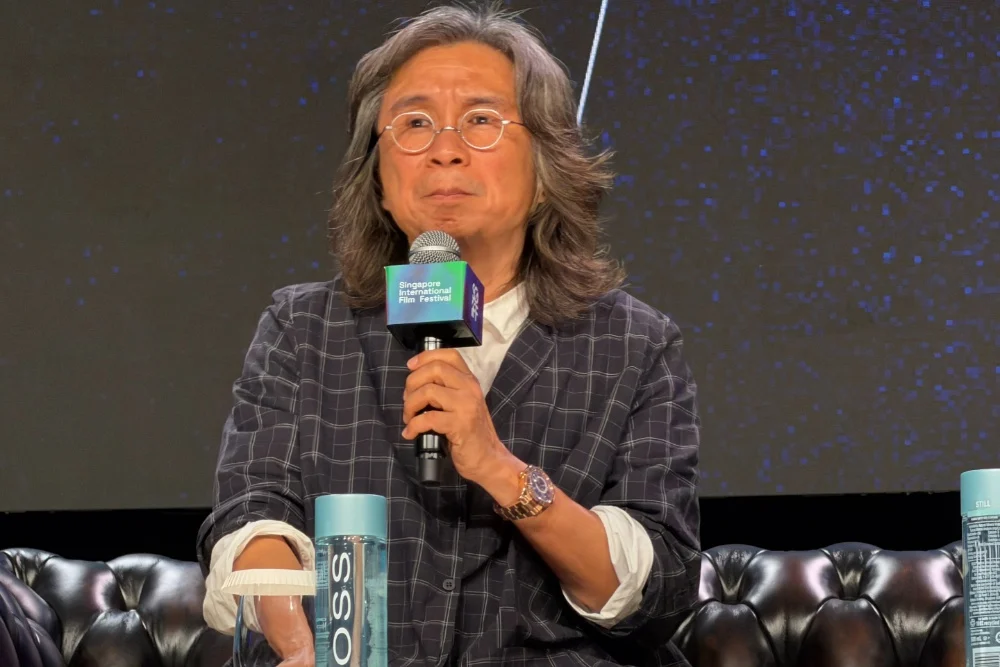
At the Singapore International Film Festival, amidst the opulence of the Marina Bay Sands, one of Asian cinema’s most formidable architects, Peter Chan Ho-sun, sat down to dissect the state of an industry currently caught in a whirlwind of technological disruption and shifting cultural consumption. The director behind seminal works like Comrades: Almost a Love Story and the sprawling epic The Warlords offered a masterclass in resilience, providing a philosophical roadmap for navigating the volatile waters of modern filmmaking.
Chan’s message was one of defiant optimism. While acknowledging that the industry is enduring what he considers its "toughest time," he remained steadfast in his conviction that the two-hour theatrical feature is not a dying relic, but a persistent pillar of human culture.
The AI Paradox: Tools vs. Artistry
As the global film industry grapples with the existential threat of generative AI, Chan offered a nuanced, pragmatic perspective. He drew a sharp line in the sand between AI as a technical utility and "AIGC" (AI-generated content).
"Anything that helps me make movies, I welcome," Chan remarked, noting that the industry has been utilizing AI-adjacent algorithms for years under the guise of CGI and post-production effects. However, he remains fundamentally skeptical of the machine’s capacity to replicate the human soul. "They won’t know art. Movies are still made by people."
For Chan, the distinction is vital. He views technology as a means of execution, not creation. By distancing himself from AIGC, he aligns with a growing school of thought among auteurs who argue that the "human touch"—the lived experience of trauma, love, and the mundane—is precisely what separates cinema from mere algorithmic output.
Chronology of a Visionary: From UFO to the World Stage
To understand Chan’s perspective, one must look at his trajectory, which has spanned over three decades of dramatic industry transformation.
The 1990s: Redefining the Flow
In the 1990s, Chan co-founded the United Filmmakers Organization (UFO), a venture that defied the then-dominant trends of Hong Kong cinema. While the local market was saturated with gangster films and wuxia (martial arts) epics, Chan and his team leaned into romantic comedies and character-driven narratives. "We were not exactly going with the flow, but we did make the flow, somehow," he recalled.
The Hollywood Interlude
His subsequent foray into the American studio system with the DreamWorks film The Love Letter proved to be a sobering experience. As one of the first Hong Kong directors to attempt a non-action project within the U.S. corporate machine, Chan encountered a rigid system that relied heavily on test screenings—what he now compares to the limiting, data-driven nature of modern algorithms. He characterizes his younger self as "too naive," noting that had he possessed his current understanding of corporate marketing, his Hollywood experience might have yielded different results.
The Pan-Asian Expansion
Following his return from the U.S., Chan pivoted toward a pan-Asian strategy with his company, Applause Pictures. This era was defined by high-concept horror, including the The Eye franchise and the Three omnibus, which brought together regional titans like Park Chan-wook and Miike Takashi. It was a period of frantic, creative output that ultimately led him to the realization that he could not stay tethered to a single genre.
Mainland China and the Epic Scale
His transition into mainland Chinese cinema with the 2005 musical Perhaps Love and the massive scale of The Warlords marked a third act in his career. The latter, a historical epic starring Jet Li, remains his largest production—a project he admits was never in his original life plan.
The Road Not Taken: A Study of the Human Condition
Chan’s latest feature, The Road Not Taken, represents a return to the intimate, character-focused storytelling that defined his early career. The film explores the complexities of a family in crisis: a couple in the midst of divorce, a wife suffering from early-onset Alzheimer’s, and their relationship with a Gen Z daughter.
The film, which premiered in Toronto, serves as an extension of Chan’s lifelong inquiry into the nature of love and family. The English title is a nod to Robert Frost, reflecting his own philosophy that "there’s really no right path" in life. "Whether it’s right or wrong, it’s all about how you walk it. You make it right."
The Industry Landscape: Short-form vs. The Purists
Chan addressed the anxiety surrounding shrinking attention spans. He noted the irony of the modern entertainment ecosystem: on one end, audiences are gravitating toward hyper-short, vertical dramas; on the other, they are consuming hours-long podcasts. He pointed to Christopher Nolan’s global promotional tour for Oppenheimer—a film made with the "purist" techniques of the 1950s—as evidence that deep-dive, long-form content is not only surviving but thriving.
"So there are two completely opposite ends of the spectrum that are surviving and thriving simultaneously," Chan explained. "I believe that movie will be around for a long, long time."
Implications: The Hard Truths of Filmmaking
When asked by an aspiring screenwriter how he handles scenes that "aren’t landing," Chan revealed a rigorous, almost ruthless approach to his craft. He does not offer quick fixes. Instead, he demands that his writers iterate, refine, and rewrite until the core truth of the scene emerges.
His reputation for being "difficult" with writers is well-earned, he admits. "I milk the writer to death, and then I milk another writer," he said, noting that his production teams often require a minibus just to carry the number of writers involved. "Making movies is not about being well-liked."
This intensity is rooted in his belief that every film he has made over the last 36 years is, in some way, an attempt to answer the same fundamental life questions. From his debut Alan & Eric: Between Hello and Goodbye to the brotherhood dynamics in The Warlords, Chan sees his filmography as a singular, evolving conversation.
Conclusion: The "Comrades" Legacy
As this year marks the 30th anniversary of his masterpiece Comrades: Almost a Love Story, Chan remains humble yet acutely aware of his impact. While he once felt "spelled" by the success of that single film—fearing that audiences viewed it as his pinnacle—he has come to accept it as a blessing.
For the next generation of filmmakers facing a world dominated by censorship, corporate interference, and the shadow of AI, Chan’s advice is a testament to the power of limitation. Whether dealing with the complex regulatory environment in mainland China or the pressures of a big-budget studio, he argues that constraints are the crucible of creativity.
"Dealing with a corporate is very, very difficult. And if I can survive that, I can survive anything," he said. Ultimately, for Peter Chan, the future of film is not found in the tools we use, but in the tenacity of the people behind the camera—those willing to go with the flow, know when to stop, and, above all, tell the truth about the human experience.
