
The Blood-Soaked Paradox: Why ‘Crystal Lake’ is Redefining Horror Standards on Peacock
In the landscape of modern streaming television, the boundaries of content moderation have always been a subject of intense debate. Yet, few franchises highlight the inherent contradictions of American entertainment censorship quite like Friday the 13th. As Peacock’s highly anticipated prequel series, Crystal Lake, continues to carve out its own gruesome legacy, a curious controversy has emerged: why is the show permitted to depict acts of extreme, visceral violence while being strictly prohibited from featuring the nudity that defined the original slasher era?
Showrunner Brad Caleb Kane has publicly addressed this paradox, highlighting a frustration shared by many horror purists who view the franchise’s DNA as an inseparable cocktail of sex, skin, and slaughter. While Crystal Lake succeeds in delivering the "creative carnage" fans demand, the restriction on nudity serves as a sharp reminder of the shifting sensibilities—and rigid policies—governing today’s digital streaming platforms.
The Chronology of a Franchise: From Campfire Slasher to Prestige TV
To understand the weight of these creative restrictions, one must first look at the history of the Friday the 13th franchise. Since the 1980 debut of Sean S. Cunningham’s original masterpiece, the series has operated under a simple, time-honored formula: a group of isolated youths, a series of illicit sexual encounters, and the inevitable, inventive arrival of a masked killer.
For decades, the "slasher" genre was intrinsically linked to the "sex equals death" trope. Whether it was the original film or the subsequent sequels that turned Jason Voorhees into a pop-culture icon, nudity was a staple of the experience. Aside from the notably more restrained Friday the 13th Part VI: Jason Lives, almost every installment featured a heavy dose of skin, usually serving as a narrative precursor to a character’s demise.
Crystal Lake, however, arrives in a different era. Tasked with exploring the origin story of Pamela Voorhees—portrayed by the acclaimed Linda Cardellini—the series shifts the focus from the typical camp counselors to the psychological deterioration of a mother. By anchoring the horror in the genuine, gut-wrenching grief of losing a child to a freak accident, the series elevates itself beyond a standard "body count" film. Yet, in this transition to "prestige horror," the series has found itself clashing with the modern-day corporate standards of its streaming home.
Official Responses: Brad Caleb Kane on the Censorship Struggle
The friction between the showrunner’s creative vision and the platform’s mandates came to a head during recent press junkets. In an interview with The Wrap, Brad Caleb Kane didn’t mince words regarding the decision-making process behind the scenes.
"I tried. That’s America," Kane remarked when asked about the lack of nudity. "You can give the kids the violence, but God forbid they see some breasts. Sometimes you get overruled in these things."
This sentiment reflects a long-standing critique of the Motion Picture Association (MPA) and television standards boards in the United States, where simulated extreme violence is often treated as a standard storytelling tool, whereas the human body—particularly the female form—is treated with a level of caution that borders on the puritanical.
Kane’s frustration is palpable, not because he wishes to make a gratuitous film, but because he views the "familiar elements" of the franchise as essential to its identity. While the series does include sex scenes, they are sanitized compared to the raw, uninhibited aesthetic of the 1980s films. Currently, viewers might catch a bare backside, but the "full-frontal" nature of the classic slasher is conspicuously absent.
Supporting Data: The Art of the Kill
While the nudity debate has captured headlines, it would be a mistake to suggest that Crystal Lake is holding back in other departments. If anything, the show has doubled down on the "creative carnage" that made the original films famous.
In a deep dive with GamesRadar+, Kane elaborated on his methodology for crafting the show’s death sequences. "I just have a deep bench of kills in my head," Kane explained. "At the end of the day, the creative process is very mysterious. You sit down, and you go, ‘How do we top the kills in the movies? How do we connect them to character and emotion? What will make the kills hit the hardest?’"
The result is a visceral experience. The production team has employed a variety of practical effects—exploding blood bags, prosthetic limbs, and, most notably, a "deep-fried head" sequence that has already become a fan favorite. These aren’t merely random acts of violence; they are choreographed to mirror the psychological disintegration of Pamela Voorhees. As she descends into a "violent desire for revenge," the deaths become increasingly personal, increasingly theatrical, and increasingly gruesome.
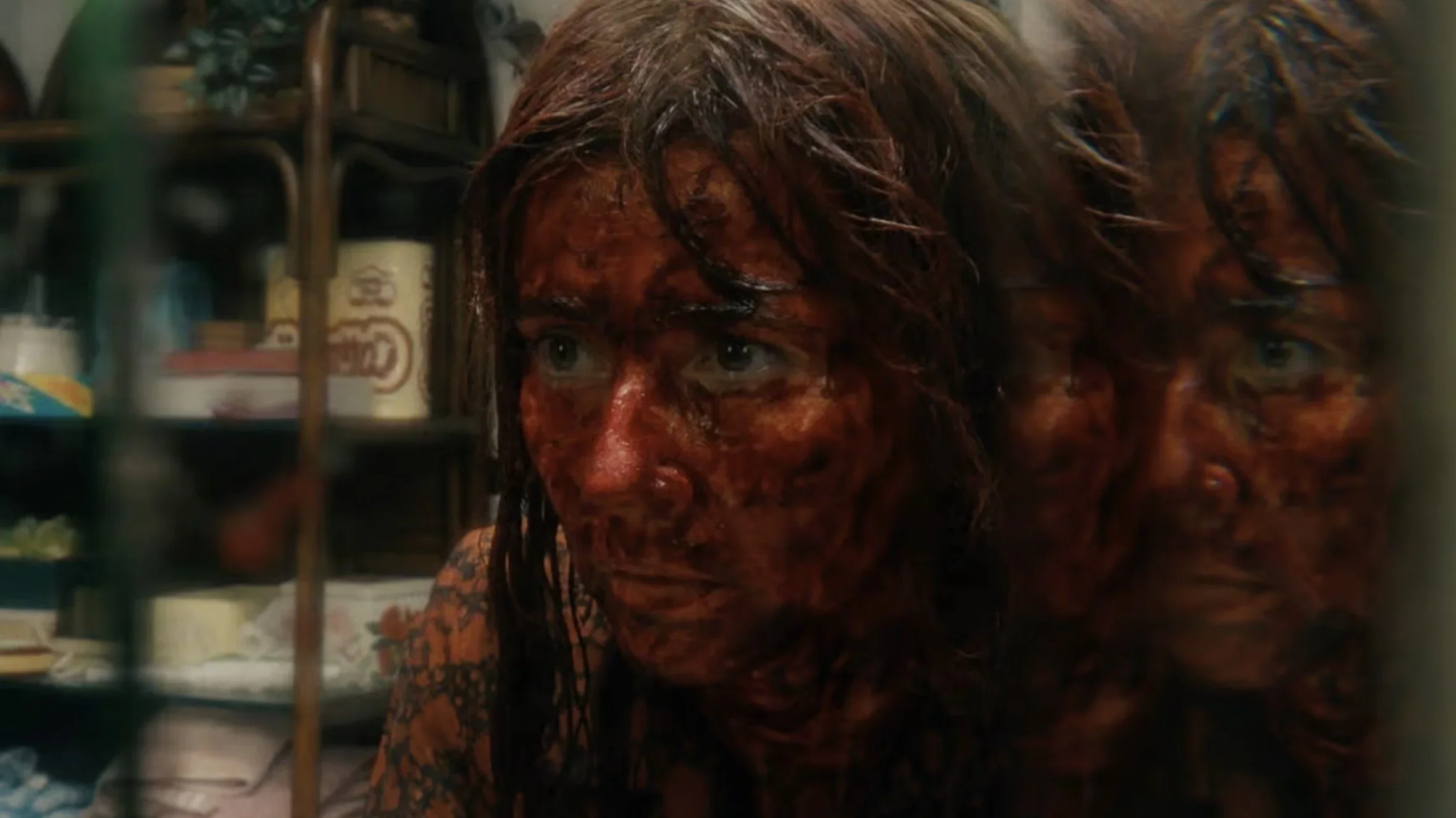
Linda Cardellini, whose performance has been widely lauded as the heart of the series, noted the intensity of the physical production. "The first scene where you see me covered in blood, that was really for me personally, my goriest," she shared. The sheer volume of blood and the emotional toll of the performance create a heavy, oppressive atmosphere that arguably outweighs the need for traditional slasher tropes.
Implications: The Future of ‘Crystal Lake’ and Slasher Television
The implications of this creative tension are significant for the future of the franchise. Does a Friday the 13th project require nudity to be "authentic"? Or has the horror genre matured to the point where the psychological horror of a mother’s grief is the true selling point?
Kane’s willingness to discuss these frustrations suggests that he is already looking toward a potential second season. He has teased that he has a repository of even more elaborate death sequences waiting to be unleashed. If Peacock continues to support the show’s grim, high-budget aesthetic, the debate over nudity may eventually fade into the background, overshadowed by the show’s mastery of practical effects and narrative depth.
However, the "violence vs. nudity" dichotomy remains a fascinating case study for media scholars. It reveals that in the streaming age, we have reached a point where the most extreme, "hamburger meat" level of violence is considered palatable for a general adult audience, provided it is contextualized as a "horror series," while the natural human body remains the "final frontier" of broadcast censorship.
A Legacy Reframed
Ultimately, Crystal Lake is a success story for the franchise. It has managed to take a property that had been trapped in legal limbo for years and successfully rebooted it as a character-driven thriller. By focusing on the bond between Pamela and Jason, the series gives the audience something they haven’t had in over four decades: a reason to care about the killer’s family.
Whether or not the show incorporates more nudity in future seasons remains to be seen, but the current iteration is a testament to the fact that horror can evolve. The "blood and gore" are the hooks, but the storytelling is the anchor.
As viewers continue to stream Crystal Lake on Peacock, they are witnessing a unique moment in television history—a show that is simultaneously a love letter to the 80s slasher genre and a modern, high-brow exploration of trauma. It may have lost the nudity of its predecessors, but it has gained a level of narrative sophistication that suggests the Friday the 13th franchise still has plenty of life—and death—left in it.
For now, fans of the series can take comfort in the fact that while the clothes may be staying on, the blood will continue to flow. And in the world of Jason Voorhees, that is, perhaps, the most important thing of all.
