
The New Frontier of Animation: Auteurs, Oscars, and the Shift Away from the "Family-Only" Mold
The landscape of animation is undergoing a seismic, structural shift. As the 2026 awards season approaches, the industry is witnessing a clear divergence: the long-standing dominance of studio-driven, family-friendly content is being challenged by a wave of ambitious, adult-oriented, and stylistically daring animated features. At the heart of this transformation is the upcoming Pixels and Pencils panel at the SCAD Savannah Film Festival, an event that has quietly evolved into a bellwether for the Academy Awards.
The MPA’s Bold New Rating: A Signal of Change
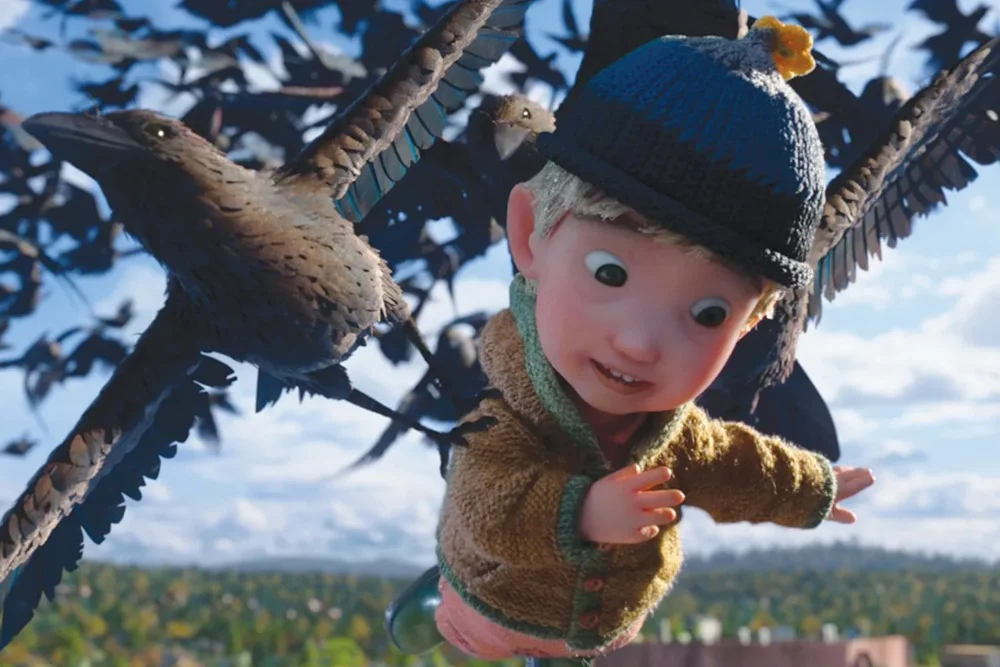
The most visible indicator of this creative pivot is Laika’s latest feature, Wildwood. The Motion Picture Association (MPA) recently slapped the stop-motion film with a PG-13 rating for "strong fantasy violence/bloody images, thematic material, suicide-related material, brief partial nudity and language."
For a studio that has built its reputation on meticulous stop-motion craft, this is a milestone. It marks the first PG-13 rating in Laika’s 17-year history. At a sprawling 130 minutes, Wildwood also ties the record for the longest English-language animated film ever produced. Travis Knight, who helms the Portland-based studio and directed the film, has clearly opted for creative autonomy over broad-market safety. Those who recall the visceral, often harrowing emotional depths explored in the third act of Knight’s Kubo and the Two Strings will find this transition not only expected but perhaps inevitable.
A Convergence of Masters in Savannah
The SCAD Savannah Film Festival, running from October 24 to 31, has become the premier stage for these industry leaders to discuss the craft. The "Pixels and Pencils" panel this year serves as a "who’s who" of animation’s current creative vanguard. Joining Travis Knight are industry titans and innovators: Brad Bird (Ray Gunn), Daniel Chong (Hoppers), the duo of Joel Crawford and Januel Mercado (Forgotten Island), and Leah Nelson (Tangles).

Historically, this panel has functioned as a remarkably accurate crystal ball for the Academy Awards. In 2024, Gints Zilbalodis appeared at the festival with his indie feature Flow before it went on to stage a historic upset against major studio juggernauts at the Oscars. Similarly, the 98th Academy Awards saw four of the five eventual nominees in the animated feature category represented on the Savannah stage.
The Decline of the Disney-Pixar Duopoly
Since the inception of the Best Animated Feature Oscar in 2002, the category was effectively a fiefdom owned by Disney and Pixar, with films like Shrek serving as the rare exception. However, the last few years have seen a definitive crack in that armor.
Since the victory of Guillermo del Toro’s Pinocchio at the 95th Academy Awards, the trophy has consistently migrated away from the traditional major studios, favoring films like The Boy and the Heron, Flow, and the breakout KPop Demon Hunters. This trend suggests that the Academy—and the broader audience—is hungry for unique, auteur-driven visions rather than the polished, algorithm-tested product that defined the previous two decades.
A Chronology of Artistic Ambition
The current slate of films highlights a diverse range of narrative maturity:

- Brad Bird’s Ray Gunn: Bird has been developing this project since 1996. A fusion of The Maltese Falcon and Buck Rogers, the film is a noir-inspired detective story set in a 1939 "Metropia" where humans and aliens coexist. Its PG rating, which includes a note about "suggestive material," underscores Bird’s intent to cater to the audience that grew up on his early work. Netflix will release the film on December 18.
- Daniel Chong’s Hoppers: Following the massive commercial success of Hoppers ($500 million+ worldwide), Pixar has found a new wind in its sails. While the story of a college student uploading her consciousness into a robot beaver is visually inventive, it is also a somber meditation on habitat loss. Reports of a "robot face removal" scene causing distress among younger viewers further prove that even major studios are leaning into more provocative, darker imagery.
- Crawford and Mercado’s Forgotten Island: Building on the success of Puss in Boots: The Last Wish, the pair returns with a story rooted in Filipino folklore. By exploring the concept of memory loss within a magical landscape, the film elevates a deeply personal cultural narrative to a universal level, signaling a shift in how major studios like DreamWorks are greenlighting international stories.
- Leah Nelson’s Tangles: Perhaps the most radical entry, Tangles makes no pretense of being a children’s film. Adapting Sarah Leavitt’s graphic memoir about her mother’s battle with Alzheimer’s, the film uses charcoal-based animation to capture the fragmented nature of memory in a way live-action cannot. With high-profile producers like Seth Rogen and Julia Louis-Dreyfus, the film is positioned as a serious drama, further blurring the line between "animated feature" and "prestige cinema."
Implications for the Industry
The decision by studios behind Tangles and Wildwood to campaign their films as "Drama" rather than "Comedy" for the Golden Globes is not merely administrative. It is a strategic effort to rebrand the medium of animation itself.
For years, the industry was haunted by the stigma that animation was a "genre" rather than a medium. But the current generation of filmmakers—who grew up on Saturday morning cartoons—is now creating content for "Saturday night." They are no longer asking for permission to tackle themes of death, dementia, war, or existential dread.
The success of these films suggests that audiences are increasingly media-literate. They are no longer tethered to the idea that animation is synonymous with "family-friendly." Instead, they are seeking the same emotional depth and complex character studies they would expect from a live-action drama.
The Road to the 99th Oscars
As we look toward the 2027 Oscars, the field is crowded with heavy hitters. The current tracking lists for Best Picture and Best Animated Feature include Wildwood, Hoppers, Ray Gunn, and Tangles. The competition is fierce, and the presence of these films in categories like "Best Picture" alongside live-action behemoths like Dune: Part Three indicates that the industry is nearing a tipping point.

The last time an animated film was nominated for Best Picture was 15 years ago (Toy Story 3). However, the sheer breadth of artistic confidence displayed by this year’s crop of directors suggests that the "Animated Feature" ghetto may soon be a thing of the past.
Whether it is the haunting, hand-crafted detail of Wildwood or the brutal, charcoal-etched grief of Tangles, these films represent a new standard. The animators are no longer just filling screen time for children; they are engaging in the highest forms of cinematic storytelling. As the Savannah Film Festival kicks off this week, it is clear that the industry is not just watching these films—it is being fundamentally reshaped by them.
The era of the "cartoon" is over. The era of the "animated auteur" has begun.
