
Beyond the Neon and Steel: Five 1980s Sci-Fi Masterpieces That Deserved More Attention
By Cinematic History & Culture Desk
Main Facts: The Forgotten Frontiers of Reagan-Era Cinema
When cinephiles discuss the golden age of 1980s science fiction, a familiar pantheon inevitably rises to the surface. Masterpieces like Ridley Scott’s Blade Runner, James Cameron’s The Terminator, Paul Verhoeven’s RoboCop, and John Carpenter’s The Thing defined an era defined by neon, practical effects, and existential dread. These films captured the public consciousness, dominating the box office and cementing themselves in the pop-culture lexicon.
However, the cinematic landscape of the 1980s was far vaster than its blockbuster titans. Beneath the polished surface of Hollywood’s highest-grossing hits lay a treasure trove of provocative, visually striking, and intellectually ambitious science fiction films. Plagued by studio mismanagement, tragic real-life circumstances, unconventional marketing hurdles, or simply arriving ahead of their time, these pictures slipped through the cracks of mainstream success.
Re-evaluating these overlooked gems reveals a decade deeply anxious about rapid technological advancement, media saturation, and geopolitical conflict—fears that resonate even more loudly in the 21st century.
Chronology: The Evolution of 1980s Sci-Fi Anxiety
To understand the subtext of these underrated films, one must look at the socio-political timeline that birthed them. As the world exited the turbulent 1970s—marked by the Vietnam War, multiple energy crises, and the resignation of Richard Nixon—society braced for an uncertain future.
The Early 1980s: Media Intrusion and Artificial Intimacy
- 1980: Bertrand Tavernier directs Death Watch, exploring a frighteningly prescient world where terminal illness is rare, and a dying woman’s final days are commodified as 24/7 reality television.
- 1982: Aaron Lipstadt releases Android, a low-budget, highly inventive spin on Frankenstein that questions the boundaries of artificial intelligence, autonomy, and synthetic desire against a backdrop of repurposed Roger Corman sets.
The Mid-1980s: Technological Overreach and Cosmic Parables
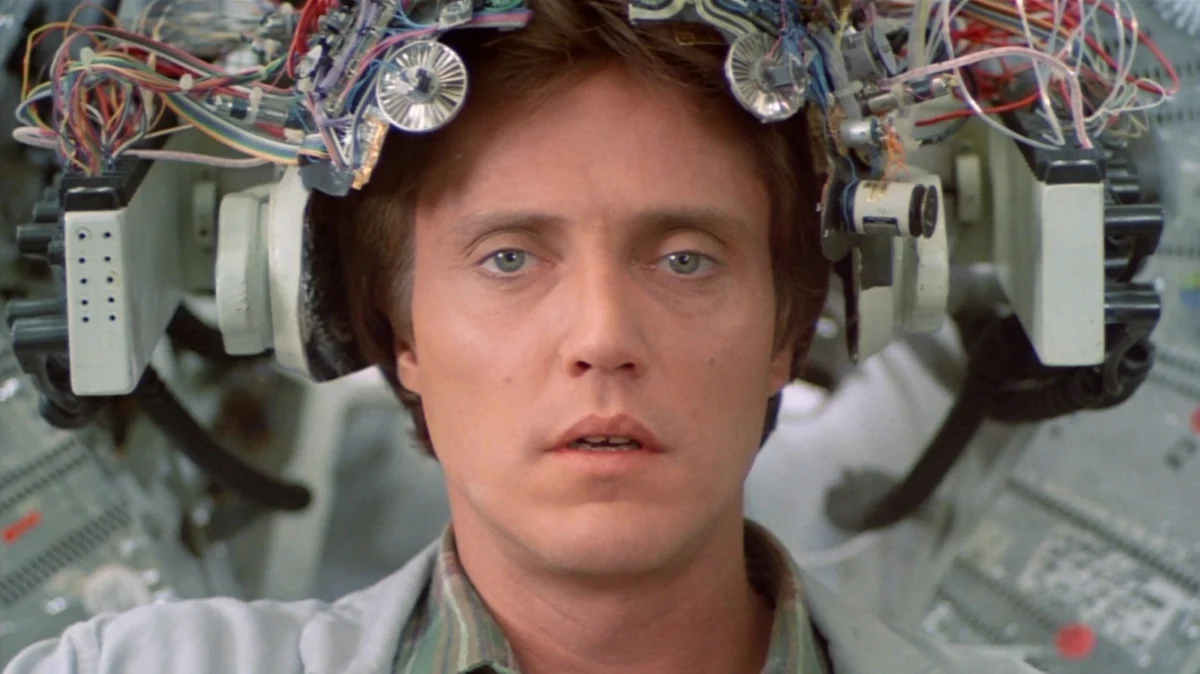
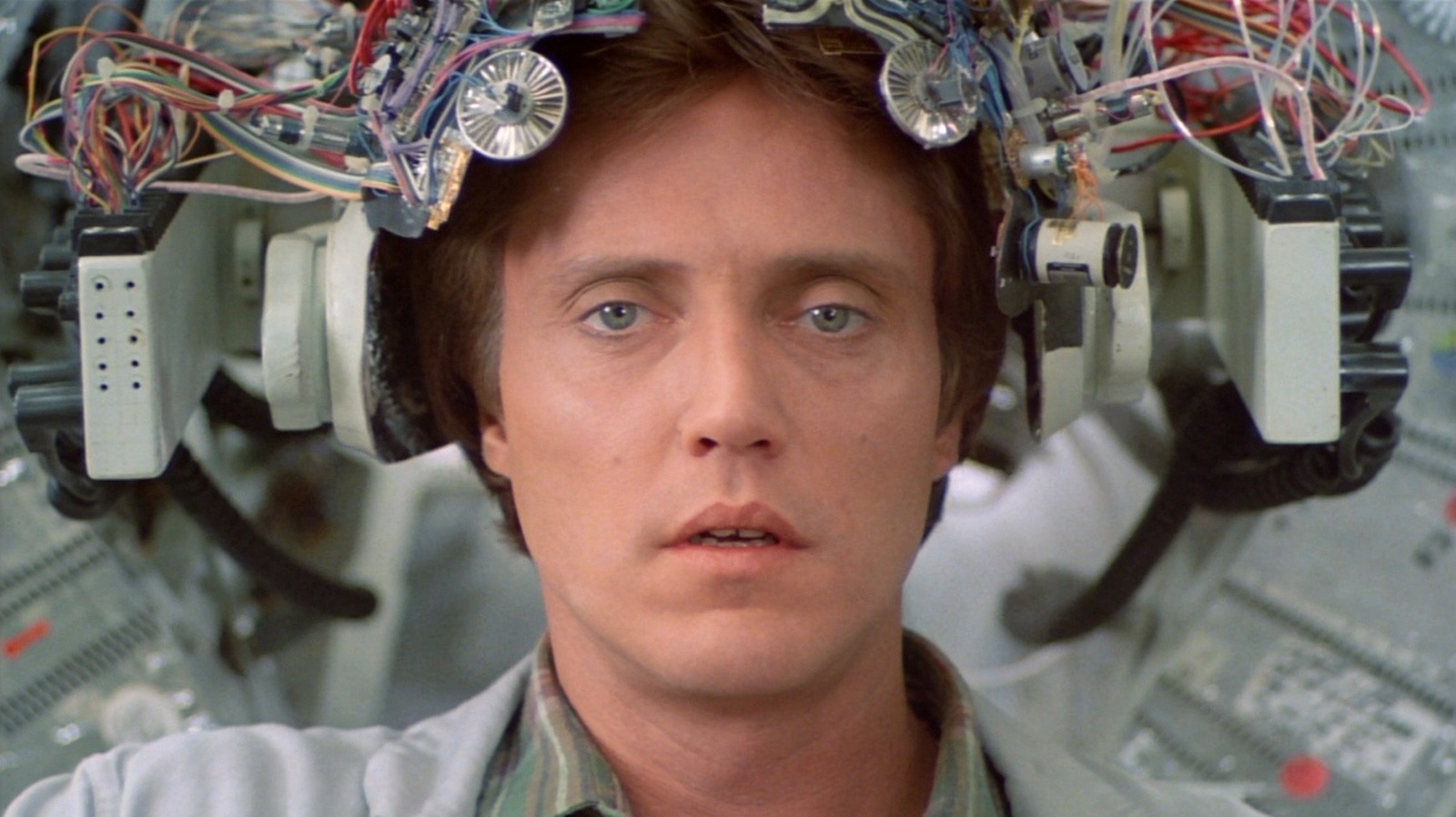
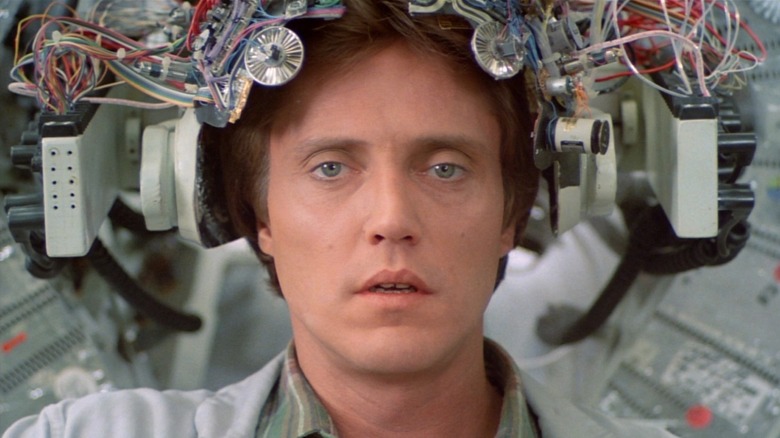
- 1983: Douglas Trumbull’s Brainstorm hits theaters under a heavy cloud of tragedy following the sudden death of lead star Natalie Wood, overshadowing its visionary exploration of brain-computer interfaces and government weaponization of consciousness.
- 1985: Wolfgang Petersen takes over Enemy Mine after a troubled production, crafting a space-faring adaptation of The Defiant Ones that uses an intergalactic war as a mirror for Cold War tensions.
The Late 1980s: Dystopian Consumerism
- 1988: Steve De Jarnatt debuts Cherry 2000, an R-rated desert-noir adventure highlighting a corporate-driven society so alienated that a man values his synthetic companion over genuine human connection—a film that baffled Orion Pictures’ marketing department.
Supporting Data & Production Insights: Why These Films Were Overlooked
Each of these five films faced distinct hurdles that prevented them from achieving the mainstream dominance of their contemporaries.
| Film Title | Release Year | Director | Primary Obstacle to Success | Prescient Theme |
|---|---|---|---|---|
| Death Watch | 1980 | Bertrand Tavernier | Limited distribution; slow-burn European arthouse pacing. | 24/7 reality television, voluntary loss of privacy. |
| Android | 1982 | Aaron Lipstadt | Independent, low-budget distribution via New World Pictures. | Sentient AI ethics, corporate-free space colonization. |
| Brainstorm | 1983 | Douglas Trumbull | The tragic death of star Natalie Wood; studio re-writes and scrapped 60fps technology. | Brain-computer interfaces, surveillance state, MKUltra tactics. |
| Cherry 2000 | 1988 | Steve De Jarnatt | Orion Pictures’ confusion over how to market a genre-bending, R-rated feminist sci-fi. | Rejection of artificial companions, tech-drenched isolation. |
| Enemy Mine | 1985 | Wolfgang Petersen | Difficult production switches; misunderstood blending of gritty sci-fi and sincere allegory. | Overcoming geopolitical and cultural "othering." |
Deep Dive: The Five Masterpieces
1. Death Watch (1980): The Blueprint for Reality Television
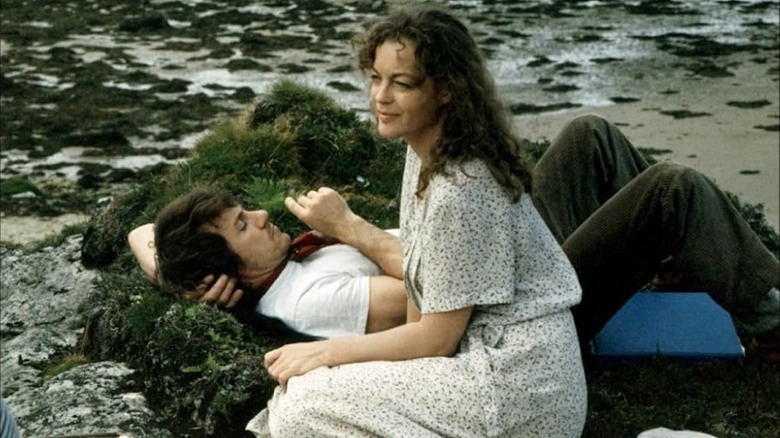
One year before French filmmaker Bertrand Tavernier adapted Jim Thompson’s pulp novel Pop. 1280 into the brilliant Coup de Torchon, he delivered Death Watch (La Mort en Direct). Set in a not-so-distant future where advanced medicine has nearly eradicated death by illness, Katherine Mortenhoe (Romy Schneider) receives a terminal diagnosis. Her rare condition transforms her into an instant celebrity.
A television executive, played by a world-weary Harry Dean Stanton, pitches her on a lucrative reality show that will document her final days. Katherine accepts solely to hand the money over to her husband before going on the run. She finds an unexpected ally in Roddy (Harvey Keitel), a cameraman who has had micro-cameras surgically implanted directly into his eyes to broadcast her every waking moment.
The Critique: Tavernier’s film was astonishingly accurate regarding the media’s relentless intrusion into private grief. The sole irony of Death Watch today is that humanity no longer requires a network executive to force this arrangement—we now volunteer our most intimate moments to the digital ether of our own accord.
2. Android (1982): Pulp Philosophy and Space-Station Shenanigans
Aaron Lipstadt’s Android is a delightfully weird, neon-lit reworking of The Bride of Frankenstein. The "creature" here is Max 404 (Don Keith Opper), a human-looking artificial intelligence whose budding libido deeply concerns his reclusive creator, Dr. Daniel (Klaus Kinski). Daniel fears Max is showing signs of "Munich Syndrome," a malfunction that famously triggered an android rebellion back on Earth.
When Max inadvertently allows a damaged prison transport carrying fugitives to dock at their isolated space station, chaos erupts. Opper—who also co-wrote the script—imbues Max with an infectious charm, a love for classic cinema, and genuine emotional yearning.
The Critique: Utilizing recycled Roger Corman sets, Lipstadt stretches every dollar on screen. Beneath its B-movie exterior lies a surprisingly sharp inquiry: Can synthetic consciousness ever truly experience love, or are we simply projecting our own humanity onto complex algorithms?
3. Brainstorm (1983): Transcendence Through Tragedy
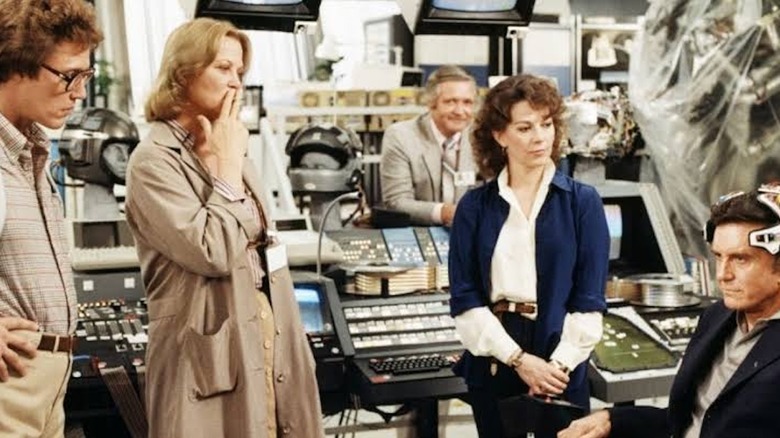
Douglas Trumbull’s Brainstorm is inextricably linked to Hollywood tragedy. During a production break in November 1981, star Natalie Wood died under mysterious circumstances off the coast of Catalina Island. The ensuing tabloid frenzy permanently overshadowed the film’s release, ensuring it would forever be discussed as a morbid curiosity rather than a work of art in its own right.
Despite being severely compromised—requiring script rewrites and the abandonment of Trumbull’s revolutionary 60-frames-per-second 70mm "Showscan" projection process—Brainstorm remains a dazzling speculative achievement. Christopher Walken stars as the inventor of a groundbreaking headset capable of transmitting raw sensations, memories, and emotions directly between minds. Naturally, the military steps in, attempting to weaponize the technology via MKUltra-style overreach.
The Critique: Backed by a soaring James Horner score and featuring conceptual trips to the afterlife that prefigure Bruce Joel Rubin’s later work on Jacob’s Ladder, Brainstorm serves as both a marvel of practical visual effects and a cautionary tale about the commodification of human consciousness.
4. Cherry 2000 (1988): The Desert-Noir Rejection of Artificial Love
Steve De Jarnatt’s Cherry 2000 follows Sam Treadwell (David Andrews), a corporate recycling executive in a crumbling futuristic dystopia who risks life and limb across a radioactive wasteland to find a replacement body for his damaged android fiancée, Cherry (Pamela Gidley).
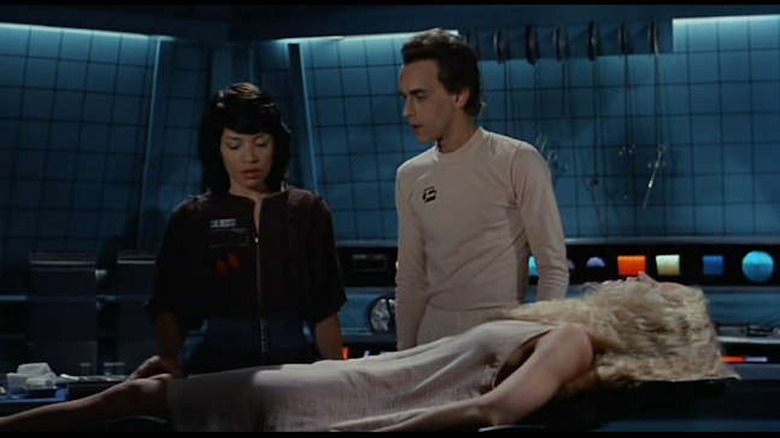
Powered by a subversive script by Michael Almereyda and boasting sweeping Nevada cinematography that channels the grandeur of classic Westerns, the film captures a culture losing its grip on authentic human connection. Melanie Griffith stars as Edith "E" Johnson, the rugged tracker hired to guide Sam through Zone 7, ultimately outclassing him at every turn and challenging his preference for artificial perfection.
The Critique: Orion Pictures had no earthly idea how to market an R-rated, off-kilter romantic sci-fi adventure about a corporate drone learning to value flesh-and-blood relationships. Today, Cherry 2000 reads as an essential critique of technological escapism—a stark warning against the automated, AI-driven entertainment futures we continue to flirt with.
5. Enemy Mine (1985): The Defiant Ones in Deep Space
Wolfgang Petersen’s Enemy Mine transposes the timeless themes of Stanley Kramer’s The Defiant Ones into an intergalactic war zone. Dennis Quaid stars as Willis E. Davidge, a human space pilot locked in a dogfight with Jeriba "Jerry" Shigan (Louis Gossett Jr.), a member of an alien species known as the Dracs.
When both ships crash-land on a hostile, uninhabitable planet, the sworn enemies find themselves utterly dependent on one another for survival. What begins as a brutal battle of attrition slowly evolves into a profound exploration of empathy, cultural understanding, and shared existence.
The Critique: Despite a turbulent production history that saw original director Richard Loncraine replaced by Petersen, Enemy Mine emerged as a deeply humane Cold War allegory. Its ultimate message is timeless: humanity’s survival depends not on the annihilation of the "other," but on our capacity for unity and compassion.
Implications: What These Lost Classics Teach Us Today
Looking back at these five forgotten masterpieces, a clear pattern emerges. While the blockbuster giants of the 1980s provided adrenaline and spectacle, these lower-profile films offered a more introspective, philosophical look at tomorrow.
They warned us about the dangers of:
- Trading genuine human empathy for mediated, artificial validation (Death Watch, Cherry 2000).
- Allowing military-industrial complexes to co-opt human consciousness and data (Brainstorm).
- Dehumanizing foreign or unfamiliar cultures out of geopolitical paranoia (Enemy Mine).
As we navigate our own modern era dominated by artificial intelligence debates, algorithmic surveillance, and global polarization, these 1980s underdogs are more than mere nostalgia—they are essential viewing for a society still trying to figure out how to remain human in a rapidly shifting world.
