
The Resilience of Memory: A Deep Dive into Doc Season 3, Episode 4, "Great Expectations"
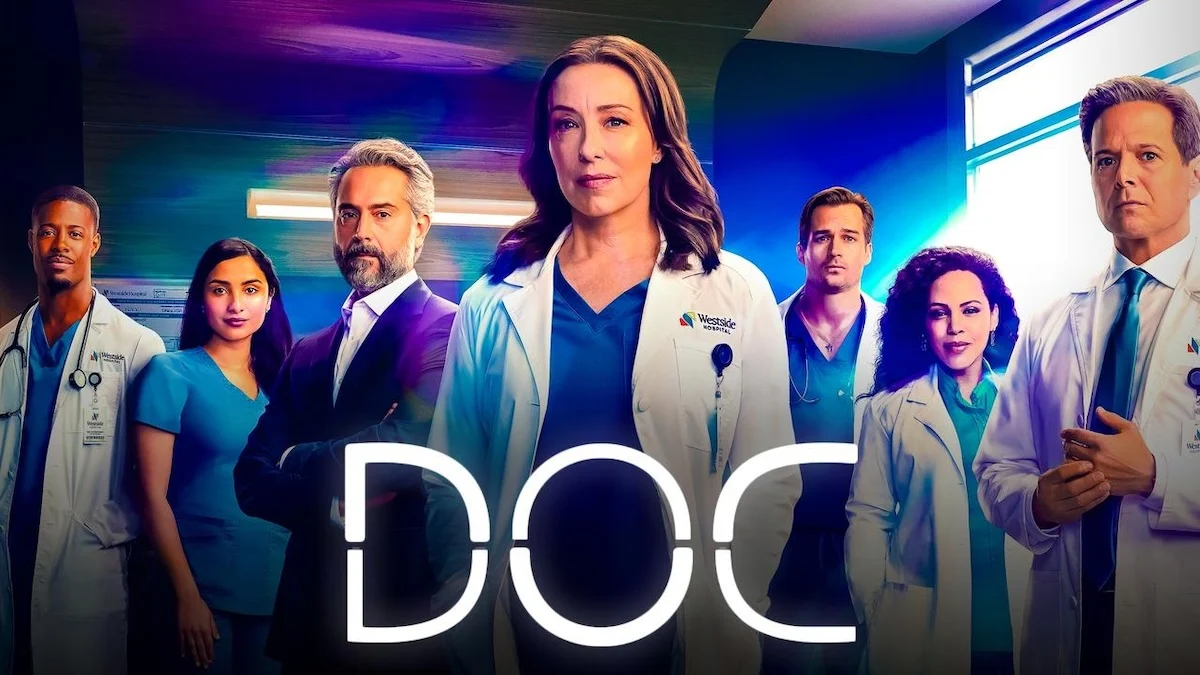
The medical drama landscape on network television has long been defined by high-stakes emergencies, complex patient diagnostics, and the often-fraught personal lives of the practitioners. However, FOX’s Doc has carved out a unique niche by grounding its narrative in a profoundly human—and neurologically harrowing—premise. As the series pushes into its third season, the stakes continue to rise. With the release of the trailer for the fourth episode, titled "Great Expectations," audiences are given a tantalizing glimpse into the next chapter of Dr. Amy Larsen’s struggle to reclaim her past and secure her professional future.
Main Facts: The Narrative Core of Doc
Doc, an adaptation of the globally acclaimed Italian series Doc — Nelle tue mani, stars the versatile Molly Parker as Dr. Amy Larsen, the Chief of Internal Medicine at Minneapolis’s prestigious Westside Hospital. The series premise is deceptively simple yet emotionally devastating: following a catastrophic car accident that results in a severe traumatic brain injury, Dr. Larsen wakes up with an eight-year gap in her memory.
This "lost time" represents more than just a lapse in medical knowledge; it encompasses the dissolution of her marriage, the evolution of her personality, and a series of personal tragedies that caused her to isolate herself from those she held dearest. In "Great Expectations," the upcoming episode, the trailer suggests that Dr. Larsen is reaching a critical inflection point. She is no longer just fighting to remember the past; she is fighting to define a future that feels increasingly foreign to her. The series is co-produced by Sony Pictures Television and FOX Entertainment Studios, with showrunners Barbie Kligman and Hank Steinberg ensuring that the balance between clinical intensity and emotional vulnerability remains the show’s hallmark.
Chronology: The Journey to "Great Expectations"
To understand the weight of the upcoming episode, one must look at the trajectory of Season 3. The season began by further complicating Dr. Larsen’s integration back into the high-pressure environment of Westside Hospital. While the first two seasons focused heavily on the immediate aftermath of her injury and the shock of waking up in a reality she didn’t recognize, Season 3 has shifted toward the long-term consequences of her condition.
In the preceding episodes of this season, we have seen Dr. Larsen grapple with the ethics of her medical practice while simultaneously attempting to "perform" the person she once was. The narrative chronology has been one of slow, painful, and often incomplete recovery. "Great Expectations" appears to be the moment where the friction between her former self and her present reality reaches a breaking point. The trailer indicates that a specific case—or perhaps a confrontation with a colleague—forces Amy to confront whether her "new" medical intuition, shaped by her injury, is actually more effective than the cold, calculated approach she took prior to the accident.
Supporting Data: The Production and Creative Vision
The creative success of Doc is largely attributed to its faithful yet localized adaptation of the Italian source material. Created by Lux Vide, a Fremantle Company, the original Italian series struck a chord because it dealt with the fragility of the self in a clinical setting. By importing this to a North American context, producers Erwin Stoff and Judith McCreary have utilized a stellar cast to bring this vision to life.
Beyond Molly Parker, the ensemble cast—featuring Omar Metwally, Felicity Huffman, Amirah Vann, Charlotte Fountain-Jardim, Jon Ecker, and Anya Banerjee—serves as the emotional sounding board for Dr. Larsen. Each character represents a different piece of the eight years she cannot remember, acting as both an anchor and a reminder of her disconnection.
The production design of Westside Hospital is intentionally stark, contrasting with the warm, often chaotic flashbacks that punctuate Amy’s life. This visual language is critical to the show’s success, as it reinforces the cold, objective world of medicine versus the subjective, hazy world of memory. The trailer for "Great Expectations" highlights this contrast, utilizing tight, claustrophobic close-ups of the cast to emphasize the high-pressure atmosphere that defines the episode’s central conflict.
Official Responses and Industry Context
The industry response to Doc has been one of measured optimism. Network television has struggled to find the next "prestige" medical drama that can capture the public imagination in the same way ER or Grey’s Anatomy once did. By focusing on a character-driven mystery—the mystery of one’s own life—Doc has successfully attracted a loyal viewership.

The showrunners have been vocal about the importance of authenticity in depicting traumatic brain injury. While Doc is, at its heart, an entertainment product, the creative team has consulted with medical professionals to ensure that the cognitive struggles Dr. Larsen faces are rooted in reality. This commitment to "truth-based" fiction has helped the series maintain credibility among viewers who are typically wary of melodramatic medical tropes.
The trailer release for "Great Expectations" is a strategic move by FOX to maintain momentum. In an era where streaming platforms often dominate the cultural conversation, traditional network TV relies heavily on these "event" episodes to drive live viewing and subsequent engagement on platforms like Hulu. The promotional material highlights the tension, the diagnostic puzzles, and the inter-personal drama that fans have come to expect, signaling that the show is firing on all cylinders.
Implications: Thematic Significance
What does "Great Expectations" imply for the broader arc of the series? The title itself is heavy with irony. In literature, "great expectations" often lead to crushing disappointment or the realization that one’s future is not what was envisioned. For Dr. Larsen, the expectation is that she will eventually "return to normal," that the gaps in her memory will fill in, and that she will reclaim her life as it was before the accident.
However, the thematic arc of the series suggests that there is no "going back." The trauma has fundamentally altered the chemistry of her personality. The implication for the rest of the season is that the series may be moving toward a resolution where Amy accepts that her injury was not the end of her life, but the beginning of a different one.
Furthermore, the show explores the ethics of a doctor who is essentially "learning on the job" while simultaneously dealing with a profound disability. This raises uncomfortable questions for the hospital administration and her colleagues. Can a physician be fully trusted when their own internal map of the world is unreliable? This central tension is the engine that drives Doc forward.
The Role of the Trailer in Modern Media
It is worth noting the evolution of the television trailer. As noted in the production notes for the episode, the trailer has transitioned from a simple "coming attraction" to a sophisticated piece of marketing collateral. In the late 2000s, the "promo" became a standard tool for audience retention. Today, in the age of social media, the trailer is designed to be dissected, theorized upon, and shared.
The "Great Expectations" trailer does precisely what it needs to: it establishes a conflict, raises the stakes for the protagonist, and leaves the viewer with a question that can only be answered by tuning in. It is a product of both technical precision—expert editing, sound design, and pacing—and creative storytelling. By showing just enough to pique curiosity without revealing the episode’s climax, FOX is successfully leveraging the "fear of missing out" (FOMO) that drives modern episodic consumption.
Conclusion
As Doc moves into the fourth episode of its third season, the series remains one of the most compelling dramas on television. By centering its narrative on the fragility of memory and the persistence of the human spirit, it offers a refreshing take on the medical genre. Whether Dr. Amy Larsen will find the answers she seeks in "Great Expectations" remains to be seen, but the journey promises to be as challenging as it is rewarding.
For fans of the series, the path forward is clear: the episode is set to air on FOX and will subsequently be available for streaming on Hulu. As we watch Dr. Larsen navigate the corridors of Westside Hospital and the labyrinths of her own mind, we are reminded that sometimes, the most difficult patient to heal is oneself. Stay tuned for further developments as the season unfolds, and prepare for an episode that is sure to leave audiences questioning the very nature of their own memories.
