
The Anatomy of Narcissism: Deconstructing the Most Controversial Scene in Warner Bros.’ Clayface
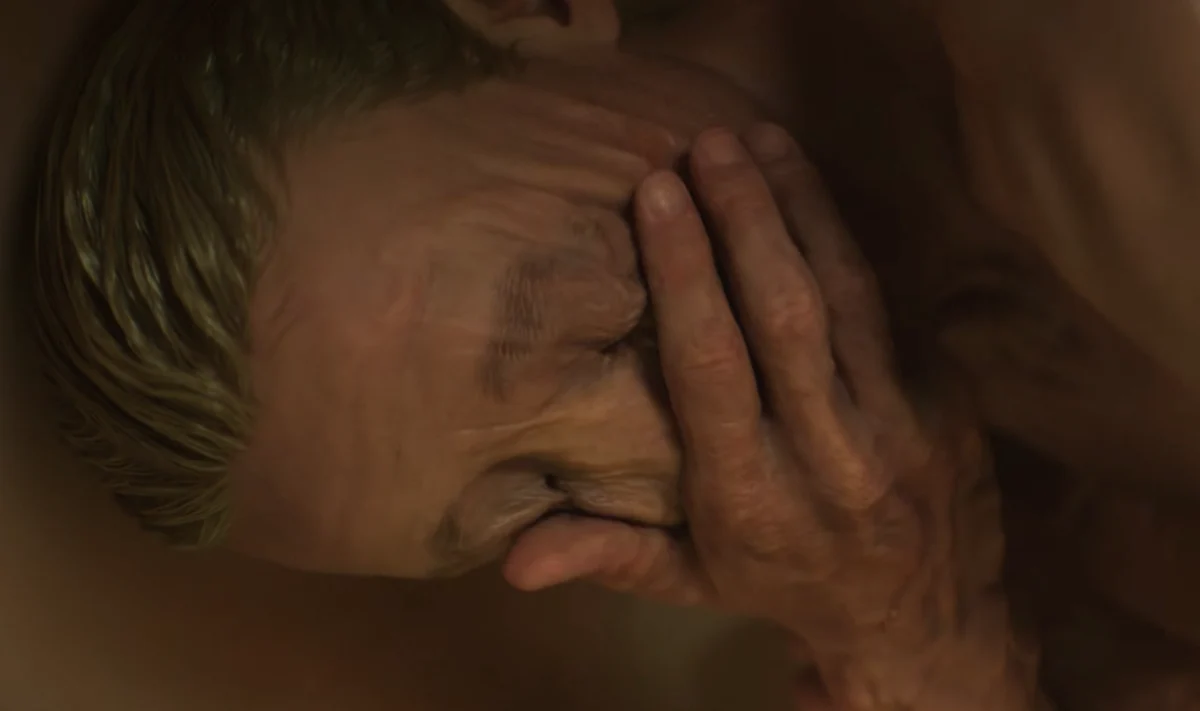
The recent release of Warner Bros. and DC’s Clayface has ignited a firestorm of discourse, not merely for its bold departure from traditional superhero fare, but for a specific, unsettling sequence that pushes the boundaries of R-rated body horror. While the film—directed as a grim, visceral exploration of identity and mutation—has received a polarized reception, one particular moment has emerged as the centerpiece of critical debate.
As the film leans heavily into the tonal aesthetics of David Cronenberg’s The Fly, it forces audiences to confront the terrifying fluidity of its protagonist, Matt Hagen. Yet, beyond the gore and the "ooey-gooey" practical effects that have drawn praise from critics like our own Matt Konopka, the film presents a psychological and existential quandary that lingers long after the credits roll: the nature of desire when the object of that desire is oneself.
A Chronology of Obsession: The Science of the Sleep Study
To understand the weight of the film’s most provocative scene, one must look at the narrative trajectory leading up to it. The film introduces us to Matt Hagen (Tom Rhys Harries), a struggling actor whose desperate bid for fame leads him into the orbit of scientist Caitlyn Corr (Naomi Ackie).
The narrative is structured around the isolation of Corr’s laboratory. In a storytelling choice that has drawn some criticism for its lack of logistical realism—namely, the decision to have a single scientist managing a high-stakes, experimental biological study without oversight or staff—the film isolates its two leads. This vacuum is intentional. It creates a claustrophobic pressure cooker where Hagen’s shifting biology is left unchecked.
The pivotal sequence occurs during a routine sleep study. As Corr monitors Hagen’s vitals from behind a glass partition, the sleeping subject begins to undergo a rapid, involuntary metamorphosis. Hagen’s body, reacting to the subconscious stimuli of his growing fixation on the scientist, begins to shift and reform. He does not simply dream of her; he becomes her. The sequence escalates from a biological curiosity into an act that the British Board of Film Classification (BBFC) has officially flagged for "brief visual allusions to masturbation."

The Philosophical Implications of Autoeroticism
The question that has captivated audiences is not just "what happened," but "what does it mean?" In the context of the scene, we see Hagen’s shifting mass wrap around his own form. The visual language suggests he is portraying two distinct entities simultaneously: himself and the woman he desires.
This raises a profound question: Is it an act of intimacy if you are physically manifesting both partners in the encounter?
The Inadequacy of Language
The term "autoeroticism" feels insufficient here. Traditionally, this implies self-stimulation. However, when an individual possesses the biological capability to rewrite their anatomy to resemble another person, the line between self-love and external desire dissolves. This is a level of narcissism that transcends vanity; it is the ultimate expression of the "solipsistic villain."
Hagen is a character defined by his desire to be someone—or anyone—other than himself. By assuming the likeness of the woman he is pining for, he is engaging in a perverse form of self-actualization. He isn’t just looking at his object of desire; he is embodying her, closing the gap between the observer and the observed.
The Precedent of "The Self"
While Clayface attempts to ground this in a dark, gritty DCU reality, it is worth noting that this is not the first time the character has grappled with the implications of his own malleable nature. In the Harley Quinn: A Very Problematic Valentine’s Day Special, a comedic precedent was set when Clayface became enamored with his own severed bottom half.

While that animated encounter was played for laughs, the live-action iteration in the new Clayface film strips away the humor, replacing it with a cold, biological dread. It underscores a recurring theme in the character’s lore: Matt Hagen was never a "good" person. His transformation into a monster is merely a physical manifestation of an already existing, deeply selfish internal landscape.
Supporting Data: Craftsmanship and The "Muddy" Reception
Critical reception to the film has been decidedly mixed, reflecting the film’s own tonal inconsistencies. In his review, Matt Konopka noted that while the film is a "muddy, mixed bag of melty body horror," the craftsmanship is undeniable. The practical effects, which focus on the grotesque nature of shifting, melting flesh, serve as a bridge between the classic horror tropes of the 1980s and the modern demands of the DC Universe.
The performance of Tom Rhys Harries has been a consistent high point in these discussions. Harries plays Hagen not as a tragic victim of circumstance, but as a man whose vanity is his primary motivation. This makes the "dream sequence" feel earned rather than gratuitous. It is the logical conclusion of a character who views the world—and the people in it—as mere props to be donned or discarded at will.
Official Responses and the Future of the DCU
The implications of this film extend beyond its own runtime. James Gunn has officially confirmed that this version of Clayface is a foundational element of the new DCU. This suggests that the "birth of the villain" we witness in this film is merely the first chapter in a much larger, more disturbing arc.
The studio’s willingness to greenlight such a transgressive scene—one that pushes the boundaries of a major franchise—indicates a shift in how DC intends to handle its secondary antagonists. By leaning into the "horror" aspects of the character rather than the "superhero" elements, they are carving out a niche that allows for more experimental, character-driven storytelling.

Implications: The Villain as a Reflection of Our Desires
Ultimately, the controversy surrounding the sleep study scene is a testament to the film’s success in making the audience uncomfortable. Whether one views the scene as a masterpiece of character study or an unnecessary indulgence in shock value, it forces us to engage with the question of identity.
If we could become the people we desired, would we lose ourselves in the process? Matt Hagen’s trajectory in the film suggests that he was already lost. His ability to mimic others is not a superpower that grants him a new life; it is a cage that prevents him from ever truly living his own.
As we look toward the future of the DCU, the question remains: How much more of this "Clayface" can the audience handle? If this is the starting point—a descent into self-obsessed, biological horror—the trajectory of the character suggests that the most monstrous parts of him have yet to fully emerge.
For now, the scene remains a touchstone for debate. It challenges the viewer to look past the "ooey-gooey" gore and recognize the chilling reality of a man who is so obsessed with his own reflection that he has decided to become it.
What did you see in the bed? Was it a tragic manifestation of unrequited love, or the inevitable behavior of a man whose narcissism knows no bounds? The conversation, much like the character himself, continues to shift and evolve.
