
The Neo-Western Renaissance Reaches New Heights: How JoJo’s Bizarre Adventure: Steel Ball Run Captured Global Audiences on Netflix
By Global Entertainment Desk
Published: October 23, 2026
Main Facts
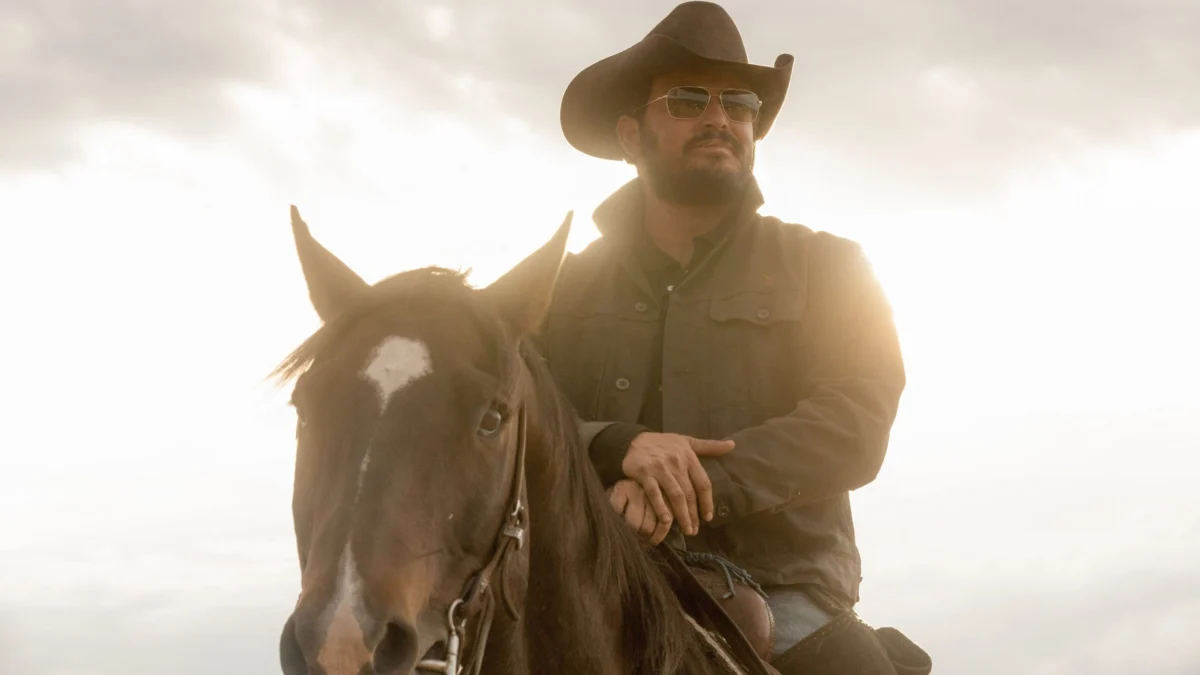
The modern Western genre has officially broken out of its traditional live-action, American-centric mold. Over the past decade, audiences have witnessed a profound creative resurgence of the Western—and its gritty cousin, the Neo-Western—across major television networks and streaming platforms. Shows like Paramount’s monumental franchise Yellowstone (alongside its historical prequels 1883 and 1923) and Netflix’s gritty prestige offerings like Godless, The Power of the Dog, Territory, and American Primeval have redefined what it means to tell a frontier story.
However, the latest entry dominating global conversation isn’t a sprawling live-action epic featuring dusty ranch hands or Montana lawmen. Instead, Netflix’s latest international triumph is an animated phenomenon: JoJo’s Bizarre Adventure: Steel Ball Run.
Surging past conventional expectations for animated adaptations, Steel Ball Run has officially captured the #8 spot on Netflix’s Global Top 10 Non-English Shows list. Marking a daring creative pivot for Hirohiko Araki’s long-running, legendary franchise, this new chapter transports viewers headfirst into an alternate-continuity 1890s America. Centered around a perilous, cross-country horseback race from San Diego to New York City, the series combines historical frontier grit with the signature supernatural flair of the JoJo universe.
Propelled by an initial double-length premiere event and the heavily praised return of a weekly streaming cadence, Steel Ball Run has proven that the appetite for complex, morally grey frontier narratives knows no cultural or medium boundaries.
Chronology of a Global Phenomenon: From Page to Screen
To understand the massive cultural footprint Steel Ball Run is currently carving out on Netflix, one must examine the timeline of its journey from a beloved manga arc to a top-tier global streaming juggernaut.
- The Manga Origins (2004–2011): Originally serialized under the title Steel Ball Run as Part 7 of Hirohiko Araki’s JoJo’s Bizarre Adventure epic, the story was widely celebrated by literary and manga critics alike as a masterclass in pacing, character development, and genre-blending. By shifting the setting to an alternate late-19th-century United States, Araki introduced fans to a radically different thematic landscape.
- Announcement and Anticipation (2024–2025): Following the conclusion of the Stone Ocean anime adaptation, rumors and eventual studio confirmations swirled regarding how production teams would handle Part 7. Given the immense logistical challenges of animating continuous, high-speed horseback riding intertwined with intricate supernatural combat, expectations—and anxieties—among the fan base were remarkably high.
- The Summer 2026 Key Visual and Marketing Push: Netflix and production partners dropped stunning promotional materials, highlighting protagonists Johnny Joestar and Gyro Zeppeli. The crisp, dynamic visuals reassured fans that the production values would match the breathtaking scope of Araki’s original artwork.
- October 2026: The Streaming Debut: Steel Ball Run made its explosive debut on Netflix with an extended double-length premiere. Despite initial fan debates over the platform’s rollout strategy, the sheer quality of the early episodes quickly dismantled any skepticism. By late October 2026, the series officially cracked Netflix’s global Top 10 for non-English programming, cementing its status as an international powerhouse.
Supporting Data and Critical Reception
The metrics behind Steel Ball Run’s success illustrate a seismic shift in how international audiences consume anime and Western-themed media simultaneously.
Securing the #8 position worldwide on Netflix’s non-English charts places the series in elite company, rubbing shoulders with massive live-action multilingual blockbusters. More impressively, the series has achieved this milestone while navigating a specialized genre—the historical sports-action Western—that rarely mainstreamed so successfully in past decades.
Critical and Audience Consensus:
- Animation and Fidelity: Reviewers across major aggregation platforms like Rotten Tomatoes and IMDb have praised the animation studios for capturing the delicate, highly detailed art style that Araki developed during his Steel Ball Run run.
- The Technical Challenge of Horses: Animating horses in motion is historically one of the most notoriously difficult and expensive tasks in both 2D and 3D animation. Critics have universally lauded the production team’s meticulous attention to equine anatomy, pacing, and kinetic energy during the grueling multi-stage cross-country race.
- The Release Schedule Debate: While Netflix’s choice to experiment with a hybrid premiere (double-length launch followed by weekly stages) initially sparked online controversy among binge-watching purists, data suggests the strategy worked. The weekly rollout generated sustained social media discourse, fan theories, and steady engagement week-over-week rather than a brief, front-loaded surge.
Official Responses and Industry Insights
Industry analysts and creators alike have weighed in on why Steel Ball Run has resonated so deeply in an era already saturated with frontier dramas.
Speaking on the broader trend of the Neo-Western revival, entertainment industry insiders note that modern audiences are increasingly fatigued by squeaky-clean heroes. Instead, stories like Yellowstone and Steel Ball Run thrive because their protagonists carry deep physical and psychological scars.
"The Western genre survives because it is fundamentally about survival against impossible odds—whether that’s taming an unforgiving American wilderness in the 19th century or navigating deep personal redemption," notes one prominent media analyst. "By taking the visual grammar of the classic American Western and infusing it with the bold, theatrical energy of Japanese animation, ‘Steel Ball Run’ has tapped into an entirely fresh demographic of viewers who might never have tuned into a traditional cowboy drama."
Netflix representatives have expressed profound enthusiasm over the international engagement metrics, noting that cross-cultural appreciation for historical Americana—reimagined through unique global lenses—represents a major cornerstone of the platform’s future content acquisition strategy.

Implications for the Future of Streaming and the Western Genre
The unexpected global triumph of JoJo’s Bizarre Adventure: Steel Ball Run carries profound implications for multiple sectors of the entertainment industry:
1. The Blurring Lines of Genre
For decades, genres like the Western were thought to belong exclusively to Hollywood live-action studios. Steel Ball Run proves that the core thematic pillars of the Western—honor, betrayal, territorial expansion, physical endurance, and the search for justice—translate seamlessly across mediums, languages, and artistic styles. Animation is no longer viewed as a niche subset of children’s or fantasy media; it is a premier vehicle for adult, prestige storytelling.
2. The Evolution of Netflix’s Anime Strategy
By pushing a complex, historical-action epic into its global non-English Top 10, Netflix has validated high-budget, faithful manga adaptations that target mature audiences. This success will likely embolden producers to greenlight similarly ambitious, narrative-dense projects that bridge the gap between niche fandoms and mainstream prestige television.
3. A Healthier Viewing Cadence
The minor controversy surrounding Steel Ball Run’s weekly release model ultimately proved to be a blessing in disguise. The data suggests that weekly drops foster deeper community engagement, allowing complex plots—such as the intricate strategies and moral dilemmas faced by Johnny and Gyro—to breathe and be dissected by fans online. Streaming platforms may take this as a cue to lean further into hybrid release schedules for high-profile narrative series moving forward.
As Steel Ball Run continues its run on Netflix, it stands as a testament to the enduring appeal of the open trail, the power of bold creative risks, and the reality that the spirit of the American frontier can be successfully recaptured from the most unexpected corners of the globe.
