
The Algorithm of Nostalgia: How Matchbox: The Movie Crystallizes the New Era of Hollywood Consolidation
By Staff Film and Industry Critics
Published October 9, 2026
Main Facts: The Arrival of Matchbox: The Movie
For a cinematic enterprise that arguably should never have been greenlit, let alone released, Apple TV’s Matchbox: The Movie has arrived with an uncanny, almost satirical precision of timing. Released just days after Skydance architect David Ellison finalized a staggering $111 billion mega-deal to consolidate what remains of the traditional Hollywood studio system under his singular corporate banner, the John Cena-led vehicle functions as more than just a piece of toy-etic IP exploitation. It stands as a frictionless, algorithmic crystallization of our new industry landscape’s prevailing tastes.
Directed by Extraction helmer Sam Hargrave and penned by David Coggeshall—whose previous algorithmic credits include The Family Plan and its sequel—Matchbox: The Movie adapts Mattel’s iconic line of miniature die-cast vehicles into a bloated, globe-trotting spy-thriller saga. It joins a depressing cinematic lineage of high-concept, low-ambition streaming fodder alongside Ghosted, Heart of Stone, and 6 Underground.
Yet, beneath its superficial layer of pop-corn entertainment lies a grim portent of the future. As Ellison transitions from streaming-first models toward theatrical dominance, Matchbox: The Movie demonstrates a worrisome reality of modern studio filmmaking: it is not merely bad, but rather completely indifferent to the concept of being good.
Chronology: From Childhood Garage to Global Espionage
The narrative structure of Matchbox: The Movie moves briskly through time, using childhood nostalgia as a narrative shortcut before plunging its characters into an absurd geopolitical conspiracy.

- The Late 1990s (Flashback): We are briefly introduced to a simpler time, marked conspicuously by a movie theater marquee playing Stephen Sommers’ Deep Rising. A young, Good Will Hunting-esque prodigy named Sean Walker spends his afternoons at Bill Camp’s local mechanic garage, playing with miniature toy cars alongside his tight-knit group of friends who dub themselves "The Matchbox Gang." Sean carries an unrequited torch for the mechanic’s niece, Aimee, before being forced to move away to Chicago, abruptly ending his childhood socialization.
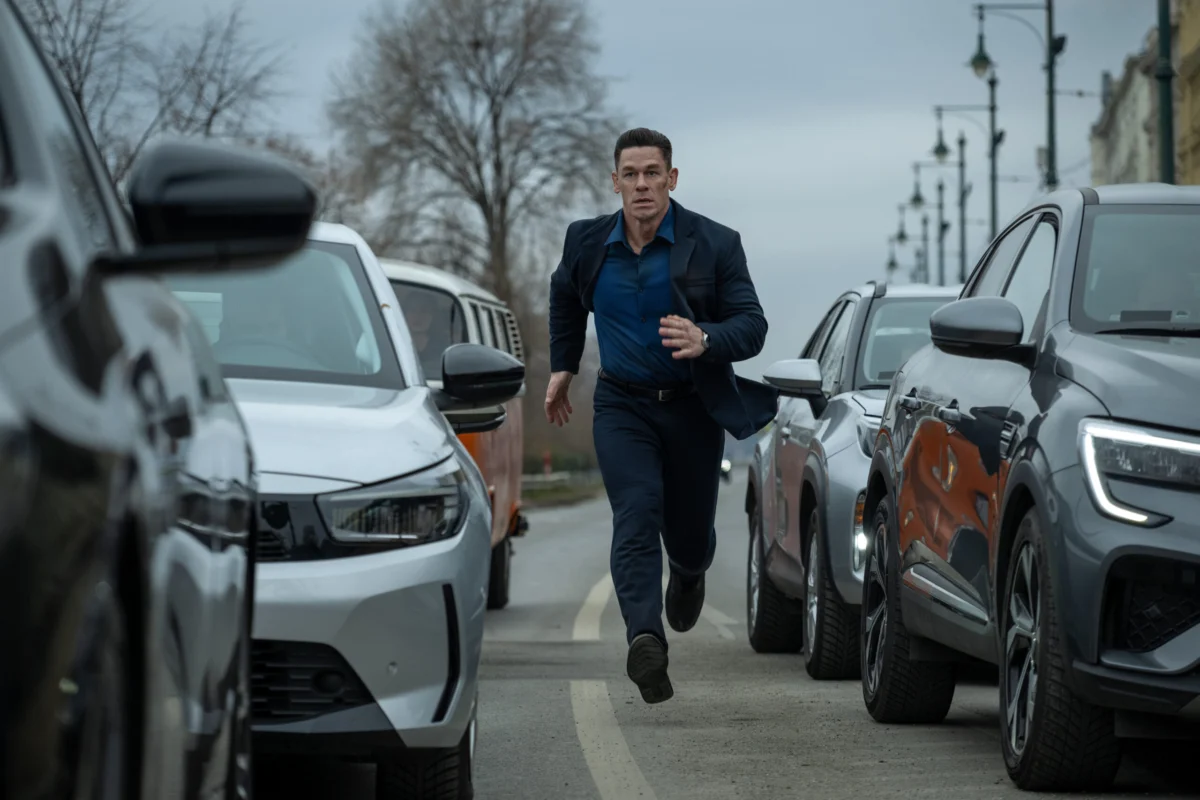
- Decades Later (The Present): In a jarring match-cut worthy of Lawrence of Arabia, a flung toy car transforms in mid-air into a full-sized vehicle tumbling through the Sahara Desert. An adult Sean (John Cena) is now a hardened CIA operative behind the wheel, fleeing Middle Eastern adversaries after stealing a nuclear warhead.
- The Hand-Off and Mandated Leave: After successfully delivering the nuclear device to a different terrorist organization under the watchful eye of his handler (Danai Gurira)—a wry nod to intelligence agency bureaucracy—Sean is ordered to lie low for 10 days. Naturally, he returns to his Podunk hometown of Nowheresville, USA.
- The Reunion and Abduction: Back home, Sean reunites with Aimee (now played by Jessica Biel, working as a reckless, high-speed ambulance driver), Crosby (Sam Richardson), and Ted (Arturo Castro). Before they can properly catch up, CIA Director Cory Stoll abducts the group during a local hangout, threatening them with severe federal retribution unless they track down the missing nuke.
- The International Chase: The newly formed "Matchbox Gang" embarks on a whistle-stop tour from Casablanca to Budapest, leveraging their idiosyncratic everyday skills (driving fast, flying helicopters, and high-school chemistry) to survive high-stakes action set-pieces before ultimately saving the day alongside international guest stars like Kristoffer Hivju and Golshifteh Farahani.
Supporting Data & Production Overview
To understand Matchbox: The Movie, one must examine the financial and creative machinery powering Skydance Media’s recent market maneuvers. The $111 billion consolidation spearheaded by David Ellison represents a fundamental shift in how American media is consumed, produced, and monetized.
| Production Metric / Feature | Details |
|---|---|
| Parent Studio / Distributor | Skydance Media / Apple TV |
| Director | Sam Hargrave (Extraction) |
| Screenwriter | David Coggeshall (The Family Plan) |
| Lead Cast | John Cena, Jessica Biel, Sam Richardson, Teyonah Parris, Arturo Castro, Danai Gurira, Cory Stoll |
| Source Material | Matchbox toy cars (Mattel Inc.) |
| Release Date | Friday, October 9, 2026 |
| Critical Consensus | Grade: C- |
Despite a capable cast and an action director of Sam Hargrave’s technical caliber, the film’s budget is funneled entirely into surface-level gloss. An early plane crash sequence and a chaotic highway pursuit offer fleeting moments of genuine kinetic energy, yet they are repeatedly undercut by forced comedic quips and a complete lack of emotional texture. The supporting characters—Crosby, an aerophobic cipher, and Ted, a high-school teacher with a penchant for self-immolation—exist merely as functional puzzle pieces rather than living breathing people.
Official Responses and Industry Context
The release of Matchbox: The Movie has sparked fierce debate among industry analysts and critics regarding the trajectory of studio filmmaking under consolidated corporate oversight. While executives at Skydance and Apple maintain that high-concept IP adaptations provide vital tentpole engagement for global streaming subscribers, creative guilds have raised alarms over the systemic erosion of original storytelling.
"When you build a film entirely out of pre-packaged nostalgia and algorithmic data points, you aren’t engaging an audience—you’re managing a demographic," noted one prominent box-office analyst.
Furthermore, the filmmakers themselves have leaned into the absurdity of the premise during promotional junkets, emphasizing the tongue-in-cheek nature of turning children’s toys into geopolitical thrillers. However, behind the playful marketing lies an industry-wide anxiety: as streaming giants absorb traditional Hollywood infrastructure, the margin for creative risk continues to shrink.

Implications: What Matchbox Means for the Future of Cinema
The ultimate significance of Matchbox: The Movie extends far beyond its mediocre script or its plastic origins. It serves as a dystopian cultural barometer for the post-consolidation Hollywood ecosystem.
As Bill Camp’s character notes early in the film, the very first Matchbox car was engineered to fit inside a literal matchbox—a brilliant innovation born from thinking inside the box. Yet, watching Matchbox: The Movie, one is struck by how suffocating that corporate container has become. The film takes an artifact of boundless childhood imagination and flattens it into a risk-averse, hyper-monetized product designed for and about dissatisfied suburban adults.
John Cena remains an undeniably magnetic, hardworking screen presence, and Sam Hargrave stages action with a competence that puts many of his peers to shame. But placed within the broader context of Ellison’s newly minted Hollywood monopoly, the film feels grimly prophetic. If Matchbox is a preview of the default multiplex experience to come—where IP reverence replaces artistic vision and corporate algorithms dictate human emotion—we are entering a cinematic era that feels profoundly, irrecoverably smaller.
“Matchbox: The Movie” is available to stream on Apple TV starting Friday, October 9.
