
The Xenomorph Legacy Continues: Aaron Guzikowski Tapped to Pen New Alien Project
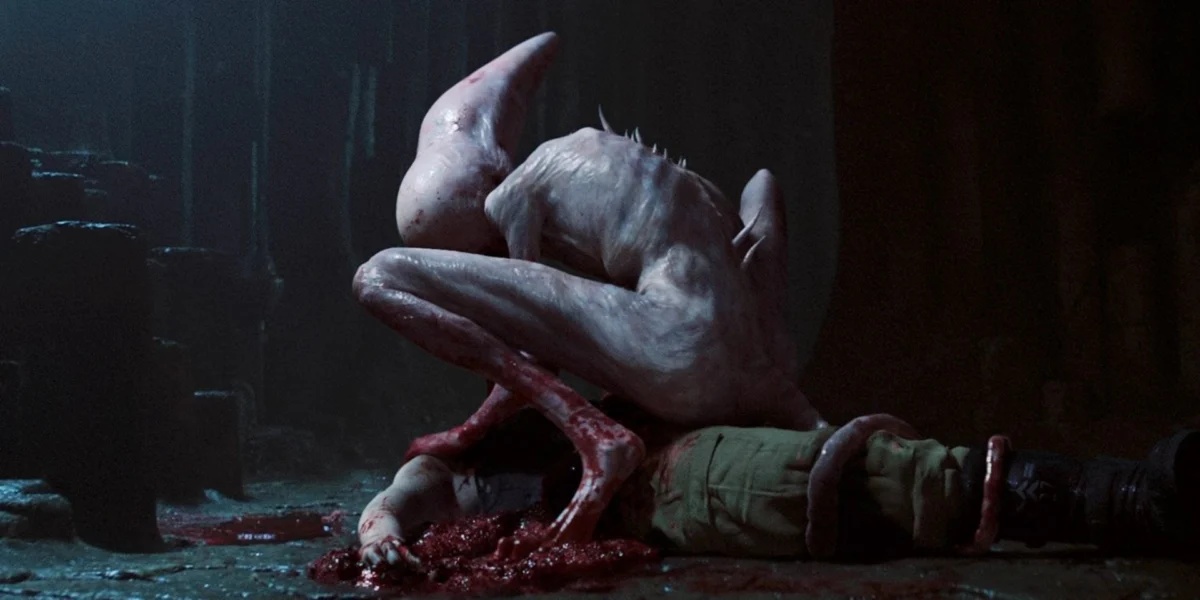
In the cold, unforgiving vacuum of space, the Alien franchise remains one of the most resilient organisms in cinematic history. Following a renaissance of critical and commercial success, 20th Century Studios is doubling down on its most prized intellectual property. Sources have confirmed that screenwriter Aaron Guzikowski, known for his masterful work on Denis Villeneuve’s Prisoners and his previous collaboration with Ridley Scott on the cerebral sci-fi series Raised by Wolves, has been tapped to write a brand-new Alien feature film.
This development signals a significant expansion of the franchise’s current trajectory, confirming that the studio is simultaneously pursuing multiple narrative threads within the storied universe that Ridley Scott first brought to life in 1979.
The Core Developments: A New Chapter in the Saga
The announcement of Guzikowski’s involvement has sent ripples through the science-fiction community. While details remain heavily guarded, the project is being positioned as a distinct effort separate from the ongoing sequel plans for Fede Alvarez’s successful Alien: Romulus.
Ridley Scott, the visionary filmmaker who redefined horror-sci-fi, is attached to produce the project through his Scott Free production banner, alongside partner Michael Pruss. Scott Aversano will oversee the production for 20th Century Studios. At this stage, Scott is not attached to direct, leaving the director’s chair vacant as the script undergoes its initial development phase.
The inclusion of Guzikowski is widely viewed as a strategic choice. His track record for navigating the “moral underbelly” of human nature—a hallmark of the best entries in the Alien series—suggests that this new installment will likely pivot toward the psychological tension and philosophical inquiry that defined the darker, more introspective moments of the franchise.

Chronology: From Prometheus to the Present
To understand the weight of this announcement, one must look at the complex timeline of the Alien franchise. The series has historically functioned as a mosaic of standalone survival horror and sprawling, interconnected philosophical mythology.
The Prequel Era (2012–2017)
The franchise underwent a radical transformation when Ridley Scott returned to the director’s chair for Prometheus (2012) and Alien: Covenant (2017). These films shifted the focus from the creature-feature mechanics of the original 1979 classic to a deeper exploration of the "Engineers," the origin of the Xenomorph, and the emergence of artificial intelligence as a primary antagonist.
The character of David 8, the amoral, god-complex-ridden android portrayed with chilling precision by Michael Fassbender, became the true face of the franchise. Covenant ended on a cliffhanger that left fans clamoring for resolution: David had successfully hijacked a colony ship, The Covenant, with a stash of embryos and his own sinister agenda.
The Return to Roots (2024–Present)
The landscape shifted again with Fede Alvarez’s Alien: Romulus, which stripped away the high-concept philosophy in favor of visceral, claustrophobic survival horror. The film’s massive success proved that the franchise could still dominate the box office by returning to its roots, effectively revitalizing interest among a new generation of viewers.
The Current Expansion
The new project involving Guzikowski appears to serve as the long-awaited "connective tissue" that may finally address the narrative threads left dangling since Covenant. While sources indicate that Michael Fassbender is not currently attached, the thematic DNA of that era is clearly being woven back into the franchise’s future.

Supporting Data: Why the Franchise is Thriving
The Alien brand is currently in the midst of a unprecedented period of output. The success of the franchise is not merely anecdotal; it is backed by a robust ecosystem of media:
- Television Success: The series Alien: Earth has achieved significant critical acclaim, effectively bridging the gap between the franchise’s slow-burn horror roots and modern prestige television. With a second season already in active production, the series has proven that the Alien universe has the depth required for long-form storytelling.
- Box Office Performance: Alien: Romulus served as a critical touchstone, proving that audiences remain hungry for the visceral, practical-effect-heavy terror that defined the 1979 original. The film’s performance solidified the franchise’s viability as a cornerstone of 20th Century Studios’ portfolio.
- Creative Talent: The decision to recruit Guzikowski—an auteur-adjacent writer—reflects the studio’s commitment to quality. By pairing him with the institutional knowledge of Ridley Scott, the studio is attempting to balance the "prestige" side of the franchise with its "blockbuster" potential.
Official Responses and Industry Implications
The industry response to this news has been largely positive, primarily due to the specific choice of writer. Guzikowski is noted for his ability to craft narratives that are deeply uncomfortable and emotionally taxing.
In a recent interview, Ridley Scott hinted at his dissatisfaction with the status quo, suggesting that he felt Alien: Romulus was "just okay" and that he has been personally involved in reshaping the direction of the next entry. This indicates that the new project is not merely a studio mandate but a passion project for the 86-year-old filmmaker.
For the studio, the goal is clear: build a multi-pronged Alien universe. By separating the "survival" horror of the Romulus timeline from the "philosophical" horror of the Prometheus timeline, 20th Century Studios can cater to two different segments of the fanbase without sacrificing the brand’s cohesion.
The Path Forward: What to Expect
As we look toward the future, the "connective tissue" mentioned by industry insiders is the most compelling aspect of this development. If the new film indeed acts as a bridge to the events following Alien: Covenant, it presents a unique opportunity to conclude the David arc.

However, there is also the question of the "moral underbelly" mentioned by critics. The Alien franchise is at its best when it asks uncomfortable questions about humanity’s place in the universe. Is humanity the protagonist, or is it merely a vessel for the perfection of the Xenomorph?
The Implications for the Genre
The decision to keep the franchise active through both TV and film suggests that the Alien brand is evolving into a cinematic universe. Unlike the Marvel Cinematic Universe, which relies on interconnected superheroes, the Alien universe is built on a shared aesthetic and a singular, terrifying biological threat.
- Narrative Flexibility: By maintaining two separate narrative tracks, the studio avoids the "franchise fatigue" that plagues other long-running series.
- Technological Innovation: With Ridley Scott’s involvement, the film is guaranteed to push the boundaries of practical and digital effects, continuing the legacy of groundbreaking visual design.
- The "Guzikowski Effect": Expect a script that emphasizes the isolation of space and the moral decay of the characters—hallmarks that will likely distinguish this film from the more action-oriented Romulus sequel.
A Closing Note on the Legacy
It is rare for a franchise to remain relevant for nearly half a century. From the claustrophobic corridors of the Nostromo to the vast, cold expanse of the Covenant, the Xenomorph has been a constant shadow over science fiction.
While the audience may not be able to hear a scream in the vacuum of space, the Alien franchise is currently screaming louder than ever. Whether this new project serves as a definitive conclusion to the prequel era or a daring expansion into new, unknown territories, one thing is certain: the franchise has successfully shed its skin once again, emerging as a lean, lethal, and undeniably compelling force in modern cinema.
Fans of the series, from those who experienced the original in 1979 to those who discovered the terror through Romulus, now have a reason to keep watching the shadows. The xenomorph is not going anywhere, and if the pedigree of this new creative team is any indication, the best—and perhaps the most terrifying—is yet to come.
