
The Symphony of Silence and Sound: How ‘The Wild Robot’ Redefines the Audio Landscape
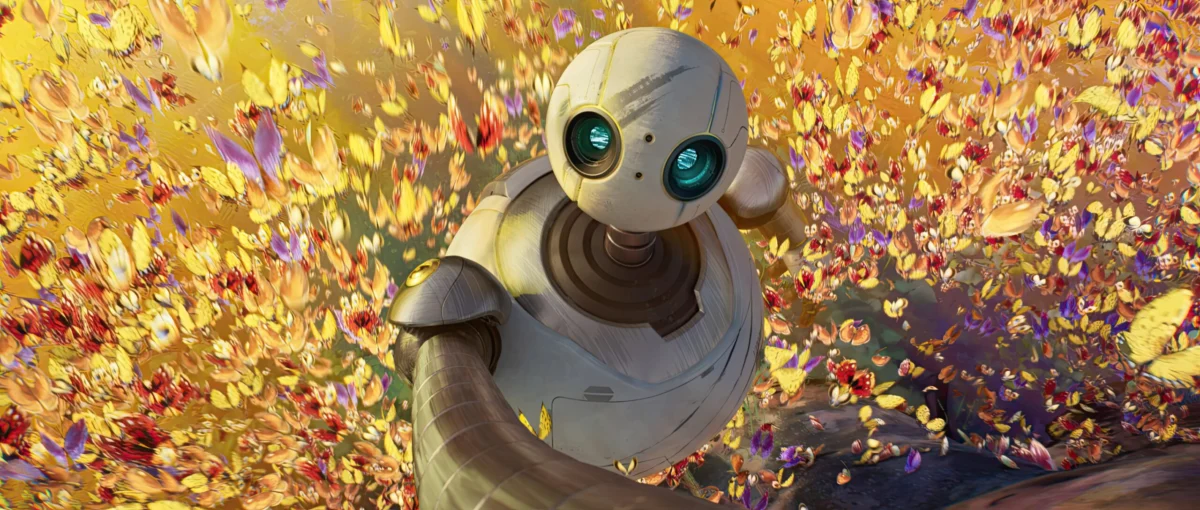
In the traditional hierarchy of post-production, the roles of the composer and the sound design team are often sequestered, functioning like parallel lines that rarely intersect until the final mix. Composers craft the melodic backbone of a film’s emotional arc, while sound editors build the tactile, visceral environment that grounds the audience in the physical world. However, in DreamWorks Animation’s critically acclaimed The Wild Robot, directed by Chris Sanders, this rigid siloing was dismantled. The result is a sonic landscape where the music and the sound design are so seamlessly intertwined that they function as a single, living organism.
By prioritizing collaboration during the mixing stage, the creative team behind The Wild Robot has set a new benchmark for how animated storytelling can utilize sound to deepen the audience’s connection to the screen.
The Architecture of a Wilderness: Crafting the Soundscape
At the heart of the film’s musical identity is composer Kris Bowers, whose score serves as a masterclass in organic composition. Tasked with capturing the wonder, adventure, and deep-seated melancholy of a robot navigating the untamed wilderness, Bowers eschewed traditional tropes. He avoided instruments that might evoke specific cultural or geographical markers, opting instead for a blend of orchestral textures, ethereal synths, and unconventional percussion.
Crucially, Bowers collaborated closely with the Sandbox Percussion ensemble, treating their contributions not as a traditional rhythmic bed, but as an extension of the film’s sound design. "The percussion kind of had their own sonic lane," Bowers explained in an interview. "It was like this ASMR, close-mic sound. There were moments where there was so much activity in that sonic area—a space typically reserved for sound design—that it required the team to be incredibly open to a shared audio language."
The "team" in question included supervising sound editors Leff Lefferts and Randy Thom, alongside re-recording mixer Gary Rizzo. Together, they navigated a process where music and sound effects took turns "leading the dance," amplifying the emotional beats of the story rather than competing for the audience’s attention.

A Chronology of Collaboration: From Sketch to Final Mix
The integration of sound and music in The Wild Robot was not an afterthought; it was built into the film’s DNA from the earliest stages of production.
Early Development: Writing Away from the Picture
In a departure from standard animation workflows, director Chris Sanders encouraged Bowers to compose away from the final picture. "Everything else I’ve written is very picture-intensive," Bowers noted. "But for The Wild Robot, I was tasked with finding the emotional rhythm first. Then, the animation team would adjust their pacing to the music." This reversal of the traditional workflow allowed the score to dictate the momentum of key sequences, such as the climactic moments where the robot, Roz (voiced by Lupita Nyong’o), confronts the vast, changing landscape of her world.
The Mid-Production Hand-off
As the film moved into its edit, the fluidity between Bowers’ score and the environmental sound effects became paramount. During scenes like Brightbill’s (Kit Connor) flight-training montage, the music provides a singular emotional arc, while the tactile, physical sound of flapping wings and rustling forest floor provides the grit and reality. Lefferts, a veteran in the field, was instrumental in this phase, identifying elements within the score that possessed "melodic sensibility" and ensuring that they harmonized with the naturalistic sound effects.
The Mixing Stage: The Final Polish
The most radical shifts occurred on the dubbing stage. In many films, scenes are locked long before the final mix. On The Wild Robot, the team remained agile, using the mix as a creative crucible. It was here that the team made the most daring decisions, including the removal of entire musical cues to let the silence—or the raw, unadorned sound design—do the heavy lifting.
Supporting Data: The Power of Less is More
The most profound impact of this collaborative process is best illustrated by the film’s most emotionally devastating moment: when Brightbill breaks into the Rossum ship and finds Roz powered down.

Bowers had composed a beautiful, poignant musical cue for the sequence. However, as the team watched the scene play out on the mixing stage, a collective realization emerged. "We were all in agreement," Bowers recalled. "We felt this would be much more devastating if there were no music at all."
By stripping away the score, the team allowed the sound design to isolate the audience with the characters. Lefferts described the effect as having one’s "heart ripped in half." To heighten the contrast, Randy Thom constructed a complex soundscape of the ongoing battle outside the ship. By filtering the sounds of the raging conflict to feel distant and muffled, the team created a "deathly quiet" inside the vessel. This interplay between the internal silence of the characters and the external chaos of the world proves that, sometimes, the most effective tool in a composer’s arsenal is the courage to stay silent.
Official Perspectives: The Philosophy of the "Massage"
The success of the sound team hinges on a philosophy Bowers adopted from his youth: "Score needs to be like a great massage. You shouldn’t really be too mindful of where the hands come on and come off."
This ethos is reflected in the way the music handles the film’s lighter moments as well. When Roz uses her internal speakers to project a corporate, slightly uncanny "Rossum Robotics" jingle to interact with the forest animals, Bowers ensured the music sounded like an extension of the machine’s hardware. It is a brilliant example of how sound design can be musical, and how music can function as sound design, creating a cohesive, immersive world that feels both artificial and deeply alive.
Implications for the Future of Animated Filmmaking
The methodology employed on The Wild Robot offers a blueprint for future animated features. By breaking down the silos between the music department and the sound editorial team, filmmakers can achieve a level of cohesion that is often missing in high-budget productions.

1. The Death of the "Wall-to-Wall" Score
The Wild Robot demonstrates that a film does not need a constant musical presence to maintain emotional momentum. When a composer is confident enough to hand the reins to the sound designers, the resulting contrast makes the moments where the music does enter feel exponentially more impactful.
2. Sound as a Narrative Driver
When music and sound design are treated as a unified language, they can guide the audience’s subconscious response to a scene. The "musical" quality of the sound effects in The Wild Robot bridges the gap between the film’s stylized, painterly animation and the grounded, physical reality of the characters.
3. Collaborative Flexibility
The willingness of the DreamWorks team to experiment on the mixing stage—even at late stages of production—is a testament to the importance of institutional trust. By empowering creators like Bowers, Lefferts, and Thom to "find the scene" together, the studio ensured that the audio was not just a garnish, but a core pillar of the storytelling experience.
As Bowers himself put it, his role felt like a "pursuit." He was constantly trying to catch up to the emotional truth of the film, adjusting his craft to match the visuals and the sonic environment created by his peers. In this pursuit, he and the team succeeded in creating something rare: a film where the audience is not just watching a story, but feeling the weight, the silence, and the rhythm of a living world. The Wild Robot stands as a definitive argument for the power of collaborative artistry, proving that when audio teams work in perfect harmony, the result is nothing short of transcendent.
